Syngonium White Butterfly Care: Complete Guide
Syngonium podophyllum 'White Butterfly'
Syngonium White Butterfly is a fast-growing, easy indoor plant with beautiful pale variegation. Water when the top inch dries and give it bright indirect light.
Syngonium White Butterfly Care: Complete Guide
Start with wateringThe most common care mistake for Syngonium White ButterflyWatering guide →Syngonium White Butterfly care essentials
Light
medium to bright indirect light, low indirect light (variegation fades)
Water
Water when top inch of soil dries.
Soil
Well-draining standard potting mix.
Humidity
Moderate to high humidity (50–60%)
Temperature
16°C to 27°C (60–80°F)
Fertilizer
Feed lightly during active growth. Use monthly in spring and summer..
About Syngonium White Butterfly
Syngonium White Butterfly has a upright growth habit.
| Detail | Information |
|---|---|
| Growth habit | Upright |
| Scientific name | Syngonium podophyllum 'White Butterfly' |
Syngonium White Butterfly Care: Complete Guide
What Is Syngonium White Butterfly?
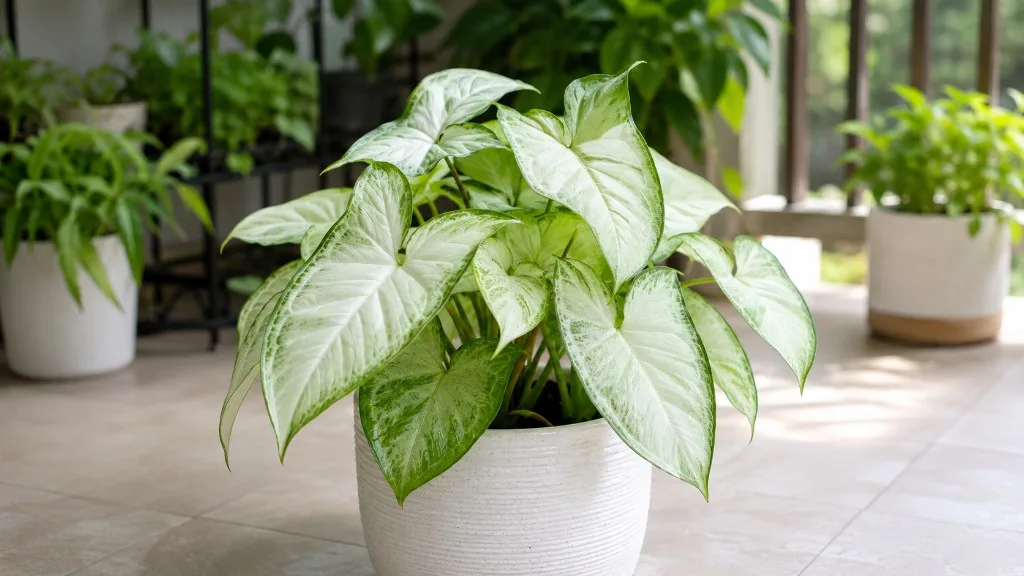
Syngonium White Butterfly - botanically Syngonium podophyllum ‘White Butterfly’ - is a cultivated variety of the arrowhead vine, one of the most forgiving foliage aroids sold for indoor growing. Its leaves are arrow-shaped when young, pale green at the margins, and washed with soft white or cream toward the center, which is why the cultivar name references butterfly wings. Indoors it typically grows 12 to 36 inches (30 to 90 cm) tall in a compact, upright juvenile form before stems lengthen and begin to trail or climb, eventually reaching 3 to 6 feet (0.9 to 1.8 m) if given a moss pole, trellis, or hanging basket according to the Missouri Botanical Garden.
Growth is fast in warm, bright conditions and slows noticeably when light weakens or temperatures drop. The plant is widely marketed to beginners because it tolerates a missed watering, adapts to average home humidity, and roots easily from cuttings - but that tolerance has limits. White Butterfly is a variegated cultivar, which means it needs more light than solid-green syngoniums to hold its pale patterning, and it is not pet-safe because all Syngonium podophyllum plants contain insoluble calcium oxalate crystals. If you are deciding whether Syngonium White Butterfly overview fits your home, the honest summary is: Syngonium White Butterfly rewards Syngonium White Butterfly light guide, consistent but not soggy moisture, and occasional pruning - and it punishes chronic overwatering, dim corners, and placement within reach of chewing pets.
Botanical Background and Aroid Family Traits
Syngonium White Butterfly belongs to the family Araceae - the aroid family - alongside philodendrons, monsteras, pothos, and peace lilies. That family connection matters for care more than most plant tags suggest. Aroids share a few baseline patterns: they prefer well-aerated soil that drains freely, they dislike standing water around roots, and most problems trace to root-zone moisture combined with insufficient light long before mysterious disease appears. The climbing or trailing habit is also typical: in the wild, Syngonium podophyllum starts on the forest floor and attaches to tree trunks as it matures, which is why your pot-grown specimen may shift from bushy and upright to vining within a year or two unless you prune regularly.
The species is native to tropical regions from Mexico to Ecuador, including Central America and parts of South America, according to the NC State Extension Gardener Plant Toolbox. In that warm, humid understory, the plant receives filtered light through a canopy, experiences stable temperatures, and grows in organic, fast-draining forest litter - not dense, waterlogged potting soil. Indoors, your job is to approximate that rhythm: bright but indirect light, warm stable air, and a mix that holds moisture briefly then dries enough for roots to breathe.
Syngonium podophyllum is winter hardy only in USDA Zones 10 through 12, which makes it a houseplant or seasonal container plant for most readers. Outdoors it can climb moss poles, trellises, or hanging baskets in frost-free climates; everywhere else it belongs indoors before night temperatures drop toward 55°F (13°C). You may also see older labels listing Nephthytis triphylla - a synonym for the same species - or common names such as arrowhead plant, arrow-head vine, American evergreen, and African evergreen. Retail naming varies; the care advice below applies to S. podophyllum cultivars generally, with extra emphasis on light for variegated White Butterfly because pale sectors contain less chlorophyll and cannot photosynthesize as efficiently as solid green tissue.
Why Juvenile and Mature Leaves Look Different
One of the most confusing traits for new syngonium owners is heteroblasty - the plant’s habit of producing different leaf shapes at different life stages. Juvenile White Butterfly leaves are simple and arrowhead-shaped, often with the pale green and cream variegation that makes the cultivar popular. As the plant ages and especially if it is allowed to climb, leaves may develop deep lobes or split into multiple leaflets, sometimes looking more like a miniature monstera than the compact arrowhead you bought. This is normal developmental change, not a sign that your plant is reverting to a different species or failing.
Understanding heteroblasty saves you from unnecessary panic and pointless fertilizer experiments. A young tabletop syngonium in a 4-inch pot will look different from a mature specimen on a moss pole - and both can be healthy. If you prefer the compact juvenile look, pinch growing tips regularly and avoid giving the plant a tall support that triggers mature climbing growth. If you want a larger vine with lobed foliage, add a moss pole or trellis and let the plant attach as it climbs. Variegation can thin on the newest leaves in low light even when leaf shape stays juvenile; that is an environmental signal, not heteroblasty. Move the plant to brighter indirect exposure and read the next two or three leaves before deciding the cultivar is lost.
Best Growing Conditions for Syngonium White Butterfly
Syngonium White Butterfly does best when your room approximates the warm, bright, humid rhythm of a tropical forest understory. The four variables that decide almost every outcome are light, water, soil, and temperature. Get those aligned and feeding, Syngonium White Butterfly repotting guide, pruning, and propagation become routine. Get one badly wrong - especially the combination of wet soil and dim light - and the plant declines faster than its easy-care reputation suggests.
Light Requirements and Variegation
Syngonium White Butterfly needs medium to bright indirect light to stay compact and hold its pale variegation. A practical target is the kind of light you would get near an east-facing window, a few feet back from a west- or south-facing window with a sheer curtain, or under a bright skylight filtered by frosted glass. The plant can survive in lower light - which is partly why it is sold as beginner-friendly - but variegation fades toward solid green, internodes stretch, and stems become leggy. Variegated forms generally need more light than solid-green varieties to hold their distinctive coloring in lower exposures.
The fastest diagnostic for incorrect light is new growth, not old leaves. Compact spacing between leaves, firm stems, and a clear white-to-green pattern on freshly opened foliage mean the plant is probably getting enough energy. Long, thin stems with small pale leaves mean it wants more light. Bleached patches, brown scorch on sun-facing leaves, or sudden crisping after a window move mean it wants less direct sun or a slower acclimation period. Acclimate over one to two weeks when moving from a dim shop shelf to a bright sill - leaves formed in low light burn easily if you jump straight into harsh afternoon rays.
White Butterfly tolerates brief morning direct sun in many homes, especially in northern latitudes, but midday and afternoon direct sun through clear glass is risky and often produces bleached or crispy sectors on the white portions first, because those areas lack protective pigment. If you must use a south window, filter it. Rotate the pot every week or two so growth stays even rather than leaning hard toward the glass. When natural light is weak in winter, a full-spectrum grow light on a 10–12 hour timer, positioned 12–18 inches above the canopy, prevents the stretched, washed-out look common on syngoniums kept far from windows between November and February in colder climates.
Temperature and Humidity
Syngonium White Butterfly prefers stable indoor temperatures between 60 and 80°F (16 and 27°C) during active growth. It handles typical home conditions well but dislikes cold drafts from AC vents, winter window sills, and frequently opened exterior doors. Sustained exposure below about 55°F (13°C) slows growth and can yellow lower leaves. Keep the pot away from radiators too - dry, fluctuating heat stresses foliage and accelerates soil drying on one side of the root ball while the other stays damp.
Humidity is helpful but secondary compared with light and watering for most homes. A target of 50 to 60% relative humidity supports the softest leaf edges and reduces spider mite pressure in dry winter air. Average room humidity in the 40% range is often acceptable if watering and light are correct, though you may see crisp brown tips on the white sectors first because variegated tissue is slightly more sensitive to desiccation. Grouping plants, using a pebble tray with the pot elevated above the water line, or running a small humidifier nearby all help more reliably than misting, which raises humidity for minutes and can leave wet foliage that invites fungal spotting if air circulation is poor.
Kitchens and bathrooms with bright windows can work well because they combine humidity with adequate light - but only if the plant actually receives plant-facing daylight, not just room brightness. A humid dim corner still produces leggy, green-reverting growth. Temperature and humidity should support the light and water strategy, not replace them.
Soil and Drainage
Use a well-draining, airy potting mix suited to aroids rather than heavy garden soil or straight peat that compacts over time. The principle matters more than a single branded recipe: the mix should hold moisture in the root zone without staying waterlogged for days, and it should retain enough air space that roots can breathe between waterings. A workable home blend is roughly two parts quality houseplant potting mix, one part perlite or pumice, and one part orchid bark or coco chips - adjust toward more bark and perlite if your home runs hot and bright, or slightly more potting mix if you struggle to keep moisture even in small pots.
Missouri Botanical Garden recommends a soil-based potting mix for Syngonium podophyllum with regular watering during the growing season and reduced watering from fall through late winter. Always plant in a container with a drainage hole. Decorative cachepots are fine only if you empty runoff after every watering. The target pH for syngoniums sits in the slightly acidic to neutral range typical of peat-based mixes - usually 5.5 to 7.0 - but hobbyists rarely need to meter pH precisely. The bigger practical issues are compaction, salt buildup from fertilizer and hard tap water, and pots that are too large after repotting, which keep the center of the root zone wet while the surface looks dry.
Because White Butterfly is a fast grower, mix breaks down within one to two years in many containers. When the soil collapses into fine, water-retentive mud, drainage slows even if your watering habits have not changed. Refreshing mix at repotting is cheaper than replacing a plant lost to chronic root stress.
How to Water Syngonium White Butterfly
The general rule for Syngonium White Butterfly is water when the top inch (about 2.5 cm) of soil feels dry and the pot has lost some of its saturated weight. This plant prefers evenly moist but never soggy soil - a pattern closer to many aroids than to succulents, but still far from “keep it wet at all times.” In warm, bright conditions that often works out to roughly every 5 to 10 days for a medium pot, and every 10 to 14 days or longer in cooler, dimmer months - though your calendar should be a reminder to check, not a rule to follow blindly.
Water thoroughly until a small amount runs from the drainage hole, then empty the saucer so roots are not standing in stale water. Check moisture with a finger, a wooden skewer, or by lifting the pot - a very light pot means the root zone has dried more than syngonium prefers, while a heavy pot with a cool, damp surface usually means wait. Because White Butterfly grows quickly when happy, container plants in bright windows use water faster than the same plant in a dim corner, and a hanging basket in summer heat may need checks every few days.
Syngonium White Butterfly watering guide During Active Growth
During the warm, bright months when new leaves are unfolding regularly, Syngonium White Butterfly uses water steadily. The goal is a consistent moisture band: the mix should feel like a wrung-out sponge through most of the root zone, not wet mud and not dusty dry throughout. Slight leaf droop on a light, dry pot is a clear thirst signal - water thoroughly and watch for recovery within several hours. Drooping on a heavy, wet pot is the opposite problem and points to root stress from overwatering rather than drought.
If you just bought the plant, expect a short adjustment period. Nursery syngoniums often arrive in peat-heavy mix with roots accustomed to greenhouse humidity and light. Do not compensate for transplant shock by watering more frequently unless the pot is genuinely dry; stabilize light first, then fine-tune the interval based on how fast your specific container dries in your home.
Seasonal Adjustments
In cooler, dimmer months - roughly fall through late winter in the Northern Hemisphere - growth slows and the pot dries more slowly. Stretch the interval between waterings and reduce or pause fertilizer until new growth resumes in spring. The most common winter failure mode is continuing a midsummer watering schedule in lower light, which keeps the mix waterlogged and leads to yellow lower leaves, fungus gnats, and root rot. Missouri Botanical Garden explicitly recommends reducing watering from fall to late winter for this species.
When you run heating that dries air quickly, the surface may crust while the center stays damp - another reason to check at depth rather than trusting appearance alone. Resume your active-season rhythm only when you see consistent new leaf production and the pot dries on a predictable schedule again.
Common Watering Mistakes
The single most damaging mistake is watering on a fixed schedule without checking the pot. The second is letting the plant sit in a full saucer or cachepot, which suffocates roots within days even if the top of the mix looks acceptable. The third is giving tiny daily sips instead of a full soak when the plant is dry - that wets only the surface while the center stays parched, producing wilt cycles that weaken fine roots over time.
People also misread syngonium drooping. A thirsty plant recovers after a thorough watering; a rotting plant may wilt while the mix stays wet and then decline despite your efforts. Always pair wilt with a moisture check at depth before adding more water. If stems are soft at the base and the mix smells sour, stop watering, inspect roots, trim any brown mushy tissue, and repot into fresh airy mix before resuming a lighter watering rhythm.
How to Feed Syngonium White Butterfly
Syngonium White Butterfly is a moderate feeder during active growth, not a heavy one. A balanced water-soluble houseplant fertilizer - for example 10-10-10 or 20-20-20 - diluted to one-quarter to one-half of the label rate is sufficient for most indoor plants. Apply to already-moist soil every four to six weeks from spring through early fall, or monthly if your potting mix already contains a slow-release starter charge. Because White Butterfly puts on visible new leaves quickly when conditions are right, regular but modest feeding supports color and size without the salt buildup that comes from full-strength weekly doses.
Hold fertilizer entirely during the cool, low-light months, after a major repot until new growth appears, and while the plant is recovering from root rot or pest damage. Overfeeding produces salt buildup and brown leaf margins that look like drought stress but persist even when watering is correct. If margins crisp despite good moisture, flush the pot with plain water at two to three times the pot volume and pause feeding for six to eight weeks.
Pale new growth on an otherwise well-lit plant occasionally indicates nitrogen limitation, but light is the first variable to fix for variegated syngoniums because low light mimics nutrient stress by reducing overall vigor. Confirm your placement before escalating fertilizer strength - excess nitrogen cannot restore white sectors that reverted due to dim conditions.
Repotting and Root Health
Repot Syngonium White Butterfly roughly every one to two years, or whenever roots circle drainage holes, the plant dries out within a day of watering, or water runs straight through without soaking in. The best timing is early spring as active growth resumes, which gives the plant a full warm season to fill the new root zone. White Butterfly grows fast enough that young plants may need repotting once per year if they are fed, watered, and lit well.
Choose a pot only one size larger than the current root ball - typically 1 to 2 inches (2.5 to 5 cm) wider. Oversized pots hold excess wet mix around roots that cannot use it, which is the most common trigger for rot after repotting. Use fresh, well-draining aroid-friendly mix, plant at the same depth as before, and water lightly for the first week while cut roots heal. Keep the plant in bright indirect light and avoid fertilizer until you see new tip growth.
Signs It Is Time to Repot
Physical signs include roots emerging from drainage holes, a top-heavy plant that wilts despite recent watering, or mix that has broken down into fine, water-retentive mud. Performance signs include stalled growth for weeks during warm weather despite adequate light and feeding, or chronic brown tips that persist after you have corrected watering - sometimes indicating mineral-loaded old mix rather than current care errors.
Do not repot a plant that is actively collapsing from overwatering until you have inspected roots and trimmed rot. Moving a failing root ball into fresh mix without fixing the underlying moisture problem rarely saves syngoniums. When repotting is genuinely needed, gently loosen circling roots and remove only the bottom third of old mix if it is compacted, leaving the root ball mostly intact if the plant is healthy.
Propagation Methods for Syngonium White Butterfly
The standard home propagation method for Syngonium White Butterfly is stem cuttings, which is fortunate because the plant produces plenty of stems to spare. Stem cuttings are fast, free, and the easiest way to rescue a leggy specimen by restarting compact growth from healthy nodes while trimming back the parent.
Take a 4- to 6-inch (10 to 15 cm) cutting just below a leaf node using clean, sharp shears or a knife. Each cutting needs at least one node - the slightly swollen joint where leaves attach - because roots and new shoots emerge from nodes, not from leaf tissue alone. Remove leaves from the lower half of the stem, leaving one or two leaf pairs at the top so the cutting can photosynthesize without losing excessive moisture.
You can root cuttings in plain water - change the water every few days to prevent stagnation - or directly in a moist, well-draining mix. Water propagation lets you watch root development; transfer to potting mix once roots reach 1 to 2 inches (2.5 to 5 cm) long, usually within two to four weeks at warm room temperatures near 70°F (21°C). If rooting in mix, keep the medium lightly moist, place the cutting in bright indirect light, and optionally cover with a clear bag or dome to raise humidity, venting briefly every few days to prevent mold.
Roots form faster during active growth in spring and summer; cool, dim conditions slow rooting dramatically. Pinch the tip once roots establish to encourage branching. Do not propagate stressed, diseased, or heavily pest-infested plants - cuttings inherit the parent’s problems. Division is possible on large multi-stemmed specimens if you can separate rooted sections cleanly, but stem cuttings are simpler for most growers and produce more plants per parent in less space.
Common Syngonium White Butterfly Problems
Most Syngonium White Butterfly problems are environmental, not mysterious diseases. The plant communicates through leaf color, stem length, and wilt timing long before the entire specimen collapses. The useful habit is to check light, moisture, and temperature in that order before reaching for pesticide or extra fertilizer.
Yellow Leaves, Brown Tips, and Pests
Yellow leaves can mean overwatering, underwatering, low light, natural aging of older leaves, sudden temperature drop, or nutrient issues. If yellow leaves are soft and the mix is wet, suspect overwatering and inspect roots for brown mushy tissue. If yellow leaves are crisp and the pot is light, drought stress is more likely. A single yellow lower leaf on an otherwise vigorous plant is often normal senescence - remove it and watch new growth rather than overcorrecting every variable at once.
Brown leaf tips and margins usually point to low humidity, drought stress, salt buildup from over-fertilizing, or fluoride and chlorine in tap water affecting sensitive variegated edges first. Flush the pot with plain water if salts are suspected, and review whether the watering rhythm matches how fast the plant actually dries in its current light. Tips that are already brown will not turn green again; judge success by undamaged new leaves.
Variegation fading toward solid green with stretched stems almost always means insufficient light, not a defective cultivar. Move the plant to brighter indirect exposure and read the next two or three leaves before assuming the White Butterfly pattern is permanently lost. Partial reversion can persist on old leaves even after conditions improve - focus on new growth.
Leggy, sparse growth follows the same logic: more light, then pinch stem tips to force side shoots. Without pinching, a bright plant still vines; with pinching every few weeks during active growth, you can maintain a bushier silhouette on a tabletop pot for longer.
Watch for spider mites in dry indoor air - fine webbing and stippled leaves are the tell. Mealybugs hide in leaf axils as white cottony clusters. Scale appears as immobile bumps along stems. Aphids may gather on soft new growth. Fungus gnats indicate overly wet surface mix; let the top layer dry slightly between waterings. Missouri Botanical Garden lists mealybugs, aphids, scale, and spider mites as common syngonium pests; catch infestations early with weekly inspection. A strong shower, manual removal, and insecticidal soap applied per label directions handle most infestations if you act before the population spreads.
Soft rot and bacterial leaf spot are possible in constantly wet, poorly ventilated conditions. Remove affected leaves, improve airflow, and correct watering before applying fungicides. Stem rot at the base combined with foul-smelling mix is advanced overwatering damage - take healthy cuttings above the rot and restart propagation rather than trying to save a mushy base.
Is Syngonium White Butterfly Safe for Pets?
Syngonium White Butterfly is toxic to cats, dogs, and horses according to the ASPCA’s toxic plant listing for arrow-head vine, which covers Syngonium podophyllum. The toxic principle is insoluble calcium oxalate crystals, the same class of irritant found in many aroids. NC State Extension rates poison severity as medium for humans, with symptoms including oral irritation, pain and swelling of mouth, tongue, and lips, excessive drooling, vomiting in pets other than horses, and difficulty swallowing. Contact dermatitis from sap is also possible during pruning, so wash hands after handling cut stems.
Toxic does not always mean fatal in tiny nibbles, but calcium oxalate exposure is painful immediately, which is why pets sometimes paw at their mouths after a single bite. Do not rely on “my pet never chews plants” as a safety plan. Place pots on high shelves, use hanging baskets out of jump range, or choose confirmed non-toxic alternatives if you have a cat that treats houseplants as enrichment. White Butterfly’s trailing habit makes it especially risky in hanging baskets within feline reach.
If you suspect your pet ingested syngonium, contact your veterinarian or the ASPCA Animal Poison Control Center at (888) 426-4435 (a consultation fee may apply). Bring a photo of the plant tag or a leaf sample to help identification. This is general information, not veterinary advice - when symptoms are severe or persistent, professional care is the right move. For households with curious pets, syngonium belongs in the same caution category as pothos or philodendron: beautiful and beginner-friendly for humans, but a poor choice at nose level.
Conclusion
Syngonium White Butterfly (Syngonium podophyllum ‘White Butterfly’) is a fast-growing tropical aroid that trades modest attention for months of soft variegated foliage. Give it medium to bright indirect light so the white pattern holds, well-draining airy soil, water when the top inch dries, and warm stable temperatures between 60 and 80°F, and it will stay compact and vivid through the growing season - then either prune for bushiness or add a moss pole if you want a climbing arrowhead vine with larger lobed leaves. Take stem cuttings in spring to refresh leggy plants, repot when roots outpace the pot, and keep the plant away from pets that chew leaves.
When something looks wrong, read the plant in context: fading variegation and stretched stems mean more light; bleached sun-facing leaves mean less direct sun or slower acclimation; droop on a dry pot means water; droop on a wet pot means roots. Yellow leaves usually trace to moisture imbalance or cold, not a missing magic nutrient. Fix the environment first, adjust watering second, and treat pests before they spread. Do that, and White Butterfly becomes one of the highest-return foliage plants you can grow indoors - as long as you respect its aroid roots, its light needs as a variegated cultivar, and its calcium oxalate toxicity around pets.
When to use this page vs other Syngonium White Butterfly guides
- Syngonium White Butterfly overview - Canonical hub for this species - care topics and problems branch from here.
- Syngonium White Butterfly problems - Symptom-first path when you already know something is wrong.
Related Syngonium White Butterfly guides
- Syngonium White Butterfly watering
- Syngonium White Butterfly light
- Syngonium White Butterfly soil
- Syngonium White Butterfly propagation
- Syngonium White Butterfly fertilizer
- Syngonium White Butterfly repotting
- Syngonium White Butterfly pruning
- Leggy Growth on Syngonium White Butterfly
- Yellow Leaves on Syngonium White Butterfly
- Syngonium White Butterfly problems
How to care for Syngonium White Butterfly?
How much light does Syngonium White Butterfly need?
medium to bright indirect light, low indirect light (variegation fades)
- medium to bright indirect light, low indirect light (variegation fades) - medium to bright indirect light, low indirect light (variegation fades).
When should you water Syngonium White Butterfly?
Water when top inch of soil dries.
- Check top 2 inches - Water when top inch of soil dries.
- Drain excess water - Water when top inch of soil dries.
What soil works best for Syngonium White Butterfly?
Well-draining standard potting mix.
- Well-draining mix - Well-draining standard potting mix.
Grower notes for Syngonium White Butterfly
What matters most with Syngonium White Butterfly
Syngonium White Butterfly can change leaf shape as it matures, so juvenile leaves are not always a sign of poor care. Give it support or pruning depending on whether you want a compact tabletop plant or a climbing arrowhead vine. In practice, the care checkpoint is simple: medium to bright indirect light, low indirect light (variegation fades). Pair that with well-draining standard potting mix, and avoid changing water, pot size, and placement all at once.
Best placement in a real home
Syngonium White Butterfly belongs where medium to bright indirect light, low indirect light (variegation fades) is realistic for most of the day, not only where the pot looks good. Water when top inch of soil dries. If the pot stays wet longer than expected, move the plant into better light or reassess the mix before watering again. Humidity target: Moderate to high humidity (50–60%).. Temperature comfort zone: 16°C to 27°C (60–80°F).
Before you buy this plant
Choose Syngonium White Butterfly with firm new growth, clean leaf undersides, and soil that does not smell sour or feel compacted. Be cautious if you see yellow-leaves, sticky residue, collapsed crowns, or a pot that is wet in poor light. Cosmetic old-leaf damage is less worrying than weak roots or active pests.
First month after bringing it home
Do not repot Syngonium White Butterfly on day one unless the mix is failing or pests are obvious. Quarantine it, learn how fast the pot dries, and keep care boring while it adjusts. Watch especially for yellow-leaves and leggy-growth. If problems appear, correct the condition first rather than stacking fertilizer, repotting, and pruning together.
Safety note for Syngonium White Butterfly
Syngonium White Butterfly is not a plant to keep within reach of pets or children. Treat it as an inaccessible display plant. Use gloves if sap or plant tissue is irritating, and pick a pet-safe alternative for floor pots or low shelves.
How to tell Syngonium White Butterfly is settling in
If you plan to multiply it later, common methods include Stem cuttings. If leggy-growth shows up early, inspect light, watering, and roots before assuming the plant is permanently weak.
Is it pet safe?
Syngonium White Butterfly is toxic to cats and dogs.
Toxic - calcium oxalate crystals cause oral irritation.
Watering Syngonium White Butterfly
Water when top inch of soil dries.
Soil & potting for Syngonium White Butterfly
Well-draining standard potting mix.
Humidity & temperature for Syngonium White Butterfly
Syngonium White Butterfly prefers moderate to high humidity (50–60%), though normal home humidity is usually fine. Keep temperatures around 16°C to 27°C (60–80°F).
| Detail | Information |
|---|---|
| Humidity | Moderate to high humidity (50–60%) - normal home humidity is fine. |
| Ideal temperature | 16°C to 27°C (60–80°F) |
Fertilizer & pruning for Syngonium White Butterfly
Use feed lightly during active growth. Use monthly in spring and summer.. for Syngonium White Butterfly.
| Detail | Information |
|---|---|
| Fertilizer type | Feed lightly during active growth. Use monthly in spring and summer.. |
Common problems on Syngonium White Butterfly
Leggy Growth
MediumLikely cause: Insufficient light.
Quick fix: Move to brighter indirect light and prune.
Full fix guide →Yellow Leaves
MediumLikely cause: Overwatering.
Quick fix: Let soil dry before watering.
Full fix guide →Aphids
MediumLikely cause: Aphids on Syngonium White Butterfly cluster on soft new arrowhead leaves and stem tips, leaving sticky honeydew that dulls pale variegation. First step: isolate the plant and rinse colonies off leaf u
Quick fix: See plant-specific guide for step-by-step fixes.
Full fix guide →Brown Tips
MediumLikely cause: Brown tips on Syngonium White Butterfly usually trace to low humidity, inconsistent watering, or mineral salts-not infection. First step: check humidity near the leaves and whether the top inch of soi
Quick fix: See plant-specific guide for step-by-step fixes.
Full fix guide →Drooping Leaves
MediumLikely cause: Drooping leaves on Syngonium White Butterfly mean roots cannot supply enough water pressure to soft arrowhead foliage-usually from dry mix or from soggy mix damaging aroid roots. First step: lift the
Quick fix: See plant-specific guide for step-by-step fixes.
Full fix guide →Fungus Gnats
MediumLikely cause: Fungus gnats on Syngonium White Butterfly mean the soil surface stays wet too long-usually from watering before the top inch dries, especially in dim light. First step: stop watering until the top 1–2
Quick fix: See plant-specific guide for step-by-step fixes.
Full fix guide →Low Humidity
MediumLikely cause: Dry household air-especially near heating vents in winter-browns the pale variegated edges on Syngonium White Butterfly before green tissue. First step: place a hygrometer beside the pot and run a hum
Quick fix: See plant-specific guide for step-by-step fixes.
Full fix guide →Mealybugs
MediumLikely cause: Mealybugs on Syngonium White Butterfly show up as white waxy cotton tucked into leaf axils and stem nodes-easy to miss against pale variegated foliage. First step: isolate the plant and dab every visi
Quick fix: See plant-specific guide for step-by-step fixes.
Full fix guide →Mold on Soil
MediumLikely cause: Surface mold on Syngonium White Butterfly soil is a warning that the top layer stays damp-risky for this fast-growing aroid. First step: let the top inch dry, scrape off the fuzzy layer, and adjust yo
Quick fix: See plant-specific guide for step-by-step fixes.
Full fix guide →Not Enough Light
MediumLikely cause: Not enough light makes Syngonium White Butterfly stretch, lose its pale white pattern, and use water slowly. First step: move it to the brightest indirect spot you have-White Butterfly needs more ligh
Quick fix: See plant-specific guide for step-by-step fixes.
Full fix guide →Overwatering
MediumLikely cause: Overwatered Syngonium White Butterfly shows yellow lower leaves, soft stems, or wilting despite wet soil-especially if you watered before the top inch dried. Stop watering, empty standing water, and c
Quick fix: See plant-specific guide for step-by-step fixes.
Full fix guide →Root Rot
MediumLikely cause: If your Syngonium White Butterfly droops while the pot still feels heavy and damp, treat it as likely root rot. Stop watering, unpot immediately, and inspect roots and crown; brown mushy roots, sour o
Quick fix: See plant-specific guide for step-by-step fixes.
Full fix guide →Slow Growth
MediumLikely cause: Slow growth on Syngonium White Butterfly is usually too little light, root-bound pot, or normal winter quiet-not disease. Move to brighter indirect light and judge recovery by white veining on the new
Quick fix: See plant-specific guide for step-by-step fixes.
Full fix guide →Spider Mites
MediumLikely cause: Spider mites on Syngonium White Butterfly show as scattered yellow stippling and fine silk on pale arrow-shaped leaves-often beside a heating vent in dry winter air. First step: isolate the plant and
Quick fix: See plant-specific guide for step-by-step fixes.
Full fix guide →Underwatering
MediumLikely cause: Underwatering on Syngonium White Butterfly shows as limp arrowhead leaves, a light dry pot, and crispy edges on pale variegated tissue when the top inch has stayed dry too long. Water deeply once unti
Quick fix: See plant-specific guide for step-by-step fixes.
Full fix guide →Wilting
MediumLikely cause: Wilting on Syngonium White Butterfly often means opposite problems look identical. Lift the pot first: light and dry means underwatering; heavy and wet with soft stems at the soil line means stop wate
Quick fix: See plant-specific guide for step-by-step fixes.
Full fix guide →