Syngonium White Butterfly Light Needs: Best Window, Sun &
Syngonium White Butterfly Light Needs: Best Window, Sun & Warning Signs
Syngonium White Butterfly Light Needs: Best Window, Sun & Warning Signs
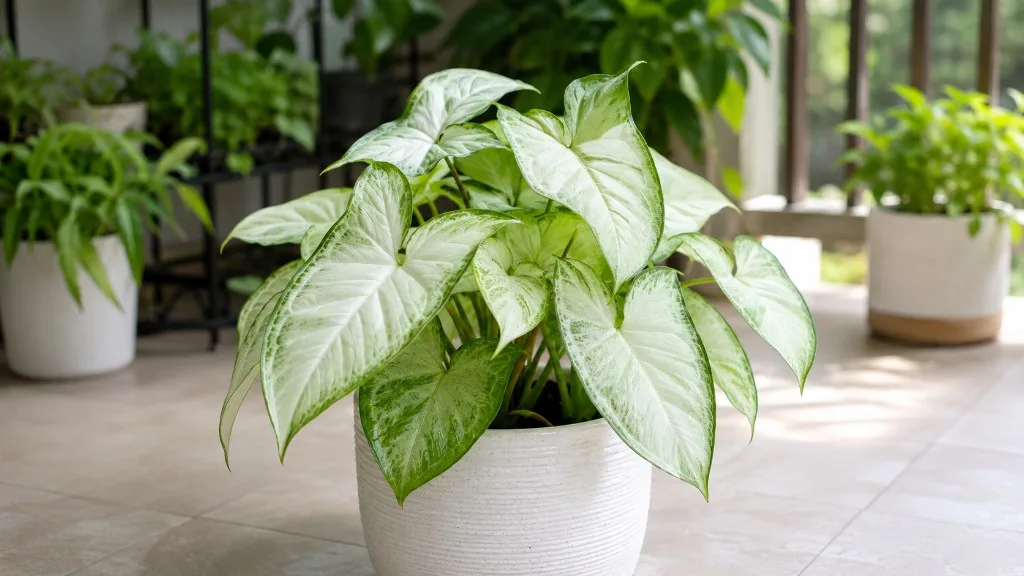
Syngonium podophyllum ‘White Butterfly’ is sold as an easy houseplant, and that reputation is mostly fair. It tolerates a wider light range than many fussy tropicals. The catch is that “easy to keep alive” and “easy to keep looking like the plant on the tag” are not the same thing. White Butterfly earns its name from pale, silvery-green arrowhead leaves with crisp white veining. That variegation is the first thing light takes away when placement is wrong, long before the plant actually dies.
Light is the control dial for almost everything else you care about on Syngonium White Butterfly overview: internode length, leaf size, color contrast, growth speed, and even how fast the potting mix dries. A White Butterfly parked in a dim hallway may survive for months while slowly turning greener, stretching toward the nearest window, and producing smaller leaves on longer stems. Move the same plant to a bright, filtered east window and the next flush of growth often looks like a different cultivar - tighter, brighter, and more distinctly patterned.
This guide is about making that second outcome predictable. You will learn how much light White Butterfly actually needs, which windows work best in a typical home, how much direct sun it can handle, when grow lights are worth adding, and how to read the plant’s own signals before variegation loss or leaf scorch becomes the new normal.
How Much Light Syngonium White Butterfly Actually Needs
Syngonium podophyllum evolved as an understory aroid in the tropical forests of Central and South America. In habitat it lives beneath taller trees, where light is bright but filtered - dappled sun, not open-sky exposure. White Butterfly follows that same pattern indoors. It wants medium to bright indirect light for most of the day, with enough intensity to fuel photosynthesis without the leaf-scorching heat of unfiltered midday sun.
Translating “bright indirect” into something you can act on helps. Growers who measure light often target roughly 400 to 800 foot-candles at the leaf surface for healthy Syngonium growth, with variegated forms like White Butterfly performing best toward the upper half of that range. Darryl Cheng’s light guidance for Syngonium podophyllum lists a minimum around 100 foot-candles for survival, a comfortable medium around 200 foot-candles, and notes that the species can tolerate two to three hours of direct sun when properly acclimated. (House Plant Journal) For variegated arrowhead vines specifically, a 10- to 12-hour photoperiod under bright, filtered light helps keep white tissue vivid without crisping it.
You do not need a light meter to grow this plant well. You do need to stop judging placement by how bright the room feels to your eyes. Human vision adapts to dim spaces far better than a plant’s chloroplasts do. A living room that looks adequately lit at night can still deliver weak plant-usable light at the sofa-side table where the pot ended up after Syngonium White Butterfly repotting guide.
The Short Answer for Busy Growers
If you want the compressed version before the details: place White Butterfly where it receives strong, diffused light for most of the day - typically within one to three feet of an east-facing window, or three to five feet from a south- or west-facing window filtered by sheer curtains or partial blinds. Avoid unfiltered afternoon sun on white leaf sections. If new leaves arrive smaller, greener, or farther apart on the stem than older leaves, move the plant closer to the light source or add a grow light. If white areas bleach, brown, or feel papery, pull it back or filter the window harder.
That new-growth test is the single most reliable shortcut. Old leaves do not recover lost variegation or repair sunburn, but the newest leaf or two tell you whether today’s placement is working.
Why Light Matters More for Variegated Arrowhead Vines
Variegation is not decorative paint. It reflects real biology. White and cream sections of a leaf contain far fewer chloroplasts than green tissue. The green areas must compensate by running photosynthesis harder to support the whole leaf and the stem behind it. When light drops too low, the plant’s most efficient survival strategy is to produce more green tissue and less white tissue on new growth. That is variegation “fading” or “reverting,” and on White Butterfly it usually shows up as new leaves that look more uniformly green-silver with less crisp white veining. The Royal Horticultural Society notes that variegated plants generally need more light than solid-green forms to maintain their coloring.
This is why variegated Syngoniums are often classified as lower-light tolerant for survival but higher-light demanding for appearance. A solid-green Syngonium might look acceptable in a mediocre spot longer than White Butterfly will. If you bought this cultivar specifically for the pattern, light is not a background detail. It is the main maintenance task.
Understanding Natural Light in the Home
Window direction, season, outdoor obstructions, and distance from glass all change the light a plant receives far more than people expect. A south-facing window in June can deliver intense, hours-long brightness. The same window in December, with a lower sun angle and shorter days, may barely keep a variegated aroid happy without supplementation. White Butterfly does not care about your calendar; it responds to photons arriving at the leaf.
Indirect light means the plant is not in the direct beam of the sun for extended periods. Light can still be bright - reflected off walls, filtered through sheer fabric, or softened by outdoor tree cover. Direct light means sun rays hit the leaf surface directly. Morning direct sun is gentler and shorter. Midday and afternoon direct sun, especially through clear glass that amplifies heat, is where White Butterfly most often gets into trouble.
A simple field test costs nothing: hold your hand about 12 inches above the pot around midday. A soft, faint shadow with a recognizable outline usually indicates adequate indirect brightness. No visible shadow means the spot is too dim for good variegation. A sharp, dark shadow means direct sun is hitting that point and you should filter or move the plant unless you are deliberately acclimating it to short morning exposure.
If you want numbers, a phone lux meter app is imperfect but still useful. Many home growers find that White Butterfly looks best when leaf-level readings at the brightest part of the day fall roughly in the 2,000 to 5,000 lux range for filtered indoor placements, keeping in mind that variegated tissue scorches at much lower thresholds than all-green leaves when direct sun is involved. Use measurements to compare spots in your home relative to each other, not as a laboratory guarantee.
Best Window Placement for Syngonium White Butterfly
The best window is the one that delivers bright, filtered light for the longest stable portion of the day without cooking the leaves. For most homes, that ends up being an east-facing window or a filtered south- or west-facing window. North windows can work if they are unobstructed and the plant sits close to the glass, but they are often marginal in Northern Hemisphere winters.
Placement is a two-variable problem: direction and distance. A plant on a table six feet from a bright window is not getting the same light as one on the sill, even in the same room. White Butterfly is often sold as a tabletop plant, which is fine aesthetically, but the prettiest shelf in the room is frequently the worst horticultural choice.
East, North, West, and South Windows Compared
East-facing windows are the easiest win for White Butterfly in most climates. Morning sun is cooler and shorter. Even if a few direct rays touch the leaves for an hour or two, damage is uncommon once the plant is acclimated. By afternoon the window shifts to bright indirect light - exactly the understory pattern this aroid evolved for. If you have one good east window and several plants competing for it, White Butterfly deserves priority over true low-light species because its variegation depends on brightness.
North-facing windows supply consistent, shadowless light that is gentle but often weak. In summer, a White Butterfly directly on a clear north sill can look excellent. In winter, the same placement may produce leggy stems and greener new leaves. Treat north windows as workable only if you can confirm strong new growth over several weeks, or plan to supplement with a grow light from late fall through early spring.
West-facing windows are bright but risky. Late-afternoon sun can be hot, low-angle, and intense. White Butterfly on an unfiltered west sill frequently shows bleached white patches or crispy leaf margins within days of a move. If west is your only option, use sheer curtains, partially closed blinds, or place the plant three to five feet back from the glass so it catches bright ambient light without sitting in the beam.
South-facing windows are the brightest and the most situational. In cool climates with weak winter sun, a south window with the plant set back a few feet can be ideal. In hot climates or during summer, the same window can turn into a magnifying lens. South placements succeed most often when filtered and when you watch leaf temperature - if the pot or leaves feel hot to the touch at midday, the plant is too close regardless of how nice the variegation looked at first.
Distance From the Glass and Seasonal Changes
Distance matters because light intensity drops quickly as you move away from a window. A White Butterfly on a windowsill may receive several times more usable light than the same plant on a bookshelf across the room. If you like the look of a trailing vine on a credenza, you may need a brighter window than you would for a sill placement, or a grow light above the display spot.
Seasonal shifts catch people off guard. Winter brings three problems at once: shorter days, a lower sun angle that may miss interior placements, and heating vents that dry air and stress leaves already struggling with reduced photosynthesis. If White Butterfly looked perfect in July and weak in February without any change in watering, winter light is the prime suspect. Move it closer to the glass, remove obstructions, or run a grow light on a timer before you start changing soil, fertilizer, or pot size.
Rotation requires a light touch. Plants do lean toward windows over time, and a quarter turn every week or two prevents a one-sided habit. Constant rotation every few days, however, forces the plant to keep reorienting and can stall growth. Let new leaves harden facing a consistent direction, then rotate modestly.
Can Syngonium White Butterfly Take Direct Sun?
Yes - but only in controlled doses, and almost never in harsh midday form without acclimation. Syngonium podophyllum as a species can tolerate limited direct sun, especially morning exposure. White Butterfly is more sensitive than solid-green forms because white tissue burns before green tissue does. The chlorophyll-poor sections act like thin paper under a lens.
Think of direct sun in three tiers. Tier 1: gentle morning sun through an east window for one to two hours - usually fine for acclimated plants. Tier 2: bright filtered sun through sheer curtains on south or west windows - often ideal for variegation. Tier 3: unfiltered midday or afternoon sun - high risk of irreversible bleaching on white areas, even if green sections look fine initially.
Outdoor summer placement follows the same logic. White Butterfly can live on a covered porch or shaded patio in warm weather, but full open-sky sun will scorch leaves faster than you can move the pot. Always place it where you would comfortably read a book without squinting, not where you’d sunbathe.
Morning Sun vs. Midday Sun
Morning sun differs from midday sun in both intensity and duration. Early rays are cooler, and the exposure window is shorter. Many growers successfully keep White Butterfly on east sills with a small amount of direct morning light and see ** tighter nodes and stronger variegation** compared to a dim interior spot. Midday sun through clear glass combines high PAR with heat buildup. That combination desiccates white leaf sections and can cause sudden curling, papery brown patches, or whole-leaf collapse on the youngest, most tender foliage.
If your only bright window is south- or west-facing, aim for filtered light rather than direct beams. A white sheer curtain often drops intensity enough to protect variegated tissue while still delivering the brightness this cultivar needs. Watch the plant, not the calendar: a cloudy climate softens south windows; a sunny desert climate makes them dangerous even in winter.
How to Acclimate to Brighter Light Safely
Plants purchased from shops, greenhouses, or dim corners arrive adapted to lower light. Their existing leaves are built for that environment. Jumping immediately to a hot south sill is how healthy-looking plants arrive home and look damaged within a week. Acclimation is gradual exposure over 7 to 14 days.
Start by placing White Butterfly in bright indirect light without direct beams - a foot or two back from the target window. After three or four days, if the newest leaf looks firm and normally colored, move it six inches closer. Repeat until the plant reaches the desired spot or until you see the first sign of stress. If any leaf shows bleaching, hold at the last safe position for a week before trying again.
During acclimation, avoid changing watering, repotting, or fertilizing at the same time. Light stress plus root disturbance is how minor moves turn into leaf drop events. One variable at a time keeps cause and effect readable.
Low-Light Limits and What Happens When Light Is Too Weak
White Butterfly can survive lower light longer than many variegated aroids, which is part of why it is recommended to beginners. Survival, again, is not the standard worth measuring. In low light - roughly below 200 foot-candles at the leaf for extended periods - growth slows, stems elongate, and the plant becomes more vulnerable to overwatering because it is using less water while the soil still dries on the same schedule you used in brighter months.
Low light also changes leaf morphology. Juvenile arrowhead leaves may stay smaller. Mature lobed forms may take longer to develop. The plant leans hard toward the brightest vector in the room, producing a one-sided, lopsided display. None of this is a mystery disease. It is a plant doing honest physics with too few photons.
Variegation Loss and Leggy Growth
Leggy growth means long internodes - the spaces between leaves along the stem stretch farther apart than they would in bright light. Each new leaf is smaller relative to the stem length, and the vine looks sparse even though it is technically growing. Variegation loss shows up when new leaves emerge with more green and less white, sometimes reverting almost completely until light improves.
Important nuance: old leaves do not regain lost variegation after you fix lighting. Only new growth reflects the improvement. That is why patient growers watch the top two leaves after a move rather than expecting an overnight makeover on the whole plant. If variegation keeps declining on successive new leaves even after a move to brighter indirect light, check whether something else is blocking light - a film on the window, a seasonal tree outside that leafed out, or a lamp shade that looked harmless in the shop.
Pruning leggy stems back to a node after correcting light encourages bushier regrowth from lower buds. Do not prune heavily while the plant is still in a dim spot; you will remove photosynthetic surface area from a plant that already lacks energy.
Grow Lights for Syngonium White Butterfly
Natural window light is ideal when available, but grow lights are a legitimate primary light source, not just a winter backup. They matter for apartments with small windows, office desks, interior rooms, and any home where winter drops effective brightness below what variegation requires.
Full-spectrum LED grow lights are the default recommendation for foliage aroids. They run cool, efficient, and close to the balanced spectrum White Butterfly uses for steady growth. Old incandescent bulbs produce too much heat and the wrong spectrum. Generic desk lamps may keep a plant alive but often fail to deliver enough PAR for crisp variegation unless placed very close with long run times.
Choosing the Right Fixture and Daily Schedule
For a single White Butterfly in a six- to eight-inch pot, a compact full-spectrum LED panel or bulb positioned 12 to 18 inches above the foliage is a practical starting point. Run it 10 to 12 hours daily on a timer. Syngonium does not need a complicated sunrise-sunset simulation; it needs consistent total daily light.
Adjust height by plant response, not by guesswork. If new leaves are compact and well patterned, hold the current setup. If leaves look pale but not scorched, lower the fixture slightly or extend the photoperiod by an hour. If white sections show crisp brown edges despite good watering, raise the light or reduce hours - variegated tissue is telling you PPFD is too high even when green tissue still looks fine.
Group setups need even coverage. White Butterfly on the edge of a light cone may stretch toward the center while the shaded side loses variegation. Rotate the pot weekly when using overhead fixtures, but keep total daily light stable.
Compare grow-light placement to window placement the same way: the goal is bright, even, indirect-equivalent intensity at the leaf, not spotlight drama on one corner of the plant.
Warning Signs Your White Butterfly Is Getting the Wrong Light
Plants communicate light problems before you need a meter. The skill is separating old damage from current conditions. A sun-scorched leaf from last month’s west-window experiment will stay scarred forever. What matters is whether new growth repeats the same mistake.
Use a simple log after any placement change: date moved, new location, and a photo of the newest leaf every five to seven days for three weeks. Patterns become obvious fast - stretching always follows dim spots, bleaching follows hot direct beams, and stable variegation follows bright filtered light.
Symptoms of Too Little Light
Too little light produces predictable, reversible-on-new-growth symptoms:
- Long internodes with visibly wider spacing between leaves along the vine
- Smaller new leaves compared to older leaves grown in better conditions
- Loss of white veining or a general green shift on fresh foliage
- Strong leaning toward the nearest window or light source
- Slowed growth even during warm months with regular watering
- Soil staying wet longer than it used to in the same pot and mix, because the plant is drinking less
If you see three or more of these at once, brightness is the first fix. Moving closer to a window or adding a grow light beats fertilizing, repotting, or pruning in low light, because those interventions treat symptoms while leaving the cause intact.
Symptoms of Too Much Light or Heat Stress
Too much light, especially direct sun on variegated tissue, looks different:
- Bleached white patches that turn papery or tan and do not green back up
- Crispy brown margins often on the sun-facing side of the leaf first
- Leaf curling during the brightest hours, sometimes unfolding overnight
- Sudden leaf drop on recently moved plants without root rot or pest signs
- Hot leaf surface when you touch foliage at midday
- New leaves smaller and distorted because they emerged while stressed
Heat stress through glass can occur even when PAR levels seem acceptable. If air near the window is hot and dry, White Butterfly may scorch at lower light levels than it would in cooler ambient air. Moving the pot back a foot, adding filtration, or improving humidity around the plant often fixes what looks like a “light toxicity” problem but is actually light plus heat plus low humidity on white tissue.
How Light Changes Affect Watering and Care
Light and watering are linked whether you plan for it or not. A White Butterfly in bright indirect light photosynthesizes faster, transpires more, and dries its potting mix quicker. The same plant in low light uses water slowly. If you keep watering on the bright-window schedule after moving the pot to a dim hallway, root stress follows.
After any light increase, check soil moisture more often for two weeks and water when the top inch feels dry, not on autopilot. After a light decrease - winter move, farther from window, shadier season - extend the interval and confirm the deeper mix is approaching dry before you pour.
Fertilizer follows the same logic indirectly. Feeding a plant that is etiolated in low light does not fix legginess and can worsen soft growth. Feed during active growth when new leaves look healthy in appropriate light. Light correction comes first; nutrition supports a plant that already has the energy budget to use it.
Humidity is not a substitute for light, but it reduces one common side effect of bright placement: crispy tips on white tissue in dry winter air. Moderate humidity around 50 to 60 percent helps leaves look cleaner when you push toward the brighter end of this plant’s range. Do not use misting as a primary fix; it barely shifts room humidity and wet foliage invites fungal spotting.
Finally, resist changing light, pot size, soil, and watering in the same week. White Butterfly is adaptable, but simultaneous shocks make troubleshooting impossible. Move the plant, wait for one full new leaf, then decide whether anything else needs adjusting.
Conclusion
Syngonium White Butterfly is not a dark-corner plant if you care about the white veining that makes it worth growing. It wants medium to bright indirect light most of the day - the kind you get near an east window, or a filtered south or west window, with the pot close enough that the leaves receive real brightness rather than leftover room glow. It can handle short morning direct sun when acclimated, but unfiltered midday and afternoon beams scorch white tissue fast. In weak light it survives, stretches, and greens out; in excess light it bleaches and crisps.
Your best tools are practical, not expensive: place the plant where a soft hand shadow appears at midday, watch the newest leaves for compact growth and stable variegation, acclimate gradually when upgrading brightness, and adjust watering whenever light changes. Add a full-spectrum LED for 10 to 12 hours daily if your brightest window still is not enough in winter or in a dim room.
Get light right and White Butterfly becomes the easy, fast-growing arrowhead vine its reputation promises - bushy when pruned, elegant when trailing, and distinctly patterned when each new leaf opens. Get light wrong and you still have a Syngonium, just not the one you thought you bought.
When to use this page vs other Syngonium White Butterfly guides
- Syngonium White Butterfly overview - Start here for whole-plant context before deep-diving this topic.
- Syngonium White Butterfly problems hub - Jump to symptom-specific fix guides when this care topic does not resolve the issue.
- Leggy Growth on Syngonium White Butterfly - Escalate here when light adjustments are not enough.
Related Syngonium White Butterfly guides
- Syngonium White Butterfly overview
- Syngonium White Butterfly watering
- Syngonium White Butterfly soil
- Syngonium White Butterfly propagation
- Syngonium White Butterfly fertilizer
- Syngonium White Butterfly repotting
- Leggy Growth on Syngonium White Butterfly
- Syngonium White Butterfly problems
Related tool
Try the Plant Problem Diagnosis Tool with syngonium-white-butterfly pre-selected to estimate needs for your setup.