Syngonium White Butterfly Problems: Causes & Quick Fixes
Quick answer
Syngonium White Butterfly is prone to 16 common issues - each link below is a plant-specific fix guide.
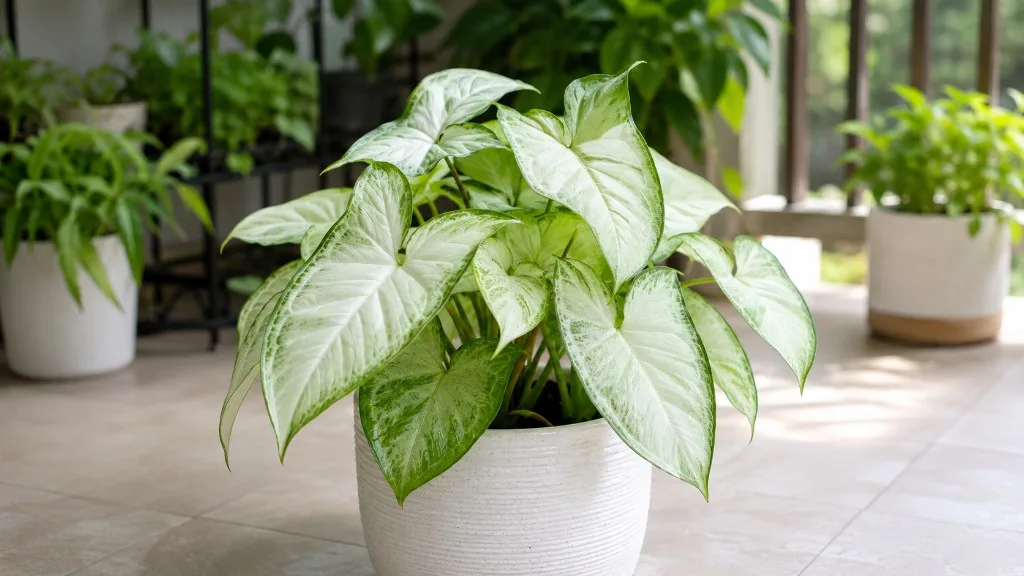
Syngonium White Butterfly problems
Use the guides below to diagnose and fix common issues on Syngonium White Butterfly. Each problem page explains why it happens on this species and what to do first.
Or use our problem diagnosis tool to narrow down symptoms.
Common problems on Syngonium White Butterfly
Leggy Growth
MediumLikely cause: Insufficient light.
Quick fix: Move to brighter indirect light and prune.
Full fix guide →Yellow Leaves
MediumLikely cause: Overwatering.
Quick fix: Let soil dry before watering.
Full fix guide →Aphids
MediumLikely cause: Aphids on Syngonium White Butterfly cluster on soft new arrowhead leaves and stem tips, leaving sticky honeydew that dulls pale variegation. First step: isolate the plant and rinse colonies off leaf u
Quick fix: See plant-specific guide for step-by-step fixes.
Full fix guide →Brown Tips
MediumLikely cause: Brown tips on Syngonium White Butterfly usually trace to low humidity, inconsistent watering, or mineral salts-not infection. First step: check humidity near the leaves and whether the top inch of soi
Quick fix: See plant-specific guide for step-by-step fixes.
Full fix guide →Drooping Leaves
MediumLikely cause: Drooping leaves on Syngonium White Butterfly mean roots cannot supply enough water pressure to soft arrowhead foliage-usually from dry mix or from soggy mix damaging aroid roots. First step: lift the
Quick fix: See plant-specific guide for step-by-step fixes.
Full fix guide →Fungus Gnats
MediumLikely cause: Fungus gnats on Syngonium White Butterfly mean the soil surface stays wet too long-usually from watering before the top inch dries, especially in dim light. First step: stop watering until the top 1–2
Quick fix: See plant-specific guide for step-by-step fixes.
Full fix guide →Low Humidity
MediumLikely cause: Dry household air-especially near heating vents in winter-browns the pale variegated edges on Syngonium White Butterfly before green tissue. First step: place a hygrometer beside the pot and run a hum
Quick fix: See plant-specific guide for step-by-step fixes.
Full fix guide →Mealybugs
MediumLikely cause: Mealybugs on Syngonium White Butterfly show up as white waxy cotton tucked into leaf axils and stem nodes-easy to miss against pale variegated foliage. First step: isolate the plant and dab every visi
Quick fix: See plant-specific guide for step-by-step fixes.
Full fix guide →Mold on Soil
MediumLikely cause: Surface mold on Syngonium White Butterfly soil is a warning that the top layer stays damp-risky for this fast-growing aroid. First step: let the top inch dry, scrape off the fuzzy layer, and adjust yo
Quick fix: See plant-specific guide for step-by-step fixes.
Full fix guide →Not Enough Light
MediumLikely cause: Not enough light makes Syngonium White Butterfly stretch, lose its pale white pattern, and use water slowly. First step: move it to the brightest indirect spot you have-White Butterfly needs more ligh
Quick fix: See plant-specific guide for step-by-step fixes.
Full fix guide →Overwatering
MediumLikely cause: Overwatered Syngonium White Butterfly shows yellow lower leaves, soft stems, or wilting despite wet soil-especially if you watered before the top inch dried. Stop watering, empty standing water, and c
Quick fix: See plant-specific guide for step-by-step fixes.
Full fix guide →Root Rot
MediumLikely cause: If your Syngonium White Butterfly droops while the pot still feels heavy and damp, treat it as likely root rot. Stop watering, unpot immediately, and inspect roots and crown; brown mushy roots, sour o
Quick fix: See plant-specific guide for step-by-step fixes.
Full fix guide →Slow Growth
MediumLikely cause: Slow growth on Syngonium White Butterfly is usually too little light, root-bound pot, or normal winter quiet-not disease. Move to brighter indirect light and judge recovery by white veining on the new
Quick fix: See plant-specific guide for step-by-step fixes.
Full fix guide →Spider Mites
MediumLikely cause: Spider mites on Syngonium White Butterfly show as scattered yellow stippling and fine silk on pale arrow-shaped leaves-often beside a heating vent in dry winter air. First step: isolate the plant and
Quick fix: See plant-specific guide for step-by-step fixes.
Full fix guide →Underwatering
MediumLikely cause: Underwatering on Syngonium White Butterfly shows as limp arrowhead leaves, a light dry pot, and crispy edges on pale variegated tissue when the top inch has stayed dry too long. Water deeply once unti
Quick fix: See plant-specific guide for step-by-step fixes.
Full fix guide →Wilting
MediumLikely cause: Wilting on Syngonium White Butterfly often means opposite problems look identical. Lift the pot first: light and dry means underwatering; heavy and wet with soft stems at the soil line means stop wate
Quick fix: See plant-specific guide for step-by-step fixes.
Full fix guide →