Yellow Leaves on Syngonium White Butterfly: Causes, Checks
Quick answer
On Syngonium White Butterfly, fading white veining on new leaves often appears before full yellowing-especially when a dim shelf keeps soil wet too long. First step: lift the pot and check whether the top inch is heavy-wet or light-dry before you water, fertilize, or move the plant.
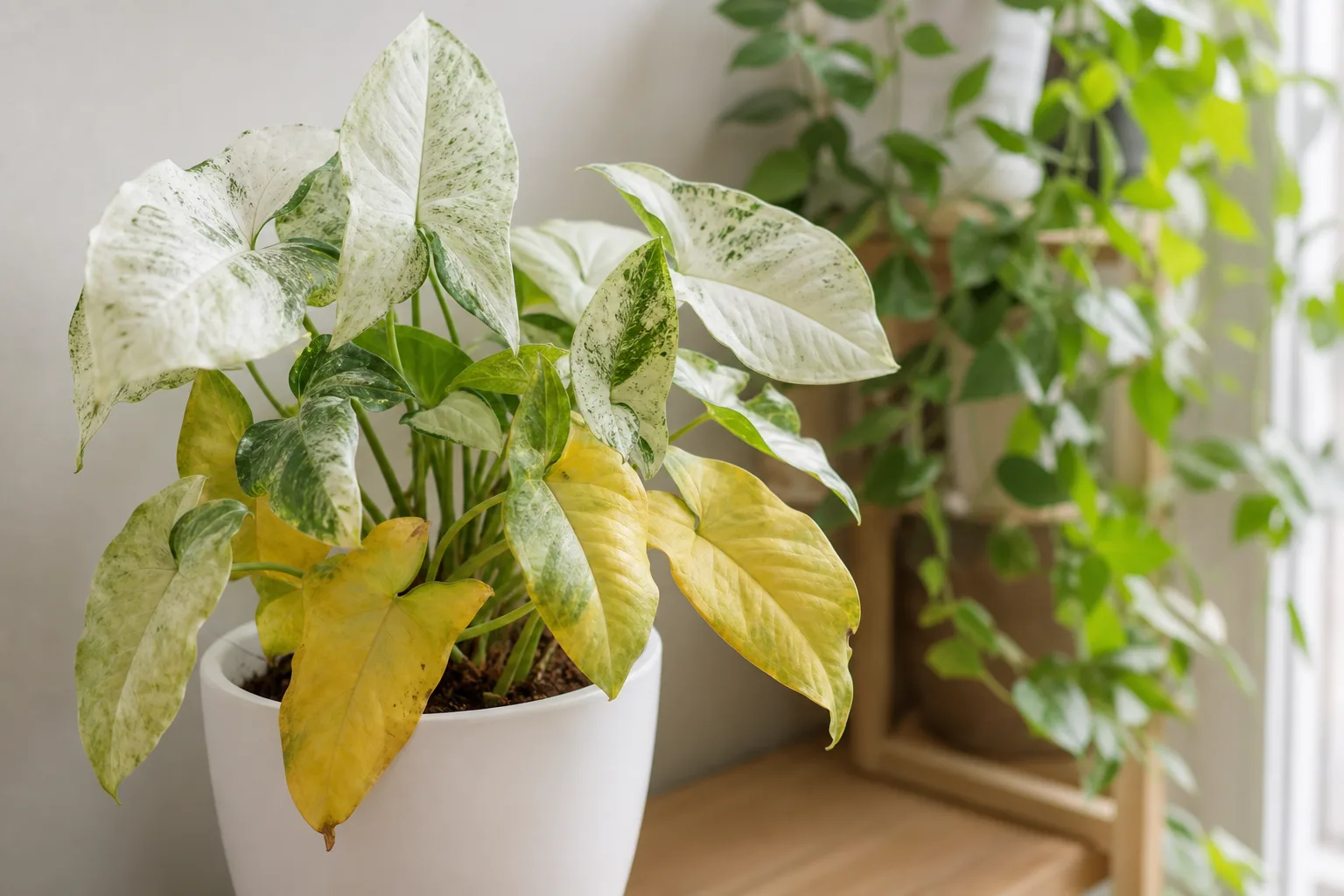
Yellow Leaves on Syngonium White Butterfly: Causes, Checks & Fixes
This guide covers yellow leaves on Syngonium White Butterfly. See also the general Yellow Leaves guide, watering, and light pages for this plant.
Yellow Leaves on Syngonium White Butterfly: Causes, Checks & Fixes
Quick answer
If your Syngonium podophyllum ‘White Butterfly’ is losing its crisp pale veining on new arrowhead leaves, check the pot before you assume hunger. On this variegated cultivar, washed-out white patterning on the newest foliage often appears weeks before lower leaves turn fully yellow-especially when the plant sits in a dim corner where soil dries slowly and stays wet at the roots.
First step: lift the pot and probe moisture one inch deep. A heavy, cool pot with damp mix means pause watering and improve airflow and light so the root zone can dry. A light, dry pot with crisp yellow blades means a thorough soak-not another dry spell. Getting wet versus dry wrong is the fastest way to turn a recoverable yellow leaf into crown rot on an aroid with fine roots.
This page is the deep diagnostic for yellow leaves on White Butterfly. For general care entry, see the Syngonium White Butterfly overview. For variegation fade without full yellowing yet, see not enough light on White Butterfly.
What yellow leaves look like on White Butterfly
Yellowing on White Butterfly is not one uniform look. The pale green arrowhead blades with white veining show stress differently than solid-green syngonium cultivars because variegated tissue photosynthesizes less efficiently and fades before the plant fully shuts down.
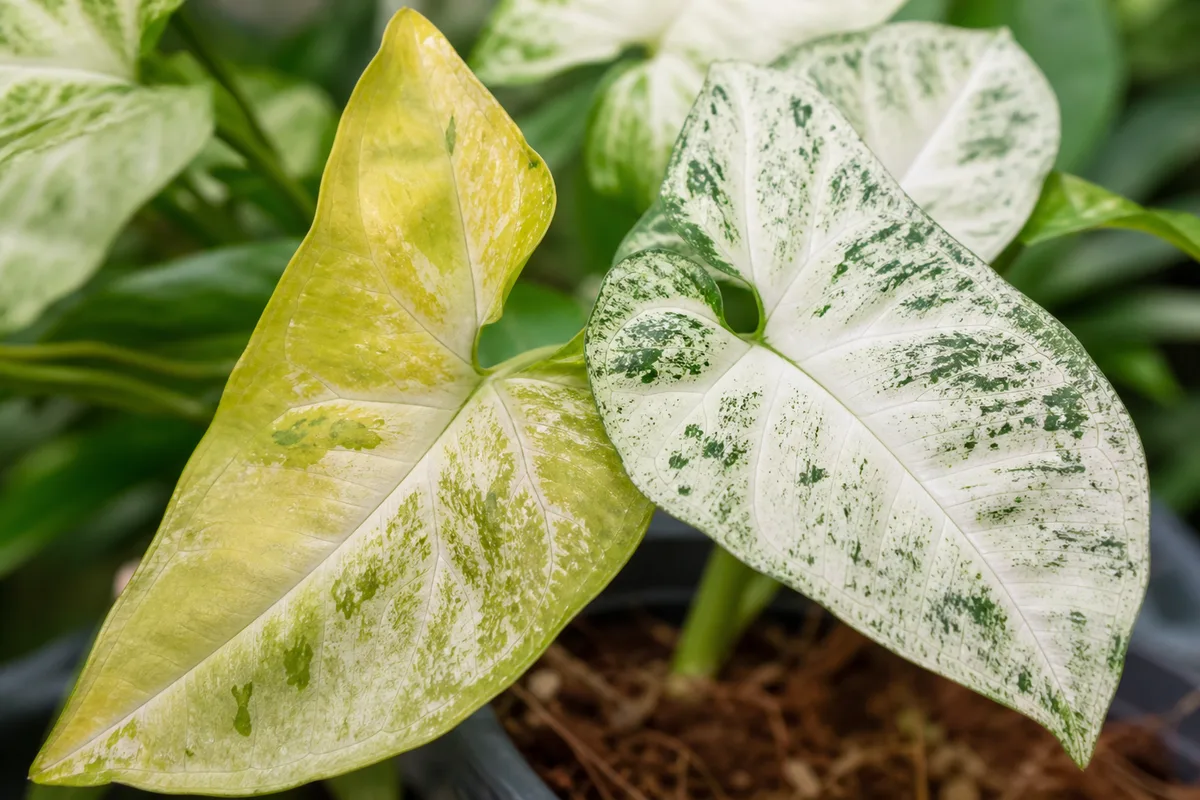
Yellow Leaves symptoms on Syngonium White Butterfly - compare with healthy tissue on the same plant.
Typical patterns:
- One firm yellow leaf at the soil line on an otherwise upright, patterned plant - often normal aging on a self-branching arrowhead vine
- Multiple soft yellow lower leaves with heavy wet soil, limp petioles, or soft stems at the base - overwatering or root stress; see overwatering on White Butterfly
- Crisp yellow leaves on a very light, dry pot with limp but firm-stemmed foliage - drought stress; see underwatering on White Butterfly
- Dull new growth with faded white veining, long internodes, and slow dry-down - low light setting up wet roots even when you water “correctly”; see not enough light
- Sudden yellowing on lower leaves after a cold night near glass or an AC vent - temperature shock below about 55°F (13°C)
- Patchy yellow stippling with fine webbing on undersides - spider mites or other sap feeders despite normal soil moisture
- Bleached or crispy yellow-white sectors on the sun-facing side - direct sun scorch on pale tissue, not root rot
Soft yellow versus crisp yellow matters. Soft, droopy yellow blades on saturated mix point to oxygen-starved roots. Crisp yellow on a light pot points to thirst. White Butterfly in dim rooms often shows soft yellow on wet soil because low light slows water use while summer watering habits continue-the double trigger this cultivar punishes hardest.
Judge the plant by newest leaves, not oldest ones at the base. Recovery means fresh arrowhead foliage opens with tight white veining again, not that yellow blades re-green.
Why Syngonium White Butterfly gets yellow leaves
White Butterfly is an understory aroid in the Araceae family with fine adventitious roots that need both moisture and oxygen. It grows fast in bright indirect light and slows dramatically when light drops or temperatures cool. Yellow leaves usually trace to a root-zone or environmental mismatch-not a missing fertilizer dose.
Overwatering and wet soil in dim light
The most common indoor cause is soil that stays wet too long. Water regularly during the growing season but reduce from fall to late winter-yet many growers keep summer frequency when daylight shortens. White Butterfly on a north shelf or interior table transpires slowly, so the top inch may look acceptable while the center of the root ball stays soggy.
Variegated forms generally need more light than solid-green varieties to hold their pattern. In shade, the plant uses less water, white veining fades on new leaves, and the same weekly soak that worked in a bright window yellows lower leaves within weeks. This is why yellow leaves and washed-out variegation often arrive together on White Butterfly-not as separate mysteries.
Underwatering and repeated drought
Syngonium leaves are thin compared with succulents. Allowing the plant to wilt or dry too hard too often leads to yellowing or browning of the oldest lower leaves even after you rehydrate. Chronic underwatering produces crisp yellow lower foliage on a light pot, sometimes after several droop-and-recovery cycles. See drooping leaves on White Butterfly for pot-weight checks that prevent misreading thirst as rot.
Low light alone and variegation loss
Insufficient light rarely yellows every leaf overnight, but it fades white veining on new growth and stretches internodes before full yellowing spreads. Green tissue outcompetes variegated portions in low light, so new shoots may emerge mostly green while the plant weakens. Fixing light is the primary lever for variegated syngonium-not nitrogen fertilizer.
Natural aging of lower leaves
A healthy bushy White Butterfly sheds the oldest arrowhead at the base one at a time as stems branch. The rest of the plant stays firm, soil dries on a normal schedule, and new leaves keep crisp pale veining. Removing a single yellow lower leaf is fine; panicking and overwatering is not.
Cold drafts and winter window sills
White Butterfly prefers stable indoor temperatures roughly between 60 and 80°F (16 and 27°C). Sustained exposure below about 55°F (13°C)-common on cold window glass, frequently opened doors, or blasting AC-can yellow and damage lower leaves quickly. The pattern often appears after one cold night rather than gradual wet-soil decline.
Pests, salt buildup, and secondary signals
Spider mites, mealybugs, and scale drain sap and produce stippled yellow patches while soil moisture looks normal. Dry winter air below 40% humidity raises mite risk on pale variegated edges first.
Salt or fertilizer buildup from hard tap water or heavy feeding can yellow margins and tips; flushing the pot helps when watering rhythm is already correct. Do not escalate fertilizer on a yellowing White Butterfly before confirming light and moisture.
Fungus gnats hovering over the pot surface signal chronic wet mix-a secondary clue that overwatering may be the root cause. See fungus gnats on White Butterfly if gnats persist after dry-down.
Direct sun scorch on pale sectors
White and cream leaf areas lack protective pigment. Harsh midday sun through clear glass can bleach or crisp pale sectors into yellow-tan patches on the exposed side while the shaded side stays green. This is light damage, not root rot-move the plant back from direct rays.
Lookalike symptoms to rule out
| Pattern | Soil / pot | Stems | New growth | Likely cause | Next step |
|---|---|---|---|---|---|
| One yellow lower leaf | Balanced moisture | Firm | Crisp white veining | Normal aging | Remove leaf; monitor next two new leaves |
| Multiple soft yellow lowers | Heavy, wet | Soft at base possible | Pale or limp | Overwatering / root stress | Overwatering guide |
| Crisp yellow, limp leaves | Light, dry | Firm | May be smaller | Underwatering | Underwatering guide |
| Faded veining, long internodes | Slow to dry | Firm | Mostly green, dull | Low light | Not enough light |
| Rapid lower yellow after cold night | Any | Firm initially | Unchanged pattern | Cold draft | Move off cold glass; reduce water until warm |
| Stippling, webbing | Normal | Firm | Patchy yellow | Pests | Inspect undersides; isolate |
| Bleached sun-facing sectors | Normal | Firm | Unchanged on shaded side | Sun scorch | Filter direct sun |
If wet soil, sour smell, and mushy roots align, escalate to root rot on White Butterfly rather than repeating surface watering checks.
How to confirm the cause
Work through these six checks in order. Each step narrows the diagnosis before you treat.
- Yellowing pattern - One old leaf at the soil line with firm stems and strong new veining suggests aging. Multiple lower leaves yellowing together suggests stress.
- Pot weight - Lift the pot. Heavy and cool after days without watering points to excess moisture. Very light means drought.
- Moisture at depth - Push a finger or skewer one inch into the mix. Wet with a heavy pot confirms overwatering suspicion. Dusty dry throughout with a light pot confirms thirst.
- Stem firmness - Pinch the base of yellowing petioles and the main stem. Soft tissue with wet soil means inspect roots before another soak.
- New leaf quality - Compare the last three arrowhead leaves to older patterned ones. Washed-out white veining or solid green new growth with wet slow-drying soil points to low light compounding water stress.
- Environment and pests - Note window sills below 55°F (13°C), recent moves to darker rooms, sour soil smell, fungus gnats, or stippling and webbing on undersides.
Confirmed overwatering: wet soil, heavy pot, soft yellow lowers, possible sour smell. Confirmed underwatering: light pot, dry mix, crisp yellow with limp firm-stemmed leaves. Confirmed low-light setup: faded veining, leggy spacing, soil wet ten-plus days while growth stalls. Confirmed aging: one lower leaf, firm plant, balanced moisture, crisp new patterning.
First fix for Syngonium White Butterfly
Lift the pot. If the top inch is wet and the pot feels heavy, stop watering and move the plant to brighter indirect light with airflow so the root zone can dry. If the top inch is dry and the pot feels light, water thoroughly until runoff drains, then empty the saucer.
This single decision prevents drowning an already wet root ball or letting a dry plant lose more lower leaves. Do not fertilize, repot, and prune heavily on the same day.
If overwatering is confirmed
Pause watering until the top inch approaches dryness. Move White Butterfly to bright indirect light so the plant uses moisture faster without scorching pale foliage. If yellowing spreads, stems soften, or soil smells sour after forty-eight hours of dry-down, unpot and inspect roots-trim mushy brown tissue and repot into fresh airy mix per the root rot guide.
If underwatering is confirmed
Soak until the mix is evenly moist and excess drains away. For hydrophobic dry soil, bottom-soak twenty to thirty minutes, then drain fully. Resume the top-inch-dry rule rather than sprinkling daily sips.
If low light is confirmed
Move to brighter filtered light before changing fertilizer. Acclimate over a week if coming from deep shade. Pair the light fix with adjusted watering-dim rooms need longer intervals between soaks. Full workflow: not enough light guide.
If cold draft is confirmed
Move off the cold window or away from the vent. Keep soil slightly drier until temperatures stabilize. Do not compensate with extra water.
If pests are confirmed
Isolate the plant, wipe or rinse leaf undersides, and treat the identified pest before assuming root problems. Mealybugs and scale often cluster at leaf axils; mites leave fine webbing.
If normal aging is confirmed
Remove the single yellow leaf at the petiole with clean scissors. No watering or light overhaul needed when new growth stays patterned and firm.
Recovery timeline
| Cause | First sign of improvement | Full stability |
|---|---|---|
| Mild overwatering (early yellow) | Yellowing stops spreading after dry-down | 1–2 weeks; new white-veined leaf |
| Moderate root stress | Firm stems; no new yellow after trim/repot | 2–4 weeks; judge by roots and new shoots |
| Underwatering | Perk-up within hours after soak | Lower crisp yellow leaves may drop; new growth firm |
| Low light correction | Tighter spacing; stronger veining on next leaf | 2–4 weeks for visible pattern recovery |
| Cold draft | No new yellow after warm stable spot | Damaged leaves do not re-green |
| Pests | Stippling stops spreading after treatment | Several weeks; watch new unblemished leaves |
Judge success by new arrowhead leaves with crisp white veining, not by old yellow blades re-greening. Fully yellow foliage usually drops and will not recover its pale pattern.
What not to do
- Do not increase watering when leaves look pale in a dim corner - fix light and dry-down first; more water worsens root stress.
- Do not fertilize a yellowing plant before checking roots and light - excess salts yellow margins and stress damaged roots.
- Do not assume every yellow leaf needs more light - check moisture and pot weight first; wet-soil yellowing needs dry-down, not a brighter window alone.
- Do not repot, fertilize, and prune on the same day - make one change, then watch the next two new leaves.
- Do not judge recovery by oldest yellow tissue - watch the newest arrowhead for returning white veining.
- Wear gloves when removing yellow leaves - Syngonium is toxic to cats and dogs if chewed; discard fallen blades out of pet reach and contact your veterinarian or the ASPCA Animal Poison Control Center at (888) 426-4435 if ingestion is suspected.
How to prevent yellow leaves next time
Learn your pot’s dry-down rhythm instead of watering on a calendar. In bright active growth, White Butterfly may need water every five to ten days; in cool dim winter, ten to fourteen days or longer is common. Our White Butterfly watering guide covers seasonal adjustment detail.
Keep bright indirect light stable year-round so water use stays predictable and white veining stays sharp-see the light guide for window placement. Use well-draining aroid mix in a pot with drainage holes and empty saucers after every soak.
Reduce watering from fall to late winter when growth slows. Protect the pot from cold drafts below 55°F (13°C). Inspect leaf undersides monthly in dry winter air for mites.
When bringing a new White Butterfly home, observe how fast nursery mix dries in your room before stacking repot, fertilizer, and placement changes.
When to worry
Escalate beyond basic fixes when:
- Yellowing climbs rapidly up the plant while soil stays wet
- Stems soften at the base, soil smells sour, or root rot symptoms appear
- Multiple yellow leaves return within days of every watering cycle-likely chronic root stress or oversized pot
- New growth stops entirely while older leaves yellow in sequence
- White veining does not return on new leaves after four to six weeks of corrected light and watering
- Pest stippling spreads despite initial washing
If most of the root system is mushy and the crown is hollow, recovery is unlikely-propagate firm stem cuttings above healthy nodes if any tissue remains viable.
Related White Butterfly problems
- Syngonium White Butterfly overview
- Overwatering
- Root rot
- Underwatering
- Not enough light
- Drooping leaves
- Light requirements
- Watering rhythm
Conclusion
Yellow leaves on Syngonium White Butterfly are the plant reporting a moisture, light, temperature, or pest problem-often before the entire specimen collapses. Read the pot and the newest leaves before the oldest yellow blade: heavy wet soil means dry down and brighten; light dry soil means soak; faded white veining in a dim room means fix light and watering together. One firm yellow leaf at the base on an otherwise patterned plant is usually normal aging. Firm new growth with crisp pale veining is the sign your fix worked.
When to use this page vs other Syngonium White Butterfly guides
- Syngonium White Butterfly watering guide - Use for routine moisture checks before assuming yellow leaves is the main issue.
- Syngonium White Butterfly problems hub - Browse all 2 common issues on this species.