Syngonium White Butterfly Pruning: When, How, and Mistakes
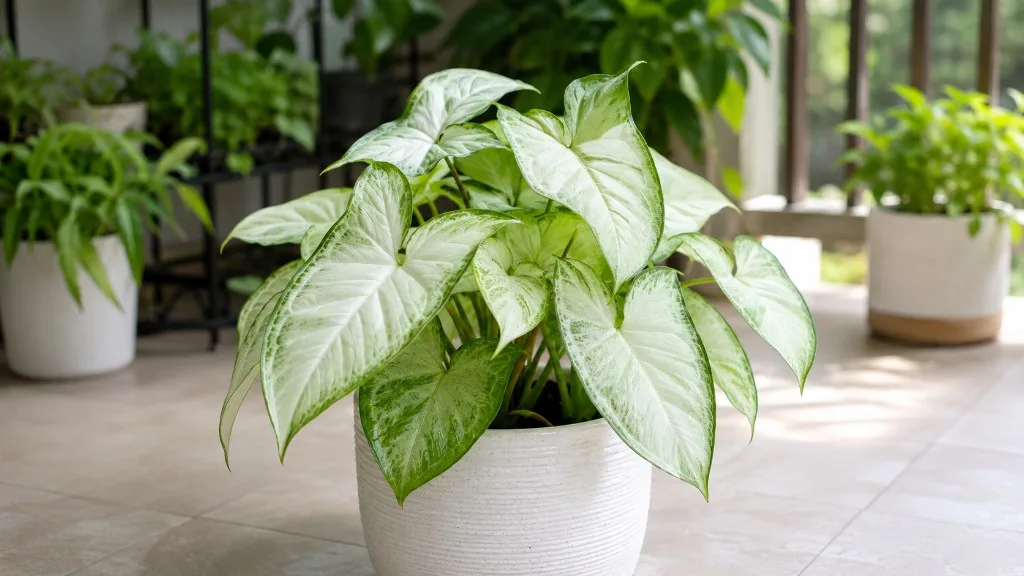
Syngonium White Butterfly Pruning: When, How, and Mistakes to Avoid
Syngonium White Butterfly Pruning: When, How, and Mistakes to Avoid
Quick Answer
Syngonium White Butterfly pruning starts with one inspection step: remove any dead, brown, or clearly diseased leaves at the petiole base with clean snips before you pinch or cut back for shape. After that, pinch the soft terminal bud and top leaf pair every two to four weeks during active growth to keep compact arrow-shaped leaves with pale variegation. When stems stretch with bare internodes, cut 6–10 mm above a lower node on the worst runners. Never remove more than one-third of healthy foliage in one session, and plan major cutbacks for months when the plant will sit in medium to Syngonium White Butterfly light guide - new leaves after a dim-season prune often emerge mostly green.
What Pruning Does for White Butterfly Syngonium
Syngonium podophyllum ‘White Butterfly’ shares arrowhead vine biology with green syngoniums but adds a variegation constraint: pale sectors on juvenile leaves need adequate light to persist on new growth. Without regular tip pinching, White Butterfly vines quickly and shifts toward mature lobed adult foliage that looks different from the compact white-patterned juvenile form most growers buy. Missouri Botanical Garden notes variable leaf morphology by age on S. podophyllum, which is why maintenance pruning matters on tabletop displays.
Pruning cannot reverse severe revert-to-green from months of deep shade, but it redirects growth to lateral nodes so side shoots fill the pot instead of one long runner dominating the silhouette. Correct cuts also remove pest-harboring damaged tissue and give you propagation material you can root and tuck back into the same pot for immediate fullness.
What to Check Before You Cut
Walk the plant stem by stem before choosing a pruning goal. You are looking for three things: node health, variegation pattern on recent leaves, and whether light placement supports the look you want after the cut.
Inspect nodes, variegation, and light first
Follow each vine from soil line to tip. Healthy nodes show a small bump or leaf scar where a petiole attaches - that is where new shoots emerge after a cut. If internodes are longer than a few centimeters and new leaves look greener with less white than older ones, light is probably too low for the variegated form; moving the pot before a hard cutback often produces better regrowth than scissors alone.
Check leaf undersides for sticky residue, webbing, or scale - prune out infested sections into a sealed bag rather than composting them on a windowsill. If several leaves yellow at once and soil stays wet, suspect overwatering or root stress; trimming yellow foliage without fixing moisture will not solve the underlying problem.
The First Cut to Make
First, remove only dead, damaged, or diseased leaves - snip each petiole cleanly at the stem, close to the node, without tearing bark. This is the one action to take before pinching tips or cutting back leggy runners. Damaged tissue drains energy and invites rot on a fast-growing aroid; clearing it lets you see the plant’s real structure and decide whether you need pinching, cutbacks, or simply better light.
Once damaged material is gone, pause and reassess. If the plant is otherwise healthy but long, move to pinching or node cutbacks - not both aggressively on the same day.
When to Prune Syngonium White Butterfly
Pinching and structural cutbacks belong in late spring through summer, when White Butterfly is actively producing leaves in warm indoor conditions. Clemson HGIC recommends pinching arrowhead vine during active growth to maintain bushy form. That schedule matches how fast this cultivar replaces foliage indoors.
Remove yellow, brown, or torn leaves any time of year - they will not green up again. Avoid heavy renovation when the plant sits in dim winter light, when soil has stayed wet for days, or when you recently repotted and roots are still settling. Staged pruning over two or three weeks beats one aggressive session when variegation is already fading.
Pinching for Compact Variegated Form
Pinching is the main White Butterfly maintenance most tabletop growers need - more frequent than many expect because this cultivar vines quickly. Every two to four weeks during active growth, grasp the soft tip between finger and thumb and remove the terminal bud plus the top one or two leaf pairs. Each pinched tip activates dormant buds at nodes below, producing shorter side branches with juvenile arrow leaves.
Pinching works best when the plant already receives medium to bright indirect light. In adequate light, new shoots after pinching tend to show stronger white patterning on small leaves. In deep shade, pinching still branches the plant but new foliage often emerges larger and greener - scissors shape the architecture; light paints the variegation.
Node Cutbacks on Leggy Vines
When a stem elongates with bare internodes between sparse leaves, pinching the tip alone may not restore fullness fast enough. Cut that runner 6–10 mm above a lower node where you want new branches - the bump just above a leaf attachment point. NC State Extension describes S. podophyllum as a climbing aroid that responds to cutting back; multiple node cutbacks on different stems can rebuild a sparse pot in one active season.
Make one clean angled or straight cut with sharp bypass snips. Do not leave a long naked stub above the node - syngonium rarely sprouts from mid-internode tissue. If several stems need shortening, spread cuts across the plant rather than topping every vine at the same height in one session.
Where to Cut - and What to Avoid
Cut just above a node, never through the middle of a bare internode. The node is the only reliable activation point for new syngonium shoots. Cutting too far above a node leaves a stub that browns without branching; cutting into the node itself can damage the bud beneath.
Do not remove the entire plant to soil level unless you are deliberately renovating a severely leggy specimen - and even then, leave several nodes on each remaining stub so the plant can photosynthesize while it recovers. Avoid pruning into soft mushy stems, which signal rot rather than a shape problem. Do not harvest cuttings from tissue showing mosaic-like mottling or sudden pattern collapse unless you have ruled out virus - propagate only from firm, healthy nodes.
How Much You Can Safely Remove
Cap each session at one-third of healthy foliage. White Butterfly grows quickly in warm humid conditions and tolerates staged renovation better than a single winter hard chop, but removing too much at once leaves a thin pot that struggles to photosynthesize while new buds break.
If the plant is severely leggy, plan two or three lighter sessions two to three weeks apart during active growth rather than one dramatic cut. Fast summer recovery supports this approach; slow winter growth does not.
Tabletop vs Climbing Display Goals
Your display goal determines pruning intensity.
Tabletop compact form: aggressive pinching every two to four weeks in active season, periodic node cutbacks on the longest runners, and rooted tip cuttings planted around the parent base for density. This keeps juvenile arrow leaves with pale variegation as the dominant look.
Climbing display on a moss pole or trellis: allow mature lobed leaves on the supported portion if you prefer that aesthetic. Trim only damaged foliage, runners that exceed the support, or occasional harvest cuts for propagation. Hard topping a mature climber temporarily resets some juvenile growth near cut points - acceptable if you want smaller leaves for a season.
Pruning Damaged, Yellow, or Dead Leaves
Yellow leaves from overwatering should come off once you have corrected the Syngonium White Butterfly watering guide - cut the petiole at the stem without pulling and tearing. Brown tips from dry air or inconsistent moisture are cosmetic; trim the damaged portion of the leaf or remove the whole leaf if more than half is dead.
Sun-scorched white sectors on variegated leaves will not recover green tissue - remove the leaf if browning spreads, especially after moving the plant into brighter light post-prune. Always diagnose why leaves failed before assuming pruning alone fixes the pattern.
Tools, Sanitation, and Pet Safety
Use sharp bypass snips or micro scissors for clean node cuts. Wipe blades with rubbing alcohol between plants and after cutting diseased tissue, following Iowa State Extension guidance on sanitizing pruning tools.
White Butterfly syngonium contains calcium oxalate crystals that irritate mouth tissue - the ASPCA lists arrowhead plant as toxic to cats and dogs. Wear gloves if sap bothers your skin, keep cuttings out of pet reach, and discard trimmings in a sealed bag rather than leaving them on the floor.
Using Pruning Cuttings for Fuller Pots
Node sections from pinching and cutbacks root readily in water or moist potting mix - the same propagation habit described for S. podophyllum in general culture. Take cuttings with at least one node and one healthy leaf; white-variegated sections root as easily as green syngonium.
Once roots are 2–5 cm long, plant cuttings around the parent base while continuing pinching above. This fills bare soil faster than waiting for lateral branching alone, especially on young pots.
Aftercare and Recovery Timeline
After major cutbacks, keep consistent moisture - water when the top inch of soil dries - and maintain 50–60% humidity if pale leaf sectors tend to crisp in dry air. Hold fertilizer for two to three weeks after removing more than a few leaves so the plant directs energy to new shoots rather than forced top growth.
Expect visible side shoots within two to four weeks during warm bright conditions. Winter cuts may sit idle longer. New leaves emerging after pruning reflect current light quality - plan aftercare light before you cut, not after.
Signs Pruning Worked - or Went Too Far
Pruning worked when multiple nodes below a pinch or cutback produce compact side shoots, recent leaves hold reasonable white patterning in adequate light, and the plant stops adding bare internode length between leaves.
Pruning went too far or was badly timed when the pot looks sparse for more than four to six weeks in active season, new leaves emerge small and pale without variegation in dim light, or stems soften at the base after a heavy cut on a waterlogged plant. If growth stalls, stop cutting, fix light and watering, and wait before the next session.
Mistakes to Avoid
Skipping pinching lets White Butterfly become a long green-leaning vine with adult lobed leaves and weak variegation - the most common complaint on this cultivar.
Pruning in deep shade produces weak regrowth with faded white pattern even when node placement is correct.
Direct sun on fresh cuts can brown pale variegated sectors before new tissue hardens - keep pruned plants in bright filtered light, not a hot south window.
Mid-internode cuts leave stubs that do not branch.
Pruning yellow leaves without fixing wet soil means yellow returns within days.
Stacking heavy prune, repot, and fertilizer on the same week stresses a fast but sensitive aroid.
When Not to Prune
Delay major cutbacks when variegation has already collapsed from low light - improve placement for two to three weeks first, then pinch. Skip structural work on plants with soggy soil, recent repot shock, or obvious pest outbreaks until conditions stabilize. Do not prune as a first response to every yellow leaf; confirm watering and roots before removing healthy green tissue.
Conclusion
Syngonium White Butterfly pruning is mostly routine tip pinching plus occasional node cutbacks on leggy runners, always in bright indirect light so new juvenile leaves keep their pale pattern. Start by clearing dead or damaged foliage, match intensity to tabletop or climbing goals, respect the one-third rule, and root trimmings for fuller pots. Scissors set the shape; light quality after the cut determines whether White Butterfly keeps the look you bought it for.
When to use this page vs other Syngonium White Butterfly guides
- Syngonium White Butterfly overview - Start here for whole-plant context before deep-diving this topic.
- Syngonium White Butterfly problems hub - Jump to symptom-specific fix guides when this care topic does not resolve the issue.
- Leggy Growth on Syngonium White Butterfly - Escalate here when pruning adjustments are not enough.