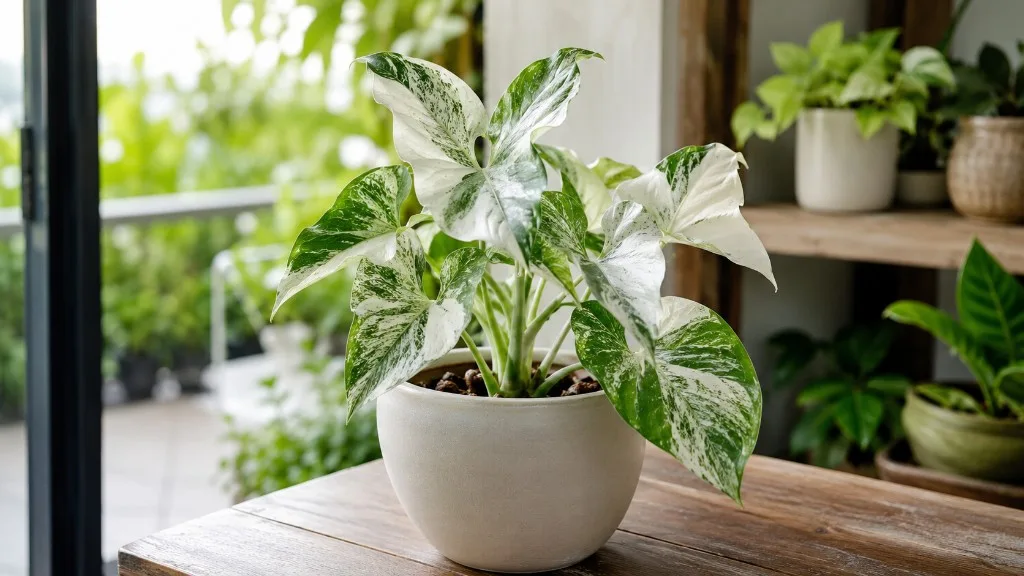
Syngonium Albo is prone to 1 common issues - each link below is a plant-specific fix guide.
Syngonium Albo problems
Use the guides below to diagnose and fix common issues on Syngonium Albo. Each problem page explains why it happens on this species and what to do first.
Water when top inch of soil dries; variegated leaves are slightly more sensitive.
What light does Syngonium Albo need?
Syngonium Albo grows best in bright indirect light, medium indirect light.
Is Syngonium Albo toxic to pets?
Syngonium Albo is toxic to cats, dogs, rabbits, birds, horses, turtles, and tortoises. Keep out of reach of curious pets and choose pet-safe alternatives for accessible spots.
How do I propagate Syngonium Albo?
Propagate Syngonium Albo from healthy stem or root divisions during active growth.
What soil is best for Syngonium Albo?
Use well-draining aroid mix.
What humidity does Syngonium Albo need?
Syngonium Albo prefers moderate to high humidity (50–65%). Normal household humidity is usually fine.
When should I repot Syngonium Albo?
Repot Syngonium Albo when roots circle the pot or growth slows despite good care.
How this Syngonium Albo problems guide is reviewed?
Written by Sai AnanthLead content writer at LeafyPixels. B.Pharmacy graduate from Andhra University with a background in pharmacognosy, turned indoor gardening writer after a long-time plant hobby became a research-led resource for home growers.View Sai Ananth's profile · Reviewed by LeafyPixels Review Board · Updated March 24, 2026
This Syngonium Albo problems problem guide was researched and written by Sai AnanthLead content writer at LeafyPixels. B.Pharmacy graduate from Andhra University with a background in pharmacognosy, turned indoor gardening writer after a long-time plant hobby became a research-led resource for home growers.View Sai Ananth's profile. Problems symptoms on Syngonium Albo, lookalike causes, and step-by-step fixes are cross-checked against extension pest, disease, and care references before publication.
We prioritize sources that hold up under scrutiny:
University cooperative extension bulletins and fact sheets (Penn State, Clemson, UMD, NC State, and similar programs)
Botanical garden and horticultural society publications
Peer-reviewed plant science and veterinary toxicology references where pet safety matters (including ASPCA Animal Poison Control)
Established reference works on indoor plant culture
The LeafyPixels editorial team then reviews the draft for clarity, step-by-step usefulness, and fit with real apartment and home conditions-not ideal greenhouse setups. When guidance changes materially, we update the page and note the revision date.