How to Prune Syngonium Albo: When, Where, and What to Cut
How to Prune Syngonium Albo: When, Where, and What to Cut
How to Prune Syngonium Albo: When, Where, and What to Cut
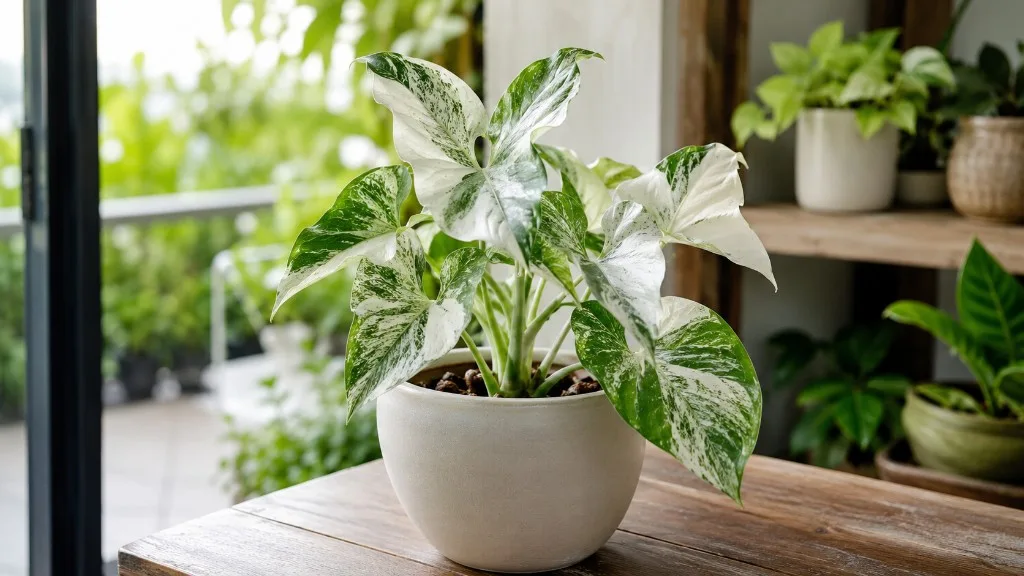
Syngonium Albo pruning is less about generic tidying and more about protecting white variegation before green growth takes over. Syngonium podophyllum ‘Albo Variegatum’ is a fast aroid vine whose chimeric variegation can shift toward all-green leaves when light is weak or green tissue outcompetes white cells at the growing tip. Pruning redirects growth to nodes that still carry variegation, keeps juvenile arrowhead leaves compact on a tabletop, or manages long runners on a moss pole. NC State Extension notes that arrowhead vine shifts from shrubby juvenile form to vining adult leaves unless stems are cut back-Albo follows the same architecture with extra stakes tied to every cut.
Quick Answer
First, with clean sharp scissors, remove dead, damaged, or diseased leaves at the petiole base. Then cut out any fully reverted all-green stems back to the last node where white variegation still shows in the stem tissue-not just on the leaf above it. After that, pinch soft growing tips for a bushy compact plant, or cut long bare vines 6–10 mm above lower nodes to fill out leggy pots. Prune heavily only during active growth, never remove more than one-third of healthy foliage in one session, and keep the plant in Syngonium Albo light guide afterward so new leaves retain white patterning.
What Pruning Does for Syngonium Albo
Pruning on this cultivar serves four jobs that overlap but are not interchangeable. Reversion control removes green-only growth that photosynthesizes faster than variegated tissue and can dominate the plant over time. Shape control decides whether you keep arrow-shaped juvenile leaves in a dense mound or allow mature lobed leaves on a climbing vine. Size control shortens runners that have outgrown shelves or poles. Cleanup removes yellow, brown, or pest-damaged tissue so the plant stops spending energy on failing leaves.
What pruning cannot do is recreate variegation on a node that has already lost its white cell population, fix chronic overwatering, or replace the bright indirect light this cultivar needs to hold pattern after a cut. Clemson HGIC recommends pinching arrowhead vine to maintain bushy indoor form-that same pinching is the main maintenance for Albo tabletop displays, with reversion cuts layered on top.
What to Check Before You Cut
Walk the vine slowly before opening scissors. On each stem section, note four things: leaf color pattern, stem stripe at the node, internode length, and overall plant stress.
Look at leaves from oldest to newest along each runner. One random green leaf on an otherwise variegated stem is not automatic reversion-Albo variegation ebbs and flows leaf to leaf. A run of two or three consecutive solid green leaves on the same stem, especially with a solid green stem at the axillary bud, signals a growth point that will keep producing green tissue until you cut it back.
Check internodes. Long gaps between leaves mean the plant stretched in low light; node cutbacks help, but improving light after the cut matters as much as the cut itself. Feel the soil and inspect petiole bases. Yellow mushy stems or soil that stays wet for days mean root stress-trim Yellow Leaves on Syngonium Albo if needed, but delay heavy structural pruning until watering and drainage stabilize.
Mark candidate nodes with a loose tie if you plan several cuts from one long vine. Prioritize nodes where a white streak runs through or beneath the axillary bud-the stem stripe rule from propagation applies equally to maintenance pruning.
The First Cut to Make
Start with sanitation, not shape. Sterilize bypass snips or scissors with rubbing alcohol, put on gloves if sap irritates your skin, and remove only tissue that is clearly dead, brown, torn, or diseased. Cut yellow or brown leaves at the petiole base where the leaf stalk meets the stem. Do not pull them-clean cuts heal faster on aroids.
If you see an obvious all-green reverted runner with no white in the stem at its tip nodes, that is your second priority in the same first pass: trace it down to the highest node that still shows variegation in stem tissue and remove everything above that point in one clean cut 6–10 mm above the variegated node. Leave shape pinching and leggy-vine cutbacks for a second decision after you finish this inspection pass.
Removing Reverted Green Stems
Reversion is the defining pruning problem for Syngonium Albo. Because variegation is chimeric-two cell types sharing one plant-green sectors photosynthesize more efficiently. Under stress, especially insufficient light, the meristem at a node can shift toward green-dominant output. Once a stem section produces consecutive all-green leaves from a green bud, that growth point will not spontaneously produce white splashes again without cutting back to variegated tissue below.
How to Find the Last Variegated Node
Follow the reverted runner downward stem by stem. At each node, look at the stem stripe, not only the attached leaf. A leaf can still show white splashes while the bud below has already gone green-trust the stem over the leaf when they disagree.
Stop at the first node where white or cream variegation is visible in the stem tissue at or just below the axillary bud. Cut 6–10 mm above that node, angled slightly if you prefer, with a single snip through healthy green stem. The bud below the cut should still carry chimeric white cells. Remove the discarded green section entirely; do not compost it where pets might reach it.
If the entire visible vine above soil has reverted with no variegated nodes left, you may need to cut back to a variegated section near the base or take a variegated cutting from another plant-there is no node magic above soil that restores white tissue that is already gone.
What Reversion Pruning Cannot Guarantee
Cutting back to a variegated node is the most effective method growers use, but it is not a guarantee. Variegation stability depends on light, humidity, temperature, and the chimeric balance at that node. Ohio State BYGL explains that chimeric variegation is inherently less stable than fixed genetic patterning. After a reversion cut, maintain bright indirect light-not direct sun that burns white sectors-and monitor the next two or three leaves closely. Promptly remove any new green-only runners before they elongate.
Pinching and Node Cutbacks for Shape
Once reversion and damage are handled, choose a display goal. Albo can stay a compact variegated mound or climb into mature lobed leaves on a support-the pruning path differs.
Compact Tabletop Form
For a bushy arrowhead look, pinch the soft terminal bud and top leaf pair every two to four weeks during spring and summer active growth. Pinching is lighter than a hard cutback: squeeze or snip the very tip where new leaves unfold. Each pinch activates lateral buds at lower nodes, keeping juvenile arrow-shaped leaves with white splashes. NC State Extension states that cutting developing stems retains arrowhead foliage instead of vining adult form-pinching does that continuously on Albo.
Without regular pinching, Albo becomes a long lean vine within one growing season-fine on a pole, awkward on a desk.
Leggy Vines and Bare Internodes
When stems elongate with empty internodes between leaves, cut each long runner 6–10 mm above a lower node that still shows good variegation in stem tissue. One cut per stem is enough to start; wait for side shoots before cutting again on the same runner. Multiple stems cut at different heights produce a fuller pot faster than one low stump.
Pair cutbacks with medium to bright indirect light. Low light after pruning produces weak stretched regrowth that skews green even from variegated nodes.
Climbing Display on a Moss Pole
On a trellis or moss pole, allow mature lobed leaves if you prefer that look. Prune only damaged leaves, runners that exceed the support, or reverted green sections. Hard topping a mature climber can temporarily reset some juvenile growth near cut points-that is acceptable if you want smaller arrowhead leaves again for a season.
Where to Cut and What to Avoid
Always cut just above a node-the slightly swollen joint where a leaf attaches, aerial roots may emerge, and the axillary bud sits. UF/IFAS describes Syngonium propagation from nodal cuttings because meristematic tissue at the node drives new shoots and roots. The cut belongs 6–10 mm above the node, never through the middle of a bare internode.
Do not cut:
- Mid-internode on stem with no node below the cut-nothing useful sprouts
- Ghost leaves that are more than roughly 70 percent white unless the stem below is healthy and variegated-heavy white leaves root and recover poorly if you propagate them, and removing too many at once stresses the plant
- Healthy variegated growth during winter dormancy unless removing reversion that is actively spreading
- Into mushy brown stems from rot-trace rot downward until tissue is firm, or address root conditions first
How Much You Can Safely Remove
Cap routine pruning at one-third of healthy foliage per session. Syngonium Albo grows quickly in warm humid bright conditions and can tolerate staged renovation over several weeks better than one aggressive winter chop. Reversion removal is an exception in urgency-if a green runner is overtaking the pot, remove it promptly even if that pushes past one-third on a small plant, because green tissue competes faster than variegated tissue left in place.
After a heavy session, expect a sparse look for two to four weeks before lateral shoots fill in. That is normal; repeated hard cuts every few days is not.
When to Prune Syngonium Albo
Active growth season-spring through summer-is best for pinching, structural cutbacks, and reversion removal you expect to regrow quickly. Missouri Botanical Garden lists Syngonium as a fast-growing tropical houseplant that responds to regular maintenance indoors.
Anytime is fine for dead, brown, or clearly damaged leaves at the petiole base.
Avoid heavy pruning when the plant is waterlogged, recently repotted, pest-stressed, or sitting in dim light you cannot improve soon. Fix the underlying condition first; otherwise new growth after the cut will skew green and leggy regardless of node choice.
Tools, Sanitation, and Handling Precautions
Use sharp bypass pruners or scissors small enough to cut cleanly above nodes without crushing stem tissue. Wipe blades with 70% isopropyl alcohol between plants and after cutting diseased tissue, following Iowa State Extension guidance on sanitizing pruning tools.
Syngonium Albo contains calcium oxalate crystals and is toxic to cats and dogs per the ASPCA. Wear gloves if sap irritates your skin. Bag and discard cuttings where pets and children cannot chew them. Wash hands after handling cut tissue.
Using Pruning Cuttings
Trimmed node sections with variegation in the stem stripe root readily in water or moist sphagnum-the same anatomy that makes nodal cuts work for shaping makes them viable propagations. Choose nodes with balanced variegation (roughly 25–40 percent or more white on the leaf) rather than ghost leaves. Plant rooted cuttings around the parent base for immediate bushiness while pinching continues above.
Only propagate from nodes you would keep on the parent plant. Green reverted sections root into green Syngonium, not Albo.
Aftercare and Recovery Timeline
After pruning, return the plant to bright indirect light and consistent care without changing everything at once. Water when the top inch of soil dries-the same rhythm as before the cut. Hold fertilizer for two to three weeks after a major session so the plant directs energy to new shoots rather than forced top growth.
Expect new side shoots two to four weeks during active season in warm conditions with adequate humidity (50–65%). Variegation on the first new leaf reflects current light and node quality-watch it closely before the second cut.
Signs Pruning Worked-or Went Too Far
Pruning worked when lateral buds break within a few weeks, new leaves show white patterning matching the node you cut above, reverted green runners stop extending, and the plant looks denser or better aligned with your display goal.
Pruning went too far or was badly timed when the plant stalls with no new growth for six or more weeks in warm season, remaining leaves wilt despite moist soil (possible root damage from concurrent stress), new growth is uniformly green and stretched despite bright light, or white sectors on new leaves brown from direct sun after a hard cutback.
Mistakes to Avoid
Ignoring reversion lets green stems dominate an expensive cultivar within a few months. Trusting a variegated leaf on a green stem wastes the cut-you needed the node below. Never pinching guarantees a leggy vine regardless of pot size. Mid-internode cuts leave dead stubs with no branching. Pruning without improving light produces green regrowth even from good nodes. Removing too many ghost leaves at once strips photosynthetic capacity the plant needs to recover.
When Not to Prune
Skip heavy structural work when soil stays wet and leaves yellow from overwatering, when you just repotted within the last two weeks, during active pest infestation until treatment stabilizes, or when you cannot move the plant out of deep shade for the months following the cut. Light correction often precedes successful Albo pruning more than owners expect.
Conclusion
Syngonium Albo pruning starts with clean removal of dead tissue and reverted green stems cut back to the last variegated node, then moves to pinching for compact arrowhead foliage or node cutbacks for leggy vines. Match intensity to tabletop or climbing goals, stay within the one-third rule for routine shaping, root variegated trimmings for fuller pots, and keep bright indirect light steady afterward. Scissors choose the shape; light and node quality decide whether white variegation returns on the next leaf.
When to use this page vs other Syngonium Albo guides
- Syngonium Albo overview - Start here for whole-plant context before deep-diving this topic.
- Syngonium Albo problems hub - Jump to symptom-specific fix guides when this care topic does not resolve the issue.