Syngonium Albo Watering: Schedule, Checks & Mistakes
Syngonium Albo Watering: Schedule, Checks & Mistakes
Syngonium Albo Watering: Schedule, Checks & Mistakes
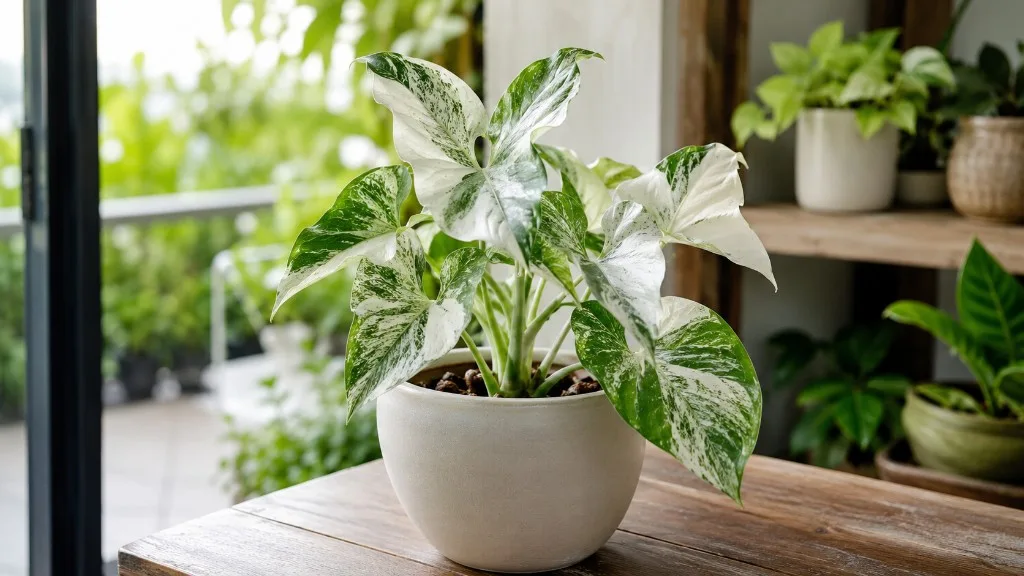
Syngonium albo watering is one of those topics that sounds straightforward until you own the plant. Syngonium podophyllum ‘Albo Variegatum’ - the white-splashed arrowhead vine collectors pay premium prices for - wants steady moisture at the roots without ever sitting in stale, oxygen-poor soil. That balance is easy to describe and hard to execute because the same drooping leaf posture can mean the plant is drowning or gasping for a drink. The difference lives in the root zone, not in how sad the foliage looks from across the room. Once you learn to read dry-down speed in your specific pot, your Syngonium Albo stops being a guessing game and becomes a predictable tropical aroid that rewards consistent checks with clean variegation and firm new growth.
What Makes Syngonium Albo Watering Tricky
The central frustration with Syngonium Albo watering is that calendar schedules fail almost immediately. A plant on a bright east-facing sill in a four-inch nursery pot may need water every three to four days during active growth, while an identical specimen in a dim hallway corner might take twelve days to reach the same dryness threshold in winter. Light intensity, pot volume, mix chunkiness, ambient humidity, room temperature, and whether the plant is pushing new leaves all change how fast water leaves the container. Watering every Tuesday because an app told you to is how healthy roots turn anaerobic while the grower wonders why lower leaves keep yellowing.
Authoritative houseplant references converge on a practical rule rather than a fixed interval. The Spruce’s Syngonium albo care guide recommends checking soil frequently and watering when the top two inches feel dry, while warning that drooping leaves can signal both over- and underwatering. That overlap is not a flaw in the advice - it reflects real plant biology. Syngonium species produce adventitious roots along their stems and depend on air pockets in the mix as much as on water itself. When soil stays wet too long, those air spaces collapse, rot fungi gain ground, and damaged roots cannot move water even though the mix is saturated. The plant wilts on wet soil, and the instinctive fix - another drink - makes everything worse.
Variegation adds another layer. White sectors on Albo leaves carry far less chlorophyll than green tissue, which means the plant has less photosynthetic capacity per square inch of leaf. It does not need more water to compensate, but it does show stress from inconsistent moisture sooner than a solid-green arrowhead vine. Collectors who treat a rare variegated plant like a moisture-loving fern often keep the mix soggy to “protect” the white patches, then lose nodes to rot from the base up. The goal is a repeatable dry-down cycle you can recognize in your home - light pot, dry probe, firm leaves - not a date on a calendar or a vague promise to keep things “moist.”
How Often Should You Water Syngonium Albo
How often to water Syngonium Albo depends entirely on how fast your specific container dries, not on a universal interval printed on a care tag. In active growth with Syngonium Albo light guide, moderate humidity around 50 to 65 percent, and a well-draining aroid mix, many indoor growers land somewhere between every four to seven days in warm months and every ten to fourteen days when light and temperatures drop. Those ranges are starting points for observation, not commandments. A small pot under strong filtered light may need water every three days. A recently repotted plant in an oversized container may go two weeks between full soaks while roots explore fresh mix. The only reliable frequency is the one you derive after two or three weeks of checking the same plant at the same time of day.
What “lightly moist” means in practice is a partial dry-down, not constant dampness from surface to bottom. After a thorough watering, the mix should hold usable moisture in the lower and middle zones while the surface dries within a day or two. By the time the top inch feels dry to touch, the root ball still has reserves below - that is the sweet spot Syngonium Albo prefers. If you water again before the upper layer dries, you are likely overdoing it. If the entire profile goes dust-dry and the pot feels feather-light repeatedly, underwatering is killing fine root hairs and stressing variegated tissue that cannot afford much downtime.
Spring and Summer Watering Rhythm
From late spring through early fall, Syngonium Albo typically grows steadily when light and temperatures cooperate. New leaves unfurl, internodes extend, and water moves from mix to foliage faster than in the dormant half of the year. During this window, check moisture every two to three days rather than assuming a fixed interval. Warm rooms, air conditioning that strips humidity, and sudden outdoor heat spikes all shift the rhythm week to week. A practical habit that works well: pick a consistent check time - morning is ideal before transpiration peaks - and note how many days pass between a full watering and the next “top inch dry” signal. After ten days of notes, you will know Syngonium Albo overview’s real summer cadence in your room, which is far more useful than any generic blog schedule.
Active growth also raises the cost of underwatering. A drought-stressed Syngonium Albo may stall unfurling, curl leaf margins inward, or produce smaller new leaves with reduced white variegation. One missed watering after a proper dry-down rarely kills the plant, but repeated dry cycles compound because fine root hairs die off and the plant must rebuild them before it can use the next drink efficiently. In summer, err slightly toward checking one day early rather than one day late - but only if the top layer is actually dry. Adding water to moist mix “just in case” is still overwatering, even during peak growth season.
Fall and Winter Watering Adjustments
In cooler, darker months, Syngonium Albo slows. Growth may continue at a reduced pace indoors, but water use drops sharply - and this is when calendar watering does the most damage. A pot that needed water every five days in July might need fourteen to twenty-one days in January if it sits away from supplemental light. Winter watering should be conservative: verify dryness deeper than the surface, feel pot weight, and stretch intervals until you see clear new growth resuming in spring. The Missouri Botanical Garden recommends reducing watering from fall to late winter for Syngonium podophyllum when growth slows. Cold drafts near windows can slow evaporation on the side facing the glass while the rest of the room dries normally, creating uneven moisture pockets that surface color alone will not reveal.
If you heat with dry forced air, leaf tips may brown even when watering is technically correct - a humidity issue, not a cue to pour more. Adjust humidity first and keep winter watering tied to dry-down tests, not leaf tip appearance alone.
Reading Soil Moisture Before Every Watering
The best Syngonium Albo soil moisture check combines three signals: touch at depth, the visual weight of the pot, and plant posture read in context. No single method is enough because peat-heavy mixes can look dry on top while staying wet below, and plastic pots can feel light when only the upper layer has dried while the core remains moist. Used together, these checks build a reliable picture within seconds and prevent most root-zone mistakes before they start.
Before you water, confirm:
- The top 1 to 2 inches of mix feel dry to a knuckle-deep finger test or a dry wooden skewer
- The pot feels noticeably lighter than it did right after the last full watering
- Leaves are not wilting on obviously wet, cool soil - which points to overwatering, not thirst
- No sour smell rises from the drainage hole or surface, which signals anaerobic conditions may already exist
If the top is dry but the pot still feels heavy and cool at the base, wait. If the top is dry, the pot is light, and lower leaves are soft or droopy, water thoroughly. This four-point check takes less time than debating whether today is “watering day” and catches the wet-soil wilt scenario that confuses beginners most.
Touch, Weight, and Probe Methods
The finger test remains the fastest tool available. Insert your finger to the second knuckle - roughly two inches in a standard four- to six-inch pot. Dry, loose, warm-feeling mix at that depth means the upper profile has released enough moisture to warrant a full soak. If the surface is dry but your finger meets cool, clinging mix below, the plant is not ready. A wooden skewer or chopstick left in the pot for ten minutes gives the same information without dirty fingers - pull it out and look for dark water marks along the wood. Mark the skewer at your usual test depth so you probe consistently each time.
Pot-weight testing is the skill that separates experienced growers from guessers. Lift the pot right after a thorough watering and notice the heft - memorize that weight if you can. Lift it again at check time. A substantial drop means much of the available water has left the profile. With practice, you can skip the finger test on familiar containers because your hands learn the “dry enough” weight. This is especially useful for cachepots where you cannot easily see the mix surface. Always lift from the grow pot, not the decorative outer shell, because water trapped between pots changes the reading entirely.
Moisture Meters: Useful Tool or False Confidence
A moisture meter can help beginners who are still learning tactile cues, especially in deep pots where finger reach is limited. Slide the probe midway between the stem and pot wall, read the dial, and water only when the meter indicates the upper-to-mid zone has moved toward dry - typically the lower half of the “moist” band or into “dry” depending on the device. Meters mislead when salts build up in the mix, when the probe sits too close to a recent watering line, or when cheap sensors give false wet readings in chunky bark. Rinse probes between uses, test in two locations, and treat the meter as confirmation of what your finger and pot weight already suggest - not as the sole authority on whether to water.
What Lightly Moist Actually Means for Aroids
Consistent moisture for Syngonium Albo means the root zone cycles through wet, then evenly moist, then approaching dry at the top, then back to wet again after a full soak. It does not mean the soil never dries and it does not mean the plant sits in a perpetual swamp. Aroids in nature grow in porous, organic forest layers that hold humidity while draining freely after rain. Your indoor goal is to mimic that rhythm in a container: a full drink, free drainage, then enough air re-entering the mix before the next soak.
Well-draining aroid mix - typically peat or coco coir blended with perlite and orchid bark - supports this cycle by keeping macro-pores open. Heavy, all-purpose potting soil compacts after repeated top watering, collapses those air pockets, and turns “lightly moist” into “dangerously wet at the center.” If your Syngonium Albo dries unevenly or stays heavy for a week after watering, the mix or pot geometry is probably fighting you more than your schedule is. Watering technique cannot fully compensate for soil that holds stale moisture against the roots, which is why pairing correct watering with an appropriate aroid blend matters as much as the interval between drinks.
Step-by-Step: Watering Syngonium Albo Correctly
Correct Syngonium Albo watering is a full soak followed by complete drainage, using room-temperature water that will not shock roots. Partial sips - a cup of water every few days - keep the upper layer damp while the lower profile alternates between too wet and too dry, encouraging weak, shallow rooting and fungus gnat breeding at the surface. One thorough watering that reaches the entire root ball, followed by a true dry-down, produces stronger roots and more stable variegated foliage over time.
Step-by-step:
- Confirm dryness with finger, skewer, or pot-weight check at the top 1 to 2 inches
- Water slowly until you see steady runoff from drainage holes - usually after a few passes around the soil surface
- Let the pot sit for five to ten minutes so water redistributes, then water once more if the surface absorbed quickly and no runoff appeared the first time
- Empty the saucer or cachepot so the plant is never standing in pooled water for more than thirty minutes
- Resume checking only after the top inch dries; do not top up because leaves look soft on still-moist soil
Use plain tap water if your household supply is moderate in minerals. Very hard water may warrant filtered or rainwater over time, but fixing dry-down rhythm comes first.
Top-Watering vs Bottom-Watering
Top-watering is the default method most growers should use because it flushes salts downward, oxygenates the upper profile, and lets you see how fast the mix accepts water. If water pools on the surface for more than a few seconds, the mix may be hydrophobic or compacted - a soil problem, not a reason to pour faster. Bottom-watering - setting the grow pot in a tray of water for twenty to thirty minutes until the surface darkens - can help seedlings, freshly rooted cuttings, or plants with dense top growth that is hard to reach. For established Syngonium Albo, occasional bottom-watering is fine, but relying on it exclusively lets salts accumulate in the upper layer where evaporation concentrates minerals. If you bottom-water regularly, top-water fully every fourth cycle to leach salts. Always drain completely afterward and never leave the pot floating in a full tray overnight.
Recognizing Overwatered Syngonium Albo
Syngonium Albo overwatering is more common than underwatering in indoor settings, especially when a beautiful variegated plant lives in low light, a pot without drainage, or a decorative cachepot that hides standing water. Overwatering is not only frequency - it is any condition that keeps roots oxygen-starved for extended periods.
Watch for these signs:
- Yellowing leaves, often starting with older lower foliage while the stem base stays dark and soft
- Wilting or drooping on wet soil - leaves sag even though you watered recently
- Soft, mushy stems at or below the soil line, sometimes with a collapsed crown
- Sour or musty smell from the mix or drainage hole
- Persistent fungus gnats breeding in a constantly damp surface layer
- No new growth for weeks while soil stays cool and heavy to the touch
Variegated leaves may also brown at the white sections when roots fail. If multiple overwatering signs appear together, stop watering, inspect roots if stems are soft or the mix smells sour, trim decay with sterile tools, and repot into fresh mix when needed.
Signs Your Syngonium Albo Is Too Dry
Syngonium Albo underwatering shows a different pattern than overwatering, and learning to distinguish the two saves expensive variegated plants from well-intentioned mistakes. The mix is light, the surface may pull away from the pot wall, and leaves lose turgor - they feel thin and droop with a dry, papery rustle when you touch them. Margins may curl inward, new leaves stall half-unfurled, and growth pauses because the plant cannot maintain cell pressure without adequate root-zone moisture. One dry episode after a proper dry-down is normal and recoverable with a single thorough soak. Chronic underwatering shrinks the root system and makes the plant react badly when water finally returns, sometimes losing leaves in what looks like shock.
Dry stress hits variegated Syngonium harder because white sections already carry less chlorophyll per square inch. The plant may prioritize green tissue and produce smaller new leaves with reduced white patterning until conditions stabilize. If you see drought signs, water thoroughly once, drain fully, and then reset your check rhythm. Do not compensate with daily small cups - that pattern alternates drought and partial wet without ever fully rehydrating the root ball. Distinguish underwatering from low humidity: dry air causes tip crisping on otherwise firm leaves with normal soil moisture, while underwatering causes whole-leaf limpness and dry mix throughout the profile. Check the pot before you mist or haul out a humidifier.
Why Variegated Leaves React Faster to Water Mistakes
The white sectors on Syngonium Albo leaves contain far less chlorophyll than the green areas. Less photosynthetic tissue means the plant cannot produce energy as efficiently per leaf, which influences how it tolerates moisture stress in both directions. Variegated leaves are slightly more sensitive to drought and to the uneven water delivery that follows root damage, and watering mistakes show on them first. You may see brown crispy patches on white sections after uneven soil moisture or after the plant sits too dry while trying to support high-variegation new growth.
This does not mean Syngonium Albo needs constantly wet soil to “protect” the white. Soggy mix rots roots and kills variegation from the bottom up - Yellow Leaves on Syngonium Albo, lost nodes, and reversion to green as the plant survives. The correct response is disciplined dry-down testing and stable humidity in the 50 to 65 percent range, not more frequent shallow watering. High-variegation cuttings and juvenile plants with more white than green are the specimens that punish inconsistent rhythm most visibly. Treat them with tighter check intervals while still honoring the top-inch-dry rule.
How Pot Size, Soil Mix, and Drainage Change Dry-Down
Container geometry and Syngonium Albo drainage setup change dry-down speed more than most care labels admit. A deep, narrow pot dries differently from a shallow wide bowl. An oversized pot holds a large volume of mix that stays wet in the center while the top looks ready - a classic setup for root rot in a newly repotted Albo. A pot only slightly larger than the root ball dries evenly and gives you honest feedback at the surface. Chunky aroid mix with perlite and bark dries faster and breathes better than straight peat or dense indoor potting soil. If your dry-down takes longer than two weeks in active growth, investigate mix composition before blaming the plant or your instincts.
Drainage holes are non-negotiable for long-term indoor care. Glazed ceramic and plastic retain moisture longer than terracotta, which wicks water through its walls - useful for growers who tend to overwater, though terracotta can dry too fast in peak summer heat. Illinois Extension notes that containers with drainage holes are essential for proper container watering.
Cachepots, Saucers, and Standing Water
A cachepot looks polished and causes silent rot when used incorrectly. If the grow pot sits inside a decorative outer pot with no drainage, every watering must include lifting the inner pot out, watering at the sink, draining until runoff stops, and only then sliding it back. Water that collects in the outer shell is the same as leaving a saucer full - roots do not distinguish between “pretty pot water” and “accidental flood.” Empty saucers within thirty minutes of every watering, as recommended by established care sources including The Spruce for preventing stem and root rot. If you forget once, assume the bottom inch of mix is wetter than the top suggests and delay the next check accordingly.
Adjusting Water for Light, Heat, and Humidity
Seasonal shifts are not subtle for container plants, but they are also not uniform across every home. When days lengthen and indoor temperatures rise, Syngonium Albo resumes or accelerates growth and transpiration. When autumn light drops and heating systems dry or cool the air unevenly, water use falls. Your job is to track the plant, not the month on the calendar. Environmental factors that speed drying include bright indirect light, warm temperatures between 18 and 27°C (65 and 80°F), low ambient humidity, small pot volume, terracotta, and active new growth. Factors that slow drying include dim corners, oversized pots, plastic containers, high ambient humidity, compacted mix, and post-repot root recovery.
Air conditioning and heating vents can desiccate leaves while leaving soil wet longer on the side away from airflow. Rotate the pot weekly for even growth and more honest moisture readings. Misting leaves does not substitute for checking the soil before you pour.
Watering After Syngonium Albo repotting guide, Propagation, and Stress
Freshly repotted Syngonium Albo needs an adjusted rhythm for the first few weeks. New mix often holds moisture differently than old, degraded peat, and disturbed roots absorb water less efficiently during recovery. Water once thoroughly after repotting, drain well, then wait until the top inch dries before the next full soak - even if leaves look slightly soft from transplant shock. Do not drown a stressed root system to “help” it settle. Bright indirect light and stable temperatures do more for recovery than extra water ever will.
Propagated cuttings need consistent root-zone moisture without saturation. Rooted water cuttings moved to soil need extra attention for the first month because water roots are fragile in mix. After shipping, feel pot weight before watering - a wilted arrival with dry mix needs one soak; a moist arrival in a warm box does not.
Fixing the Most Common Watering Errors
The same mistakes appear repeatedly on collector forums, and most are preventable with better diagnostics before decline sets in. Calendar watering without checking, standing runoff in saucers, dense mix in low light, watering every droop without touching soil, daily sips instead of full soaks, oversized pots after repotting, and adding water when leaf tips crisp in dry air - each has a clear fix tied to dry-down testing, drainage, chunkier mix, or humidity instead of more pours.
If problems persist after correcting watering, look next at light and mix before stacking fertilizer or repeated repotting. Syngonium Albo declines rarely from a single missed watering, but they decline quickly when wet roots meet dim light and compacted soil - a triangle worth checking whenever leaves yellow without an obvious pest. For pet households, Syngonium species contain calcium oxalate crystals and are toxic if chewed, according to the ASPCA. Watering correctly does not change that risk; keep plants out of reach of cats and dogs that explore pots and spilled saucer water.
Conclusion
Syngonium albo watering succeeds when you treat moisture as a cycle to read, not a routine to repeat blindly. Water when the top 1 to 2 inches of mix dry, confirmed by pot weight and - when needed - a skewer or moisture meter. Soak thoroughly, drain completely, and never let the plant stand in leftover runoff. In active growth, checks every few days keep pace with faster dry-down; in winter or low light, stretch intervals and trust the soil over the calendar. Variegated leaves demand consistency more than extra water - soggy roots destroy white sectors from the bottom up, while chronic drought shrinks new growth and fades the pattern you bought the plant for.
Build a two-week habit of lifting the pot, noting how many days pass between waterings, and pairing leaf posture with actual soil moisture. That calibration outlasts any generic schedule and catches overwatering before stems go soft. If yellowing, sour smell, or wet-soil wilt appears, stop watering, inspect roots, and fix mix and drainage before resuming. If dry, light pots and limp leaves appear, rehydrate once fully and reset your rhythm. Syngonium Albo is not a dry succulent and not a bog plant - it is an aroid that wants air at the roots and water on a steady, observable clock only you can see in your own room.
When to use this page vs other Syngonium Albo guides
- Syngonium Albo overview - Start here for whole-plant context before deep-diving this topic.
- Syngonium Albo problems hub - Jump to symptom-specific fix guides when this care topic does not resolve the issue.