Syngonium Albo Repotting: When, How & Mistakes
Syngonium Albo Repotting: When, How & Mistakes
Syngonium Albo Repotting: When, How & Mistakes
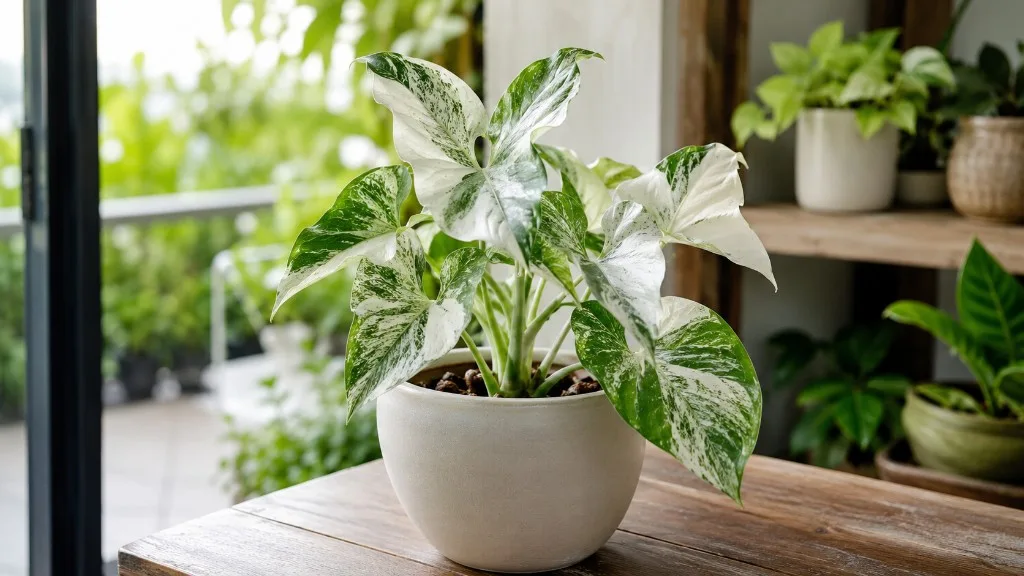
A Syngonium albo that wilts for weeks after a pot change, sheds variegated leaves, or pushes only solid-green growth is usually not a difficult plant. It is a plant that was repotted at the wrong moment, into a container that held too much wet mix around a modest root system, or with more root disturbance than its fibrous aroid roots could absorb. Syngonium podophyllum ‘Albo Variegatum’-the variegated arrowhead vine collectors prize for its creamy white splashes on arrow-shaped foliage-is a fast-growing tropical aroid from Central and South America that wants an airy, well-draining mix, a pot only one size larger, and a spring repotting window that respects its active growth rhythm. Get those variables right and the same plant that looked stressed after transplant will push a new variegated leaf within three to four weeks and resume climbing cleanly up its moss pole.
This guide covers every decision that matters: when repotting is actually necessary versus when patience is the better call, the spring timing that protects variegation, how to choose a container one size up with working drainage, the aroid blend that keeps oxygen moving through the root zone, the step-by-step procedure for plants on moss poles and in standard pots, and the post-repot care that determines whether the plant recovers without losing its white patterning. Guidance is grounded in botanical references and extension sources including the Missouri Botanical Garden, UF/IFAS Syngonium cultural guidelines, and ASPCA toxic plant data.
If symptoms persist, see the Yellow Leaves on Syngonium Albo guide.
Why Syngonium Albo Repotting Needs Aroid-Specific Thinking
Most people treat Syngonium albo like a generic foliage houseplant: any bag of indoor potting mix, any pot that looks proportional to the leaves, and a repot whenever the calendar turns. That approach works until it does not-usually when the white-variegated leaves yellow from chronic wet feet, growth stalls in a pot three sizes too large, or a moss pole transfer snaps aerial roots that took months to establish. Syngonium albo is an aroid, a member of the Araceae family that shares root-zone biology with philodendrons and monsteras rather than with moisture-loving ferns or drought-tolerant succulents.
In the wild, Syngonium species climb tree trunks in humid rainforest understories, anchoring with aerial roots while their main root mass sits in a thin layer of decaying leaf litter and bark debris. Rain arrives, soaks the organic debris briefly, then the substrate dries as air moves through the canopy. Indoors, the closest analogue is a chunky aroid mix in a container with drainage holes-not a deep bed of fine peat that stays saturated for a week after every watering. Repotting is your chance to refresh that root environment before decomposition, salt buildup, or compaction quietly undermines the variegation you bought the plant for.
Syngonium podophyllum ‘Albo Variegatum’ Growth Habits
Syngonium podophyllum is a vigorous climber that transitions through distinct growth phases as it matures. Juvenile plants produce compact, arrowhead-shaped leaves close to the soil. As the vine climbs-with or without a moss pole-the foliage often develops more lobed, sometimes almost hand-shaped mature forms on longer internodes. Missouri Botanical Garden notes that mature Syngonium podophyllum leaves become pedate with multiple leaflets, and the species thrives in Syngonium Albo light guide with well-draining soil and a structure to climb. That last point matters at repotting time: many specimens are already tied to a moss pole, and the repot procedure must account for the support structure rather than treating the plant as a self-supporting rosette.
The root system matches the growth rate. Young Syngonium albo plants in active growth can fill a container within 12 to 18 months in warm, bright conditions - Missouri Botanical Garden notes that Syngonium podophyllum typically grows 3 to 6 feet as a climbing vine when given support. Mature specimens that are regularly pruned or kept slightly root-bound may go two to three years between full repots. The roots are fibrous, white when healthy, and relatively forgiving compared to slower aroids-but they still require oxygen at the root zone, and they recover faster from repotting when disturbed minimally in warm, bright conditions.
How Variegation Changes Water and Recovery Demands
The white and cream sectors on Syngonium albo leaves are not decorative paint. They are chimeric variegation-sectors of tissue that lack functional chlorophyll and cannot photosynthesize. The green portions of each leaf carry the full metabolic load for that leaf’s water regulation and energy production. That imbalance has two practical consequences at repotting time.
First, variegated syngoniums are slightly less forgiving of the water stress that follows root disturbance. A fully green Syngonium podophyllum can tolerate a day or two of slight wilting after repotting with less visible damage. An albo may show creased or browned white sectors when the root system cannot replace water lost through transpiration, because the reduced chlorophyll area already operates closer to its limit. Second, variegation stability depends on adequate light after repotting. Plants pushed into dim corners during recovery often respond by producing more green growth-a phenomenon called reversion-because the plant physiologically favors tissue that can photosynthesize efficiently. Ohio State University Extension explains that all-green reversion on variegated plants is often more vigorous than variegated tissue, and repotting recovery is a high-risk window for this shift if you reduce light to “help” a wilting plant.
None of this means Syngonium albo is fragile. It means your post-repot care should prioritize bright indirect light and conservative watering rather than shade and sympathy overwatering-the combination that protects neither roots nor variegation.
When to Repot Syngonium Albo: Signs You Actually Need It
Syngonium albo grows quickly enough that the pot can become the limiting factor within a year, but “fast grower” does not mean “repot on schedule regardless of symptoms.” The signs below are worth checking every spring, especially if your plant has not been repotted in 12 or more months.
Roots emerging from drainage holes in significant numbers. A single white root tip exploring a hole is normal curiosity. Several thick roots curling out of multiple holes, or a dense mat visible when you tilt the pot, means the container is functionally full.
Water runs straight through the pot within seconds. When the root mass displaces most of the soil volume, irrigation has nowhere to linger. The plant may wilt between waterings even though you are watering on schedule.
The mix dries out within one to two days of a thorough soak. Same underlying problem viewed from the other direction: too little functioning substrate for the root mass you have.
Growth has stalled during spring and summer. If no new leaves unfurl for several weeks, existing foliage looks smaller or less variegated than earlier growth, and light and feeding are otherwise reasonable, depleted or compacted mix may be the limit.
The aroid mix has broken down. Pull back the top layer. If the mix smells sour, looks like fine mud, or has collapsed into a dense brick that repels water on the surface while staying wet underneath, it is time for a full refresh regardless of how the leaves look.
Salt crust on the soil surface or leaf-tip burn despite careful watering. Mineral buildup from tap water and fertilizer accumulates over time. Repotting with fresh mix is more effective than repeatedly leaching a degraded substrate.
The plant is visibly unstable in a pot that once felt appropriate. A mature vine on a moss pole can become top-heavy. Some wobble is a staking issue, but if the root ball lifts easily and the pot feels oddly light right after watering, roots may have consumed the mix.
Root-Bound and Soil Breakdown Signals
Two signs deserve a closer look because growers misread them. Aerial roots along the stem are normal for climbing syngoniums in humid conditions. They are not, by themselves, a repotting trigger. Aerial roots become relevant when they thicken, darken, and appear extensively above the soil line while the plant also shows the drainage and fast-dry symptoms described above-suggesting the root system is searching for better substrate than what sits in the pot.
Yellowing lower leaves can indicate root congestion, but it can also mean inconsistent watering, low light, or natural senescence on a long vine. Do not repot solely because bottom leaves yellow unless you also see mix or root problems. Repotting itself pauses growth for two to four weeks; using leaf drop as the only trigger can create a cycle where you never let the plant settle.
The practical rule: plan a full repot when two or more of the structural signs above appear together-especially roots at drainage holes plus fast-dry mix, or stalled spring growth plus sour-smelling substrate.
When an Emergency Repot Cannot Wait for Spring
The ideal window is early to mid-spring when active growth resumes. Two situations override that schedule.
Active root rot. Soft, mushy stems at the soil line, a sour smell from the mix, or black, slimy roots when you probe the surface mean you need to unpot immediately, trim damaged tissue, and repot into fresh, barely moist aroid mix-regardless of season. Delaying lets rot climb the stem and destroy variegated growth points.
Severe overpotting in a sealed or non-draining container. If the plant sits in a decorative pot with no drainage hole, or a vessel so large that the mix never dries, treat it as an emergency. The seasonal ideal matters less than stopping chronic waterlogging.
Emergency repots in autumn or winter carry more risk because the plant is not in its active growth phase and the mix stays wet longer in cooler rooms. If you must repot off-season, use the smallest appropriate container, the chunkiest aroid mix you can manage, wait at least five to seven days before the first watering, and keep temperatures in the 60–80°F (15–26°C) range with bright indirect light.
Best Time of Year and How Often to Repot
The single most important timing rule for Syngonium albo: repot during active growth, not during dormancy. In most indoor environments, the best window opens in early to mid-spring-roughly March through May in the Northern Hemisphere-as the plant resumes vigorous growth after winter slowdown. The Spruce recommends repotting every other year or every third year depending on pruning and plant size, with spring as the practical season. Actively growing young specimens often need fresh mix every 12 to 18 months when roots circle drainage holes or water runs straight through depleted substrate.
Early summer can work as a backup if you missed spring, but finish any transplant by midsummer so the plant has months to rebuild roots before autumn light drops. Avoid routine repotting in the coldest part of winter when growth is minimal and wet mix lingers dangerously long in cool rooms.
Frequency: most young, vigorously growing Syngonium albo plants benefit from repotting every 12 to 18 months. Mature specimens that are pruned regularly or intentionally kept slightly snug may go two to three years between full repots. The spread reflects a real trade-off: slightly root-bound conditions can support compact growth, while fresh mix and modestly more room support larger variegated leaves and longer internodes. A plant that is thriving, producing well-variegated new growth, and draining normally can wait. A plant with degraded mix or roots circling the pot cannot.
Top-dressing versus full repot: in autumn or when a full repot feels unnecessary, scrape out the top 2–3 cm of degraded mix and replace it with fresh aroid blend. This is not a substitute for a full repot when roots have consumed the container, but it buys time and reduces salt buildup without the recovery pause of a complete transplant.
Choosing the Right Pot Size, Material, and Moss Pole Setup
Three decisions define the container: diameter, material, and whether the support structure transfers with the plant. For a climbing aroid whose vine and moss pole can tower over a modest root ball, these choices matter as much as the soil recipe.
The One-Size-Up Rule and Why Overpotting Causes Rot
When the plant has genuinely outgrown its container, move up only one pot size-about 1 to 2 inches (2.5 to 5 cm) wider in diameter than the current pot. The Spruce specifies one size larger or 2 inches wider in diameter. The reason is straightforward aroid physics: Syngonium albo roots are vigorous but not voluminous relative to the leafy vine above. A jump from a 6-inch pot to a 10-inch pot surrounds a modest root ball with a reservoir of wet mix it cannot colonize quickly. Oxygen at the root zone drops, decomposition accelerates, and fungal rot follows-often silently, until stems soften.
Depth is less critical than width for syngoniums, but extremely deep pots create the same overpotting problem at the bottom: a column of unused wet mix below a shallow root mass. Choose a standard nursery pot depth proportional to the root ball rather than a deep specimen container unless you are supporting a very tall moss pole that needs a wider base for stability.
Often the better move is same pot, fresh aroid mix. If roots have not circled the entire container but the substrate has degraded, remove the plant, trim only dead roots, discard all old mix, rinse the pot, and replant with entirely fresh blend. That refreshes nutrients and structure without sacrificing the establishment advantage of a familiar container size.
Whatever container you choose, verify the drainage hole is open-not plugged by a factory sticker or a layer of gravel. Skip the myth that gravel at the bottom “improves drainage.” It creates a perched water table that keeps the root zone wetter, not drier.
Plastic, Terracotta, Ceramic, and Drainage Requirements
Plastic nursery pots are the most common choice for Syngonium albo because they are light-important when you add a moss pole and a climbing vine-and they retain moisture slightly longer than terracotta, which suits many indoor humidity levels. The Spruce notes that plastic or ceramic pots work well for water retention when drainage holes are present.
Unglazed terracotta dries faster through porous walls. It is an excellent option if you tend to overwater or if your mix skews peat-heavy, but you may need to water more frequently and monitor white-variegated leaves for crisping at the edges during the post-repot recovery window.
Glazed ceramic behaves similarly to plastic: slower dry-down, acceptable with a drainage hole. Avoid ceramic cachepots that hold standing water at the bottom.
Moss pole transfer: if your Syngonium albo already climbs a moss pole, plan to move the pole with the plant rather than detaching the vine. Choose a new pot wide enough to seat the pole base securely-often the same width as the old pot or one size up. If the pole is too tall for the new setup, trim the pole bottom or replace it with a taller one during repot rather than after, when fresh roots are fragile. Use soft plant ties to hold the vine loosely to the pole after repotting; tight ties snap stems when the plant shifts.
The Best Aroid Mix for Syngonium Albo Repotting
Substrate is the variable that determines whether repotting succeeds or triggers rot within weeks. The target is a mix that holds moisture for several days but drains fast enough that the roots never sit in stagnant water. This is an aroid mix refresh, not a standard houseplant soil swap.
Why Standard Peat-Heavy Potting Soil Falls Short
Commercial indoor potting soil is formulated for a wide range of foliage plants and tends toward fine peat particles, compost, and moisture-retention additives. That structure works for many tropicals in moderate conditions, but it compacts over months of watering, reducing the air pockets aroid roots require. In a degraded peat-heavy mix, water lingers around the root zone, oxygen drops, and roots turn brown and mushy even when you believe you are watering “correctly.”
Straight cactus and succulent mix swings too far the other direction for most indoor syngoniums. It drains rapidly-sometimes a virtue-but often lacks the organic matter and water-holding capacity that Syngonium albo needs between waterings in heated, dehumidified rooms. The white sectors on variegated leaves are particularly prone to crisping when the root zone oscillates between bone-dry and briefly soaked.
A Practical DIY Blend and Same-Pot Refresh
A reliable starting blend for Syngonium albo repotting combines three components in roughly equal proportions, consistent with recommendations from The Spruce and experienced aroid growers:
- One-third high-quality peat-free potting mix or coco coir - supplies organic matter and slow moisture release
- One-third perlite or pumice - creates pore space and prevents compaction
- One-third orchid bark - mimics the epiphytic substrate and improves drainage
For plastic pots in humid climates, shift toward 30% potting mix, 35% perlite, 35% bark for extra drainage. For terracotta in dry indoor air, 40% potting mix, 25% perlite, 35% bark retains a little more moisture. A small handful of worm castings (roughly 5–10% of total volume) adds slow-release organic nutrition without replacing fertilizer long-term. Target pH in the 5.5–6.5 range suits Syngonium podophyllum.
Moisten the mix lightly before potting. Dry mixes repel water and create dry pockets around roots that stay dry through the first several waterings. The mix should feel like a wrung-out sponge, not mud.
For a same-pot refresh, remove the plant, discard all old mix, rinse the pot with hot water, and replant with entirely fresh substrate. Do not top-dress over degraded material when roots are already stressed. If you are treating root rot, rinse away all old mix from healthy roots and let trimmed surfaces air-dry for an hour before replanting in barely moist blend.
Step-by-Step: How to Repot Syngonium Albo With Minimal Shock
The procedure is straightforward once mix, container, and timing are settled. The highest-risk moments are pulling on fragile variegated stems, bare-rooting the plant, burying nodes too deep, and watering too soon afterward. Minimal root disturbance is the guiding principle throughout.
Preparing the Plant and Sliding It Out Safely
Water lightly one to two days before repotting, not the morning of the job. You want the root ball cohesive enough to hold together, but not saturated. Soggy mix smears onto roots and makes the plant heavier and harder to handle without gaining any advantage.
Gather a clean workspace, fresh aroid mix, the new container, sterilized scissors, and-if applicable-the moss pole you plan to transfer. Lay down newspaper or a tray because old mix will spill. If the plant is large, have a second person hold the moss pole upright during transfer, or lean the pole against a stable support so stems do not snap under their own weight.
Turn the pot on its side and slide the plant out by supporting the root ball, not yanking stems. Variegated syngonium stems snap cleanly at the base when forced. If the pot is stuck, squeeze flexible plastic sides or run a dull knife around the inner edge. Never pull the vine like a handle.
Root Inspection, Gentle Loosening, and Moss Pole Transfer
Once out, brush away loose old mix from the sides and bottom only. Healthy Syngonium albo roots are white to cream-colored and firm. Trim black, mushy, or foul-smelling roots with clean scissors back to healthy tissue. Do not prune healthy roots routinely-only remove dead, rotting, or hopelessly circling tissue at the very bottom.
If the root ball is a dense circle at the base, gently tease the outer layer apart with your fingers or a chopstick. No aggressive washing, bare-rooting, or shaking every particle of old mix free unless you are treating active rot. Keeping some original substrate around the root ball preserves fine root hairs that absorb water and reduces recovery time.
Add an inch or two of fresh aroid mix to the new container. If using a moss pole, seat the pole base first and hold it centered while you position the root ball. Set the plant so the base of the stems sits at the same depth as before-never bury aerial roots or nodes deeper than they originally grew. Leave roughly 1–2 cm of space between the mix surface and the pot rim for watering room.
Fill around the sides with mix, using a chopstick or pencil to settle substrate into gaps without compacting the center. Firm the surface lightly with fingertips and stop. The plant may wobble slightly until new roots anchor; that is normal. Re-tie the vine loosely to the moss pole with soft ties, leaving room for stems to thicken.
Post-Repotting Recovery: Watering, Light, and Feeding
The two to four weeks after repotting determine whether your work sticks. Syngonium albo forgives moderate mistakes, but it does not forgive wet mix on torn roots combined with dim light that encourages reversion.
Wait five to seven days before the first watering. Fine root hairs damaged during repotting need time to callus before they meet moisture. The stems and existing leaves store enough water to sustain the plant through this interval. When you resume, water thoroughly until excess runs from the drainage hole, then let the top 2–3 cm of mix dry before soaking again. During recovery, err slightly dry rather than wet. Overcompensating with extra water is one of the most common post-repot errors and shows up as limp stems and yellowing lower leaves within days.
Light: keep the plant in bright, indirect light for the first two weeks-an east-facing window, or a few feet back from a south or west window. Do not push a recovering albo into shade to “reduce stress”; that trade reduces photosynthetic capacity in the green leaf sectors and commonly triggers greener new growth. Direct sun on a stressed root system accelerates water loss faster than the roots can replace it, and sunburn on white variegated sectors is permanent.
Temperature and humidity: aim for 60–80°F (15–26°C) and avoid cold drafts or hot heating vents. Target 50–60% humidity if you can; syngoniums tolerate average indoor air but recover faster when humidity is not desert-dry. A pebble tray or nearby humidifier helps without misting leaves directly, which can spot white variegation.
Fertilizer: hold all feeding for at least four weeks, and many growers wait six weeks. Fresh mix contains residual nutrients, and fertilizer salts on healing roots cause tip burn on variegated leaves. Resume a diluted balanced liquid fertilizer only after you see new growth that matches the size and variegation pattern of the previous leaves.
What normal recovery looks like: mild limpness, slight dulling of leaf sheen, or a brief pause in new leaf production for one to two weeks is normal. New variegated growth emerging within three to six weeks is the clearest success signal. Damaged leaves will not revert to perfect form, but the plant is healthy when new foliage arrives with reasonable white patterning.
Common Repotting Mistakes and Transplant Shock Recovery
Most post-repot problems trace back to a short list of avoidable errors.
Choosing a pot two or more sizes larger. Excess wet mix around a modest root mass causes slow rot and stalled growth. Go one size up in width, or refresh mix in the same pot.
Bare-rooting or aggressively washing the root ball. Stripping fine root hairs removes the structures that absorb water and nutrients. Keep as much of the original root zone intact as possible and only loosen the outer circling layer.
Using unamended peat-heavy potting soil. Fine mixes stay wet too long in a fresh, undisturbed root zone. Use the aroid blend above.
Watering immediately after repotting. Torn roots plus wet mix equals fungal infection. Wait at least five days, preferably seven.
Burying stems or nodes deeper than they grew before. Syngonium albo regenerates from nodes, but buried stems in soggy mix rot before they sprout. Match the original planting depth exactly.
Pulling stems instead of supporting the root ball. Broken stems are open wounds that invite rot. Always unpot from the container side.
Fertilizing in the first month. Salt burn on healing roots and white leaf sectors sets growth back further than no feed at all.
Placing the plant in deep shade during recovery. Encourages reversion to green growth. Bright indirect light is the correct recovery environment.
Detaching the vine from its moss pole during repot. Snaps aerial roots and sets climbing growth back by months. Transfer the pole with the plant.
Repotting into a decorative pot with no drainage. Chronic waterlogging overrides every other correct decision.
Mild transplant shock-slight limpness, one or two yellowing lower leaves, or a brief pause in growth for one to two weeks-is normal and usually self-corrects if you keep conditions stable and avoid overwatering. Severe wilting with mushy stems after repotting suggests rot. Unpot, trim all soft tissue back to firm stem and healthy root, let cut surfaces air-dry for several hours, and repot into fresh, barely moist aroid mix in a smaller pot. Restart the no-water waiting period.
If variegated leaves brown at the white sectors but stems remain firm and the mix is appropriately dry, the plant is often reallocating resources rather than dying. Maintain the recovery routine and watch for new growth at vine tips within three to six weeks. If new leaves emerge mostly green, increase light gradually and consider pruning back to the last well-variegated node to encourage patterned regrowth-after the plant has fully recovered from the repot, not during the initial shock window.
Pet safety note: Syngonium podophyllum contains calcium oxalate crystals that can irritate the mouth and digestive tract if chewed or ingested by pets or children. The ASPCA lists arrowhead vine as toxic to cats and dogs. Repotting is a high-spill, high-cleanup activity; keep cuttings, spilled mix, and trimmed leaves off floors where pets investigate.
Conclusion
Syngonium albo repotting is less about maximizing pot size and more about refreshing the aroid root zone on a schedule the plant actually tolerates. Repot every 12 to 18 months when the plant is young and vigorous, or every two to three years when growth is stable-sooner only when roots crowd the pot, the mix has collapsed, or drainage has failed. Do the work in early to mid-spring, with early summer as a backup, and reserve emergency repots for root rot or containers without drainage.
Use a pot one size up-about 1 to 2 inches wider-with a working drainage hole, or the same container with entirely fresh aroid mix if the root ball still fits comfortably. Fill it with a chunky blend of peat-free potting mix, perlite, and orchid bark in roughly equal parts, not straight peat and not desert-only grit. Handle the root ball gently with minimal disturbance, keep stems at the same depth, transfer the moss pole with the plant, wait five to seven days before the first watering, and hold fertilizer for at least four weeks. Keep the plant in bright indirect light while it settles, because variegation depends on light as much as roots depend on oxygen.
Follow that sequence and repotting becomes routine maintenance instead of a gamble with your plant’s white patterning. The stems will firm up, new variegated leaves will appear within a month, and the vine will resume climbing-the way a Central American aroid was built to grow when its roots finally have airy, fresh substrate beneath them.
When to use this page vs other Syngonium Albo guides
- Syngonium Albo overview - Start here for whole-plant context before deep-diving this topic.
- Syngonium Albo problems hub - Jump to symptom-specific fix guides when this care topic does not resolve the issue.