Yellow Leaves on Syngonium Albo: Causes, Checks & Fixes
Quick answer
On Syngonium Albo, yellow leaves are usually from wet roots plus low light, not from low fertilizer. Start with pot weight and moisture depth, then confirm roots; one old lower yellow leaf can still be normal aging.
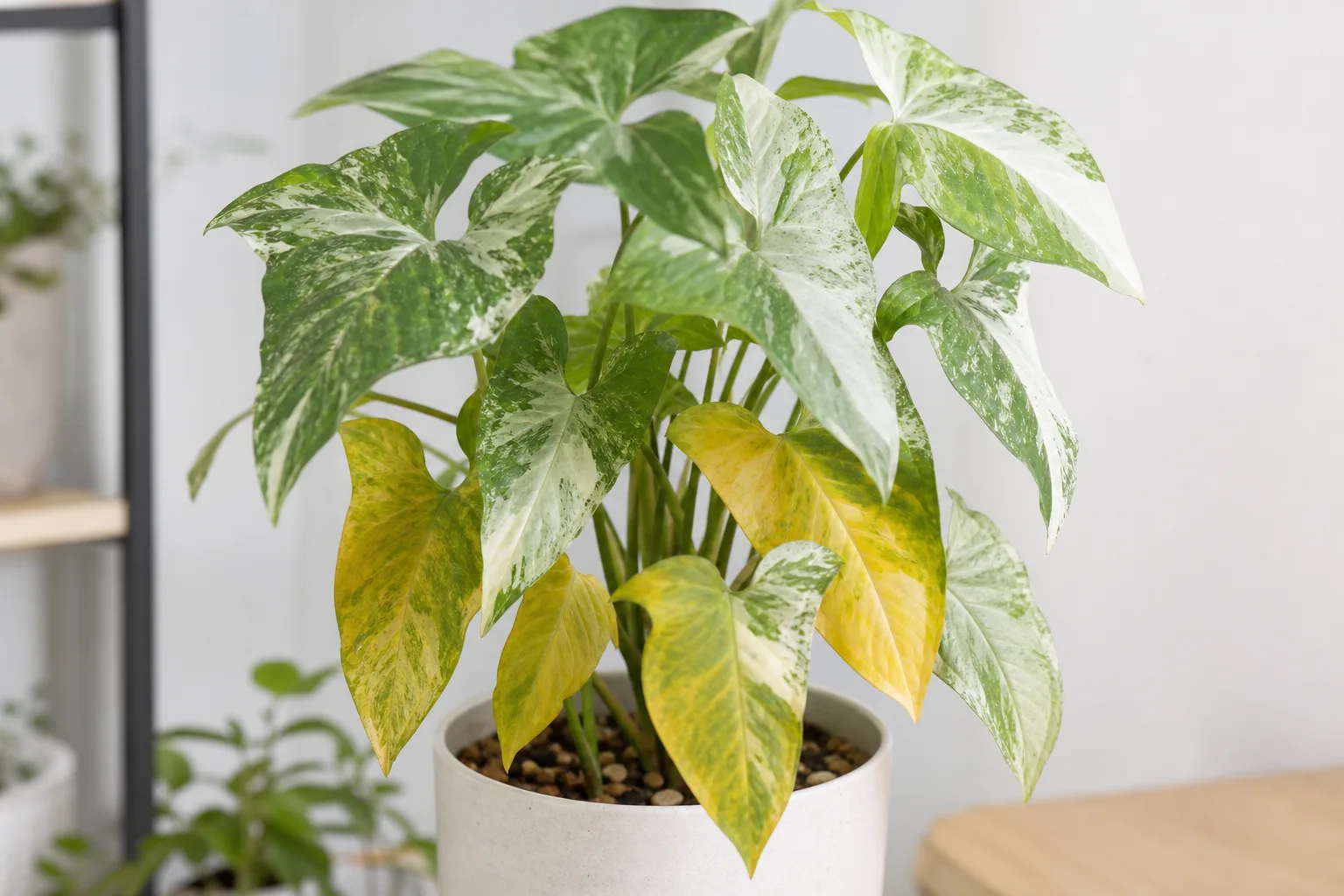
Yellow Leaves on Syngonium Albo: Causes, Checks & Fixes
This guide covers yellow leaves on Syngonium Albo. See also the general Yellow Leaves guide, watering, and light pages for this plant.
Yellow Leaves on Syngonium Albo: Causes, Checks & Fixes
Quick answer
Yellow leaves on Syngonium Albo usually mean root stress from staying wet too long, often made worse by low light. This plant is an aroid in the Araceae family, and aroid roots struggle when air spaces in potting mix stay saturated. One old lower leaf turning yellow on an otherwise firm vine can be normal aging, but multiple yellow leaves with a heavy wet pot should be treated as a root-oxygen problem first.
What yellow leaves look like on Syngonium Albo
Symptom pattern matters more than one isolated yellow leaf:
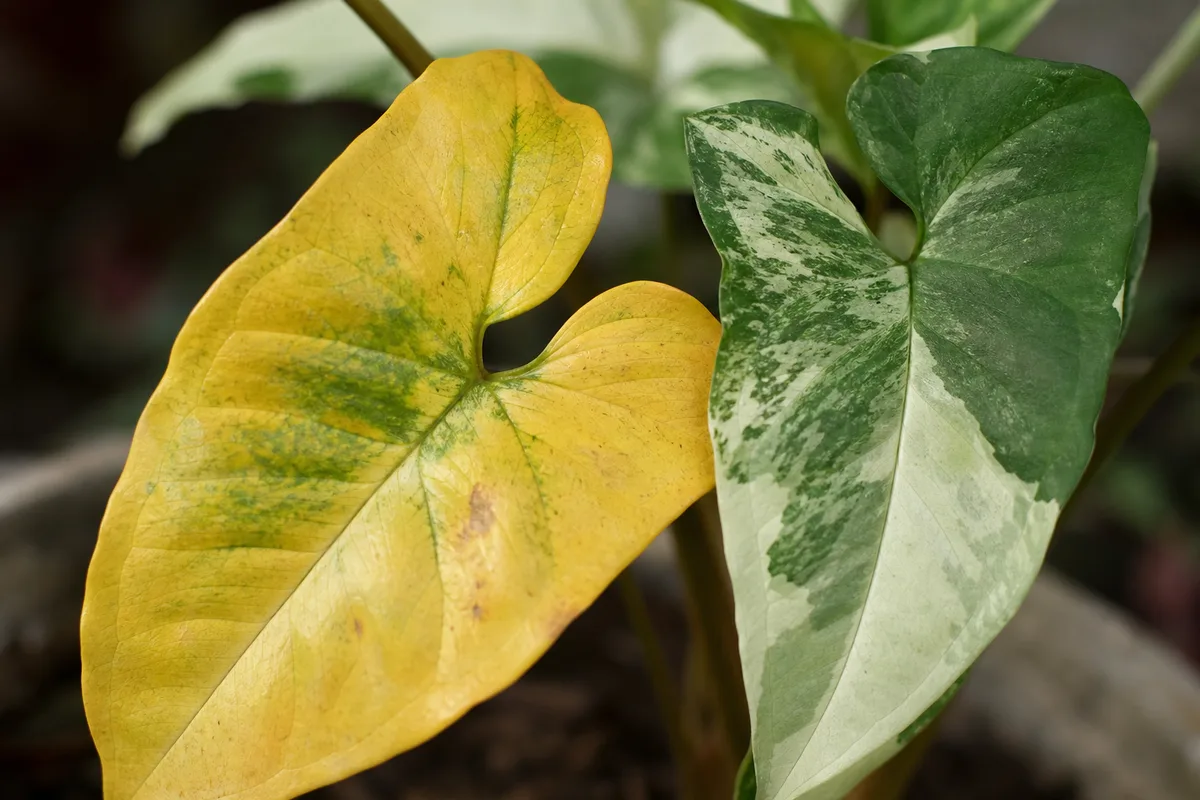
Yellow Leaves symptoms on Syngonium Albo - compare with healthy tissue on the same plant.
- Normal aging: a single older leaf fades slowly near the base while stems stay firm and new growth remains active.
- Wet-root stress: several leaves yellow in a short period, the pot stays heavy for many days, and growth pauses.
- Low-light plus wet cycle: new leaves emerge smaller or greener, internodes stretch, and yellowing repeats after each watering.
- Dry-cycle stress: pot is very light, leaf margins turn crisp, and leaves may curl before yellowing.
- Cold draft stress: yellowing appears after exposure to AC vents, cold windows, or temperature swings.
On variegated Albo, white sectors often brown before full-leaf yellowing because chlorophyll-poor tissue has less stress tolerance. Treat that pattern as an early warning that moisture and light are out of balance.
Why Syngonium Albo gets yellow leaves
Syngonium podophyllum prefers bright indirect light and a well-drained root zone in containers (Missouri Botanical Garden). When media stays too wet, roots lose oxygen and yellowing follows; overwatering is a common cause of yellowing and collapse in houseplants (RHS houseplant troubleshooting). Missouri Botanical Garden also lists yellowing and stunting as classic overwatering indicators (MBG overwatering guidance).
Albo adds one important layer: variegated tissue has less chlorophyll, so low-light conditions reduce energy use and slow dry-down. Ohio State Extension notes that all-green growth can outcompete variegated growth under low-light pressure (Ohio State Extension). In practical terms, a watering rhythm that worked in brighter months can become excessive when light drops.
Lookalike matrix: what to rule out fast
| Pattern | Most likely cause | Fast check | First action |
|---|---|---|---|
| One lower leaf yellow, rest healthy | Normal aging | Only oldest leaf affected | Remove when mostly spent |
| Several soft yellow leaves, pot heavy | Overwatering / root stress | Pot still wet days later, sour smell | Pause watering, inspect roots |
| Crisp yellow margins, pot very light | Underwatering | Dry mix through root zone | Rehydrate once, reset schedule |
| Greener new growth + stretch + yellowing | Low light + moisture mismatch | Long internodes, dim placement | Increase indirect light, reduce frequency |
| Sudden yellowing after cold exposure | Draft/temperature stress | Recent cold window/AC event | Move to stable warm zone |
If signs overlap, prioritize moisture and root condition first. Root stress can exist alongside low light or temperature stress.
How to confirm the cause (6-step inspection)
- Lift the pot and test moisture depth. Heavy pot plus damp mix several days after watering points to excess moisture.
- Map which leaves yellowed first. One older leaf is often aging; scattered or clustered yellowing suggests stress.
- Check stem firmness at the base. Firm is reassuring; soft tissue signals escalation.
- Inspect roots when moisture clues stay high risk. Soft dark roots and sour media support overwatering/root decline (UF/IFAS diagnostic guidance).
- Assess light quality, not just hours. Dim corners often pair with greener new growth and slow substrate dry-down.
- Review recent temperature exposure. Prolonged cold drafts can stress tropical houseplants and trigger yellowing (RHS growing guide).
This sequence helps you avoid shotgun fixes. Confirm the root-zone state first, then adjust care.
First fix by confirmed cause
If it is normal aging
Leave the leaf until most of its function is done, then remove it cleanly. Keep routine care stable and monitor new growth.
If the root zone is wet and stressed
Pause watering first. Empty any standing water from cachepots or saucers, then inspect roots. Trim clearly soft, dark tissue and repot only if the current mix is compacted, sour, or poorly draining. Do not fertilize on day one of rescue.
Use these pages for deeper branching:
If the root zone is too dry
Rehydrate thoroughly once until water drains out, then allow excess to drain fully. Return to a moisture-based rhythm instead of calendar watering.
Compare with:
If low light is driving repeated yellowing
Move to brighter indirect light and reduce watering frequency while the plant readjusts. On Albo, mostly green new leaves plus yellowing is often a light-stress signal tied to moisture imbalance.
Related guides:
Recovery timeline: what improves and what does not
After correcting moisture and light, stabilization often starts within 2 to 6 weeks, depending on root damage severity. Fully yellow leaves rarely regain green color. Track recovery through new growth quality, stem firmness, and a stop in symptom spread rather than old-leaf appearance.
Escalate if any of these appear:
- yellowing continues into new leaves after corrections
- stems soften at the base
- media stays wet despite reduced watering
- root odor worsens
What not to do
- Do not fertilize to “green up” leaves while mix is still wet.
- Do not increase watering because white variegation looks pale in low light.
- Do not repot, prune heavily, and feed aggressively in one session.
- Do not leave runoff sitting in cachepots or saucers.
- Do not assume nutrient deficiency first; with Albo, moisture and light mismatches are more common drivers.
Prevention for next time
Water by root-zone moisture, not by fixed weekday. Keep an airy, fast-draining aroid mix and maintain bright indirect light so water use stays predictable. In cooler or dimmer periods, extend the interval between waterings and rely on pot weight plus moisture depth checks before watering again.
If you want a steady baseline routine, use:
For pet safety, ASPCA lists arrowhead vine (Syngonium podophyllum) as toxic to cats and dogs due to insoluble calcium oxalates (ASPCA).
When to use this page vs other Syngonium Albo guides
- Syngonium Albo watering guide - Use for routine moisture checks before assuming yellow leaves is the main issue.
- Syngonium Albo problems hub - Browse all 1 common issues on this species.