Best Soil for Syngonium Albo: Mix, Drainage & pH
Best Soil for Syngonium Albo: Mix, Drainage & pH
Best Soil for Syngonium Albo: Mix, Drainage & pH
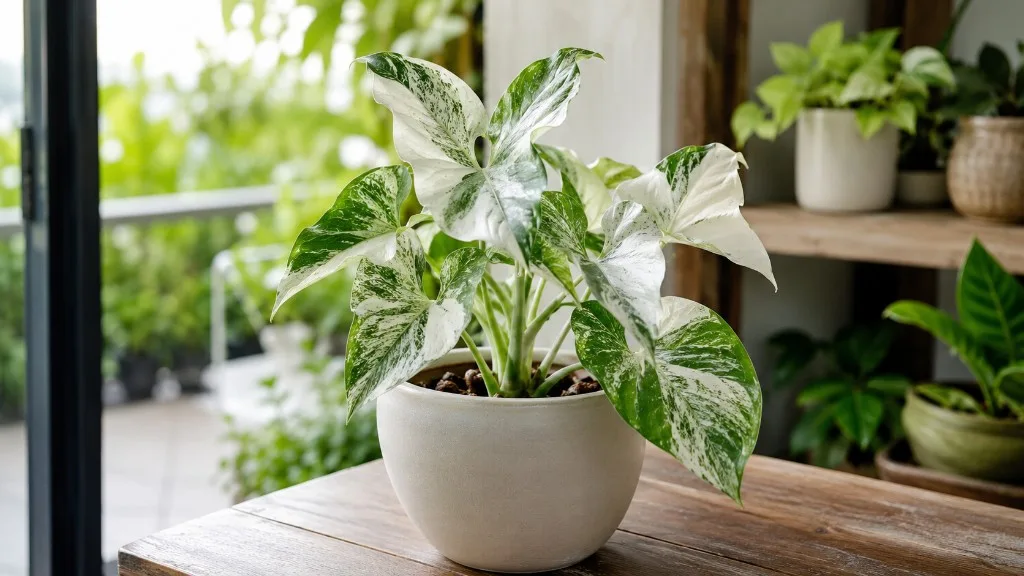
Syngonium Albo soil is not a minor detail you can improvise after the plant arrives. Syngonium podophyllum ‘Albo Variegatum’ - the variegated arrowhead vine collectors prize for its white-and-green marbled foliage - is an aroid with roots that evolved for tropical forest floors: consistently damp organic matter, plenty of oxygen between particles, and almost no tolerance for sitting in stagnant, airless mud. The best soil for Syngonium Albo is a chunky, well-draining aroid mix that holds moisture in the middle of the pot while drying predictably at the surface between waterings. Get that balance wrong and you will chase Yellow Leaves on Syngonium Albo, brown spots on white sections, and mushy roots long before light or humidity become the limiting factor.
The practical starting point most growers land on is simple: equal parts high-quality potting soil, orchid bark, and perlite, adjusted up or down depending on how fast your room dries the pot. Target a mildly acidic pH between 5.5 and 6.5, use a pot with a drainage hole, and refresh the mix every 12 to 18 months before compaction steals airflow from the roots. Syngonium Albo is more forgiving than many rare aroids - it is not as finicky as Philodendron ‘Pink Princess’ or Monstera albo about substrate - but variegated tissue is less forgiving of root stress than all-green growth. Soil is where that stress usually starts.
This guide covers what the roots need, three DIY recipes you can tune to your home, how each ingredient works, pH and salt management, pot pairing, when to repot, and the mistakes that turn a beautiful Albo into a rescue project.
Why Soil Quality Matters More on a Variegated Arrowhead
Variegation is not just a color preference - it is a photosynthetic handicap. White and cream sections on Syngonium Albo leaves contain little to no chlorophyll, which means the green portions must work harder to fuel new growth, root maintenance, and the energy cost of producing patterned tissue. When roots sit in dense, oxygen-poor mix, the plant cannot compensate as easily as an all-green Syngonium podophyllum. You see it first on the variegated sections: brown edges, crispy patches, or new leaves that emerge smaller and less white than the previous generation.
Soil quality also determines how forgiving your watering habits can be. A loose, chunky aroid mix creates a wide margin between “moist enough for growth” and “wet enough to rot roots.” A heavy peat-based indoor mix narrows that margin to almost nothing, especially in winter when evaporation slows and roots absorb water more sluggishly. Many growers blame themselves for overwatering when the real problem is a substrate that holds water at the bottom of the pot for five days while the surface looks dry - a classic recipe for root decline on variegated plants.
The Spruce describes Syngonium albo as thriving in slightly acidic, fertile, well-draining potting mixes combined with bark and perlite (The Spruce - Syngonium Albo Growing Guide). That description is accurate but incomplete without the why: fertility supports steady leaf production, acidity keeps micronutrients available, drainage prevents the anaerobic conditions that trigger root rot, and chunkiness keeps adventitious roots - the fuzzy anchors Syngonium sends out as it climbs - from suffocating between waterings.
What Syngonium Albo Roots Actually Need
Syngonium Albo roots are adventitious and fibrous, built for gripping bark, leaf litter, and loose forest soil rather than compacted garden dirt. They need three things simultaneously: moisture contact so fine root hairs can absorb water and dissolved minerals, air channels so those same roots can respire, and stable structure so the mix does not collapse into a brick after six months of watering. Standard bagged potting soil alone usually fails the second and third requirements because fine peat and compost particles settle under repeated irrigation, squeezing out the air pockets roots depend on.
Unlike succulents, Syngonium does not want to dry to dust between drinks. Unlike true bog plants, it cannot sit with its root zone submerged for days. The target is even moisture distribution through a breathable matrix - damp like a wrung-out sponge through the middle and upper root zone, never soupy at the bottom. When you squeeze a handful of properly mixed Syngonium Albo soil, it should hold together briefly, then crumble apart when you open your hand. If it stays in a tight ball or drips water, the mix is too fine or too wet for long-term health.
How Native Habitat Shapes Indoor Mix Choices
In the wild, Syngonium podophyllum grows across Central and South America as a climbing hemiepiphyte - starting on the forest floor and ascending tree trunks as it matures. That ecology matters for soil thinking. Juvenile plants root in decomposed leaf litter, loose humus, and mineral grit washed in by rain. Mature plants anchor adventitious roots to bark and moss while still drawing moisture from organic debris trapped in crevices. Neither life stage involves dense, airless clay or waterlogged muck.
Indoors, you are approximating forest-floor conditions in a 6-inch plastic pot. You cannot replicate a rainforest, but you can mimic its texture profile: coarse pieces for structure, fine organic matter for moisture retention, and mineral amendments for drainage. Garden soil from the yard is the wrong tool - it compacts, carries pathogens and weed seeds, and drains unpredictably in a container. Pure peat moss is also a poor solo choice because it compacts over time and becomes hydrophobic when it dries completely, repelling water on the next soak.
The Air-Moisture Balance Aroids Demand
Aroid roots respire. They consume oxygen and release carbon dioxide, just like leaves - and they cannot do that efficiently in saturated, compacted media. The oxygen-to-moisture ratio is the central soil decision for Syngonium Albo, more important than whether you use coco coir versus peat or pine bark versus orchid bark. Chunky amendments - bark, perlite, pumice, charcoal - create macropores: large spaces where air sits between waterings. Fine organic matter - coir, peat, worm castings - creates micropores that hold water films roots can access without drowning.
For Syngonium Albo specifically, err slightly toward moisture stability compared with ultra-epiphytic anthuriums that want to dry fast. Variegated arrowhead benefits from a mix that does not swing from bone-dry to sodden in 24 hours, because white leaf sections stress quickly when the plant dehydrates and then gets flooded to compensate. A balanced aroid blend - not the driest orchid bark slurry, not the wettest peat pot - is the sweet spot most indoor growers need.
Best Ready-Made Soil Options for Syngonium Albo
You do not have to mix soil from scratch. A commercial aroid or “houseplant” chunky mix from a reputable nursery or specialty seller is a legitimate choice, especially if you are Syngonium Albo repotting guide one plant and do not want to store bags of bark and perlite. Look for labels that mention fast drainage, orchid bark content, and indoor aroid use - not seed-starting mix, not moisture-control “feeds for six months” formulas designed for outdoor annuals, and not straight orchid bark alone.
Straight orchid bark drains beautifully but often dries too fast and carries too little nutrition for a Syngonium in a small pot unless you fertilize consistently and monitor moisture daily. Straight bagged potting soil is the opposite problem: convenient, but usually too fine unless you amend it heavily. If you buy a standard indoor potting mix, plan to cut it with at least 30 to 50 percent perlite and bark by volume before using it for Syngonium Albo. A 3:1 ratio of potting soil to perlite is a workable emergency amendment, though equal thirds with bark added is better for long-term structure.
Can Syngonium Albo grow in regular potting soil? Temporarily, sometimes - long-term, no. An all-green Syngonium might survive a season in unamended mix if you water carefully and the plant sits in bright, warm conditions. Variegated Albo in dense soil is a different story: compaction arrives within months, drainage slows, and the margin for watering error disappears. Treat unamended potting soil as a short bridge, not a destination.
Three Reliable DIY Soil Mix Recipes
These three recipes cover most home environments. Measure by volume (scoops or cups), not weight. Mix dry ingredients thoroughly in a tub or bucket before adding water or potting up. Wear a dust mask when handling fine perlite or peat.
The Classic Equal-Parts Aroid Blend
This is the recipe cited most often for Syngonium Albo and it works because it is balanced:
- 1 part high-quality potting soil - provides organic matter, starter nutrients, and fine water-holding capacity
- 1 part orchid bark or pine bark - creates air channels and mimics forest litter texture
- 1 part perlite - prevents compaction and speeds drainage without drying as fast as bark alone
Combine thoroughly. The result should look visibly chunky, with bark pieces distributed evenly and no single ingredient clumping. This mix suits average indoor conditions: moderate humidity (45–60%), Syngonium Albo light guide, and a grower who waters when the top inch dries. UF/IFAS recommends commercial media combining peat, pine bark, vermiculite, and/or perlite with pH of 5.5 to 6.5 for Syngonium production - the same range most home aroid blends target.
If the pot dries in under three days and leaf edges crisp despite good humidity, increase the potting soil or add a small portion of coco coir - no more than 10 to 15 percent of total volume. If the pot stays wet beyond five days, add another half-part perlite or bark.
The Chunky Bark-Heavy Mix for Over-Waterers
Built for growers who tend to water on schedule rather than on feel, or for homes above 60% humidity where evaporation is slow:
- 2 parts orchid bark or pine bark
- 2 parts perlite or pumice
- 1 part potting soil
- Optional: 5–10% horticultural charcoal - helps keep the mix structurally fresh over time
This blend dries faster and forgives excess water less than it forgives underwatering - which is the point. You still need a drainage hole and empty saucers, but roots get more oxygen between sessions. Pumice is heavier than perlite and does not float to the surface as easily during aggressive watering; perlite is cheaper and more widely available. Either works.
Use this recipe if you have previously lost Syngonium roots to rot, if your pot stays heavy days after watering, or if the plant sits in a greenhouse cabinet with stable high humidity. Pair it with checking moisture at depth - a dry surface on a chunky mix can still mean a damp core, so do not assume dryness from the top alone.
The Moisture-Retaining Coir Blend for Dry Homes
Built for winter heating, air conditioning, or arid climates where pots dry in 48 hours and white variegation shows crisp edges:
- 2 parts coco coir (rehydrated and fluffed)
- 2 parts potting soil
- 1 part orchid bark
- 1 part perlite
- Optional: 5–10% worm castings for mild organic nutrition
Coco coir holds water more evenly than peat without becoming hydrophobic as quickly when it does dry out. The bark and perlite still prevent the mix from turning into a solid block. This is the most forgiving blend for inconsistent waterers in dry rooms, provided you still use a drainage hole and do not let the pot sit in runoff.
If you run this mix in a humid summer environment, reduce coir to one part and increase perlite - otherwise you risk slow drying that encourages fungus gnats and root stagnation. Substrate tuning is seasonal as much as it is geographic.
Key Ingredients and What Each One Does
Understanding ingredients lets you adjust a recipe without starting over. Here is what each common component contributes:
| Ingredient | Primary role | Trade-off to watch |
|---|---|---|
| Potting soil | Fine organic base, starter nutrients | Compacts over time; too much reduces airflow |
| Orchid bark / pine bark | Structure, aeration, root grip | Dries faster; decomposes in 12–18 months |
| Perlite | Drainage, anti-compaction | Floats in light mixes; dusty when dry |
| Pumice | Long-term aeration, some weight | Harder to source; more expensive |
| Coco coir | Even moisture retention | Can hold too much water if overused |
| Peat moss | Moisture and acidity | Compacts; hydrophobic when bone-dry |
| Worm castings | Mild nutrition, biology | Fine particles - keep below 10–15% |
| Horticultural charcoal | Long-term pore structure | Optional; does not replace drainage amendments |
Orchid bark is not just for orchids. Aroid growers use it because the chunk size creates durable air pockets. Fine bark (quarter-inch or smaller) integrates better in 4- to 6-inch pots; larger chunks suit bigger containers and mature vines.
Perlite is expanded volcanic glass. It does not rot, it is sterile, and it prevents the “concrete peat” effect that kills so many indoor aroids. If you dislike perlite dust, rinse it outdoors before mixing or substitute pumice at a similar volume.
Coco coir is a sustainable peat alternative with a more even wet-dry curve. Rehydrate compressed bricks fully - a partially hydrated coir block hides dry pockets that repel water later.
Worm castings add organic nutrition and microbial life. They are useful in small doses but should not dominate the mix; too many fines close air gaps.
Soil pH, Minerals, and Fertilizer Interaction
Syngonium Albo prefers a mildly acidic pH between 5.5 and 6.5, according to UF/IFAS cultural guidelines for Syngonium. Most quality peat- or coir-based potting soils and amended aroid mixes land in this range without intervention. Hobbyists rarely need a pH meter unless the plant shows persistent micronutrient problems despite good care.
What matters more in practice is salt accumulation. Fertilizer, hard tap water, and slow decomposition of organic matter all raise soluble salts over time. Variegated leaves show tip burn and marginal browning when salts concentrate while roots are also stressed by poor drainage - a double hit that looks like humidity or light problems. If you see white crust on the soil surface or pot rim, flush the pot with plain water until runoff runs clear, or refresh the mix at repotting instead of stacking more fertilizer on old substrate.
Fertilizer does not replace good soil structure, but it interacts with it. A chunky, well-aerated mix supports the root function that lets the plant use a balanced liquid feed at half strength during active growth. A waterlogged mix impairs uptake even when nutrients are present. Fix drainage and aeration before chasing variegation with heavier feeding - white sections will not stabilize on rotting roots.
Choosing the Right Pot for Your Mix
Soil and pot are one system. A perfect aroid blend in a pot without a drainage hole still fails, because you cannot see or remove excess water. Always use a drainage hole for long-term Syngonium Albo care. Cachepots are fine decoratively if the inner grow pot drains freely and you empty the outer shell after watering.
Pot size should track the root ball, not the leaf span. Syngonium Albo can look bushy while roots still fit a 4- or 5-inch container. Upsizing too early surrounds roots with wet, unused mix that slows drying and encourages rot. A sensible rule: choose a pot one size up (about 1 to 2 inches wider) when repotting, unless the plant is root-bound and actively pushing vigorous new growth.
Pot material changes drying speed. Unglazed terra-cotta breathes and dries faster - useful with moisture-retaining coir blends. Plastic and glazed ceramic hold moisture longer - useful with bark-heavy mixes in dry rooms. Neither is universally better; match material to your mix and your watering tendencies.
Do not add a layer of gravel at the bottom to “improve drainage.” Water does not skip a perched water table; it sits at the bottom of the fine soil above the gravel until saturation equalizes. Gravel layers can actually reduce usable root volume and push the wet zone closer to the roots. Chunky mix throughout the full pot depth is the evidence-based approach.
How to Tell If Your Current Soil Is Failing
Soil problems announce themselves through roots and leaves before the mix looks obviously bad on the surface. Watch for these patterns:
- Water sits on the surface or runs down the sides without soaking in - a sign of hydrophobic, compacted, or peat-dominated mix
- The pot stays heavy four to five days after watering while the top inch feels dry - classic perched moisture and poor vertical drainage
- Yellowing leaves on multiple stems simultaneously, often with soft or brown base stems - root stress from low oxygen
- White variegation browning on new leaves while older green sections still look fine - often linked to inconsistent moisture at the roots
- Sour or swampy smell when you lift the plant or slide it from the pot - anaerobic breakdown
- Fungus gnat clouds that persist despite sticky traps - wet, decomposing fine organic matter
- Roots dark, mushy, or slimy when you inspect - active rot; healthy aroid roots are firm and pale, with some tan corking normal on older tissue
A fast one-minute drainage check after repotting or when diagnosing trouble: water thoroughly until runoff exits the bottom. Water should not pool on top for more than a few seconds. Within an hour, the pot should feel heavier but not dripping. Within three to five days in average indoor conditions, the top inch should approach dryness while the deeper mix remains barely cool to the touch - not wet, not dust.
When and How to Refresh or Repot the Mix
Even the best Syngonium Albo soil has a lifespan. Bark decomposes, perlite does not but fine particles migrate downward, and repeated watering compresses organic matter. Plan to refresh substrate every 12 to 18 months for actively growing plants, or sooner if you see the failure signs above. The Spruce and multiple grower references suggest repotting Syngonium albo on a roughly two-year cycle when growth is steady (The Spruce - Syngonium Albo Growing Guide).
Repot during active growth - spring through early fall - when the plant can repair root disturbance quickly. Avoid repotting a stressed, dropping plant unless the soil itself is clearly the emergency (sour smell, visible rot). Fix the root zone first; do not stack repotting, pruning, and fertilizer on the same weekend.
Signs Your Syngonium Albo Needs Fresh Substrate
Repot or fully refresh the mix when you notice roots circling the pot wall, pushing out drainage holes, or forming a dense mat that water runs through without soaking. Also repot when the mix has shrunk below the rim and become difficult to wet evenly, or when you have been fighting gnat and moisture problems for months despite adjusted watering.
Steps for a clean repot: water lightly a day before if the mix is very dry; slide the plant out and gently tease circling roots without shredding healthy tissue; remove old mix from the outer third of the root ball while leaving the core intact if roots are fragile; place in a appropriately sized pot with fresh mix; water once lightly to settle, then resume normal care after a week of acclimation without fertilizer.
Adjusting Your Mix for Your Home Environment
No single recipe is universal. Tune your Syngonium Albo soil the same way you tune watering - by observing how the pot behaves in your room.
Dry home (30–45% humidity, winter heating): Increase coco coir or potting soil slightly; consider plastic or glazed pots; check moisture at mid-depth, not just the surface. White variegation crisping on multiple new leaves often means the pot dries faster than you think.
Humid home or cabinet (60–80% humidity): Increase bark and perlite; reduce fine organic matter; ensure a fan or air exchange so leaves do not stay wet for hours. High humidity slows evaporation from the pot as much as from the leaves.
Bright, warm window: Faster drying - moisture-retaining tweaks help. Low light corner: Slower drying - chunkier, drier mix prevents stagnation even if you water less often.
Heavy-handed waterer: Bark-heavy recipe, terra-cotta optional, always drain saucers. Forgetful waterer: Coir-blend, plastic pot, but never eliminate drainage holes to “hold moisture” - that trades one problem for a worse one.
Keep a simple log for two weeks after any mix change: date watered, pot weight feel, and leaf response. Soil tuning is empirical. Your apartment beats any internet recipe.
Soil Alternatives: LECA, Pon, and Semi-Hydro
Some growers transition Syngonium Albo to LECA (expanded clay pebbles) or Pon (a structured mineral-organic blend) in semi-hydro setups. These can work - Syngonium podophyllum is adaptable - but they are not automatically better than a well-made aroid mix. Semi-hydro demands a consistent nutrient solution, vigilant reservoir hygiene, and acceptance of a learning curve while roots transition from organic media.
LECA excels at oxygen delivery and makes root inspection easy. It also dries and salts differently than soil, and variegated plants may sulk during transition. Pon offers more buffering and moisture wicking than bare LECA, but product quality varies. For most collectors, a chunky soil mix in a draining pot remains the lowest-friction path unless you already run other plants successfully in semi-hydro and want consistency across a collection.
If you experiment, transition during active growth, keep the reservoir or Syngonium Albo watering guide stable, and do not interpret initial yellowing as failure in the first three to four weeks - but do inspect roots if decline continues. Reverse to aroid mix if roots stay stagnant.
Common Syngonium Albo Soil Mistakes to Avoid
Using unamended garden or bagged potting soil long-term. It compacts. Amend or replace.
Oversized pots “so it can grow.” Excess wet mix rots roots. Size to the root ball.
No drainage hole. Decorative pots without holes are display-only. Drill or use an inner pot.
Gravel drainage layers. They do not create the drainage people imagine and can shorten the aerobic root zone.
Repotting into dry mix then flooding daily. Initial light watering after repot lets roots contact moist media without shock.
Ignoring decomposition. Year-old bark is soil-like sludge. Refresh on schedule.
Chasing variegation with fertilizer on bad soil. Nutrients cannot fix anaerobic roots.
Forgetting toxicity. Syngonium contains calcium oxalate crystals and is toxic to people and pets if ingested (ASPCA toxic plant guidance). Soil, runoff, and recently repotted mix are not safe for curious cats or dogs. Keep plants and supplies out of reach.
Conclusion
The best soil for Syngonium Albo is a chunky, well-draining aroid mix that stays mildly acidic, holds even moisture without staying waterlogged, and gets refreshed before bark breaks down into compaction. Start with equal parts potting soil, orchid bark, and perlite, then tune: more bark and perlite if you overwater or live humid; more coir and potting soil if your dry room crispens white leaves between waterings. Pair the mix with a draining pot sized to the roots, check moisture below the surface, and repot every 12 to 18 months as structure fades.
Soil is the foundation variegated arrowhead builds on. When roots breathe and moisture stays stable, light and humidity fine-tuning actually sticks - and the white patterns you bought the plant for have a fair chance of showing up on the next leaf.
When to use this page vs other Syngonium Albo guides
- Syngonium Albo overview - Start here for whole-plant context before deep-diving this topic.
- Syngonium Albo problems hub - Jump to symptom-specific fix guides when this care topic does not resolve the issue.