Distorted Leaves on Swedish Ivy: Causes, Checks & Fixes
Quick answer
Distorted new leaves on Swedish Ivy usually trace to sap-feeding pests on soft stem tips or uneven watering that stresses shallow roots while foliage is forming. First step: inspect the newest leaves and their undersides under good light before you repot, fertilize, or spray.
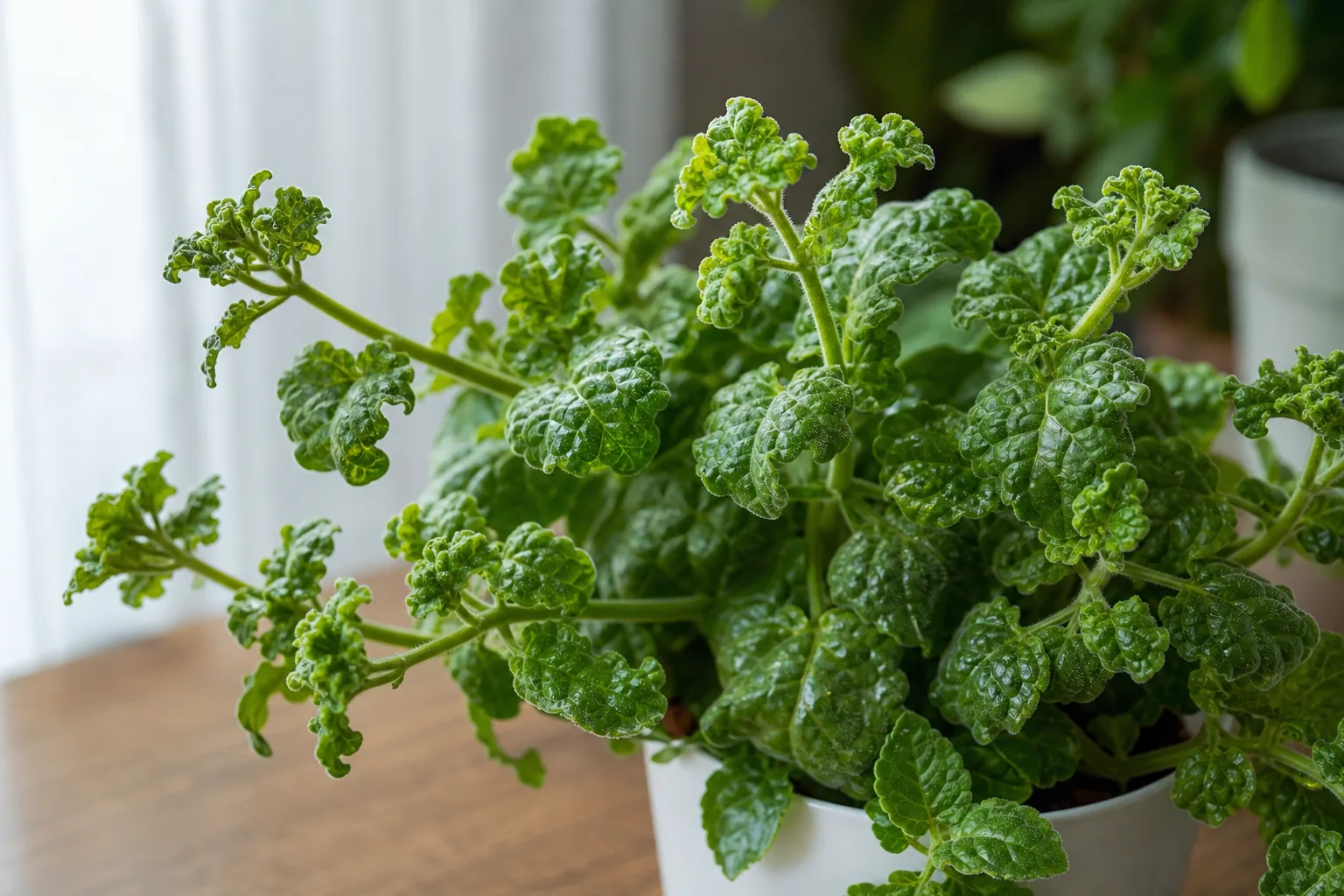
Distorted Leaves on Swedish Ivy: Causes, Checks & Fixes
This guide covers distorted leaves on Swedish Ivy. See also the general Distorted Leaves guide, watering, and light pages for this plant.
Distorted Leaves on Swedish Ivy: Causes, Checks & Fixes
Quick answer
Swedish Ivy (Plectranthus australis) grows as a fast trailing trailer-often in hanging baskets where runners cascade past the pot rim and push soft scalloped leaves from stem tips throughout spring and summer. That growth habit matters: damage shows up on the newest tissue at runner ends first, while older glossy foliage on the same stem may still look fine. Distortion means a leaf puckers, twists along the midrib, cups inward, or opens smaller than the leaf below while it is still unfurling-not a problem you can fix on fully hardened blades.
First step: inspect the newest leaves and their undersides under good light before you repot, fertilize, or spray. If you find stippling, webbing, cottony masses, or clustered soft-bodied insects, treat for pests and isolate the plant. If the mix has stayed wet or bone-dry and no insects are present, stabilize watering and light before adding fertilizer.
In April I watched a four-runner kitchen basket where only the outer trailing tip showed twisted scalloped leaves-pear-shaped aphids clustered on the unfurling blade, while the other three runners looked normal. I rinsed undersides every three days with plain water, then used insecticidal soap twice at five-day intervals. A normal glossy leaf opened on that same runner by day 18; the older twisted leaf never flattened. That pattern-one runner hit, recovery judged by the next tip-is typical for pest-driven distortion on Swedish Ivy.
Scope on this site: This page owns misshapen new blades (twisted, wrinkled, cupped, undersized). For overlapping tip-curl wording, see deformed new growth on Swedish Ivy. For dedicated pest treatment depth, use the aphids, spider mites, and mealybugs guides after you confirm the cause below.
Symptom quick-reference
| What you notice | Likely cause | Key check | First move |
|---|---|---|---|
| Pear-shaped insects, sticky honeydew, stippling on soft tips | Sap-feeding pests | Magnify leaf undersides at runner ends | Isolate; rinse undersides |
| Small thin new leaves; wet heavy pot for weeks | Overwatering / root stress | Top inch wet; sour smell on unpot | Dry-down; inspect roots |
| Crispy curled new tips; very dry top inch | Underwatering | Pot light; limp runners | Thorough soak; resume top-inch rule |
| One-sided puckering after cold window night | Cold draft below 50°F | Basket near exterior glass or vent | Move to stable 60–75°F spot |
| Distortion on every tip; soft stems at soil line | Advanced root rot | Mushy roots; sour mix | Stem-tip propagation salvage |
Why Swedish Ivy gets distorted leaves
Swedish Ivy produces new leaves quickly from trailing stem tips when light and moisture are right. When pests, roots, or environment disrupt that growth rhythm, the newest leaves show it first while older glossy foliage on the same runner may still look fine.
Sap-feeding pests are the most common indoor trigger for misshapen new growth. Aphids feed on unopened leaf buds and newly opening leaves, causing stunted and distorted growth plus sticky honeydew. Swedish Ivy’s soft spring and summer shoots at runner ends are ideal feeding sites. Spider mites cause pale leaves and fine webbing on undersides; heavy feeding creates stippling and bronzed foliage that can stunt new leaves. Mealybugs produce cottony masses on stems and leaf undersides and weaken growth through sap loss. Missouri Botanical Garden notes that Plectranthus is commonly affected by mealybugs and spider mites. Thrips are less common indoors but can cause deformed or discolored leaves and silvery stippling on tender shoots-look for tiny black frass specks on undersides if aphids and mites are absent.
Watering stress distorts new leaves when shallow roots cannot deliver steady moisture. Swedish Ivy wants humusy, medium moisture, well-drained soils. UF/IFAS recommends watering when the top inch of mix feels dry and keeping the plant in bright indirect light away from harsh sun. Chronic overwatering in poorly draining hanging baskets suffocates roots, so new leaves emerge small, yellow-tinged, or soft. Brief underwatering can produce crispy, curled new tips while trailing stems droop-this plant tolerates short dry spells but still needs regular drinks once the surface dries.
Cold and draft stress hit tender new growth harder than mature leaves. Temperatures below 50°F (10°C) during winter can damage tissue, and cold air from exterior doors or window sills often distorts the next flush of leaves on baskets hung nearby.
Recent repotting or root disturbance can stall or deform the next one or two leaves while shallow roots re-establish. Distortion limited to the first leaf after repotting usually resolves once watering stabilizes.
Over-fertilization builds salts in the mix, burning roots and producing stunted, deformed new growth. Swedish Ivy is not a heavy feeder; fertilizing a stressed plant before fixing moisture or pests often makes distortion worse.
What distorted leaves look like on Swedish Ivy
Pest-related distortion:
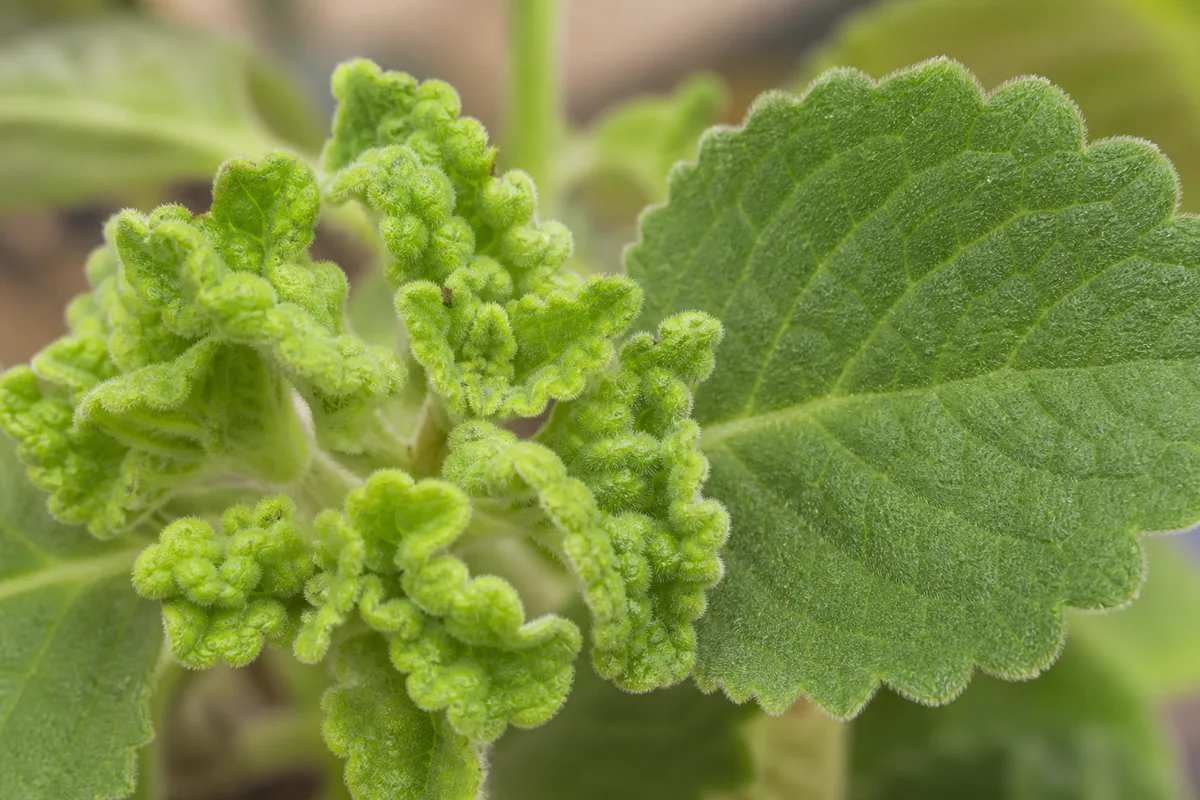
Distorted Leaves symptoms on Swedish Ivy - compare with healthy tissue on the same plant.
- Newest leaves at stem tips emerge twisted, wrinkled, cupped, or smaller than the leaf below
- Pear-shaped aphids clustered on soft shoots, flower spikes, or unfurling scalloped leaves
- Fine stippling or pale speckles on glossy upper surfaces; webbing between leaves and stems on spider mite cases
- Cottony white clusters in leaf axils or along trailing stems from mealybugs
- Sticky honeydew on leaves or basket rims; dull sooty patches in heavy infestations
- Damage concentrated on soft new growth while older trailing foliage stays mostly normal
Water and root stress:
- New leaves small, thin, or slow to unfurl while mix stays wet deep down
- Crispy, curled new tips after a dry spell with limp runners and very dry top inch of mix
- Yellow-tinged or soft new growth when roots are compromised from chronic overwatering
Environmental stress:
- Brown, scorched edges on new leaves after a sudden shift to direct sun
- Pale, undersized new leaves on stems stretching toward a window in very low light
- One-sided distortion after the basket sat in a cold draft or against a hot radiator
Normal Swedish Ivy leaves are glossy green with scalloped edges and symmetrical blades. Distortion means the leaf puckers, twists along the midrib, or opens at an uneven size compared with the previous node on the same runner.
How to confirm the cause
Work from the newest growth outward:
- Inspect stem tips and leaf undersides with a bright light or magnifying lens. Houseplant pests are most often found on undersides of leaves and in leaf axils.
- Note stickiness or ants on the pot, hanger chain, or nearby surfaces-honeydew confirms sap feeders even when insects are hard to see.
- Check soil moisture at the top inch and pot weight. Wet, heavy mix with distorted soft new leaves suggests root stress; very dry mix with crispy tips suggests drought.
- Review recent changes: repotting within two weeks, fertilizer applied to dry soil, move near a heat vent, or shift to a brighter window.
- Compare multiple runners on the same plant. Pests often cluster on one trailing stem first; whole-plant small leaves on every tip with wet soil point to roots.
If you find insects or webbing, pest damage is confirmed-see the dedicated aphid, spider mite, or mealybug guides for treatment depth. If soil has been wet for weeks and roots smell sour when you unpot, treat as root rot-not a spray problem.
First fix for Swedish Ivy
Isolate the plant and inspect every stem tip under good light. If you see aphids, spider mites, or mealybugs, rinse sturdy leaves thoroughly-including undersides and growing tips-or wipe them with a damp cloth. That single step stops active feeding on the tissue that is still forming.
Do not repot or fertilize on day one unless roots are clearly rotting in soggy mix. Do not prune every distorted leaf before you know the cause; those leaves still photosynthesize while you correct care.
Step-by-step recovery
If pests are confirmed:
- Keep Swedish Ivy isolated from other houseplants for several weeks.
- Rinse or wipe leaves every few days to dislodge mites and remove honeydew. Washing leaves is a primary non-chemical control for indoor plant pests.
- For persistent infestations, apply insecticidal soap to tops and undersides of leaves, re-treating every five to seven days until new growth looks normal. UF/IFAS recommends insecticidal soap for mealybugs and spider mites on Swedish Ivy.
- Trim only fully damaged leaves that block airflow or harbor heavy colonies after sprays begin working.
If watering is the issue:
- For overwatered plants, stop watering until the top inch is dry. If mix has stayed wet for weeks, unpot, trim mushy roots, and repot in airy well-draining mix with drainage holes sized to the root ball.
- For underwatered trailers, water thoroughly until excess drains, then resume the top-inch dry rule.
- Move the basket to bright indirect light so the plant uses moisture predictably.
If environment caused distortion:
- Move Swedish Ivy away from vents, cold windows, and direct sunbeams.
- Increase humidity modestly if winter air is very dry-grouping plants or a humidifier helps more than misting alone.
- Leave the plant in one stable spot for two weeks before judging new leaves.
If over-fertilization is suspected:
- Flush the pot with plain water until it runs clear from drainage holes.
- Hold fertilizer until two healthy new leaves open normally.
Recovery timeline
Already distorted leaves rarely flatten-the cells hardened in that shape. Within one to two weeks of corrected care you should see the next leaf open closer to normal scalloped form. Pest recovery often takes three to four weeks and multiple treatments because eggs hatch in cycles. Severe root rot can take several months and may require cutting healthy stem tips to propagate fresh plants.
Judge success by new growth, not old twisted leaves. Firm stems, normal leaf size at tips, and no spreading stippling mean recovery is working.
Lookalike symptoms
| Symptom | How it differs from distortion | Where to go |
|---|---|---|
| Curling leaves | Blade rolls inward/upward from drought or heat-not asymmetric puckering | Underwatering / low humidity |
| Leggy growth | Long bare stems with small but symmetrical leaves from low light | Not enough light |
| Cold damage | Dark water-soaked patches on exposed leaves-not gradual wrinkling at every tip | Cold damage / draft stress |
| Drooping leaves | Whole trailing stem limp on very wet or very dry soil | Drooping leaves |
Mistakes to avoid
Do not spray neem oil or soap on every problem before confirming pests-chemical injury can distort leaves on its own, especially on stressed plants in hot direct sun. Do not fertilize a stressed Swedish Ivy hoping new leaves will fill out faster. Do not keep a chronically wet hanging basket in dim corners; that combination stalls new growth and invites root rot. Swedish Ivy is non-toxic to cats and dogs, but still handle infested plants carefully when rinsing indoors.
How to prevent distorted leaves on Swedish Ivy
Prevention on a trailing basket comes down to three habits: quarantine new plants for two weeks before hanging them beside established trailers (fast spring growth can hide early aphids), inspect stem tips weekly during active growth, and water only when the top inch dries in well-draining mix. Wash glossy leaves every two to three weeks during dry indoor seasons to discourage spider mites. Avoid repotting, moving, and fertilizing in the same week. Buy from sources with clean, firm new tips and no sticky residue on leaves.
When to worry
Treat as urgent if stems blacken at the soil line with wilting, soil smells sour on wet mix, or every new tip stays distorted after four weeks of corrected watering and pest treatment. Those patterns suggest advanced root disease or a systemic problem that simple leaf wiping will not fix. UF/IFAS notes that when Swedish Ivy wilts and does not recover after watering, root rot is likely-take stem tip cuttings from healthy runners and dispose of the diseased parent rather than waiting for distorted leaves to heal.