Aphids on Swedish Ivy: Causes, Checks & Fixes
Quick answer
Aphids on Swedish Ivy cluster on soft stem tips and new leaves along trailing runners, leaving sticky honeydew. First step: isolate the plant and rinse colonies off with a firm water spray, covering leaf undersides and growing tips.
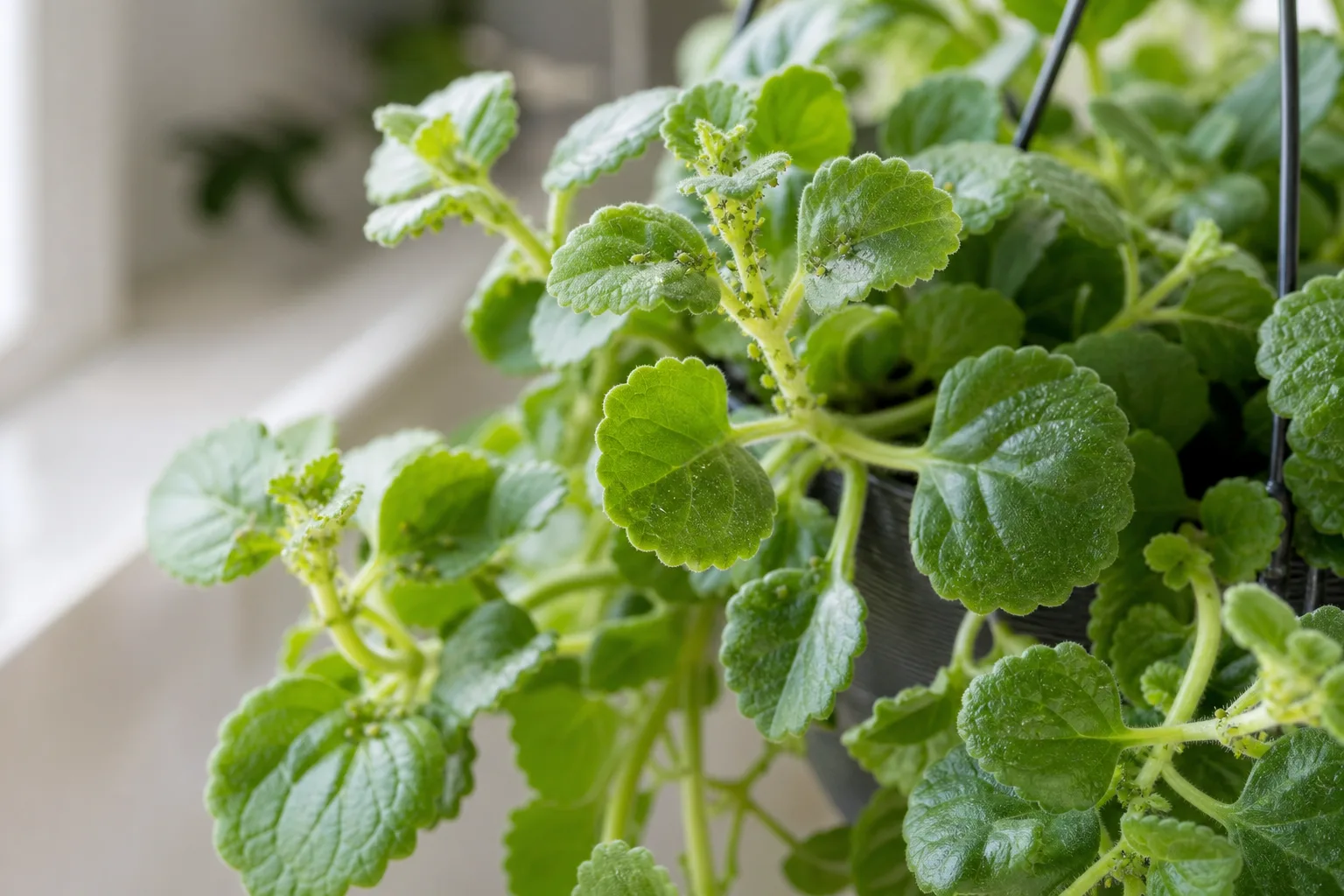
Aphids on Swedish Ivy: Causes, Checks & Fixes
This guide covers aphids on Swedish Ivy. See also the general Aphids guide, watering, and light pages for this plant.
Aphids on Swedish Ivy: Causes, Checks & Fixes
Quick answer
Aphids on Swedish Ivy cluster on soft stem tips and new leaves along trailing runners, leaving sticky honeydew on glossy scalloped foliage. First step: isolate the plant and rinse colonies off with a firm water spray, targeting leaf undersides and growing tips.
Swedish Ivy pushes its most vulnerable tissue at the ends of trailing stems during spring and summer active growth. Aphids are slow-moving and visible without magnification once numbers build, but they reproduce fast in warm indoor air. Catching them before honeydew attracts ants or sooty mold is far easier than rescuing a hanging basket already weakened by sap loss.
Why Swedish Ivy gets aphids
Trailing stem tips are the target. Swedish Ivy produces soft shoots, unfurling scalloped leaves, and small flower spikes quickly when light and moisture are right. Aphids prefer tender new growth where they feed on sap-rich tissue, which is why damage often appears on the newest leaves at runner ends while older trailing stems and firm bases look otherwise normal.
Fast active growth speeds outbreaks. Swedish Ivy grows fastest in spring and summer at typical indoor temperatures. Aphids multiply quickly in that same window. Hanging baskets moved outdoors for summer-or brought back inside without inspection-often carry aphids on tender shoots that were invisible at lower populations.
Soft, over-fed shoots attract pests. Do not overfertilize-excess nitrogen during strong light produces lush succulent growth aphids favor. This plant needs only modest feeding during active growth; weak, stretched indoor shoots combined with poor airflow between clustered pots is a common setup for pest buildup.
Entry routes are predictable. New nursery plants, open windows in warm weather, and nearby infested houseplants can introduce winged aphids. Ants traveling up basket chains toward branch tips often signal an established colony higher on the trailing stems.
Indoor conditions lack predators. Outdoors, lady beetles and lacewings help keep aphids in check. Inside, without those natural enemies, a few hitchhikers on one new leaf can become a colony within a week during peak growth.
What aphids look like on Swedish Ivy
- Small pear-shaped insects-green, black, pink, or yellow-clustered on new stem tips and flower buds
- Colonies tucked under unfurling scalloped leaves and at leaf-stem junctions along trailing runners
- Sticky, shiny honeydew on glossy green upper leaves or basket rims below infested tips
- Ants traveling up hanger chains or pot sides toward the growing tips
- Curling, yellowing, or stunted newest leaves while older trailing foliage stays mostly intact
- Dropped flower spikes when feeding is heavy on bloom racemes
- Sooty mold growing on untreated honeydew, dulling the characteristic glossy leaf surface
- White cast skins left on leaf undersides after molting
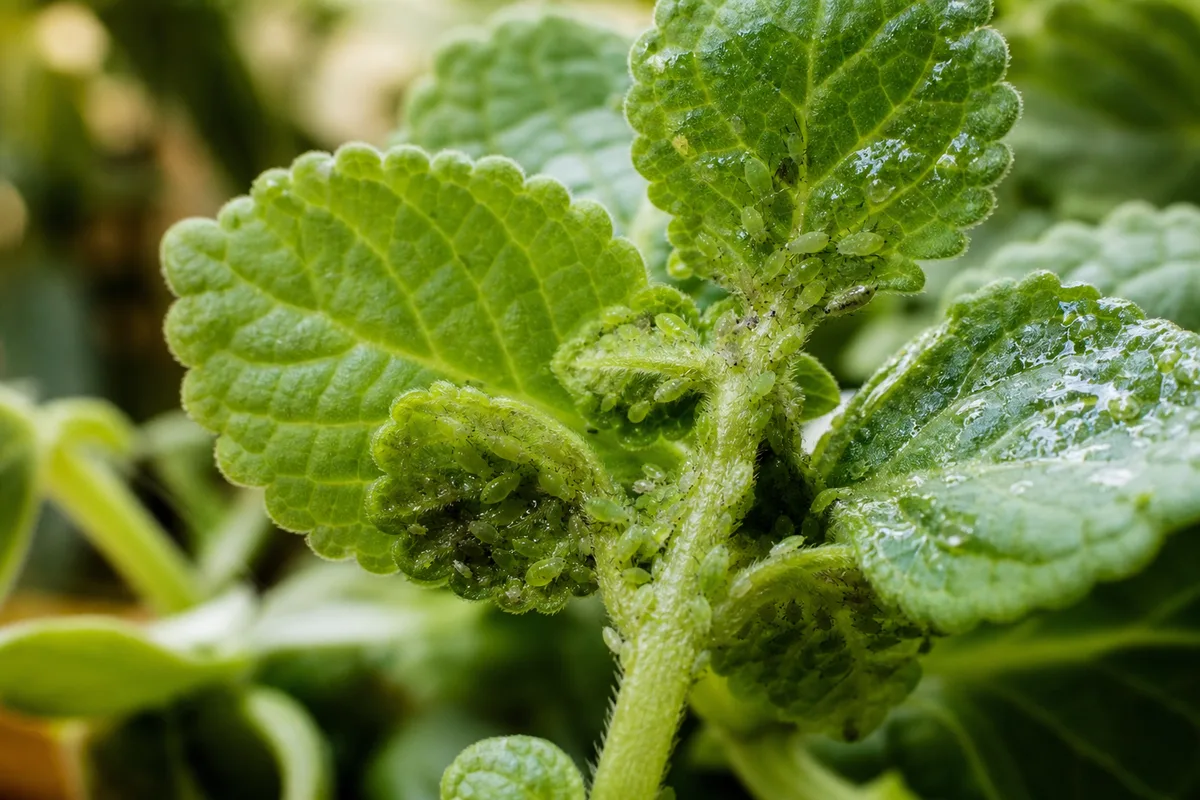
Aphids symptoms on Swedish Ivy - compare with healthy tissue on the same plant.
Unlike mealybugs, aphids are not cottony white. Unlike scale, they move when disturbed. Unlike spider mites, they do not leave fine webbing or stippled older leaves across the whole plant.
How to confirm the cause
- Stem-tip scan - Start at the softest growth at the ends of trailing runners and any swelling flower buds.
- Underside check - Colonies often hide below young scalloped leaves pressed against stems along the hanger.
- Honeydew test - Wipe a glossy upper leaf; if stickiness returns within a day, sap feeders are still active.
- Ant trail follow - Ants on basket hardware usually lead to aphids above on trailing tips, not root rot below.
- Soil moisture check - Wet mix with yellow lower leaves and no insects points to overwatering, not aphids. Aphid damage concentrates on tender tips while the pot dries on your normal schedule.
Lookalike symptoms to rule out
Mealybugs form white cottony masses in leaf axils and tight crown centers. UF/IFAS notes that Swedish Ivy is often the first plant in an area to show mealybugs-not aphids-but the cottony appearance distinguishes them. Scale insects look like hard brown bumps that do not move. Spider mites cause yellow stippling and webbing on older leaves in hot dry air. None of these produce clusters of soft pear-shaped insects on fresh trailing shoots.
First fix for Swedish Ivy
Isolate the plant away from other houseplants until you see no new aphids for at least two weeks after treatment.
Rinse colonies off with a firm water spray. Move the hanging basket to a sink or shower, wrap the soil surface in plastic to keep mix contained, and spray new shoots, leaf undersides, and flower buds thoroughly. Hold trailing stems and direct water from below so undersides get direct contact. Let foliage dry completely afterward in Swedish Ivy light guide, not direct sun. Repeat every two to three days to knock down nymphs that hatch between rinses.
If colonies remain after two or three rinses, apply insecticidal soap or neem oil labeled for ornamentals. Cover all tender growth thoroughly and repeat every five to seven days for two to three cycles.
Wipe honeydew from leaves with a damp cloth. Swedish Ivy is generally considered non-toxic to pets, but keep treated plants away from curious animals until sprays have dried.
Do not repot, prune heavily, or fertilize on the same day you start treatment. Make one correction first so you can read the plant’s response.
Step-by-step recovery
Once aphids are confirmed, work in this order:
- Isolate - Move the basket away from other plants and open windows that might spread winged aphids.
- Rinse - Shower or sink-wash stem tips, bud clusters, and leaf undersides with lukewarm water. Knock aphids into the drain rather than onto nearby pots.
- Light alcohol touch for small colonies - On a few accessible clusters, a cotton swab dipped in rubbing alcohol can kill insects on contact. Test one leaf first; alcohol can burn sensitive tissue if overused.
- Soap or neem if rinsing fails - Spray insecticidal soap or neem oil on all infested tissue. Treat in early morning or evening so wet foliage is not sitting in hot direct light.
- Remove hopeless tissue - Cut off flower spikes or leaf clusters so heavily coated that spray cannot reach every hiding spot. Sterilize scissors between cuts.
- Monitor weekly - Inspect stem tips during each watering check. One missed nymph can restart the cycle in warm weather.
- Hold fertilizer - Skip feed until new growth looks clean for two weeks. Soft nitrogen-rich shoots invite reinfestation.
Recovery timeline
Visible aphids should clear within one to two weeks of consistent rinsing or soap treatment. Expect clean new shoots within three to five weeks during active growth. Distorted young leaves will not fully flatten once hardened. Flower spikes that dropped from feeding are gone for that cycle-judge success by the next clean flush, not by reopening old buds.
Firm trailing stems and stable older leaves throughout treatment are good signs. Yellowing lower leaves with soggy mix means overwatering-not aphids-and needs a different response immediately.
Mistakes to avoid
Do not ignore honeydew-it can lead to sooty mold that blocks light on glossy leaves.
Do not over-fertilize while fighting aphids. Lush nitrogen-driven growth produces more tender tissue pests prefer.
Do not return an isolated plant to a mixed display before you have confirmed no live aphids for at least two weeks.
Do not compost heavily infested clippings near outdoor Swedish Ivy baskets.
Do not assume sticky leaves alone mean aphids without finding insects-confirm before spraying chemicals.
How to prevent aphids next time
Scout new growth weekly from late spring through peak summer growth. Swedish Ivy produces constant soft shoots at trailing tips during this window-the tissue aphids prefer.
Quarantine new hanging baskets for several days before combining them with existing displays.
Keep even moisture using your normal Swedish Ivy watering guide when the top inch of mix feels dry. Swedish Ivy in bright light dries quickly, but chronic drought stress invites pests.
Preserve beneficial insects when baskets sit outdoors. Lady beetles, lacewings, and parasitic wasps control aphids when broad-spectrum sprays have not wiped them out.
Avoid excess nitrogen that produces lush leafy growth with fewer flowers-tender shoots attract aphids.
Pinch stem tips regularly after flowers fade to encourage branching without pushing excessive soft growth from heavy feeding.
Improve airflow around crowded baskets on sheltered porches. Stagnant warm pockets favor aphid buildup on trailing tips hidden from view.
When to worry
Treat as urgent when honeydew and sooty mold spread across most trailing runners within days, flower spikes abort before opening, or the plant stops producing clean new tips despite treatment. Replace severely declining baskets rather than fighting endless reinfestation on a stressed specimen-Swedish Ivy roots easily from cuttings, so starting fresh with clean stock is often cheaper than repeated chemical cycles.
A few aphids on one new tip during active growth is common and manageable. Confirm insects first; escalate only when colonies spread or ants farm the plant.
Conclusion
Aphids on Swedish Ivy concentrate on the softest trailing growth, but early rinsing and isolation stop most outbreaks before honeydew coats your whole hanging basket. Inspect stem tips, rinse before you spray, and repeat until new growth comes in clean. That diagnostic path saves healthy runners from unnecessary chemicals and stops sap loss before trailing stems weaken.
When to use this page vs other Swedish Ivy guides
- Swedish Ivy watering guide - Use for routine moisture checks before assuming aphids is the main issue.
- Swedish Ivy problems hub - Browse all 18 common issues on this species.
- Yellow Leaves on Swedish Ivy - Different entry point when symptoms overlap with aphids.
- Leaf Drop on Swedish Ivy - Different entry point when symptoms overlap with aphids.