Deformed New Growth on Swedish Ivy: Causes, Checks & Fixes
Quick answer
Deformed new growth on Swedish Ivy shows as curled, puckered, or undersized leaves at trailing stem tips. Compare two runners on the same basket-damage on only the freshest outer tips while inner stems look glossy points to pests, cold, or root stress on tender tissue, not a whole-plant nutrient lack.
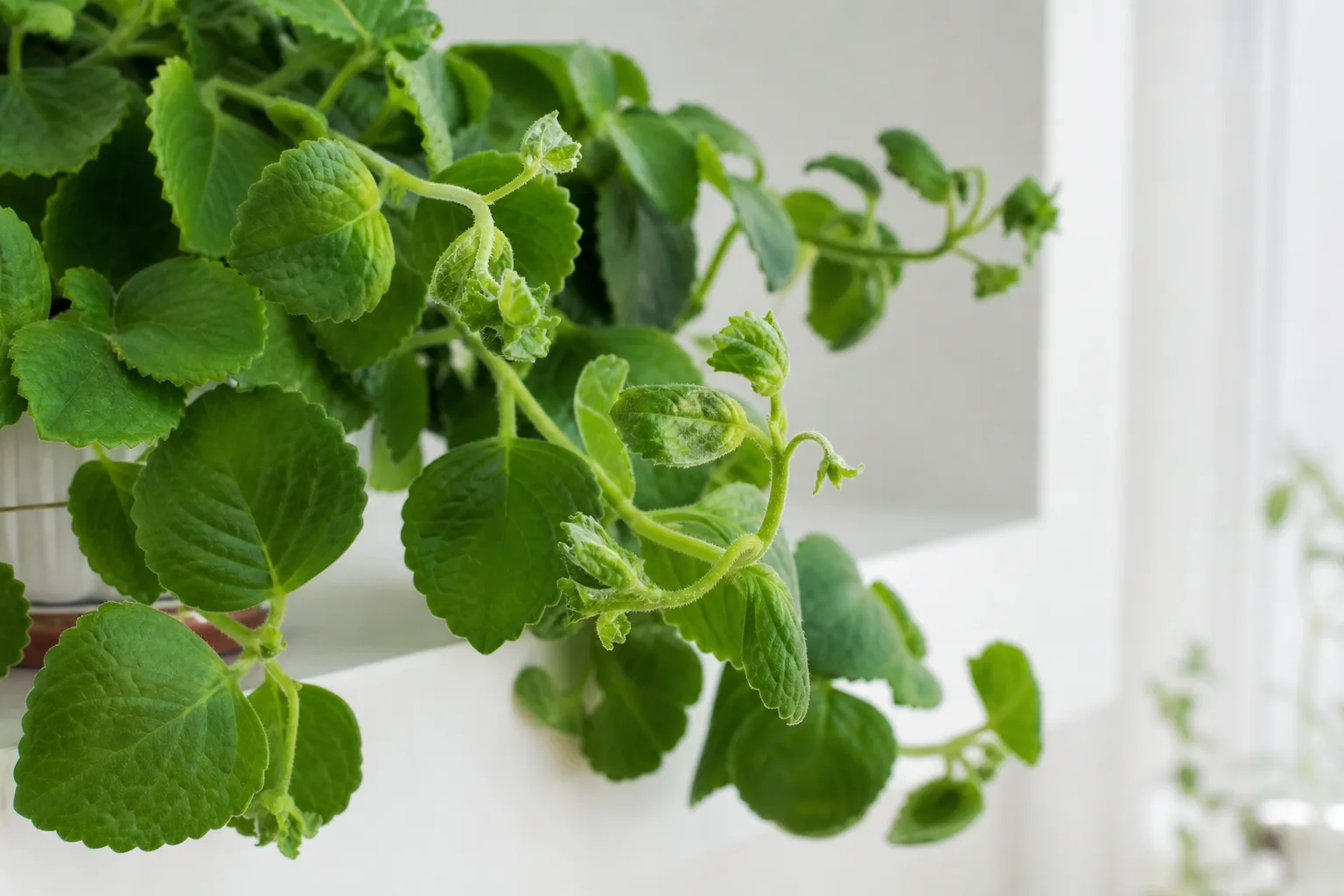
Deformed New Growth on Swedish Ivy: Causes, Checks & Fixes
This guide covers deformed new growth on Swedish Ivy. See also the general Deformed New Growth guide, watering, and light pages for this plant.
Deformed New Growth on Swedish Ivy: Causes, Checks & Fixes
Quick answer
Deformed new growth on Swedish Ivy (Plectranthus australis, often grouped with P. verticillatus) shows up at the ends of trailing runners: new scalloped leaves curl, pucker, stay smaller than older foliage, or twist as they unfurl. The problem almost always hits tender tissue still expanding-not fully hardened blades lower on the stem.
Compare two runners on the same basket before you change care. If only the outer trailing tip shows curled unfurling leaves while a neighboring runner still looks glossy and symmetrical, suspect aphids, cold air on fresh tips, or failing roots-not a fertilizer shortage affecting every leaf equally. Hold a white paper under a stippled tip and tap the leaf; moving specks confirm spider mites in dry window air.
First step: inspect the softest new shoots and leaf undersides at stem tips for aphids, mealybugs, or mites. Swedish Ivy pushes vulnerable growth quickly in spring and summer; pests that prefer tender new tissue often distort only the newest leaves while older trailing stems still look glossy. Do not reach for fertilizer until you have ruled out insects and checked whether the pot is wet, cold, or root-compromised.
Scope on this site: This page owns tip-only deformation on unfurling growth at runner ends. For the broader twisted-or-wrinkled-leaf diagnostic hub-including watering stress, fertilizer burn, and the full symptom table-see distorted leaves on Swedish Ivy.
Deformed new growth vs. distorted leaves on Swedish Ivy
These two URLs overlap in causes but answer different search intents:
| Your symptom | Best page | Why |
|---|---|---|
| Curling, puckering, or stunting only on the softest unfurling tips at runner ends | This page | Focuses on new-growth deformation before leaves harden |
| Twisted, wrinkled, or cupped new blades across several vine sections, with full pest-vs-care branches | Distorted leaves | Broader diagnostic hub with symptom quick-reference table |
| Long bare stems with small but symmetrical leaves | Leggy growth | Low light stretch-not asymmetric tip puckering |
| Whole trailing stem limp on very wet or very dry soil | Drooping leaves | Whole-stem wilt, not isolated tip curl |
In mixed hanging displays, aphids often colonize the longest outer runners first-the stems that brush past neighboring plants-while shorter inner stems stay clean until the infestation spreads. That one-runner-hit pattern is why the two-runner comparison belongs in your first minute of inspection.
What deformed new growth looks on Swedish Ivy
Healthy Swedish Ivy forms closely spaced, glossy green leaves with scalloped edges along each trailing stem. Deformation is easiest to spot where growth is newest.
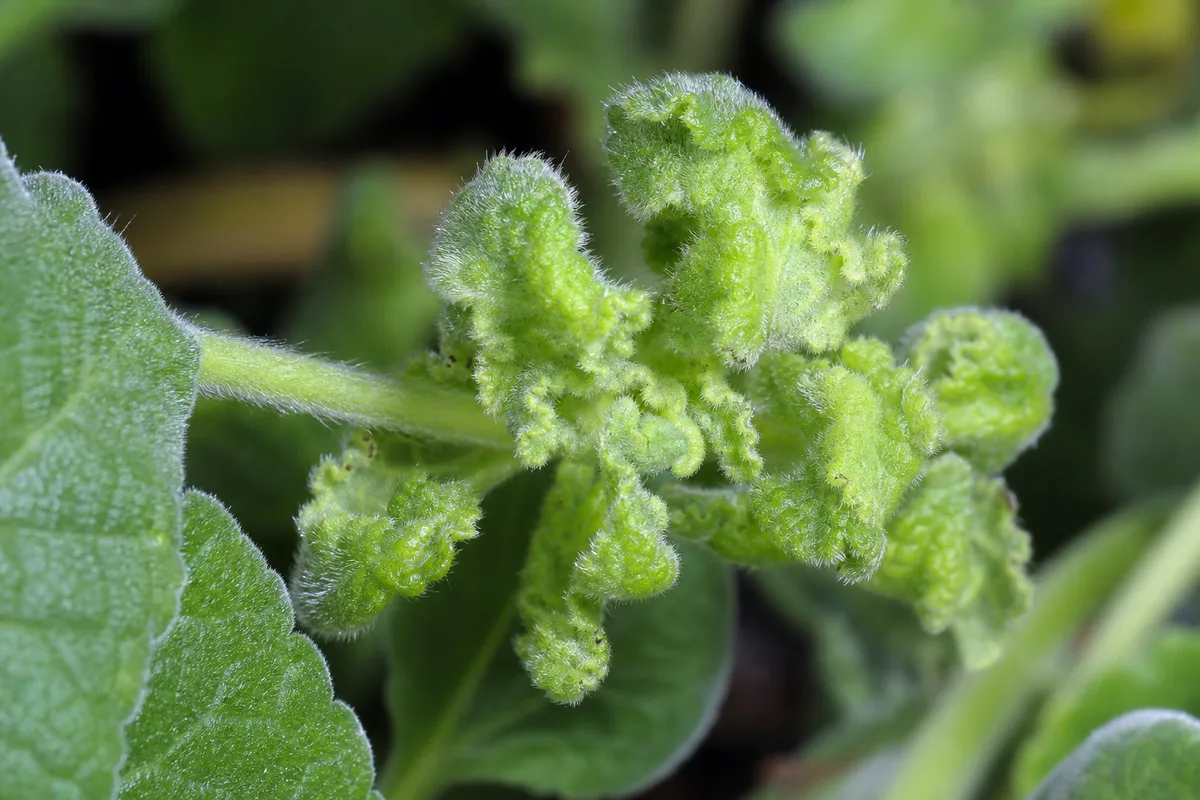
Deformed New Growth symptoms on Swedish Ivy - compare with healthy tissue on the same plant.
Typical signs on Swedish Ivy tips:
- New leaves curling inward, puckering, or failing to expand to full size
- Twisted or uneven leaf edges on shoots at runner ends while mid-stem leaves look normal
- Stunted tips that stop elongating, sometimes with yellowing on the smallest leaves
- Soft, limp new growth combined with dull older foliage when roots are failing
- Sticky shiny residue on glossy upper leaves below distorted tips (honeydew from sap feeders)
- Pale or bronzed stippling on new leaves when spider mites are active in dry window air
Old curled leaves rarely flatten-track recovery on new tissue at runner ends, not by waiting for hardened puckered blades to reshape.
Why Swedish Ivy gets deformed new growth
Swedish Ivy produces soft stem tips, unfurling scalloped leaves, and occasional flower spikes during active growth. Spring and early summer are the highest-risk window: fast flushes of tender tissue attract sap feeders before leaves harden.
Aphids on tender trailing shoots. Aphids cluster on new growth and leaf undersides, piercing sap-rich tissue. Their feeding-and the saliva some species inject-causes leaves to curl and become distorted. On a hanging basket, damage often appears only on the outer runners you see first. Ants on hanger chains often farm aphid colonies on tips above-see the dedicated aphids guide for treatment depth.
Cold drafts on fresh tissue. Swedish Ivy prefers average temperatures and moderate light year-round. It can tolerate brief dips to about 40°F outdoors, but temperatures below 50°F (10°C) cause stress when baskets hang near exterior doors, leaky windows, or AC vents in winter. New tips exposed to cold air often emerge smaller, curled, or damaged while older hardened leaves show less change. Cross-check draft stress if distortion followed a cold snap.
Root rot and chronic wet mix. Overwatered Swedish Ivy develops yellowing, wilting, and soft stems at the soil line when root rot takes hold. Roots cannot deliver water and nutrients to expanding leaves, so new growth looks weak, small, or misshapen even though you are still watering. This plant stores some water in its stems but still needs functioning roots for normal leaf development. Chronic wet baskets also invite fungus gnats-a clue that moisture rhythm, not fertilizer, needs fixing first.
Spider mites in hot dry air. Mites pierce leaf cells on runners nearest warm windows, causing stippling and bronzed foliage on dull upper surfaces. Severe feeding can leave new tips curled, slow, or smaller than healthy side shoots-often alongside fine webbing on undersides. Full mite biology and repeat-spray cadence live on the spider mites page.
Mealybugs on soft shoots. White cottony masses on stems and leaf undersides signal mealybugs. Swedish Ivy is often the first plant in an area to show them. Feeding on tender tips can stunt and distort new leaves before the cottony coating becomes obvious across the whole basket-see mealybugs on Swedish Ivy for wipe-and-soap protocol.
Less common: excess nitrogen in dim light. Heavy fertilizer during weak light produces soft succulent shoots that aphids favor and that may look uneven-but the underlying issue is usually light plus pest pressure, not a lack of nutrients.
How to confirm the cause
Work from the tips inward on each trailing runner.
- Tip and underside scan - Hold the softest stem ends at eye level and check both sides of unfurling leaves. Pear-shaped aphids, cottony mealybug patches, or fine webbing confirm sap feeders.
- Honeydew and ant check - Wipe a glossy leaf below a distorted tip. Stickiness returning within a day means active feeding above. Ants on hanger chains often lead to aphid colonies on tips.
- Soil and stem-base test - Push a finger into the top inch of mix. Constant wetness, sour smell, or a soft mushy stem at the soil line point to root trouble-not insects. Dry, crispy lower leaves with firm roots suggest underwatering or heat stress instead.
- Temperature and placement audit - Note whether the basket sits in a winter draft path or directly under a cold AC vent. Distortion that started after a cold snap fits draft damage.
- Mite paper test - Tap a stippled runner over white paper. Moving specks confirm mites; deformation without movement or webbing points elsewhere.
- Two-runner comparison - On the same plant, compare an affected outer runner with a clean inner stem. Tip-only damage on one runner strongly suggests pests or localized cold-not whole-plant nutrient deficiency.
Cause comparison table
| Cause | What you see on soft tips | Key check | First move |
|---|---|---|---|
| Aphids | Inward curl, puckering, honeydew shine | Pear-shaped insects on undersides | Isolate; rinse undersides |
| Spider mites | Pale stippling, bronzed tips, slow unfurling | Moving specks on paper tap; fine silk | Shower knockdown; see mite guide |
| Mealybugs | Stunted tips before cotton spreads wide | White wax in leaf axils | Wipe colonies; insecticidal soap |
| Cold draft | Small curled tips after cold night | Basket near door, window, or AC vent | Move to stable 60–75°F spot |
| Root rot / wet mix | Weak small tips; soft stem at soil line | Top inch wet weeks; sour smell on unpot | Dry-down; stem-tip propagation salvage |
| Excess nitrogen + dim light | Soft uneven shoots; no insects | Recent heavy feed in low light | Hold fertilizer; improve light |
Lookalike symptoms to rule out
Leggy growth means long bare stems with wide gaps between normal-sized leaves-classic not enough light, not curling tips. Yellow lower leaves from overwatering affect older foliage first; aphid distortion usually clusters on newest tissue. Direct sun scorch bleaches or browns exposed upper leaves; it does not typically twist every new tip on inner runners.
First fix for Swedish Ivy
Inspect soft new shoots and rinse or remove sap feeders before changing care.
If you find aphids or mealybugs: isolate the basket, move it to a sink or shower, wrap the soil surface to keep mix contained, and rinse colonies off with a firm water spray-covering leaf undersides and swelling buds at stem tips. Let foliage dry in bright indirect light, not direct sun. Repeat every two to three days until new tips stay clean for two weeks. If colonies persist, apply insecticidal soap labeled for ornamentals on a five-to-seven-day repeat schedule. For heavy aphid detail, follow the aphids guide.
If pests are absent but mix stays wet and the stem base feels soft: stop watering, confirm drainage, and take stem tip cuttings from the healthiest runners rather than waiting for deformed tips to recover on a rotting parent plant. See root rot for unpot and trim protocol.
If distortion followed cold exposure: move the basket to stable room temperatures (60–75°F / 16–24°C) away from draft paths. Do not prune every tip immediately-wait to see whether the next flush of growth emerges clean.
Step-by-step recovery
Once the primary cause is addressed:
- Trim only after new growth looks healthy - Pinch or cut distorted hardened tips above a leaf pair to redirect energy into fresh shoots. Swedish Ivy tolerates severe pruning and roots readily from cuttings.
- Improve light without scorching - Move gradually to brighter indirect light so recovered tips do not stretch leggy. Direct sun burns leaves outdoors; indoors, avoid sudden jumps to hot south glass. See Swedish ivy light for placement.
- Resume modest feeding only on stable plants - Feed lightly during active spring and summer growth after pests are gone and soil moisture is predictable per the watering guide. Do not fertilize a wilted or recently treated plant.
- Root salvage cuttings - If root rot limited new growth, root trimmed healthy runners in clean moist mix or water per the propagation guide. Dispose of severely rotted parent material to protect neighboring baskets.
If rinse-and-spray fails after two weeks: Escalate with a second insecticidal soap cycle at five-to-seven-day intervals, ensuring full coverage on glossy undersides. Neem oil at labeled rates is an option when soap alone misses hidden colonies-never apply in hot direct sun on soft new tissue. Persistent mealybug wax may need alcohol swabs on individual clusters before the next soap pass.
Recovery timeline
Typical indoor-basket ranges based on editorial observation-not a clinical guarantee. Your room temperature, light, and infestation severity will shift timing.
| Milestone | Typical timing |
|---|---|
| Pests knocked down after rinses | 3–7 days |
| Clean new tips emerging | 2–4 weeks after cause fixed |
| Basket looks full again after tip pruning | 4–8 weeks in active growth |
| Flower spikes on recovered runners | Next bloom cycle if light and feeding are adequate |
Old curled leaves rarely flatten. Track progress on new tissue at runner ends.
What not to do
Do not blast distorted tips with high-nitrogen fertilizer hoping to force normal leaves-soft growth attracts more aphids and does not fix root rot. Do not repot into a huge pot on day one unless roots are clearly failing; excess wet mix worsens deformation. Do not hang the basket back with other plants until pests are gone for two weeks. Do not spray neem oil or soap on every problem before confirming pests-chemical injury can distort glossy leaves in hot direct sun. Do not assume every small winter tip is diseased; growth slows naturally in cool short days-worry when spring light returns and tips stay twisted with pest signs or wet soil.
When to worry
Treat as urgent when:
- Distortion spreads along every runner while mix stays wet and stems soften at the soil line-unpot and inspect for root rot before more spraying
- Soil smells sour on wet mix, or the whole basket wilts without recovering after watering
- Every new tip stays twisted after four weeks of corrected care and repeated pest treatment
- Sticky honeydew and ants cover hanger chains while multiple runners show active colonies-infestation is basket-wide, not one outer tip
Lower urgency when distortion is confined to one outer runner with visible aphids, firm roots, and stable room temperatures-the first rinse plus soap often clears it within two to four weeks.
UF/IFAS notes that when Swedish Ivy wilts and does not recover after watering, root rot is likely-take stem-tip cuttings from healthy runners and dispose of the diseased parent rather than waiting for deformed tips to heal.
How to prevent deformed new growth next time
Scout stem tips weekly during the spring flush-the window when Swedish Ivy pushes the softest tissue aphids target. Bright indirect light, stable temperatures above 50°F (10°C), and water when the top inch of mix feels dry keep growth firm rather than overly soft. Quarantine new plants for two weeks before mixing hanging displays-outer runners in mixed baskets are the first infestation bridge. Rinse foliage monthly in winter when heating dries window air-mite-prone conditions start on the warmest runners. Swedish Ivy is non-toxic to cats and dogs, so you can hang baskets in brighter spots without toxicity worry while still keeping sprays away from pets until dry.
Related tool
Use the Plant Problem Diagnosis Tool to narrow causes for deformed new growth on this plant before changing multiple variables at once.