Underwatering on Stromanthe Triostar: Causes, Checks & Fixes
Quick answer
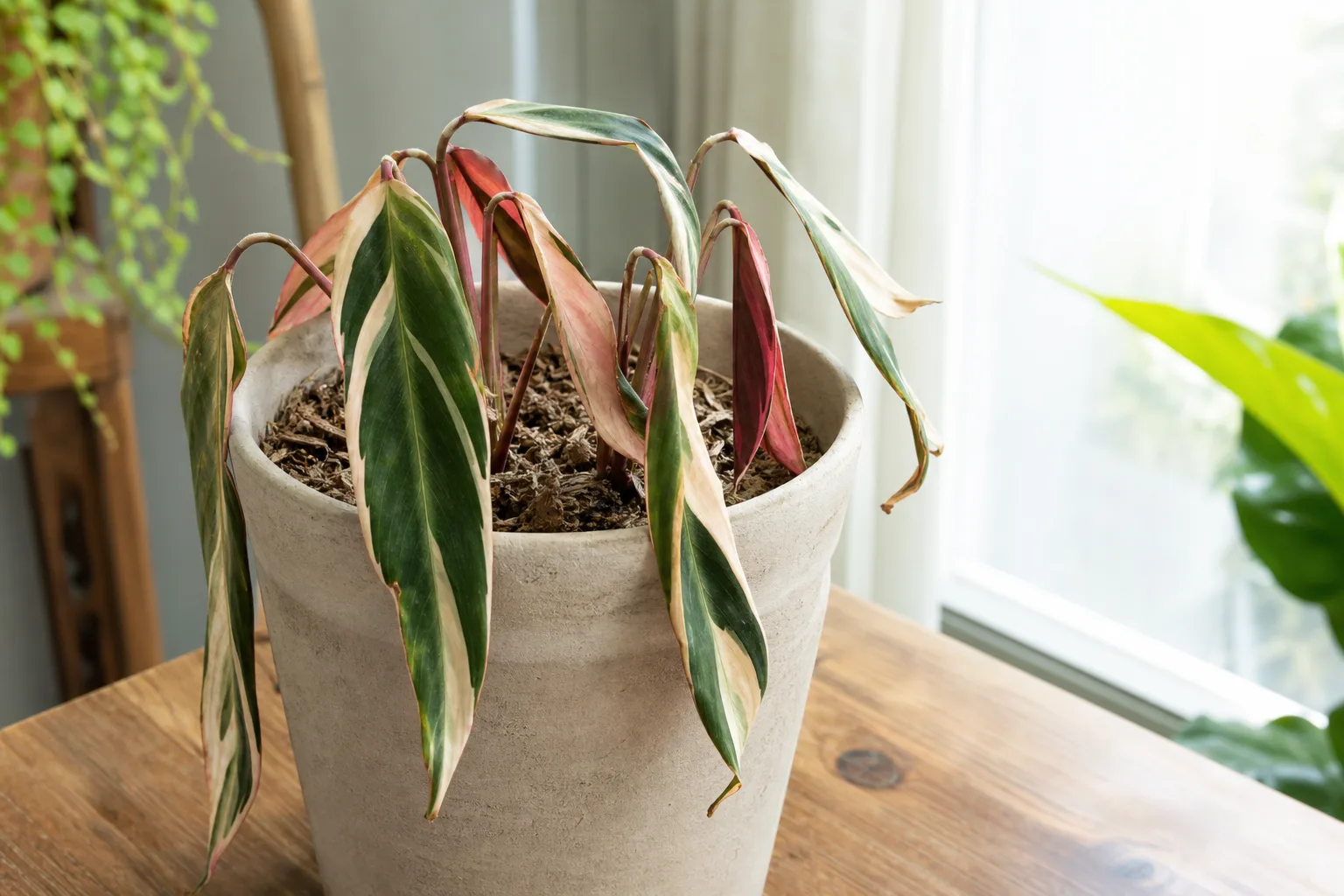
Underwatering Stromanthe Triostar shows as curled daytime leaves, crispy brown edges on cream and pink panels, and a pot that lifts light with dry mix an inch down. First step: soak the root ball thoroughly until water drains, then adjust checks so the top inch never stays bone dry for days.
Underwatering on Stromanthe Triostar: Causes, Checks & Fixes
This guide covers underwatering on Stromanthe Triostar. See also the general Underwatering guide, watering, and light pages for this plant.
Underwatering on Stromanthe Triostar: Causes, Checks & Fixes
Quick answer
Underwatering Stromanthe Triostar means the root ball dried too far or stayed dry too long-not a single missed watering on vacation, but a pattern where fine roots cannot keep thin, variegated leaves hydrated. Missouri Botanical Garden culture notes that for Stromanthe Triostar overview, soils must never be allowed to dry out indoors, even though the mix must still stay moist but well-drained rather than soggy.
First step: water slowly and thoroughly until the entire root zone rewets and excess runs from the drainage holes, then empty the saucer. Do not mist leaves, trim heavily, or repot on day one. Confirm drought with pot weight and a finger test at the top inch before you pour-prayer plants in the Marantaceae family can look equally miserable from too much water, and the fix is opposite.
Why Stromanthe Triostar underwatering happens
Triostar is not a forgiving drought-tolerant houseplant. It comes from Brazilian rainforest understory where moisture is reliable and drainage is sharp-not from a habitat that tolerates long dry spells. Wisconsin Horticulture Extension describes the cultivar as needing the medium kept evenly moist during active growth, with only a slightly longer dry-down in cooler, dimmer months. That narrow moisture window is where most indoor failures start.
Several patterns push Triostar into drought despite good intentions:
Fear of root rot on Stromanthe Triostar. Growers who have lost prayer plants to overwatering on Stromanthe Triostar often swing too far the other way, waiting until leaves curl hard before watering. Triostar’s thin leaves signal thirst within hours; by the time cream panels crisp, the root zone has often been dry for days.
Small pots in bright, dry rooms. A 4-inch nursery pot on a sunny sill can lose surface moisture in two days while the owner still follows a weekly calendar. Heat vents and air conditioning accelerate evaporation from both soil and foliage.
Hydrophobic peat mix. When peat-heavy soil dries completely, it repels water. The surface may look briefly damp after a quick pour while the center stays bone dry-a classic underwatering trap on moisture-retentive mixes Triostar prefers.
Seasonal schedule drift. Intervals that worked in dim winter get applied through spring growth without adjustment. New spears use water faster; the same ten-day gap that was safe in January can leave mix desert-dry by April.
Low humidity paired with dry soil. Dry air alone can crisp edges, but when humidity is low and the pot is light, leaves lose water from both directions. Humidity support helps recovery but does not replace root-zone moisture.
What underwatering looks like on Stromanthe Triostar
Triostar announces drought faster than many houseplants because variegated leaves have less green tissue to photosynthesize and thin panels lose turgor quickly. Learn these patterns on daytime foliage-prayer plants fold leaves upward at night as normal nyctinastic movement, which is not the same as drought curl.
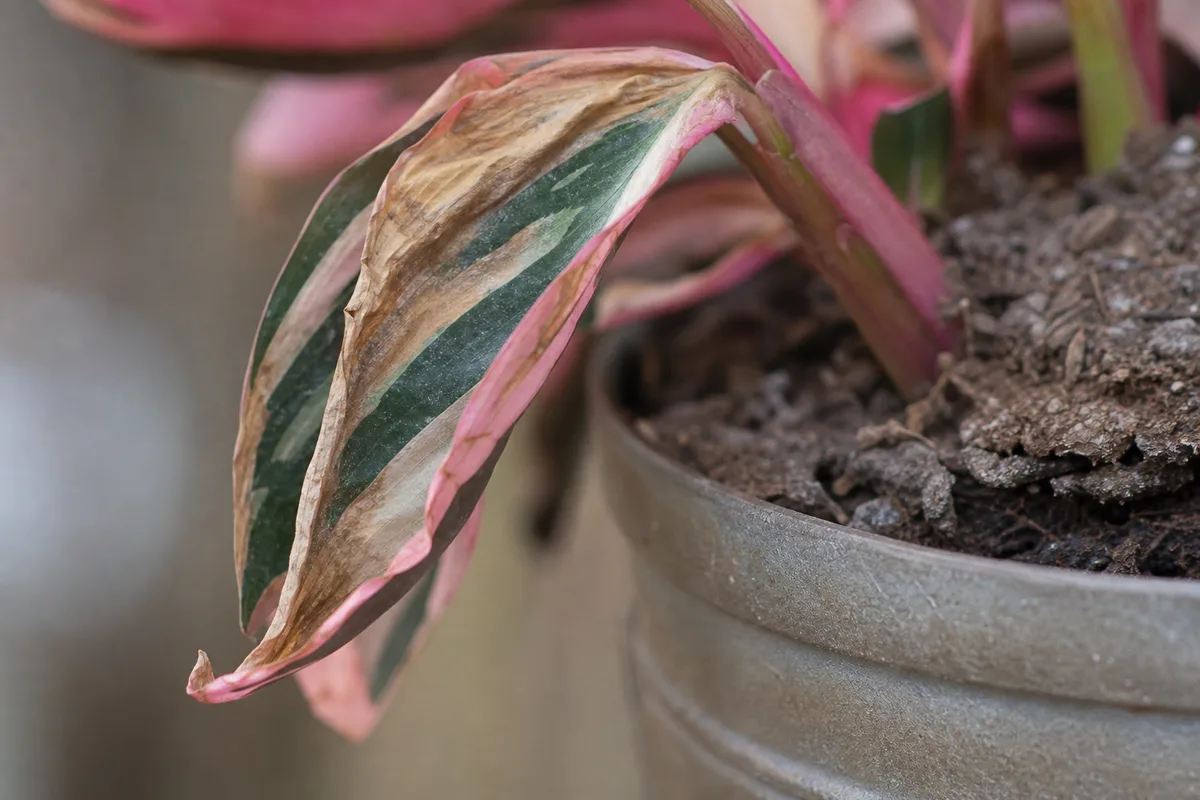
Underwatering symptoms on Stromanthe Triostar - compare with healthy tissue on the same plant.
Early drought signals:
- Leaves roll inward or cup during the day, especially on newer growth
- Petioles and stems feel limp, though not mushy
- Pot lifts noticeably lighter than right after a full watering
- Top inch of mix is dry and crumbly; skewer pulled from mid-pot comes out clean
Established underwatering:
- Crispy brown edges and tips on pink and cream leaf sections-the pale tissue scorches first
- New spears slow, stall, or brown before fully unfurling
- Mix shrinks and pulls away from the pot wall; water channels down the gap without rewetting roots
- Variegation fades toward plain green as the plant deprioritizes color maintenance
- Older leaves may yellow and drop after repeated dry cycles
What underwatering does not look like:
- Yellow limp leaves on wet, heavy soil-that pattern points to overwatering or root failure
- Uniform brown patches on leaves facing a window-that is often direct sun scorch
- Sour-smelling mix with fungus gnats on constantly damp surface-overwatering, not thirst
Crispy brown tissue is dead. It will not revert to pink or cream. Judge recovery by firm new leaves and spears, not by old edge marks.
How to confirm underwatering before you water
Always check soil and pot weight before reacting to leaf posture. Prayer plant relatives wilt from both too little and too much water; pouring on already-wet mix makes rot more likely than recovery.
Work through these checks in order:
- Pot weight - Lift the container. A thoroughly watered Triostar pot feels distinctly heavier than one ready for water. If it is light and you can tilt it easily with one hand, drought is likely.
- Surface and depth moisture - Push your finger to the first knuckle (about 1 inch / 2.5 cm). Dry, loose mix at that depth supports thirst. If the surface is dry but the pot still feels heavy and cool, wait-the center may hold adequate moisture.
- Skewer or chopstick test - Insert a dry bamboo skewer to the lower third of the pot, wait thirty seconds, pull it out. A clean, dry stick means the root zone needs water. Clinging dark particles mean hold off.
- Daytime leaf posture - Inward curl or droop during daylight, combined with dry soil, confirms drought. Night folding alone is normal.
- Hydrophobic check - If water runs straight through in seconds and out the bottom while the surface looks barely damp, the mix may be repelling moisture. That is still an underwatering problem-the root ball is dry inside.
- Rule out wet-soil wilt - If leaves are limp but soil is wet, smell sour, or you see gnats, do not water. Inspect drainage and consider root health instead.
When dry soil and light pot align with curled daytime leaves, underwatering is confirmed. Proceed to rehydration.
First fix for underwatered Stromanthe Triostar
Water slowly at the soil surface until the mix is evenly rewetted and roughly 10–20% of the volume runs from the drainage holes, then discard all saucer water within thirty minutes.
Use room-temperature filtered, distilled, or rainwater when possible-Triostar is sensitive to chlorine, fluoride, and minerals that cause edge burn on rehydrating leaves. Pour in two or three passes if the first round channels through hydrophobic dry peat without soaking the center.
If water runs off immediately and the pot still feels light:
- Bottom-soak the bottom third of the pot in a tray of room-temperature water for 20–45 minutes, then drain fully
- Repeat top watering once the mix has softened enough to absorb normally
Do not mist foliage as a substitute for soil moisture. Do not prune crispy edges until turgor returns-wait 24–48 hours after a proper soak so you can see which tissue is fully dead versus partially damaged. Do not fertilize a drought-stressed plant; rehydrate first.
Step-by-step recovery
After the initial thorough watering:
- Wait for the legitimate dry-down - When the top inch feels dry again, water fully. Avoid daily sips that wet only the surface and encourage shallow roots.
- Raise humidity near the canopy - Run a humidifier or group plants to reduce further edge crisping while roots rebuild. High humidity supports rainforest understory plants but does not replace soil moisture.
- Move to Stromanthe Triostar light guide - Adequate light helps the plant use water predictably without scorching pale panels. Direct hot sun on drought-stressed leaves worsens crisping.
- Bottom-soak once more if needed - If weight stays light two days after top watering, repeat a bottom soak to break hydrophobic dry pockets.
- Trim only fully dead tissue - Snip leaves that are entirely brown and papery after the plant regains firmness. Leave partially green leaves; they still feed recovery.
- Inspect roots only if symptoms persist - If leaves stay limp after two proper soak cycles, slide the plant out. Firm white roots mean keep adjusting water and humidity. Mushy brown roots mean root rot from prior overwatering-not current drought-and need different treatment.
Hold off on Stromanthe Triostar repotting guide unless mix is completely broken down or roots are rotting. Fresh repotting on a stressed Triostar adds shock on top of drought.
Recovery timeline
Mild dehydration often shows improvement within hours to one day-leaves uncurl and petioles firm up after a single thorough watering when roots are still healthy.
Moderate underwatering with crispy edge damage typically needs one to two weeks of consistent moisture before new growth looks normal. Old brown margins remain until those leaves are replaced.
Repeated drought that damaged fine feeder roots may need two to four weeks before new spears unfurl cleanly. Recovery is slow because the root system must rebuild before leaves can hold turgor under normal evaporation.
Signs you are improving: daytime leaves lie flat, pot weight cycles predictably between heavy and light, new spears emerge without browning at the tip, and curl stops appearing between waterings.
Signs the problem is worsening: continued collapse after two full soak cycles, new spears dying before opening, or yellowing spread on dry soil-possible root damage from earlier stress cycles.
Lookalike symptoms to rule out
Low humidity crisps leaf edges while mix moisture may still be adequate. Check humidity at canopy height and proximity to heat vents. Fix with a humidifier; do not overwater if the pot is already heavy.
Tap water mineral burn shows progressive brown tips on new leaves even when you water on schedule. Switch to filtered or rainwater and flush salts if a white crust forms on the soil surface.
Overwatering produces yellow limp leaves, sour soil, and fungus gnats on wet mix. Wilting on wet soil indicates root problems, not thirst-hold the watering can and inspect roots instead.
Direct sun scorch creates bleached or brown patches on leaves facing the window, often with dry soil from fast evaporation but not necessarily a fully dry root ball. Move out of hot direct rays.
Cold draft or cold water shock can curl leaves immediately after watering. Use room-temperature water and keep Triostar away from winter window sills and AC blasts.
Mistakes to avoid
Do not assume every curled Triostar leaf means underwatering without checking soil-wet-soil wilt sends many growers to the watering can when they should stop.
Do not mist instead of soaking dry roots. Foliage mist raises humidity briefly; it does not rehydrate a dry root ball.
Do not water on a fixed calendar without reading the pot. Bright spring growth, small pots, and dry indoor air all shorten the interval.
Do not give daily tiny pours to “play it safe” after drought. That wets the crown repeatedly without rewetting the full root zone and can encourage surface mold.
Do not fertilize until new growth looks stable and moisture has been consistent for several weeks.
Do not repot on day one unless mix is hydrophobic beyond rescue or roots are clearly rotting from a prior overwatering episode.
Stromanthe Triostar care cross-check
Underwatering prevention on Triostar is mostly about matching water frequency to how fast your pot dries-not copying someone else’s Tuesday schedule.
Stromanthe Triostar watering guide: Check before every pour. Water when the top inch is dry, then soak until runoff. In active growth that often means every five to ten days indoors; in cool winter months, ten to fourteen days or longer-but always confirm with weight and touch.
Light: Bright indirect light helps the plant use water steadily. Too dim slows growth but also slows drying, which can mask overwatering; too bright without adequate moisture accelerates drought crisping on pale leaf panels.
Humidity: Target 60% or higher near the canopy during heating season. Wisconsin Extension notes that without adequate humidity, leaf edges dry out starting at the margins-a pattern that overlaps with underwatering and makes diagnosis harder.
Water quality: Filtered, distilled, or rainwater reduces edge burn that can look like drought damage on new leaves.
Container: Use pots with drainage holes. If you bottom-water after drought, still top-water occasionally to flush mineral salts from peat-heavy mix.
When to worry
Treat underwatering as urgent when the entire clump collapses, multiple new spears brown before unfurling, or soil has been completely dry for many days during hot, dry conditions. Fine roots die back in prolonged drought, and even correct watering afterward cannot always save a plant that has lost most of its root system.
Repot into fresh mix only if inspection reveals mostly dead roots after repeated dry-wet cycles, or if hydrophobic soil no longer absorbs water despite repeated soaks. Otherwise, stable moisture and humidity give Triostar a strong chance to push new growth from the rhizome.
If leaves yellow and soften on wet soil after you have been watering heavily out of guilt, switch diagnosis to overwatering or root rot-continued soaking will finish the plant off.
Conclusion
Underwatering on Stromanthe Triostar is a moisture-deficit problem on a plant that was never built for drought. Confirm with a light pot and dry mix an inch down, rehydrate with a full soak-and-drain cycle, and adjust your check rhythm as light and season change. Crispy old edges may stay, but firm new spears and uncurling daytime leaves tell you the root zone is working again-and that is the recovery that matters.
When to use this page vs other Stromanthe Triostar guides
- Stromanthe Triostar watering guide - Use for routine moisture checks before assuming underwatering is the main issue.
- Stromanthe Triostar problems hub - Browse all 17 common issues on this species.
- Wilting on Stromanthe Triostar - Different entry point when symptoms overlap with underwatering.
- Brown Tips on Stromanthe Triostar - Different entry point when symptoms overlap with underwatering.
- Yellow Leaves on Stromanthe Triostar - Different entry point when symptoms overlap with underwatering.
Related Stromanthe Triostar guides
- Stromanthe Triostar overview
- Stromanthe Triostar watering
- Stromanthe Triostar light
- Stromanthe Triostar soil
- Wilting on Stromanthe Triostar
- Brown Tips on Stromanthe Triostar
- Yellow Leaves on Stromanthe Triostar
- Overwatering on Stromanthe Triostar
- Drooping Leaves on Stromanthe Triostar
- Curling Leaves on Stromanthe Triostar
- Stromanthe Triostar problems