Root Rot on Stromanthe Triostar: Causes, Checks & Fixes
Quick answer
Root rot on Stromanthe Triostar starts when peat mix stays wet too long-especially in low light or an oversized pot. Stop watering, unpot, trim mushy roots, air-dry cut surfaces, and repot into fresh airy mix with bright indirect light.
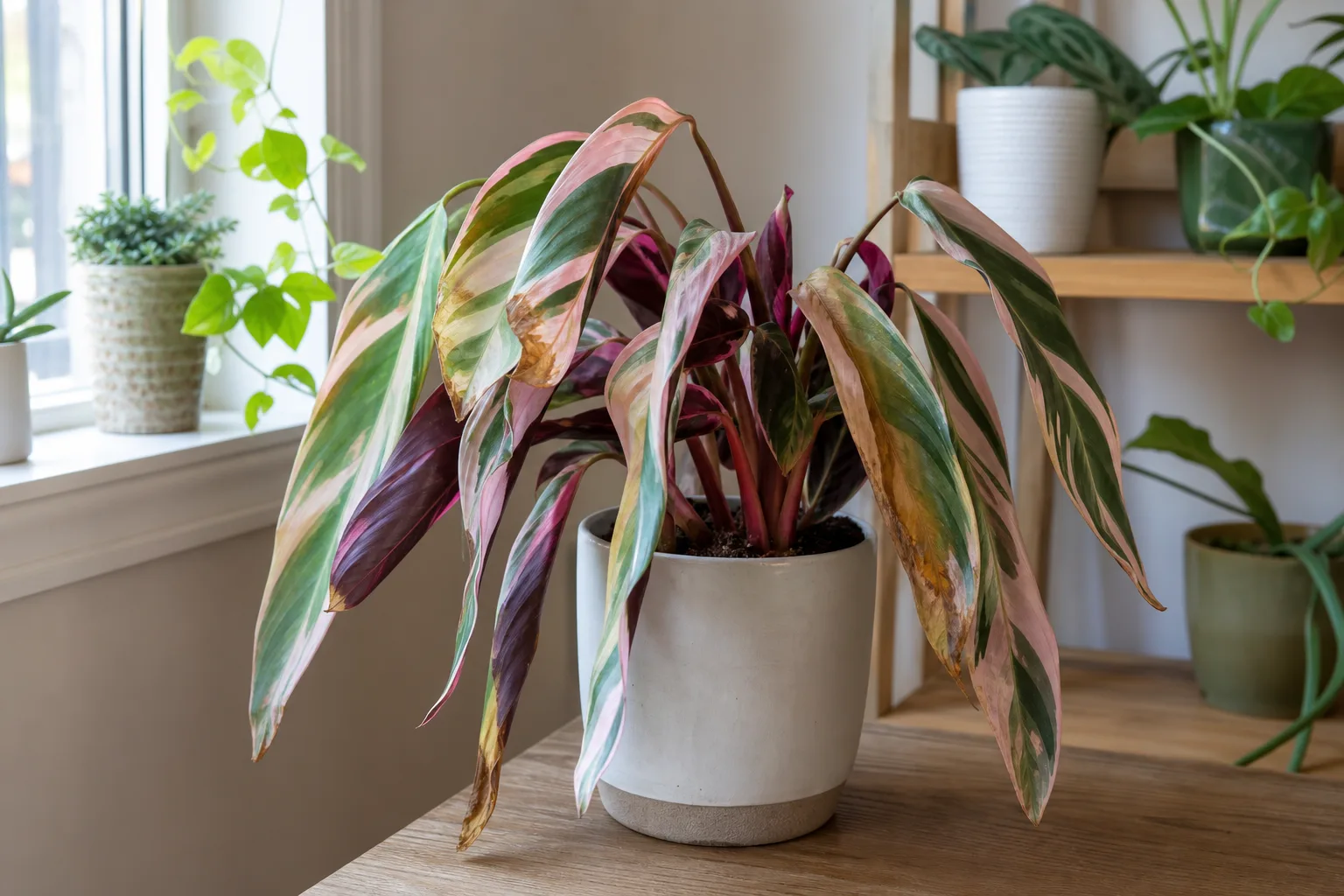
Root Rot on Stromanthe Triostar: Causes, Checks & Fixes
This guide covers root rot on Stromanthe Triostar. See also the general Root Rot guide, watering, and light pages for this plant.
Root Rot on Stromanthe Triostar: Causes, Checks & Fixes
Quick answer
Root rot on Stromanthe Triostar (Stromanthe sanguinea ‘Triostar’, also sold as Stromanthe thalia ‘Triostar’) is a drainage and oxygen problem-not a single bad watering day. Triostar needs moist but well-drained mix in the root zone; when peat stays waterlogged in dim corners or oversized pots, fine Marantaceae roots suffocate when surrounded by water and decay faster than many tougher tropicals.
First step: stop watering. Move the plant to brighter indirect light, then unpot and inspect roots within a day if the mix smells sour, stems feel soft at the base, or leaves wilt on wet soil. If rot is not yet confirmed-only a heavy pot and yellow lower leaves-start with overwatering triage before you cut roots.
What root rot looks like on Stromanthe Triostar
Triostar signals root failure through its thin variegated leaves and prayer-plant movement before the damage looks dramatic. Healthy plants fold leaves upward at night through nyctinasty; when roots rot, that movement slows or stops while petioles stay limp on saturated mix.
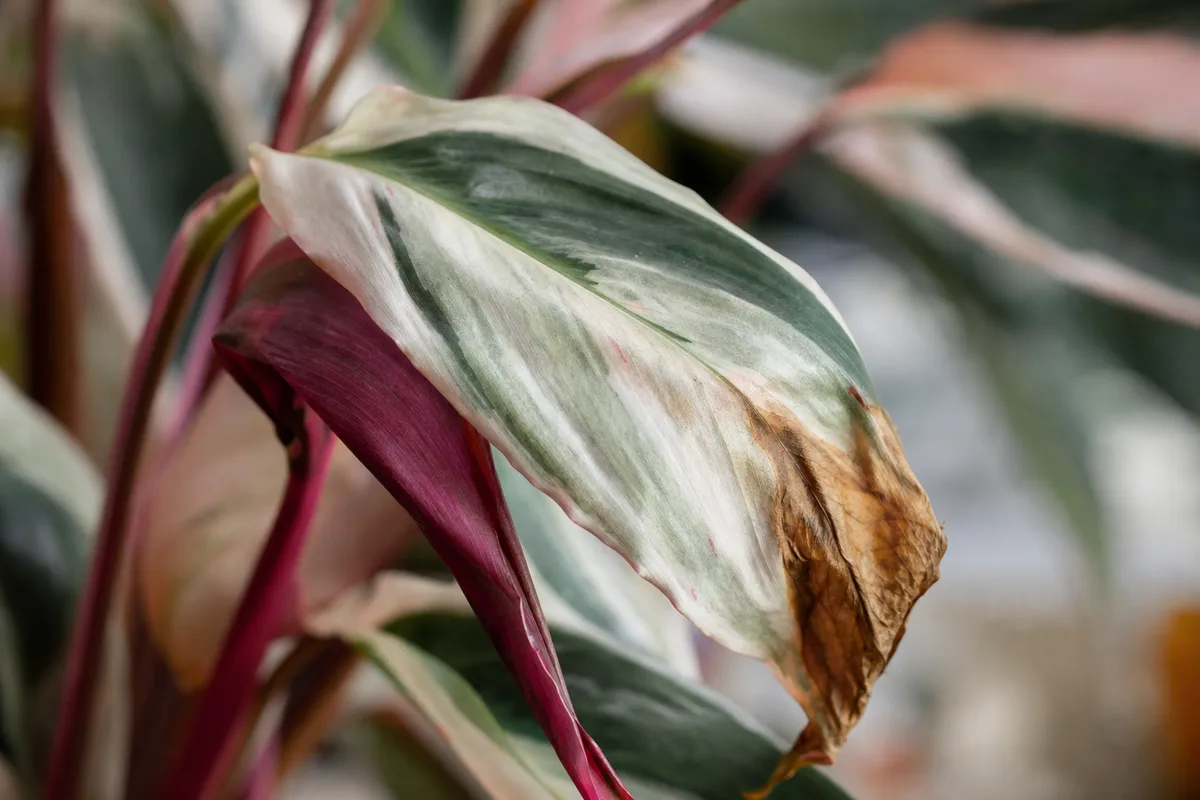
Root Rot symptoms on Stromanthe Triostar - compare with healthy tissue on the same plant.
Typical patterns
- Dull yellow lower leaves that stay soft-not crispy-on an otherwise wet pot
- Limp or drooping stems despite damp mix; the plant looks thirsty in a puddle
- New spears stall, stay rolled, or open with pale washed-out pink-and-cream color
- Sour, musty smell when you lift the pot or poke near drainage holes
- Brown, slimy roots that pull away easily when rinsed; healthy roots are firm and whitish to tan
- Soft brown patches at the crown where water sat on folded leaves after top-watering
- Fungus gnats hovering when surface soil stays damp for days
What is usually not root rot alone
- Crispy brown leaf edges with a light dry pot-more often low humidity or harsh tap water
- Pink and cream panels fading to mostly green-usually too little light, not rotten roots
- A single old yellow leaf at the base while the pot dries normally-normal aging
- Inward leaf curl with dusty dry mix throughout-see underwatering before assuming rot
Do not wait for every leaf to collapse. Triostar’s variegated tissue yellows on older lower leaves while the crown still looks green for a while.
Why Stromanthe Triostar gets root rot
Root rot follows chronic wet soil, not one generous drink. The most common setup is calendar watering in winter while the plant sits in a dim corner-mix that dried in four days in summer may stay wet for two weeks in December.
Plant-specific reasons this species rots:
- Peat-heavy mix without aeration - Triostar performs best in moisture-retentive, well-draining medium. Dense compacted peat loses air pockets at the bottom even when the top inch feels acceptable.
- Low light - In medium or dim indirect light, transpiration drops. Cooler rooms compound the problem.
- Oversized or cache pots - Extra soil volume without matching root mass stays wet at the center. Decorative pots without drainage trap saucer water against the rhizome.
- Sympathy watering - Triostar droops when underwatered, but it also droops when overwatered roots cannot take up water. Adding more water to already wet soil accelerates rot.
- Humidity confusion - High humidity supports leaves but does not replace drainage. Many growers overwater the pot while fixing dry air.
- Fresh repot into dense mix - New peat that has not opened up with roots can stay soggy at the bottom.
Triostar is rhizomatous and spreads at the soil line. Wet crowns rot faster than dry ones, especially if water standing on crowns pools where leaves fold together after top-watering.
How to confirm root rot
Work through these checks in order before you trim anything:
- Smell first - Lift the pot. Sour, swampy odor from drainage holes strongly supports anaerobic rot. Neutral smell with a heavy pot may still be overwatering without established rot.
- Pot weight and finger test - A cold, heavy pot days after watering confirms slow drainage. Press the top inch; wet clinging mix on a wilting plant is the classic rot context.
- Stem-base firmness - Gently squeeze petioles at the soil line. Soft, collapsing bases mean crown involvement-not a dry-down-only fix.
- Nyctinasty check - Note whether leaves still fold at night. Stopped movement on wet soil often precedes visible mushy roots.
- Root inspection - Slide the root ball out gently. Rinse lightly. Firm pale roots with a sour smell still mean repot and trim; mushy brown roots throughout confirm active rot.
- Severity count - Estimate what share of roots are mushy. More than half mushy, or a soft central rhizome, shifts the plan toward propagation salvage rather than simple repot.
If the top inch is dry, the pot is light, and edges are crispy with no sour smell, rule out underwatering before you assume root rot.
First fix for Stromanthe Triostar
Stop watering and move the plant to bright, indirect light until you can inspect roots.
Brighter light increases transpiration so the root zone can recover oxygen faster-without blasting variegated leaves in direct sun, which burns pale panels first. Tilt the pot over a sink to drain trapped saucer water. Do not fertilize, mist heavily, or repot on day one unless you already smell rot or find mushy tissue.
Once you confirm mushy roots, proceed to the numbered recovery below-not another dry-down cycle.
Step-by-step recovery
Follow this sequence once root rot is confirmed:
- Unpot and rinse roots gently - Knock away old mix. Work under running lukewarm water if needed to see root texture clearly.
- Trim all dead tissue - Cut mushy brown roots back to firm white or tan tissue with clean, sharp scissors or shears. Remove infected roots and repot in sterile soil when rot is limited; sterilize blades between cuts with rubbing alcohol if rot is extensive.
- Inspect the rhizome crown - Firm rhizome at the soil line can support recovery; soft black crown tissue means salvage divisions only. Cut away any soft crown patches back to firm tissue.
- Air-dry cut surfaces - Let trimmed roots and rhizome cuts sit in air for 12–24 hours on a clean tray. This reduces reinfection risk in fresh mix.
- Repot into fresh airy mix - Use a peat-based blend amended with perlite or fine orchid bark-roughly two parts peat to one part perlite works well for recovery. See the watering guide for long-term rhythm; the mix must drain while staying evenly moist below the surface.
- Right-size the pot - Choose a container only slightly larger than the trimmed root ball-about an inch of fresh mix around the sides. Oversized pots stay wet at the center and repeat the problem.
- Water once lightly, then wait - After Stromanthe Triostar repotting guide, give one moderate watering until a little runs from drainage holes, then empty the saucer. Hold the next drink until the top inch dries.
- Place in Stromanthe Triostar light guide - Recovery needs light to drive transpiration and root regrowth. Dim corners prolong wet mix.
- Hold fertilizer - Wait until a new spear opens cleanly before feeding at half strength during active growth.
- Salvage by division if needed - When the main clump is lost but lateral sections have firm rhizome and roots, divide and repot separately per the propagation guide.
Remove only fully dead leaves that pull away easily. Do not strip half-green foliage-the plant still needs photosynthetic area while roots rebuild.
Recovery timeline
Mild rot with less than one-third of roots trimmed and a firm rhizome often stabilizes within one to two weeks after repot. New spears may take two to four weeks to appear once roots regain function.
Yellow leaves rarely revert to full pink-and-green variegation-they stay yellow until they drop. Judge success by firm petioles, resumed nightly leaf movement, and clean new growth, not by old blemishes.
Moderate rot with 30–50% root loss can push visible recovery into four to eight weeks. Some lost variegation on new leaves may occur while the plant prioritizes survival over color.
Severe rot with more than half the root mass removed or crown damage may need a full growing season-or propagation from firm divisions may be the only save. If no new spear appears after six to eight weeks in warm bright conditions, the parent clump may not recover.
Lookalike symptoms to rule out
| What you see | Likely cause | Key check |
|---|---|---|
| Limp leaves + wet heavy soil + mushy roots + sour smell | Root rot | Trim, repot, bright light |
| Yellow lower leaves + wet pot + firm roots | Overwatering without rot yet | Stop water, dry-down, no trim |
| Inward curl + light dry pot + perks after soak | Underwatering | Edge soak; roots firm and pale |
| Crispy tips, firm roots, normal dry-down | Low humidity or tap-water salts | Fix air moisture; soil not swampy |
| Fine webbing on undersides | Spider mites | Not soggy soil; tap test |
| Gnats only, firm roots, no sour smell | Early wet surface | Fungus gnat control + dry surface |
The wilt-on-wet-soil paradox is the trap that converts overwatering into rot: damaged roots cannot absorb water, so the plant looks thirsty while sitting in a puddle.
Mistakes to avoid
Do not keep watering limp leaves when soil is already wet-that is how overwatering becomes established rot.
Do not repot into a much larger pot to “help drainage.” Extra wet soil volume makes the problem worse.
Do not skip the air-dry step after trimming. Fresh cuts into soggy mix invite rapid reinfection.
Do not fertilize a stressed root system hoping for new color. Feed only after stable new growth returns.
Do not assume high humidity fixes rot. Humid air helps leaves; it does not drain the pot.
Do not discard the plant on day one if firm lateral rhizome sections remain-propagation salvage often works when the main crown is lost.
How to prevent root rot next time
Build prevention around soil moisture checks, not a fixed weekday:
- Water when the top inch of mix dries-often every four to seven days in warm bright months and ten to fourteen days in cool dim months. Full rhythm is in the watering guide.
- Use pots with open drainage holes and empty saucers within 30 minutes of every watering.
- Right-size containers: an inch or two of fresh mix around the root ball at repot time is enough.
- Keep medium to bright indirect light so the plant uses water predictably.
- Monitor nyctinasty-stopped nightly leaf folding on wet soil is an early warning before mushy roots appear. High humidity supports leaves but does not replace drainage.
- Address fungus gnats promptly; they signal chronically moist surface layers.
Triostar dislikes bone-dry pots as much as swamp-but the surface must breathe between drinks.
When to worry
Treat as urgent same-day when stems collapse at the soil line, the mix smells rotten, yellowing spreads quickly across multiple leaves while soil stays wet, or soft crown tissue appears where water collected.
Escalate to propagation salvage when more than half the root mass is mushy after inspection, the central rhizome feels soft throughout, or no firm roots remain on the parent clump. Follow the propagation guide for division criteria.
Worry less about one yellow lower leaf on an otherwise drying pot after you corrected watering-or minor gnats that disappear once the surface dries.
If rot keeps returning on an otherwise healthy schedule, review pot size, mix aeration, and light together rather than watering alone.
Conclusion
Root rot on Stromanthe Triostar is advanced wet-soil failure-not a mystery disease. The fix starts with stopping water, confirming mushy roots and sour smell, then executing a careful trim-and-repot with airy mix and bright indirect light. Use the lookalike table to avoid cutting healthy roots, judge recovery by new spears and resumed leaf folding-not old yellow leaves-and link early wet-soil problems to overwatering triage before rot is established.
When to use this page vs other Stromanthe Triostar guides
- Stromanthe Triostar watering guide - Use for routine moisture checks before assuming root rot is the main issue.
- Stromanthe Triostar problems hub - Browse all 17 common issues on this species.
- Overwatering on Stromanthe Triostar - Different entry point when symptoms overlap with root rot.
- Yellow Leaves on Stromanthe Triostar - Different entry point when symptoms overlap with root rot.
- Wilting on Stromanthe Triostar - Different entry point when symptoms overlap with root rot.