Fungus Gnats on Stromanthe Triostar: Causes, Checks & Fixes
Quick answer
Fungus gnats on Stromanthe Triostar mean the peat surface stays wet too long-often from sympathy watering in a dim winter corner. First step: let the top inch dry before watering again and set a yellow sticky trap while you fix the moisture rhythm.
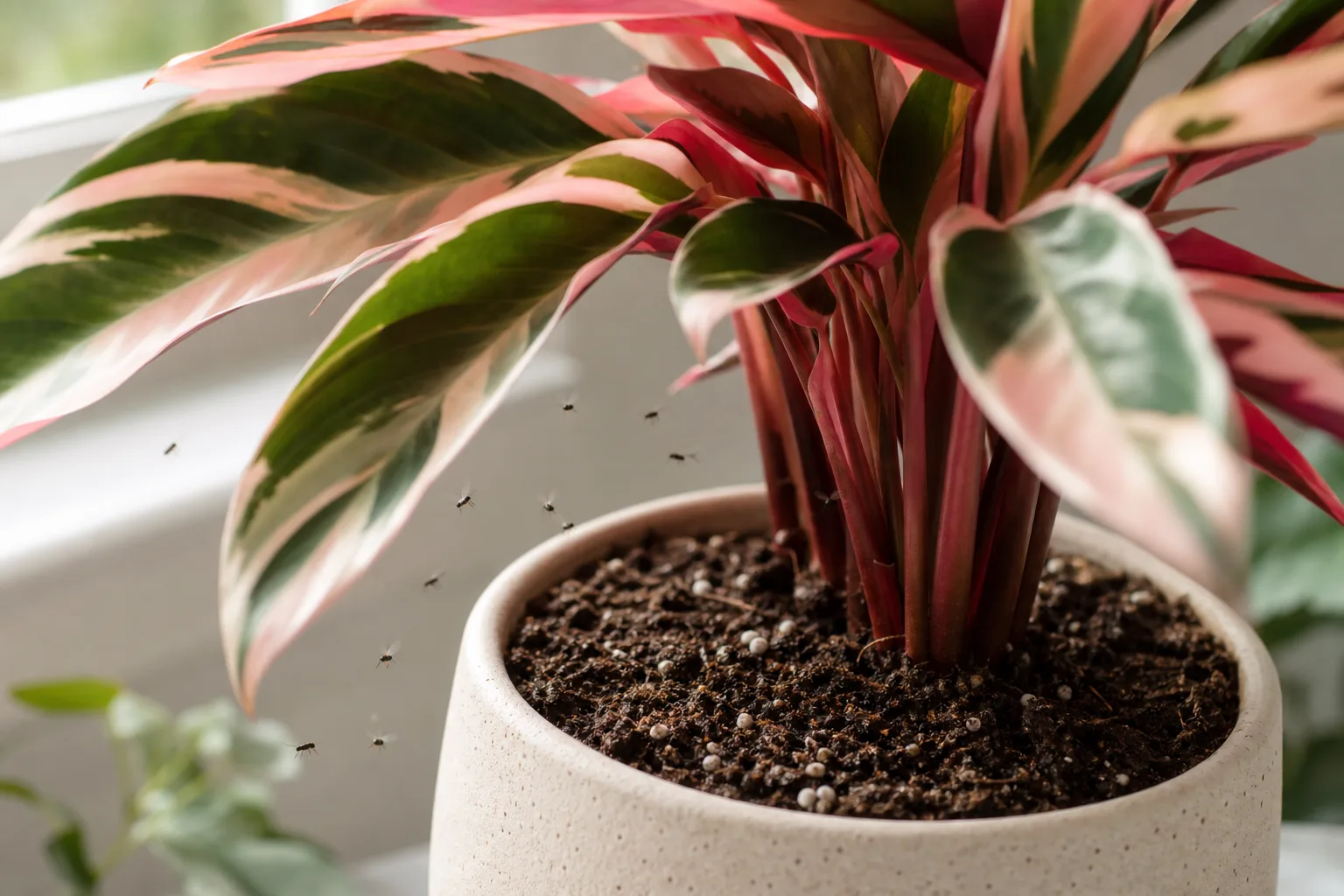
Fungus Gnats on Stromanthe Triostar: Causes, Checks & Fixes
This guide covers fungus gnats on Stromanthe Triostar. See also the general Fungus Gnats guide, watering, and light pages for this plant.
Fungus Gnats on Stromanthe Triostar: Causes, Checks & Fixes
Quick answer
If you bought a Stromanthe Triostar for its pink-and-cream prayer-plant foliage and now see small dark flies when you water, the peat surface has probably stayed wet too long. Triostar is often sold in dense nursery peat and parked in a north-facing room through winter-exactly where sympathy watering (“it loves moisture”) leaves the top layer chronically damp while roots sit in stale mix. That habitat is where fungus gnat adults lay eggs.
Triostar wants moist but well-drained soil at depth-not a permanently damp surface. The fix is not to desert-dry the whole pot.
First step: let the top inch of mix dry before you water again, and set a yellow sticky trap near the pot. That breaks the larval cycle in the upper soil while you catch flying adults. Do not reach for spray on day one-fix the moisture pattern that invited the gnats, then add larval control only if drying alone is not enough within two weeks.
What fungus gnats look like on Stromanthe Triostar
Fungus gnats are small, delicate-bodied flies-about fruit-fly size-with dark bodies and long legs. Adults run across the soil surface when you water or bump the pot, then scatter weakly toward windows. They do not bite humans or pets and pose no health risk to people, but they signal habitat problems in the pot.
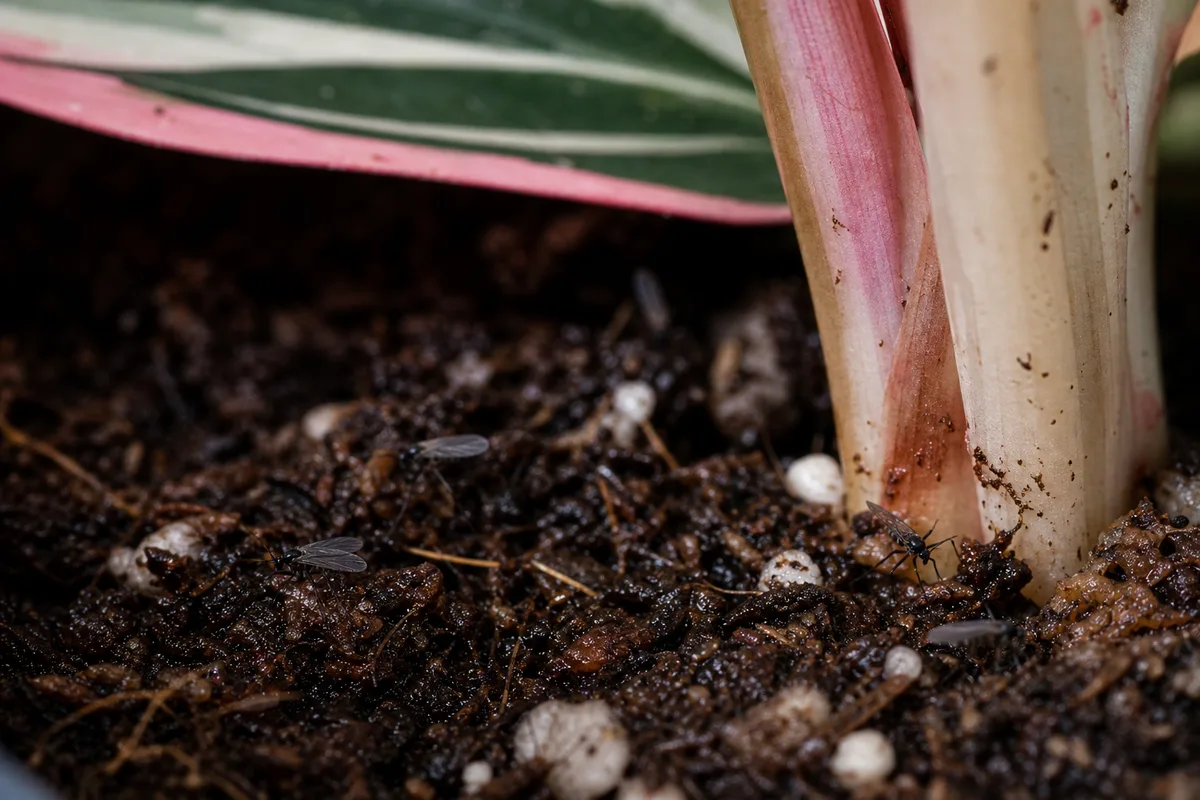
Fungus Gnats symptoms on Stromanthe Triostar - compare with healthy tissue on the same plant.
On Triostar, watch for these patterns:
- Flies rising in a cloud when you lift trailing leaves or water the surface
- Adults resting on damp peat, pot rims, or nearby window glass
- Top inch of mix that never dries between waterings, even in cooler months
- Translucent worm-like larvae with dark heads in the upper soil (visible with a hand lens or on a potato-slice test)
- Yellow sticky traps catching many tiny dark flies within a few days
Triostar’s thin, colorful leaves can look stressed from unrelated humidity or water-quality issues. Gnats themselves rarely mark foliage-they tell you the root zone environment is wrong. If you also see yellow lower leaves, limp stems, and sour-smelling soil while the mix feels wet, treat both gnats and possible root stress from overwatering.
Why Stromanthe Triostar gets fungus gnats
Fungus gnats can infest any houseplant, but they thrive where organic, moisture-retentive potting mix stays damp at the surface. Triostar is especially prone because of how it is usually grown.
The moisture paradox
Triostar belongs to the Marantaceae prayer plant family and needs consistent root-zone moisture-but gnat larvae need a persistently wet surface layer. The same “keep evenly moist” advice that keeps deep roots happy can breed flies if you water the calendar instead of the pot. The watering guide uses the same top-inch dry trigger as this page: when that inch feels dry, water thoroughly; when it stays damp for days, gnats follow.
Peat-heavy nursery mix and sympathy watering
Nursery Triostar often arrives in dense peat that holds water at the top while the center still feels acceptable. Peat-rich media attract egg-laying females more than fast-draining mixes. As peat ages in the pot, it retains even more moisture-exactly when gnat populations spike in winter collections. Watering on a fixed schedule-especially after you move the plant to a dimmer room-leaves the top layer chronically damp.
Low light, winter slow-down, and lost nightly folding
In dim corners, Triostar grows slowly and transpires less. The same watering rhythm that worked near a bright east window can leave peat soggy for a week or more in a north room. Cooler temperatures and shorter days reduce plant water uptake, so fall and winter are peak gnat season if watering habits do not shift.
Watch for reduced nyctinastic movement-Triostar’s leaves fold upward at night when healthy. If nightly folding weakens or stops while soil stays wet, overwatering stress may precede a visible gnat explosion. That behavioral shift often appears before yellow lower leaves.
High humidity without airflow
Triostar prefers high humidity, but misting the soil surface or grouping pots in stagnant humid corners keeps the top layer wet longer. Humidity helps leaves; it does not replace a dry surface cycle between waterings. See low humidity for foliage targets that do not require wetting peat.
Introduced on new plants or reused mix
Eggs arrive in nursery soil and spread to neighboring pots in shared trays. Quarantine skips are a common source in prayer plant collections where several Marantaceae share similar wet peat culture.
How to confirm the cause
Work through these checks before treating:
- Fly behavior - Fungus gnats emerge from the pot when disturbed and run on soil. Fruit flies hover in kitchens near fruit or compost, not specifically from one plant’s mix.
- Surface moisture - Push a finger into the top inch. If it feels wet or cool-damp days after watering, you have the habitat gnats need. Cross-check depth against the watering guide finger test.
- Pot weight and drainage - Lift the pot after watering and again several days later. A pot that stays heavy with no dry-down signals slow drainage or oversized container.
- Potato slice test - Place a half-inch slice of raw potato on the soil surface for 48 hours, then lift it. Shiny white larvae on the slice confirm fungus gnat maggots in the upper mix.
- Sticky trap count - One yellow trap near the pot catching multiple tiny flies per day confirms active adults; zero catches after a week suggests another fly source.
- Root check if leaves yellow - If lower leaves yellow while soil stays wet, knock the plant gently from the pot. Firm pale roots with gnats only mean moisture correction. Mushy brown roots mean overwatering damage-address roots per the root-rot guide, not just flies.
Gnats vs. overwatering on Triostar: Gnats confirm a wet surface; yellow limp leaves on heavy wet soil confirm the plant is already stressed. You can have both. Confirmed fungus gnats plus firm roots: focus on drying and larval control. Gnats plus mushy roots: treat as a watering emergency.
First fix for Stromanthe Triostar
Let the top inch of potting mix dry before the next watering, and place one yellow sticky trap upright in the pot or on the rim.
This single step targets the real problem. Allowing the upper soil to dry between waterings kills eggs and larvae and makes the surface less attractive to egg-laying adults. Sticky traps catch flying adults so you can monitor whether the population is falling-traps alone never solve larvae in soil.
For Triostar, drying the surface does not mean letting the entire root ball go desert-dry. Check the top inch with your finger; when it feels dry, water thoroughly until runoff exits the drainage holes, then empty the saucer. That preserves the evenly moist deep root zone Triostar needs while breaking the gnat cycle at the surface.
Do not repot on day one unless the mix is clearly failing. Do not drench with hydrogen peroxide or BTI before adjusting watering-you may stress roots in already-wet peat.
Step-by-step recovery
After the first dry-down and trap:
- Adjust watering to the pot, not the calendar. In bright filtered light, the top inch may dry every five to ten days in active growth; in cool dim months, ten to fourteen days or longer is common. Always confirm with a finger test per the watering guide.
- Improve light if the pot stays wet. Move Triostar to bright indirect light so the plant uses water faster. Avoid direct sun on pale variegated panels-they scorch easily when you relocate for faster dry-down.
- Empty saucers and clear debris. Remove fallen leaves and dead stem bits from the soil surface-they feed larvae as they decay. White or gray fluff on peat may mean mold on soil sharing the same wet-surface cause.
- Apply BTI if gnats persist after two weeks of proper drying. Bacillus thuringiensis israelensis (BTI) as a soil drench targets fungus gnat larvae. Per Mosquito Bits label directions: mix four tablespoons of granules in one gallon of water, soak 30 minutes, strain, and use the infused water to drench the pot. Repeat weekly for three weeks to cover overlapping life stages. Use the same filtered or rainwater you already give Triostar.
- Consider bottom watering temporarily if surface wetting worsens gnat pressure. Soak the bottom third of the pot for twenty to forty-five minutes, then drain fully. Alternate with occasional top watering to prevent salt buildup at the surface.
- Repot only when mix will not dry despite corrected habits-dense degraded peat, no perlite, or a pot far too large for the root ball. Follow the repotting guide with moisture-retentive but airy peat-based mix with added perlite; do not jump to a desert-style succulent blend that dries Triostar roots too fast.
- Quarantine heavily infested pots from other prayer plants until trap counts drop for at least a week.
Recovery timeline
Expect two to six weeks of consistent surface drying and larval control before gnats disappear completely. The life cycle spans several weeks with overlapping generations, so adults may keep emerging from soil even after you fix watering-sticky trap counts should trend downward week by week.
Signs of improvement:
- Fewer flies when watering
- Top inch dries predictably between drinks
- Sticky traps catch fewer than five adults per week
- New Triostar spears unfurl without additional yellowing
- Nightly leaf folding returns on healthy spears
Signs the problem is worsening:
- Swarms increase despite dry surface cycles
- Lower leaves yellow while mix stays wet and smells sour
- Larvae visible on potato slices after you thought treatment worked
- New growth stalls and stems soften at the base
Old leaves with minor edge crisping from earlier stress will not revert; judge recovery by clean new rolled leaves and stable roots, not perfect old foliage.
Lookalike symptoms to rule out
| Symptom source | Key difference on Triostar |
|---|---|
| Fruit flies (Drosophila) | Cluster in kitchens near fermenting food-not rising from one pot when watered |
| Shore flies | Stouter bodies; common in greenhouse flood trays, rare on a single indoor Triostar |
| Mold on soil surface | White or gray fluff without flies; same wet-peat cause-see mold on soil |
| Root rot without visible gnats | Yellow limp leaves and mushy roots in wet mix; gnats are a common companion but not required |
| Spider mites | Stippling and fine webbing on leaf undersides in hot dry air-the opposite habitat from fungus gnats |
Mistakes to avoid
Do not spray adults with general insecticide while ignoring wet soil-larvae keep developing in the mix.
Do not interpret “evenly moist” as “water every Tuesday.” Triostar needs moisture checks, especially after seasonal light changes.
Do not let the whole pot go bone dry for days trying to kill gnats. Surface dry-down is the target; prolonged drought damages fine prayer-plant roots and causes permanent leaf crisping.
Do not stop treatment after three days because adult numbers dip. Eggs and larvae remain in soil for weeks.
Do not reuse infested peat or leave decaying rhizome chunks in the pot-they feed larvae even after you reduce watering.
Do not bottom-water exclusively forever without occasional top flushes-mineral and fertilizer salts can accumulate at the surface in filtered-water routines.
Stromanthe Triostar care cross-check
While fighting gnats, keep the rest of care steady-changing water source, pot size, and placement all at once makes it hard to know what helped.
- Light: Bright filtered indoor light; enough brightness that the pot dries at a predictable rate-see light guide.
- Water: Top inch dry trigger; room-temperature filtered or rainwater when possible to avoid edge burn on new leaves.
- Humidity: Target high humidity for foliage, but pair it with airflow so leaves and soil surface do not stay wet together.
- Pot: Drainage holes mandatory; pot sized to root mass, not dramatically oversized.
- Mix: Moisture-retentive peat-based blend with perlite or bark for oxygen-see soil guide.
Triostar is non-toxic to cats and dogs, so sticky traps and BTI drenches around pet-accessible shelves are generally low risk-still keep traps where curious pets cannot chew them.
How to prevent fungus gnats next time
Let the top inch dry between waterings year-round, adjusting frequency when days shorten. Excessively moist soil favors fungus gnat development on virtually any houseplant; Triostar’s peat culture makes prevention about discipline, not luck.
Scrape fallen leaves from the soil surface weekly. Keep saucers dry after watering. Place new nursery plants in quarantine with their own trap for two to three weeks before mixing them with Calathea, Maranta, or other Triostar neighbors.
When repotting on schedule, refresh degraded peat with airy mix before it holds water like a sponge. A moisture meter can help beginners, but a finger in the top inch plus pot weight remains the most reliable check-aligned with the watering guide.
Monitor with one sticky trap in high-risk seasons-late fall through early spring when indoor heating and short days slow dry-down.
When to worry
Treat as urgent when gnats persist after four weeks of corrected drying and BTI drenches, when yellowing spreads up the plant while soil stays wet, or when inspection reveals mostly mushy roots and sour-smelling mix. At that point gnats are a symptom of root failure-not the primary problem. Follow the root-rot guide and consider contacting your local extension office or master gardener helpline for severe Marantaceae rot.
Salvage may require trimming rotted roots, repotting into fresh mix, and bright indirect recovery light. Severe crown mush on the rhizome may limit recovery to any firm divisions still attached.
A few gnats on an otherwise healthy Triostar with firm roots, good new spears, and a surface that dries between waterings is annoying but not an emergency-stay consistent with drying and traps.
Conclusion
Fungus gnats on Stromanthe Triostar mean the peat surface stayed wet too long-usually from sympathy watering, low light, or aged compact mix in a prayer-plant that genuinely needs moisture at depth. Dry the top inch before the next drink, trap adults to track progress, and add BTI only if larvae outlast two weeks of corrected habits.
You are winning when: sticky traps catch fewer than five flies per week, the top inch dries on a predictable rhythm, and new tricolor spears unfurl with firm petioles and normal nightly folding. Fix the habitat first and the flies follow.
When to use this page vs other Stromanthe Triostar guides
- Stromanthe Triostar watering guide - Use for routine moisture checks before assuming fungus gnats is the main issue.
- Stromanthe Triostar problems hub - Browse all 17 common issues on this species.
- Overwatering on Stromanthe Triostar - Different entry point when symptoms overlap with fungus gnats.
- Mold on Soil on Stromanthe Triostar - Different entry point when symptoms overlap with fungus gnats.
- Root Rot on Stromanthe Triostar - Different entry point when symptoms overlap with fungus gnats.