Stromanthe Triostar Repotting: When, How, and Mistakes
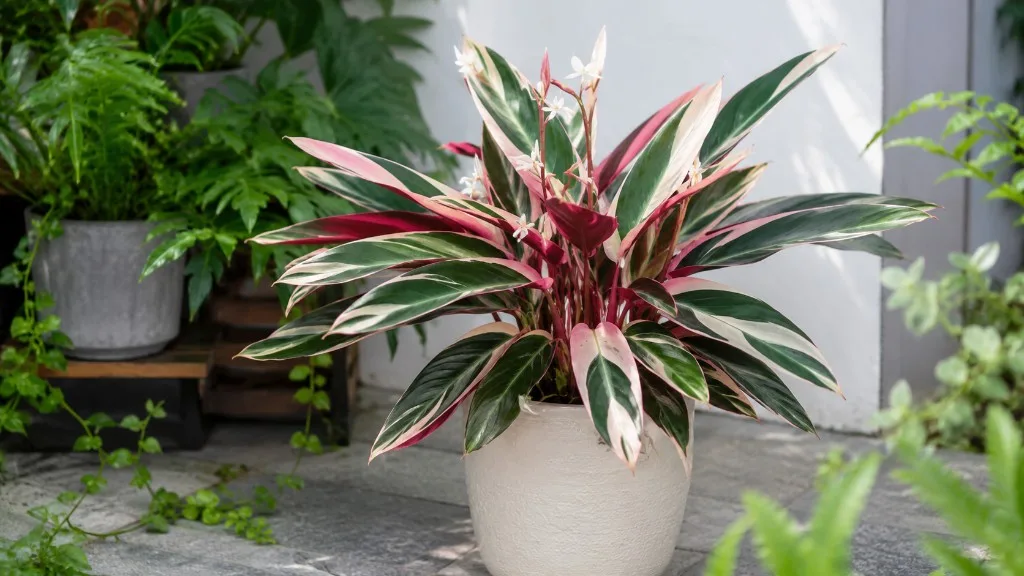
Stromanthe Triostar Repotting: When, How, and Mistakes to Avoid
Stromanthe Triostar Repotting: When, How, and Mistakes to Avoid
Stromanthe triostar (Stromanthe thalia ‘Triostar’, still widely labeled Stromanthe sanguinea in nurseries) is the showpiece of the prayer-plant world - cream, green, and pink variegation on elongated leaves that fold upward at night and reveal magenta undersides by day. That beauty comes with a reputation: Triostar is sensitive to change. Move it, divide it, or upgrade the pot at the wrong time and the plant responds with curled leaves, drooping stems, and faded color long before anything truly fatal happens. Repotting is one of the highest-stress events in its calendar, which is exactly why timing, pot choice, and soil matter more here than on a forgiving pothos.
Done well, Stromanthe triostar repotting is a quiet maintenance job every one to three years: a slightly larger pot, fresh peaty mix that holds even moisture without going swampy, a gentle root inspection, and optionally a rhizome division that turns one full clump into two. Done poorly - oversized container, bare-rooting, repotting in deep winter, dividing pieces too small, watering heavily into cold compacted mix - the same plant sulks for weeks and you spend that time guessing whether you killed it or merely annoyed it. This guide covers when to repot, why rhizomatous prayer plants need a lighter touch than fast growers, how to divide at repot time without losing variegation, and the mistakes that turn a routine upgrade into a recovery project.
Why Stromanthe Triostar Repotting Is Different from Most Houseplants
Stromanthe triostar belongs to Marantaceae, the same family as Calathea and Maranta. Like its relatives, it spreads through underground rhizomes - thick horizontal stems that send up clusters of leaves from distinct growth points. Wisconsin Horticulture Extension describes S. thalia as having short, creeping stems that form a bushy clump rather than racing upward on a single stem. That growth habit shapes every repotting decision: you are working with a spreading root architecture that prefers stable moisture and high humidity, not the fast-drying, gritty conditions a succulent wants, and not the deep vertical root zone a fiddle-leaf fig fills.
Repotting solves three problems that eventually show up as stalled growth, chronic leaf crisping, or mushy roots if you ignore them. First, even moderate growers eventually fill a container, circling roots at the bottom and reducing the air pockets mix needs to breathe. Second, organic components break down - peat and coir compress, perlite crumbles, and the blend that held moisture evenly in year one drains too fast or too slow in year three. Third, salts from tap water and fertilizer accumulate at the root zone, which can stress fine roots and show up as brown leaf edges even when you think watering is correct. Triostar is not a plant you repot on autopilot every spring; it is a plant you repot when roots, mix, or division goals give you a clear reason.
Rhizomatous roots and slow-to-moderate growth
Indoors, Stromanthe triostar typically reaches 60–90 cm (2–3 feet) in height and spread over several seasons, forming a full bushy clump from multiple rhizome points. Wisconsin Horticulture Extension notes that the cultivar remains 18 to 30 inches in containers - a moderate grower that typically needs repotting every one to three years, or whenever clearly pot-bound. Treat that range as a check-in reminder: a vigorous plant in a well-matched pot may sit comfortably for three years, while a nursery specimen in a tight 12 cm pot may need upgrading within the first active season.
Unlike monsteras or pothos, Triostar does not quickly colonize a large volume of fresh mix. Jumping to a much bigger pot creates a wet zone around a small root system - the classic setup for root rot on Stromanthe Triostar in moisture-loving tropicals. The rhizome structure also means roots and stems connect through shared tissue below the soil line; tearing apart the clump without identifying natural splits damages the pathways that move water into leaves. That is why gentle handling beats aggressive bare-rooting, and why division at repot time follows the rhizome’s natural geometry rather than arbitrary cuts through the center.
When repotting helps vs when it triggers stress
Repot when roots circle heavily or emerge from drainage holes, water runs straight through without absorbing, growth stalls despite good light and feeding, mix smells sour or drains in odd patterns, or you find brown mushy roots during inspection - not when a few outer leaves crisp after one dry week on an otherwise healthy plant. Emergency repotting for root rot is justified even outside the ideal season; routine repotting for a plant still draining well and unfurling clean new spears is optional. When in doubt, top-dressing the top 2–3 cm with fresh mix in early spring can buy time until a full repot is clearly needed.
Also repot nursery purchases sitting in dense, waterlogged peat that never dries evenly. Many big-box Triostars arrive root-bound in mix that looks fine on day one and becomes a compaction problem by month six. If you brought a new plant home recently, let it acclimate three to four weeks before repotting unless drainage is clearly failing - prayer plants hate stacked changes. Triostar can sulk after any environmental shift; stacking repot, relocation, and division on the same afternoon multiplies that response.
Signs Your Stromanthe Triostar Needs Repotting
The clearest sign is visual: roots emerging from drainage holes or a root ball that slips out as a dense cylinder with almost no loose mix on the sides. Less obvious but equally reliable signals include water that channels through in seconds without wetting the center, a pot that tips from top-heavy foliage despite a stable base, and new leaves arriving smaller or less variegated than older ones when light has not changed. When two or more appear during active growth, plan a repot. Do not repot because leaves rolled closed overnight after one missed watering - confirm roots or soil structure are the bottleneck first.
Root-bound, drainage, and stalled growth signals
Slide the plant out gently after a light watering the day before - dry rhizomes snap, but soggy mix smears and hides rot. If the root mass holds the shape of the container and white roots wrap the outer surface in a tight mat, you are looking at a classic root-bound situation. On Triostar, the visible root mass may look modest compared to the full leaf display above, which is why checking the bottom matters more than judging by foliage volume alone.
Fast drainage after watering sounds healthy until you realize water is bypassing a hydrophobic center because the mix has broken down. If the pot feels light again within hours of a thorough soak, the structure may be spent. Slow drainage combined with a sour smell, soft stems at the soil line, or leaves that yellow from the base upward points to rot that requires immediate repotting with trimmed roots and fresh airy mix. Stalled growth - no new spears for months in warm bright conditions while watering and humidity seem correct - often traces back to a root zone that has run out of usable space or oxygen.
Degraded mix, salt buildup, and root rot warnings
Even when roots still fit, spent mix is a valid repot trigger. Organic matter decomposes over 18–36 months indoors and the blend shifts from evenly moist to either brick-hard or permanently damp. White mineral crust on the soil surface or pot rim, plus chronic brown tips despite consistent care, suggest salt buildup that a full refresh fixes better than repeated flushing. A sour smell at the soil surface means anaerobic conditions may already be stressing roots - common when old peat compacts in a plastic pot that dries slowly on the surface but stays wet at the core.
Active root rot shows as brown mushy roots, a musty smell, and sometimes stem softness where rhizome meets soil. Rescue repotting requires removing all old mix, cutting rot back to firm white tissue, and replanting into fresh dry-leaning mix with adjusted watering - not simply moving the plant to a bigger pot and hoping the extra soil absorbs the problem.
Best Time of Year to Repot Stromanthe Triostar
Timing matters because Triostar recovers fastest when it is already geared for growth. Spring through early summer is the safest window for most indoor growers in the Northern Hemisphere. Rising temperatures and lengthening days trigger root activity, so the plant can colonize fresh mix and heal minor damage before short days return. Wisconsin Horticulture Extension recommends repotting and division in spring before new growth starts - separating clumps just as active growth begins gives each division the longest runway before winter slowdown.
Avoid repotting during the hottest week of summer if your home lacks air conditioning and the plant sits in a sun-heated south window. Heat plus freshly disturbed roots plus wet mix invites rot even in a well-draining blend. If you must repot in midsummer, keep the plant in Stromanthe Triostar light guide rather than direct sun for the first two weeks, maintain humidity above 50%, and water more conservatively than you would in spring.
Spring and early summer windows
During active growth, firm new spears often appear within two to four weeks after a well-executed repot. Early summer remains workable if spring passed quickly - keep temperatures near 21–27°C (70–80°F) and hold fertilizer until new growth shows, typically at least four weeks after repotting. Divisions typically need four to six weeks to establish when humidity and moisture stay consistent.
This is also the ideal window if you plan to divide and repot in one session. The plant has energy to repair rhizome cuts, push new roots into fresh mix, and support multiple smaller clumps without the prolonged dormancy that winter division invites.
When emergency winter repotting is justified
Winter repotting is a backup plan, not a default. Growth slows, humidity drops in heated homes, and a disturbed root system sits in mix longer because the plant is not pulling water actively. That combination increases rot risk for any Marantaceae plant. Skip winter repotting if the plant is merely slightly tight but still producing new spears and drying on a normal winter schedule.
Repot in winter only when delay would clearly harm the plant: active root rot requiring trimming and fresh mix, severe root-binding with repeated watering failures, or a container that has cracked or become unusable. If you must repot then, use a modest size increase, keep temperatures above roughly 18°C (65°F), provide bright indirect light, boost humidity with a tray or humidifier, and water lightly. Avoid division in winter unless you have grow lights and stable warmth - small splits struggle to root when days are short.
Choosing the Right Pot for Stromanthe Triostar
The most important pot decision for Stromanthe triostar is proportion, not decoration. Jumping from a 12 cm pot to a 20 cm pot feels generous, but the unused mix stays wet for days while the rhizome mass never reaches it. That wet zone is where Marantaceae roots rot, and the plant shows the problem as yellowing lower leaves, stem softness, and persistent leaf curl - symptoms that look like watering errors because they are oxygen problems at the root zone.
Measure the current inner diameter and choose a new pot 2.5–5 cm (about 1–2 inches) wider - one nursery pot size up. For a Triostar in a 12 cm pot, 14–15 cm is appropriate. From a 15 cm pot, move to 17–18 cm. Repeat the one-size-up rule each time rather than skipping sizes to reduce future work. Missouri Botanical Garden culture emphasizes moist but well-drained conditions in appropriately sized containers with drainage holes as non-negotiable.
One-size-up rule and drainage holes
Every pot needs drainage holes - at least one, preferably several on larger containers. Triostar wants mix that stays evenly moist, not permanently saturated; holes let excess water exit so the rhizome zone can breathe between waterings. Depth should match the root ball rather than the leaf height: a pot slightly wider than deep often suits the spreading rhizome habit better than a tall narrow cylinder that concentrates moisture below unused space.
Leave 1–2 cm (about half an inch to an inch) between the top of the mix and the pot rim after backfilling so water does not spill over when you soak the surface - it also gives you room to top-dress later without overflow.
Cache pots without holes work only when the plant stays in a draining nursery liner you empty after every watering. Self-watering pots can work for experienced growers who monitor reservoir levels, but they are a poor first choice for a freshly repotted or divided Triostar that needs predictable drying while roots heal.
Best Soil Mix for Repotting Stromanthe Triostar
Stromanthe triostar wants peaty, organically rich, well-draining mix - the balance tropical understory plants evolved for in Brazilian rainforest habitats. Missouri Botanical Garden recommends fertile, moist but well-drained soils in light or dappled shade. Wisconsin Horticulture Extension recommends a quality soilless growing medium kept evenly moist during active growth. The principle matters more than a single sacred ratio: the mix should hold moisture evenly through the root zone while allowing excess water to exit within minutes, never compacting into a brick when dry.
A reliable DIY blend for repotting:
- 1 part quality indoor potting mix
- 1 part peat moss or coco coir for moisture retention
- 1 part perlite, pumice, or orchid bark for aeration
Some growers add a small handful of horticultural charcoal per liter to improve drainage and reduce bacterial buildup in long-lived mix - optional but useful in plastic pots that dry slowly. Avoid straight garden soil, unamended cactus mix, and heavy peat with no structural amendment; the first compacts, the second dries too fast for Triostar’s fine roots, and the third suffocates rhizomes after repeated watering.
Commercial tropical or aroid blends work if you verify they contain enough perlite or bark - many bagged mixes need 20–30% additional perlite for long-term Marantaceae health. Full repot replaces all old mix when roots are bound, soil is sour, or you are correcting rot. Never reuse mix from a rot case.
Step-by-Step: How to Repot Stromanthe Triostar
Repotting Stromanthe triostar is straightforward if you prepare materials first and minimize time with roots exposed. Gather the new pot, pre-mixed soil, clean scissors or a knife, a chopstick, a watering can with a narrow spout, and optionally a humidity dome or clear bag if you plan to divide. Work when you can maintain stable warmth and humidity for the recovery period - not on a day when the heat will drop overnight or the plant will sit in a drafty hallway.
Step 1 - Water the day before: Give the plant a thorough drink 24 hours before repotting so the root ball holds together and rhizomes are hydrated but not soggy. Dry roots snap; waterlogged mix smears and hides problems.
Step 2 - Prepare the new pot: Add enough fresh mix to the bottom so the root ball will sit with the same soil line as before - rhizomes should not end up deeper than they grew previously. Mound slightly if needed so the crown sits at or just above the final surface.
Step 3 - Remove and inspect: Turn the pot on its side and slide the plant out, supporting the root ball with your hand. Brush away old mix from the outer third of the root mass. Trim brown mushy roots to firm white or tan tissue with clean scissors. Tease circling outer roots gently outward; score the bottom lightly only if severely bound.
Step 4 - Decide: repot only or divide: If the clump has multiple distinct rhizome groups with their own leaf clusters, see the division section below. If not, place the intact root ball in the new pot and proceed to backfilling.
Step 5 - Backfill and settle: Fill around the sides with fresh mix, using a chopstick to settle soil without compacting. Tap the pot gently on the bench to remove large air pockets. Leave headspace below the rim.
Step 6 - Water and recover: Water lightly but thoroughly to settle mix around roots - enough that a little drains from the bottom, not a flood that saturates unused soil in an oversized pot. Place in bright indirect light, maintain humidity above 50%, and hold fertilizer for at least four weeks.
Preparing, removing the plant, and inspecting roots
Support the root ball, not the leaves - Triostar foliage tears easily and shows mechanical damage for months. If the plant is stuck, run a knife around the pot edge rather than pulling stems. Rot rescue may require gently rinsing old mix from roots under lukewarm water; routine repotting rarely needs full washing. After rot trimming, let the root ball air for 30–60 minutes before planting into fresh mix so cut surfaces are not immediately buried in moisture.
Inspect rhizomes while exposed: firm tan or light brown tissue is healthy; black mushy sections must go. Each remaining rhizome segment should connect to living roots and at least one growth point with leaves or a visible spear.
Setting depth, backfilling, and the first watering
Rhizomes and stem bases should sit at the same depth as before - burying them deeper invites stem rot and slows recovery. The first watering after repotting should moisten the new mix around existing roots without creating a swamp in empty space below a small root ball in a large pot. If you moved up only one size and used airy mix, one moderate soak is appropriate. If you divided into much smaller pieces, water each pot lightly and monitor more frequently.
Keep the plant out of direct sun for 7–14 days. Mild leaf curl or droop for a few days is normal; widespread yellowing that spreads upward after two weeks suggests rot, buried rhizomes, or a pot that is too large.
Dividing Stromanthe Triostar During Repotting
Division is the most reliable way to propagate Stromanthe triostar - and repotting is the natural time to do it. Stem cuttings and leaf propagation do not reliably preserve the cultivar’s variegation; rhizome division clones the exact color pattern because each section carries genetically identical tissue. Wisconsin Horticulture Extension states that the best propagation method is division of the clumps, ideally in spring before new growth starts, with each section retaining healthy roots and at least two to three leaves.
Before cutting, study the clump from above. Each rhizome sends up its own cluster of stems - natural fault lines usually appear between these groups rather than through the center of a single crown. Gently pull apart what separates easily by hand; use a sterilized sharp knife only where rhizomes remain connected. Each division needs its own rhizome segment, a workable root mass, and enough leaf area to photosynthesize while new roots form. Divisions with only one small leaf and few roots often fail or revert to mostly green growth as the plant prioritizes survival over variegation display.
Finding natural rhizome splits and minimum division size
Aim for two to four divisions from a mature clump rather than many tiny pieces - fewer, stronger splits recover faster and look better sooner. Pot each division in its own container one size appropriate to its root mass, not the size the parent used. A division with a small root ball belongs in a 10–12 cm pot, not a 18 cm pot “so it can grow into it.”
After potting, water lightly and place divisions in warm, humid, bright indirect conditions. A clear plastic bag or humidity dome for 7–10 days helps small splits - vent daily to prevent mold. Remove covering gradually over another week as leaves stay upright and new growth appears. Expect four to six weeks for full establishment; resist fertilizing until you see a new spear.
Division doubles as propagation and repotting: you refresh mix, reduce crowding, and gain a second plant without a separate stressful event later in the season. If the parent clump is not yet large enough to split cleanly, repot intact and wait another year - forcing division on a young plant produces weak offsets that struggle all summer.
Common Stromanthe Triostar Repotting Mistakes and Recovery
Oversized pots top the list. More soil without more roots means chronic bottom wetness and yellowing leaves that look like overwatering on Stromanthe Triostar but are really oxygen starvation. Stick to one size up even if you imagine the clump will eventually fill a larger container. Triostar spreads horizontally through rhizomes long before it needs dramatic vertical room.
Repotting or dividing in low humidity produces the dramatic leaf curl Triostar is famous for. If leaves roll tight and stay closed for more than a week after repotting, raise humidity with a tray, humidifier, or temporary bag tent - and verify the mix is not staying soggy. Dry air plus wet soil is worse than either problem alone.
Bare-rooting and aggressive soil removal strips fine root hairs that absorb water. Keep most of the original root zone intact during routine repots; remove only the outer spent mix and circling roots. If you already bare-rooted and the plant is collapsing, humidity dome recovery and withheld fertilizer for a month are your best tools - do not compensate with heavy watering.
Burying rhizomes too deep causes stem softness at the soil line within days. Lift the plant, remount the root ball higher on a soil mound, and brush mix away from buried stems. Immediate fertilizing after repot burns damaged roots - wait for new growth before feeding at half strength. Dividing too small produces offsets that stall or lose variegation; recombine tiny pieces or pot them together rather than spreading a weak clump across four micro-pots.
Winter repotting without adjusting expectations extends shock to three or four weeks or longer. Provide supplemental light if days are short, keep temperatures stable, and accept slower recovery rather than overwatering to “help” a dormant plant.
Pet note: Stromanthe triostar is non-toxic to cats and dogs according to ASPCA listings for Marantaceae prayer plants, though ingestion of any plant material can cause mild gastrointestinal upset - still keep divisions and discarded leaves away from curious chewers during cleanup.
If recovery stalls beyond six weeks with firm rhizomes and no spreading rot, check humidity, light intensity, and whether the pot is too large before repotting again. Sometimes the fix is environmental stability, not another root disturbance.
Conclusion
Stromanthe triostar repotting comes down to reading the rhizome and root zone, choosing spring or early summer when you can, moving the plant to a slightly larger pot with fresh peaty well-draining mix, and handling the clump with more patience than faster houseplants demand. The species grows slowly enough that checking every one to three years beats repotting on autopilot - yet never ignore circling roots, spent mix, or rot because Triostar tolerates tight quarters better than wet, oxygen-poor ones.
Repot time is also the best window to divide rhizomes into new plants that keep the same cream, green, and pink pattern - provided each split carries enough roots, leaves, and rhizome tissue to stand alone. Get pot size, mix quality, crown depth, humidity, and the post-repot fertilizer wait right and Triostar rewards you with upright variegated leaves and new spears within weeks. Oversize the container, divide too aggressively, or repot in dry winter air without recovery support and the same plant curls its leaves and fades for months despite its showy appearance. Watch roots and soil structure, not just foliage drama, and treat repotting as a targeted refresh - optionally paired with thoughtful division - rather than a reflex whenever a leaf browns.
When to use this page vs other Stromanthe Triostar guides
- Stromanthe Triostar overview - Start here for whole-plant context before deep-diving this topic.
- Stromanthe Triostar problems hub - Jump to symptom-specific fix guides when this care topic does not resolve the issue.
- Root Rot on Stromanthe Triostar - Escalate here when repotting adjustments are not enough.
Related Stromanthe Triostar guides
- Stromanthe Triostar overview
- Stromanthe Triostar watering
- Stromanthe Triostar light
- Stromanthe Triostar soil
- Stromanthe Triostar propagation
- Stromanthe Triostar fertilizer
- Root Rot on Stromanthe Triostar
- Stromanthe Triostar problems
Related tool
Try the Pot Size Calculator with stromanthe-triostar pre-selected to estimate needs for your setup.