Stromanthe Triostar Propagation: Division Guide
Stromanthe Triostar Propagation: Division Guide
Stromanthe Triostar Propagation: Division Guide
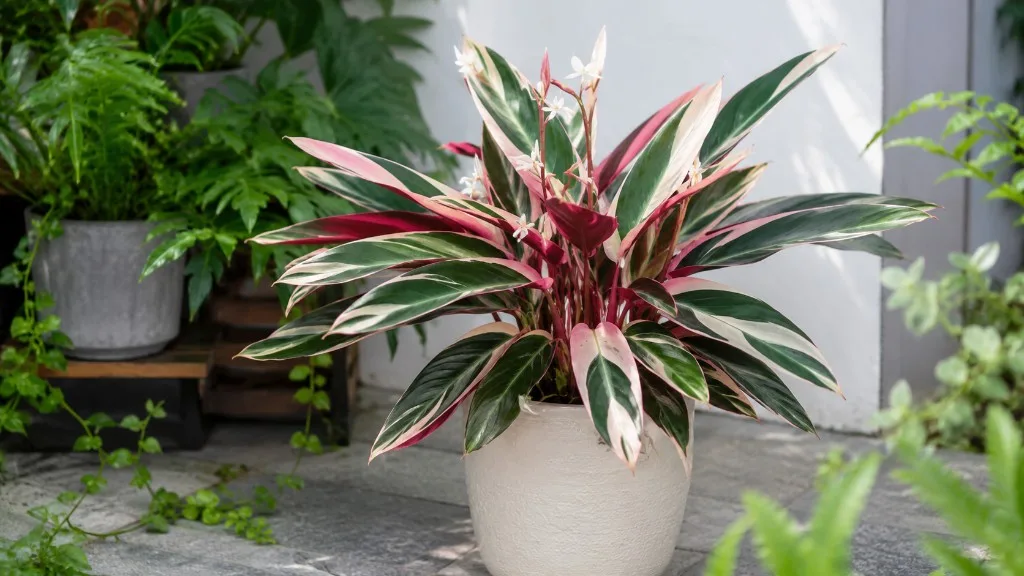
Stromanthe triostar propagation at home comes down to one method that actually works: rhizome division during Stromanthe Triostar repotting guide. Stromanthe sanguinea ‘Triostar’ - the cultivar most people call Triostar Stromanthe, Magenta Triostar, or Stromanthe thalia ‘Triostar’ in older labels - is a rhizomatous prayer plant from the Marantaceae family. It spreads underground through thick horizontal stems that send up clusters of vividly variegated leaves, not through nodes on upright stems that root in water like pothos or philodendron. That single biological fact eliminates leaf cuttings, stem cuttings, and water jars from the conversation before you ever pick up a knife.
If you want a second plant with the same pink, cream, and green pattern intact, you divide a mature clump when the root ball naturally separates - usually on the same day you repot. The workflow is unglamorous but reliable: water the parent a day ahead, unpot in spring, identify sections with their own rhizome and roots, cut or tease them apart, repot each piece in fresh airy mix, and hold humidity steady while transplant shock passes. This guide covers that entire process, explains why other propagation methods fail for Stromanthe Triostar overview, and walks through aftercare so your divisions recover instead of rotting quietly in soggy soil.
Why Division Is the Only Reliable Method
Triostar Stromanthe is not difficult to multiply - it is just specific. The plant stores energy and produces new shoots from rhizomes, fleshy underground stems that creep horizontally just below the soil surface. Each rhizome segment can carry roots on its underside and leaf clusters above, and when conditions are warm and humid, those segments push new growth independently. Division simply separates already-viable sections rather than asking a severed leaf or petiole to reinvent an entire plant from scratch.
Major houseplant references agree on this point. Wisconsin Horticulture Extension states that Triostar cannot be propagated from stem cuttings and should be propagated by division of the clumps, preferably in spring before new growth starts, with each section retaining several leaves and healthy roots. The Missouri Botanical Garden lists Stromanthe sanguinea ‘Triostar’ as an upright rhizomatous perennial suited to indoor cultivation - a growth habit that points directly to division, not cutting culture.
Combining propagation with repotting is the practical sweet spot. You already have the plant out of its pot, roots exposed, and fresh mix ready. Trying to divide without repotting means double root disturbance; waiting to repot without dividing when natural offsets are present means missing free plants. One session, two outcomes: a refreshed parent and one or more genetically identical offspring carrying the same variegation you bought the plant for in the first place.
How Rhizomes Produce New Shoots
Understanding rhizome anatomy makes division feel logical instead of intimidating. A Triostar rhizome looks like a thick, pale stem running sideways through the upper layer of the mix. From nodes along that stem, roots descend and short upright shoots emerge - each shoot becomes a fan of stems and leaves you recognize as one “plant” above the soil. Over one to three years in a pot, the rhizome branches and fills the container, often producing offsets: smaller leaf clusters connected to the main mass but already carrying their own root initials.
When you divide, you are not creating new tissue from nothing. You are allocating existing rhizome, root, and shoot systems to separate pots so each section can continue photosynthesizing and expanding on its own. That is why division preserves variegation perfectly - you are cloning the parent at the root level. Seed propagation, rarely available indoors anyway, would not reliably reproduce the cultivar’s color pattern. Stem or leaf attempts cannot access the bud-forming tissue concentrated at rhizome nodes and crowns.
Healthy rhizomes feel firm and slightly crisp, not mushy or hollow. They may show pale cream or light green color with visible scale-like markings. Roots attached to the rhizome should be white or tan and resilient, not black or slimy. If you brush away old mix and see several crowns spaced along one rhizome with visible gaps between them, nature has already drawn your cut lines. Your job is to follow those gaps with minimal damage, not to hack blindly through the center of a single crown.
Why Leaf and Stem Cuttings Do Not Work
This is the section that saves you weeks of frustration. Leaf cuttings - a single variegated leaf with or without its petiole stuck in water or soil - cannot regenerate a Triostar because the leaf blade lacks the meristematic tissue needed to produce roots and shoots together. The petiole base may root in rare experiments, but without rhizome tissue attached, it will not push new leaves. You end up with a rooted leaf that slowly dies, which is why social media “one leaf propagation” posts for calathea-family plants so often fizzle.
Stem cuttings fail for the same structural reason. Triostar does not produce long, node-bearing stems like a tradescantia or monstera. What looks like a stem above soil is a leaf petiole and sheath emerging from a short crown tied to the rhizome below. Cutting that tissue severs the connection to the energy store underground. There is no adventitious bud at each node waiting to sprout along a severed stalk. Water propagation makes the failure faster: rhizome-free tissue rots in stagnant water within days, and even if the base stays firm, no crown forms.
Water propagation of rhizome pieces is equally unreliable for this species. Unlike pothos, Triostar rhizomes are not adapted to submerged oxygen-poor conditions. They expect airy, lightly moist tropical soil with roots breathing between waterings. A rhizome segment in a jar often turns brown and soft before any roots appear. If you read a generic “prayer plant propagation” article that mentions water jars or stem segments, it was written for a different genus. For Triostar, keep the rhizome in fresh mix at the same depth it grew before, and treat the division like a repot with extra recovery time - not like a cutting experiment.
When to Divide During Repotting
Timing separates a division that roots into new growth within weeks from one that sulks through a dim winter and loses half its leaves. Stromanthe triostar propagation should happen when the plant is actively growing, soil temperature in the pot is warm, and you can provide stable humidity afterward. That window aligns with repotting season for most indoor growers, which is why combining the two tasks is standard practice among experienced collectors.
Avoid dividing because you are impatient. A young Triostar in a four-inch pot with one rhizome and four leaves is not a propagation candidate - it is a plant still establishing. Wait until the clump has filled its container, produced visible offsets or a branching rhizome, and shows firm new leaves unfurling from the center of each crown. Propagation rewards maturity, not novelty.
Best Season for Division Success
Spring through early summer is the best season for Stromanthe triostar division in most homes. As daylight lengthens and room temperatures settle in the 18–27°C (65–80°F) range, rhizome cells divide quickly, roots regenerate from cut surfaces, and new leaves roll out with less drama. Wisconsin Horticulture Extension recommends division in spring before new growth starts - the same timing extension sources repeat for Marantaceae species.
Early summer remains workable if your plant lives in air-conditioned stability with Stromanthe Triostar light guide and you can maintain 50–70% humidity around fresh divisions. Late fall and winter are poor choices unless you use supplemental warmth and light. Short days slow metabolism; cool mix stays wet longer; and the plant you divide may spend two months looking curled and static before any recovery - if it recovers at all. If repotting is overdue in November, refresh the parent in slightly larger fresh mix and postpone division until March unless you have a greenhouse or grow tent.
Water the parent one to two days before division day. Hydrated tissue handles separation better; the root ball holds together when you unpot; and rhizomes are less brittle than when dust-dry. Do not soak to mud - a normal thorough watering is enough. Plan division for a morning when you have an hour uninterrupted, surfaces are clean, and you can keep divisions out of direct sun afterward.
Signs the Root Ball Is Ready to Split
Not every repot requires division. Sometimes you simply move the intact clump one pot size up and refresh mix. Propagate only when the root ball shows natural separations worth exploiting.
Look for these readiness signals together, not in isolation:
- Crowded crowns: two or more distinct leaf clusters spaced around the pot rim, each with its own stem base.
- Visible offset: a smaller fan of leaves connected by a rhizome bridge you can trace with your finger after brushing away surface mix.
- Root-bound pattern: roots circle the bottom or peek from drainage holes, indicating the rhizome has traveled the pot’s width.
- Active new leaves: the newest rolled spears at each crown are firm and opening cleanly, not brown or stuck - proof the plant has energy to spare.
- Healthy parent overall: no active spider mites, mealybugs, widespread rot smell, or chronic wilt from root disease.
If the plant is one tight symmetrical clump with a single crown and no lateral rhizome, repot without dividing. Forcing a split on a immature specimen leaves pieces with too little root mass - the most common reason home divisions fail. Patience for one more growing season often turns one pot into an obvious two-crown layout that separates almost by hand.
What You Need Before You Begin
Division is low-tech, but clean tools and fresh materials matter disproportionately for fussy prayer plants. Rhizome cuts expose moist tissue to fungi and bacteria present on kitchen scissors, old potting benches, or reused mix. Ten minutes of preparation prevents two months of rot recovery.
Clear a workspace with room for the parent plant, each division, and labeled pots. Triostar leaves are large and fragile; crushing them against the table edge during a cramped repot causes cosmetic damage that persists for months. A shallow tray or old baking sheet corrals loose mix and keeps rhizomes off bare countertops.
Sterilized Tools and Fresh Potting Mix
Gather these items before unpotting:
- Sharp knife or pruning shears wiped with 70% isopropyl alcohol or passed through a flame and cooled.
- Hand trowel and chopstick for settling mix without compacting it.
- Nursery pots one size appropriate for each division - usually only 2–5 cm (1–2 inches) wider than the section’s root mass, with drainage holes.
- Fresh tropical mix, not recycled soil from another plant. A proven starting blend for Triostar divisions:
- 50% quality peat-based potting mix or coco coir
- 25% perlite or pumice
- 25% orchid bark or coarse coconut husk chips
- Filtered, distilled, or rainwater if your tap water is hard or heavily chlorinated - Marantaceae leaves often show edge burn on sensitive divisions when mineral load is high.
- Optional humidity cover: clear plastic bag supported on stakes, or a propagation box, for the first seven to ten days in dry homes.
- Labels if you are splitting into more than two pots - divisions look identical, and you will forget which sat in brighter light.
Pre-moisten the mix until it holds together when squeezed but does not drip. Fill pots one-third full and keep extra dry mix nearby. Sterilize blades again between cuts if you trim any mushy root tissue. Do not apply rooting hormone to rhizome divisions - it is unnecessary when roots already exist and can encourage soft rot in wet mix if over-applied.
How to Divide Stromanthe Triostar Step by Step
The actual division takes less time than reading about it. Move deliberately, follow natural rhizome geometry, and stop when each section meets the minimum size rule: at least three to four healthy leaves, a portion of rhizome, and attached roots. Sections with only one or two leaves sometimes survive but decline often enough that they are not worth the risk unless you are experienced and can offer greenhouse conditions.
Work over your tray. Support the parent by the pot rim, tip it sideways, and slide the root ball out rather than yanking stems. If the plant is stuck, squeeze the pot sides or run a knife around the inner edge. Never pull Triostar by its leaves - petioles tear at the crown and open wounds invite rot exactly when the plant is most vulnerable.
Unpotting and Locating Natural Divisions
Once the root ball is free, brush away old mix gently from the top and sides with your fingers. You are looking for rhizome direction, crown positions, and where roots attach - not bare-rooting every filament. Leave a cushion of mix around delicate roots if they resist separation; soaking the root ball briefly in lukewarm water can loosen compacted peat without a wrestling match.
Trace each crown - the point where leaf sheaths converge at soil level. Count leaves per crown. Follow the rhizome horizontally from crown to crown. Natural divisions appear as narrowed rhizome sections, partially separated offsets, or crowns pointing away from each other with root masses that already diverge. Mark mentally where you will cut before blades touch tissue.
Inspect roots while exposed. Trim black, mushy, or sour-smelling roots with sterilized shears back to firm white tissue. A division day discovery of moderate root rot on Stromanthe Triostar does not cancel propagation, but it changes priorities: remove diseased tissue first, consider fungicide only if rot was extensive, and keep divisions slightly drier than usual during recovery. Healthy roots should outnumber trimmed ones on each final section.
If you find no natural split - one central rhizome, one crown, roots filling the pot evenly - stop. Repot the intact plant and revisit division next spring. Forcing a bisection through a single crown halves the root system on each side and doubles transplant shock without the offset advantage that makes division easy.
Cutting or Teasing Rhizome Sections Apart
When crowns already pull apart with gentle pressure, tease rather than cut. Hold two sections with roots draped downward and slowly work rhizome connections apart until they separate. Minimal wound area heals faster than a cross-section through dense tissue.
When a cut is necessary, use one clean slice through rhizome tissue between crowns, not through the middle of a leaf cluster. Each piece should retain:
- Rhizome segment at least a few centimeters long when possible - more stored energy for recovery.
- Root mass proportional to leaf count; a four-leaf division with a handful of white roots outperforms a six-leaf division with severed stubs.
- Crown intact at the original soil-line level; do not strip leaf sheaths or bury them deeper later.
Place divisions on damp paper towel in shade while you prepare pots - minutes, not hours. Long air exposure dries fine roots on a plant that hates desiccation. Pot parent and children in the same session so nothing sits naked longer than necessary.
Repotting Parent and Offsets
Repotting is not an afterthought to propagation - it is half the procedure. The parent plant returns to a clean pot with refreshed mix, ideally the same size or one size up if the remaining root mass warrants it. Each offset gets its own container sized to its roots, not to its leaf spread. Triostar looks top-heavy in a small pot for weeks; that is normal until roots colonize fresh mix.
Choosing Pot Size and Planting Depth
Follow the one pot size up rule for each piece. An oversized pot holds wet mix around a tiny root system - the fastest route to rhizome rot after division. Terracotta breathes well for recovery in humid rooms; plastic retains moisture in dry air. Either works if drainage holes exist and you adjust watering accordingly.
Set each division so the rhizome sits just below the soil surface and the crown - where stems emerge - remains at the same level it grew before. Burying the crown too deep suffocates sheaths and encourages stem rot. Leaving rhizome exposed to air dries it and stalls rooting. Aim for a half inch of mix above the rhizome in a typical four-to-six-inch pot, with a half inch to an inch of headspace below the rim for watering.
Fill around roots with pre-moistened mix, tapping the pot gently and using a chopstick to eliminate large air pockets without compressing perlite into concrete. Water thoroughly once until runoff exits the drainage hole, then empty the saucer. This first watering settles mix around roots; it is not permission to keep soil soggy thereafter.
Position all pots in bright indirect light - an east window or several feet back from south glass. No direct sun on recovering divisions; pale variegated panels scorch quickly when root function is reduced. If you use a humidity tent, ensure leaves do not touch wet plastic, which causes localized rot marks on cream and pink tissue. Crack the cover gradually after seven to ten days as new growth stiffens.
Aftercare for Newly Divided Plants
The first month after Stromanthe triostar propagation is management of transplant shock, not aggressive feeding or constant repotting checks. Divisions may droop, curl, or drop one or two older leaves even when you executed a perfect split. That response reflects root disturbance and moisture redistribution, not necessarily failure - unless stems soften at the base or the mix smells sour.
Hold fertilizer for at least four to six weeks. Fresh mix contains some nutrients, and forcing growth on a reduced root system stresses the plant. Resume quarter-strength balanced liquid feed only when you see a new leaf rolling from the crown with normal color - evidence roots are taking up water and minerals again.
Water when the top 2–3 cm (about an inch) of mix approaches dry, using filtered water at room temperature. Divisions with smaller root mass dry faster than the parent in a larger pot - check each container independently instead of watering on a single calendar. Never let divisions sit in runoff; prayer plant rhizomes interpret wet feet as an emergency signal and respond with leaf curl.
Humidity, Light, and the First Four Weeks
Humidity between 50% and 70% dramatically improves division recovery. Triostar evolved in the humid understory of Brazilian rainforests; dry apartment air during winter division is a predictable crisping trigger. A humidifier near the grouping beats misting leaves, which offers seconds of relief and can spot variegated tissue if water sits in folded leaves overnight.
Expect visible new growth in two to four weeks during active season when conditions are stable. The first new leaf may be slightly smaller or less pink than mature foliage - normal until the root system rebuilds. If nothing unfolds after six weeks in warm bright conditions, reassess moisture and rot rather than adding fertilizer or moving pots repeatedly. Each relocation resets acclimation.
Keep temperature steady. Cold drafts from windows or hot air from radiators cause overnight leaf curl that mimics underwatering on Stromanthe Triostar. A thermometer at plant level helps distinguish environmental swing from root problem. After four to six weeks of firm new growth, treat divisions like mature Triostar plants: same light goals, same Stromanthe Triostar watering guide, same distaste for direct sun on pale leaves.
Troubleshooting Slow Recovery After Division
Slow recovery is not always failure, but silent rot is. Learn to read the difference so you intervene early instead of watching a division decline for two months.
Persistent leaf curl with dry mix often means underwatering on a root-reduced plant that cannot pull moisture fast enough. Water thoroughly once, increase ambient humidity for a week, and verify the pot is not so small that roots dry within hours. Persistent curl with wet mix and sour smell means rot - unpot, trim affected rhizome and roots, dust cuts with cinnamon if you wish, and repot into fresh dry-ish mix with reduced watering.
Brown crispy margins on older leaves only, with a firm new spear emerging, is frequently acceptable shock on lower leaves you can trim later for aesthetics. Blackening at the crown with mushy base tissue is not acceptable - discard the division if the rhizome center is soft; recovery is rare once crown rot establishes.
Pests appearing after division usually transferred from the parent. Inspect sheaths and rhizome crevices for mealybugs and spider mites before splitting; quarantine new divisions for two weeks if the parent ever had pests. Stress makes Triostar more attractive to mites in dry air - another humidity argument.
If one division thrives and another stalls despite identical care, compare root mass at separation. The weaker piece may have received too little rhizome. Give it warmer, more humid conditions and patience, or consolidate your learning and commit to larger minimum sections next season.
Common Division Mistakes to Avoid
Most Stromanthe triostar propagation failures trace to avoidable process errors, not bad luck.
Dividing too small: sections with one or two leaves and minimal roots look cute in tiny pots but lack reserves to survive shock. Wait for offsets or accept fewer, larger divisions.
Wrong season: winter splits in cold dim rooms stay wet and idle. Move the calendar, not the plant, unless you control climate artificially.
overwatering on Stromanthe Triostar after division: the instinct to “help” with constant moisture rots rhizomes. Moist - not wet - is the rule until new growth confirms root function.
Heavy compacted mix: straight peat or garden soil suffocates cut surfaces. Use chunky, airy tropical blend every time.
Burying the crown: planting too deep causes stem rot that shows up as black base tissue weeks later. Match original depth exactly.
Skipping sterilization: dull scissors crush rhizome cells and introduce pathogens. One alcohol wipe takes seconds.
Attempting leaf, stem, or water propagation anyway: hope is not a method for Marantaceae. Rhizome division preserves variegation and succeeds when minimum size and season align.
Dividing a sick parent: propagation multiplies problems. Stabilize pests, rot, or severe dehydration first; take divisions only from clean regrowth.
Overpotting: huge pots around tiny divisions stay waterlogged. Size to roots, not leaves.
When Not to Propagate by Division
Division is the right tool often, but not always. Do not propagate when the plant is newly purchased and still acclimating - wait at least four to six weeks after bringing it home so you know its baseline health. Do not divide during active pest outbreaks, root rot crises, or severe underwatering recovery unless you are sacrificing a dying parent to save a clean lateral offset.
Do not divide every repot by habit. A single-crown Triostar that simply needs fresh mix and one size up should stay whole. Forcing symmetry where the rhizome has not branched yet sets you back a full growing season.
Do not divide to “save” a plant losing variegation to low light. Reversion and fading color are light problems, not propagation problems. Splitting a greening plant produces more green plants. Fix placement first; divide later if you still want multiples.
Do not gift or sell divisions until they show independent new growth and you have confirmed no pest hitchhikers. A stressed division in a dry home is a bad introduction to Triostar care and reflects on the sharer, not the recipient.
If you are unsure, default to repot without split this year and reassess next spring. Triostar is not a fast propagator like pothos; it rewards growers who read the root ball honestly instead of treating every mature pot as mandatory multiplication day.
Conclusion
Stromanthe triostar propagation belongs entirely in the repotting-day division category. Stromanthe sanguinea ‘Triostar’ grows from rhizomes, not from stem nodes or detached leaves, so the reliable path is to unpot a mature clump in spring or early summer, separate sections that each carry three to four leaves, rhizome tissue, and healthy roots, and repot into fresh airy tropical mix with steady humidity and bright indirect light while transplant shock passes. Leaf cuttings, stem cuttings, and water jars fail for physiological reasons this species cannot override with patience.
If you remember only three rules, make them these: divide only where natural rhizome splits exist, never bury the crown deeper than it grew before, and keep mix moist but not wet until new leaves roll out. Get those right and Triostar becomes a plant you multiply with confidence - identical variegation, no wasted experiments, and a parent that returns to the same pot refreshed rather than exhausted. Wait for the root ball to tell you it is ready, sterilize your blade, and treat the split as part of repotting rather than a separate gamble.
When to use this page vs other Stromanthe Triostar guides
- Stromanthe Triostar overview - Start here for whole-plant context before deep-diving this topic.
- Stromanthe Triostar problems hub - Jump to symptom-specific fix guides when this care topic does not resolve the issue.
Related Stromanthe Triostar guides
- Stromanthe Triostar overview
- Stromanthe Triostar watering
- Stromanthe Triostar light
- Stromanthe Triostar soil
- Stromanthe Triostar fertilizer
- Stromanthe Triostar repotting
- Stromanthe Triostar problems
Related tool
Try the Propagation Success Calculator with stromanthe-triostar pre-selected to estimate needs for your setup.