Best Soil for Stromanthe Triostar: Mix & Drainage
Best Soil for Stromanthe Triostar: Mix & Drainage
Best Soil for Stromanthe Triostar: Mix & Drainage
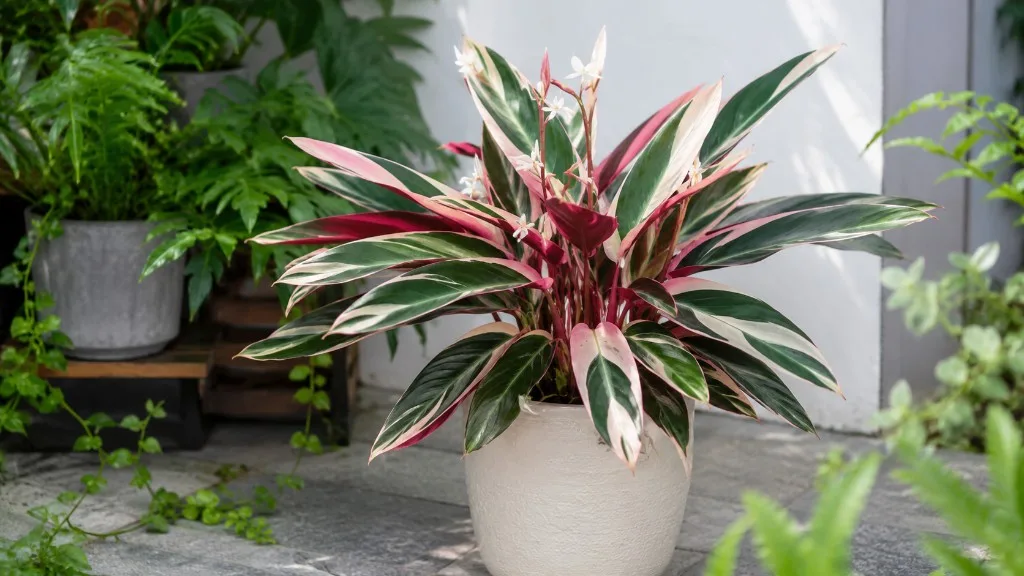
Stromanthe triostar soil is not a minor detail you can outsource to whatever bag of “indoor plant mix” happened to be on sale. Stromanthe thalia ‘Triostar’ - the cream, pink, and green prayer plant sold widely as Stromanthe triostar or magenta triostar - comes from the forest floor of Brazil, where roots sit in loose, organic, oxygen-rich material that stays lightly damp but never stagnant. Indoors, your potting mix is the stand-in for that forest floor. Get it wrong and the plant shows stress on its thin, colorful leaves long before you think to look at the roots: crisped margins, rolled foliage, stalled new spears, and yellowing lower leaves that look like a watering mistake but trace back to compacted or sour substrate.
The practical goal is a moisture-retentive, well-draining, peaty or coir-based mix with a slightly acidic to neutral profile typical of humus-rich tropical houseplant mixes. A reliable DIY starting point is two parts peat moss or coco coir, one part perlite or pumice, and a small handful of orchid bark or pine bark fines per quart of mix - adjusted upward in perlite if your home runs warm and the pot dries slowly. Use a pot with drainage holes, sized only slightly larger than the root ball, and refresh the mix every one to two years before decomposition turns airy structure into a wet brick.
This guide covers what Triostar roots actually need, exact mix recipes you can make at home, store-bought alternatives, how to test whether your current soil is working, when to repot, and the soil mistakes that cause more damage than underwatering on Stromanthe Triostar ever would.
Why Soil Matters More Than Most Triostar Care Guides Admit
Stromanthe triostar belongs to Marantaceae, the prayer plant family alongside Calathea, Maranta, and Ctenanthe. Plants in this group share a root style that is easy to misunderstand: fine, shallow, and highly sensitive to oxygen loss. They want consistent moisture, but they cannot tolerate the anaerobic conditions that develop when mix compacts, pots lack drainage, or water sits in saucers for days. That combination - moisture-loving yet oxygen-demanding - is exactly why soil choice matters so much.
Most care failures on Triostar get blamed on humidity or light first. Those factors absolutely matter for keeping pink and cream variegation vivid. But in practice, a grower who keeps humidity at 60% and light bright yet uses dense, old potting soil in an oversized decorative pot will still see chronic edge crisping and weak new growth. The leaves are the dashboard; the root zone is the engine. When the mix holds water without draining, fine roots die back. When the mix dries into a hard puck between waterings, those same roots desiccate. Either path produces leaf symptoms that mimic underwatering, overwatering on Stromanthe Triostar, or low humidity - which sends you adjusting the wrong variable.
Missouri Botanical Garden notes that Stromanthe species are tropical herbaceous perennials grown for colorful foliage and that indoor culture requires humus-rich, moist, well-drained soils (Missouri Botanical Garden - Stromanthe). That single phrase - humus-rich, moist, well-drained - is the whole brief. Your job is to build a container mix that holds water long enough for even root-zone moisture between waterings, yet drains and breathes fast enough that roots never swim.
Think of soil as the buffer between your watering can and the roots. Good Triostar soil smooths out small timing errors. Bad soil amplifies them. A light, chunky mix forgives a slightly early or late watering because air pockets remain even when the mix is moist. A compacted peat-heavy mix punishes every deviation because water moves unevenly - wet at the bottom, oddly dry at the top, or vice versa - and the plant cannot tell you which layer is wrong until leaves roll and spears stall.
What Stromanthe Triostar Needs From Its Root Zone
Before mixing ingredients, it helps to name the three jobs your substrate must perform simultaneously: hold moisture, hold air, and stay structurally open over time. Most houseplant mixes nail one or two of those and fail the third after a few months of watering and root pressure. Triostar is unforgiving about that third job because decomposed, flattened mix is the most common hidden cause of prayer plant decline.
In its native Atlantic rainforest understory, Triostar grows in leaf litter and organic topsoil that is constantly replenished, never compressed by a human thumb, and never enclosed in a glazed pot with no exit for water. Your indoor setup is artificial by definition. The mix has to compensate.
Moisture Retention Without Waterlogging
Triostar prefers consistently moist root-zone conditions, not wet feet. Missouri Botanical Garden describes the ideal as moist but well-drained fertile soils, and Wisconsin Horticulture Extension recommends a quality soilless medium kept evenly moist during the growing season. That wording sounds contradictory until you touch good mix: it feels damp, even cool, but still loose. Squeeze a handful and it should hold together briefly, then crumble - not drip water and not pack into a clay-like ball.
Peat moss and coco coir are the standard moisture-holding bases because their structure absorbs water while maintaining pore space when blended with coarse amendments. Peat is slightly acidic and excellent at holding moisture; coir is more sustainable, rewets more reliably when it dries out, and drains a touch faster - a useful trait if you tend toward heavy-handed watering. Neither material works alone for Triostar. Straight coir or straight peat in a closed pot becomes a soggy or hydrophobic block over time.
The retention target is practical, not laboratory precise: after a full watering and drain, the mix should stay evenly moist for roughly three to seven days in a typical indoor environment, depending on pot size, light, and humidity. If it stays wet at the bottom for two weeks, add perlite and check your pot and Stromanthe Triostar watering guide. If it goes brick-hard in forty-eight hours, add more coir or peat and consider a smaller pot or more humidity - dry collapse damages fine roots as surely as rot.
Aeration and Fine Root Oxygen
Drainage is not only about holes in the pot. It is about air-filled pores inside the mix that persist after watering. Perlite, pumice, and orchid bark create those pores. Perlite is lightweight and cheap; pumice is heavier and stays put when you water; bark adds long-lasting chunk that prevents peat from closing air channels as it ages. Triostar roots are thin. They need those micro-channels to breathe.
root rot on Stromanthe Triostar on prayer plants rarely starts as a mysterious fungus. It starts as roots sitting in waterlogged, oxygen-poor mix - often in a pot that is too large, a saucer that is never emptied, or soil that has broken down into muck. Illinois Extension notes that prayer plant stems rot easily when water stands on crowns, and poor drainage from oversized containers or standing saucer water is a primary root rot trigger. Soil structure is the variable you control before the first watering mistake happens.
A useful mental model: water should move through the pot, not settle in it. After watering, excess should exit the drainage hole within minutes. What remains is evenly distributed moisture clinging to organic particles and perched in small pores - not a pooled layer at the bottom. If you have ever lifted a struggling Triostar and found brown, mushy roots concentrated at the base while the top still looked fine, you have seen what poor internal aeration does.
Ideal pH and Mineral Sensitivity
Stromanthe triostar grows best in slightly acidic to neutral soil, typically in the range favored by humus-rich tropical houseplant mixes. Wisconsin Horticulture Extension recommends a quality soilless growing medium for container culture. Peat-based mixes naturally sit on the acidic side; coir is closer to neutral. For most hobbyists, a quality peat-or-coir blend with perlite lands close enough that pH adjustment is unnecessary.
What matters more in daily care is mineral and salt sensitivity. Prayer plants are notorious for reacting to fluoride, chlorine, and mineral salts in tap water and accumulated fertilizer. Soil is where those salts concentrate when water evaporates from the surface or when you feed repeatedly without flushing. A white crust on the mix, burnt leaf tips despite good humidity, and stunted new spears after months of otherwise “correct” care often mean salt buildup in the root zone, not the wrong NPK ratio.
If your tap water is hard, combine soil maintenance with water quality: use filtered or distilled water when practical, and flush the pot every few months by running clean water through until it flows freely from the drainage hole. Refreshing the mix at Stromanthe Triostar repotting guide removes salt-laden old peat that no amount of surface scraping fixes. Do not chase pH with garden lime or sulfur unless you have a meter reading and a reason; imbalanced DIY pH tweaks cause more problems than they solve on a single container plant.
The Best DIY Soil Mix for Stromanthe Triostar
The best soil for Stromanthe triostar is one you can reproduce and adjust. Store recipes vary; your home’s light, temperature, and watering hand do not. A DIY mix lets you increase drainage in a humid bathroom or retention in a dry, bright living room without buying an entirely new product.
Here is a dependable default that works for most indoor Triostar setups:
- 2 parts peat moss or coco coir (pre-moisten coir before mixing)
- 1 part perlite or pumice
- ½ part orchid bark or pine bark fines (optional but helpful)
- ½ part quality indoor potting soil (optional base for trace nutrients)
Mix thoroughly in a bucket until uniform. The finished texture should look like coarse chocolate cake crumbs - dark organic matter speckled with white perlite and tan bark chips. When you fill a pot and water it, the surface should accept water immediately, not repel it or float perlite to the top.
For a lighter, faster-draining mix - useful in low light, cool rooms, or if you tend to overwater - shift to equal parts coir and perlite with a handful of bark per quart. For a slightly more retentive mix in a dry, bright environment where the pot dries in two days - try 3 parts coir, 1 part perlite, 1 part potting soil, still with bark added. Never remove perlite entirely; that is the most common “helpful” change that backfires into root rot.
Base Recipe: Peat or Coco Coir
Peat moss is the traditional choice for prayer plants. It holds moisture well, acidifies slightly, and blends smoothly with perlite. Its weaknesses: environmental concerns for some growers, difficulty rewetting when allowed to go bone dry, and gradual decomposition into finer particles that compact after twelve to eighteen months.
Coco coir is the modern alternative. It is renewable, rewets easily, and resists compaction slightly better than peat. It drains faster, which means you may water a touch more often in hot, bright conditions - but that is usually safer for Triostar than slower drainage. If you choose coir, buy buffered horticultural coir, not decorative mulch bricks. Soak and fluff until no dry clumps remain before measuring parts.
Neither peat nor coir provides much fertility. Triostar is not a heavy feeder, but completely inert mix without any compost or potting soil component may need light fertilizer during active growth - always at reduced strength on prayer plants. Many growers include a small proportion of quality potting soil or worm castings for micronutrients without making the mix heavy.
Drainage Amendments: Perlite, Pumice, and Bark
Perlite is the default drainage amendment: inexpensive, sterile, and effective. Use horticultural grade, not construction dust. Pumice costs more but stays distributed in the mix and adds weight that helps top-heavy Triostar pots stay upright. Either works; do not skip both categories by substituting sand alone - sand fills pore spaces in peat and can worsen compaction unless used in very small proportions with bark.
Orchid bark or pine bark fines extend the life of your mix. Chunky bark breaks up the homogenous peat-perlite matrix and creates long-lived air channels. Prayer plant growers often borrow from orchid culture here because Triostar’s root density benefits from the same open structure epiphytes prefer, even though Triostar is not an epiphyte. A little horticultural charcoal (optional, no more than 5% of volume) can help in mixes that stay wet longer than you intend, though it is not a substitute for perlite and drainage holes.
When blending, wear a mask if dry peat or perlite dust bothers your lungs, and moisten components as you go. Dry peat can repel water in the pot; pre-moistening avoids the “water runs down the sides” problem on first watering after repotting.
Pre-Mixed Options That Work for Triostar
Not everyone wants a bucket and a dust cloud. Pre-mixed options can work if you read the label and amend when needed. A bag labeled African violet mix is often suitable out of the bag because it is formulated for fine roots, moderate moisture, and good aeration - the same profile Triostar needs. Calathea- or prayer plant-specific mixes from reputable houseplant brands are another direct fit, since Calathea and Stromanthe share Marantaceae root preferences.
Standard all-purpose indoor potting soil is usable only as a partial component, not as the whole substrate. Commercial mixes vary wildly. Some are excellent; many are too heavy with fine peat and composted bark fines that break down fast. If you use store potting soil as your base, cut it 50/50 with perlite and add a scoop of orchid bark per gallon. Without that amendment, a fresh Triostar from the nursery - often already in reasonably chunky mix - declines six months after you repot into unamended bag soil.
Do not use:
- Cactus or succulent mix alone - too fast-draining for a plant that wants even moisture
- Outdoor garden soil - compacts, introduces pests and pathogens, poor container drainage
- Pure moss poles or sphagnum alone - wrong structure for a potted upright clump long term
- Water-retaining crystals or heavy “moisture control” formulas - they mask dry-down signals and keep root zones wetter than Triostar tolerates
If you are standing in a garden center deciding between two bags, pick the one whose dry contents look and feel chunky when you squeeze the bag. If it feels like fine dirt with no visible perlite or bark, plan to amend or choose a different product.
Pot Size, Material, and Drainage Holes
Soil performance depends on the container physics around it. A perfect mix in a pot with no drainage hole becomes a closed system where salts and water accumulate. An oversized pot surrounds a small root ball with wet mix the roots never reach - the classic “I only watered once but it rotted” scenario.
Drainage holes are non-negotiable for long-term Triostar care. One central hole is minimum; three or four smaller holes in a wider pot are better. If you use a decorative cachepot, grow the plant in a slightly smaller inner plastic or terracotta pot that lifts out, and empty runoff after every watering. Leaving the inner pot sitting in accumulated water replicates the worst of closed-pot conditions.
Size the pot to the root mass, not the leaf spread. Triostar leaves are dramatic; roots are modest. When repotting, move up one inch in diameter - roughly one pot size - unless you are dividing a large clump. An 8-inch pot for a 4-inch root ball means a large volume of mix stays wet while roots occupy only the center. Oxygen deprivation at the periphery still affects the whole root system through water chemistry and fungal pressure.
Terracotta vs Plastic vs Ceramic
Terracotta breathes through porous walls. Water evaporates from the sides, which speeds dry-down and adds a margin of safety against overwatering. In dry, bright rooms, terracotta may require more frequent watering - acceptable if you check moisture consistently. Plastic retains moisture longer, useful in hot apartments where pots dry fast, but risky for heavy waterers or low-light placements. Glazed ceramic often behaves like plastic but heavier; treat it as moisture-retentive unless you know the glaze is highly breathable (rare).
Match pot material to your habits, not aesthetics alone. If you forget to check soil and tend to water on autopilot, terracotta plus a chunkier mix saves roots. If you travel or your home is very dry, plastic plus a slightly more retentive mix prevents constant desiccation. The soil recipe and pot choice are one system; changing one without the other shifts the dry-down curve.
How to Test Whether Your Mix Is Working
Recipes are starting points. Your home’s conditions are the final judge. A mix that works in a humid greenhouse fails in a dry office with the same nominal ratios. Run simple tests monthly, especially in the first six weeks after repotting or when leaf quality shifts.
Watch new spear development first. A Triostar with appropriate soil and care pushes out rolled leaves that open with strong pink and cream color in bright, filtered light. If new spears are small, stuck half-unfurled, or absent for months while old leaves decline, inspect the root zone before buying a humidifier or moving the plant again.
Check dry-down timing. Note the date you water thoroughly. Touch the top inch daily without watering until it feels dry. How many days until that top inch dries in your normal conditions? If the answer is more than ten days in an active growing season, the mix or pot is likely too wet for safety. If the answer is less than two days repeatedly, the mix may be too fast or the pot too small, and chronic drought stress will show as curling and crisp edges.
Smell the surface and, if you are comfortable, gently lift the plant from the pot for a look. Fresh healthy mix smells earthy. Sour, eggy, or swampy odor means anaerobic breakdown - repot soon, trim mushy roots, and increase drainage amendments.
The One-Minute Drainage Check
After a full watering until water runs from the hole, start a timer.
- 0–5 minutes: Excess water should exit freely. If none appears and the pot feels heavy, holes may be blocked or mix too dense.
- 5–30 minutes: Surface should glisten, not pool. Press a finger in: moist, not mud.
- 24 hours: Top inch slightly less wet; pot still has weight. No standing water in saucer.
- 3–7 days (typical indoor): Top inch approaches dry; deeper mix still cool and slightly moist - time to water for most Triostar setups.
If water sits on the surface more than a minute or runs straight through without moistening the center, you have hydrophobic or channeling problems - flush repeatedly, poke gentle holes in the top layer, and consider repotting with pre-moistened mix. This one-minute check catches failures early, before root rot becomes a smell you cannot ignore.
When to Repot and Refresh the Mix
Even the best Stromanthe triostar potting mix has a shelf life inside a pot. Organic matter decomposes, perlite floats upward with repeated watering, and roots fill space that once held air. Repot every one to two years for actively growing plants, or sooner if you see clear signals: roots circling the bottom, mix that dries in an uneven pattern, water running straight down the sides, or sour smell despite careful watering.
The best season is spring through early summer, when Triostar enters active growth and can repair minor root damage. Fall repotting can work in warm homes; winter repotting is best avoided unless the plant is clearly root-bound in rotten mix and declining. A stressed Triostar mid-crisis does not need a bigger pot - it needs fresh, appropriate mix and trimmed bad roots in the same or slightly smaller container.
To repot: water lightly a day ahead if the mix is very dry (easier on roots), slide the plant out, loosen the outer 20–30% of old mix without bare-rooting unless rot requires it, trim black mushy roots with clean shears, and replant at the same depth - do not bury the crown. Fill with fresh mix, water thoroughly, drain, and hold fertilizer for four to six weeks while roots settle. Keep humidity stable and light bright but not direct sun during recovery.
Division is optional when repotting a multi-stem clump. Each division needs its own root section and several stems. Use the same mix formula for all divisions. Smaller pots after division dry faster; adjust watering checks accordingly.
Soil Problems and How to Fix Them
Wrong soil rarely announces itself with a label. It shows up as leaf problems you have already tried to fix. Use this section as a differential diagnosis when humidity, light, and watering seem “correct” but the plant still struggles.
Chronic wet mix produces yellow lower leaves, soft stems at the base, fungus gnats, and a heavy pot days after watering. Fix: repot with chunkier mix, smaller appropriate pot, confirm drainage holes, stop leaving saucer water. Chronic dry compacted mix produces curling leaves, brown tips, pale new growth, and a pot so light you could tip it with a finger. Fix: repot with more coir or peat and less excessive perlite if you overcorrected, soak thoroughly when watering, consider plastic pot or humidity increase.
Uneven dry-down - wet bottom, dry top - means channeling or root mat blocking flow. Repot, loosen root ball gently, pre-moisten mix. Slow growth with good light and no pests often means depleted, compacted mix without available air or nutrients; refresh entirely rather than top-dressing. Top-dressing peat on a compacted core hides the problem.
Compaction, Salt Buildup, and Sour Mix
Compaction is the silent killer. Peat breaks into fine particles; watering collapses air pockets. The mix looks dark and “healthy” while roots gasp. If a skewer pushed to mid-depth meets resistance and comes up smeared rather than speckled with particles, compaction is likely. Repot is the fix; occasional surface fluffing is not.
Salt buildup shows as white crust, stunted new leaves, and tip burn despite adequate humidity. Scrape the crust, then flush with water equal to several pot volumes, letting it run free. If crust returns within weeks, repot into fresh mix and review fertilizer strength and water source. Prayer plants tolerate half-strength or weaker fertilizer during active growth; full-strength monthly feeding on heavy peat accelerates salt problems.
Sour mix from anaerobic conditions needs immediate repot. Cut away brown roots until you reach firm, white or tan tissue. Dust cuts with cinnamon if you like (optional, not magic). Replant in fresh airy mix, water once, then let dry-down guide the next watering rather than panicking with daily small sips that keep the center wet.
Common Stromanthe Triostar Soil Mistakes
Some errors appear so often in forums and shop advice that they deserve direct correction.
Using rocks or gravel at the bottom of the pot “for drainage.” This creates a perched water table at the soil-rock boundary and reduces usable root volume. Drainage comes from mix structure and holes, not a gravel layer. Repotting into a much larger pot to “give it room to grow” keeps excess mix wet around roots that cannot use it. Size up incrementally.
Reusing old mix from a previous plant without sterilizing or refreshing introduces pathogens and depleted structure. Cheap for the wallet, expensive for the Triostar. Choosing mix based on what’s cheapest without reading composition - many discount mixes are fine sedge peat and sand that cement in months.
Burying the rhizome or crown too deep when repotting invites stem rot in moist mix. Plant at the same depth as before; the crown should sit at or just above the soil line. Ignoring the nursery pot - Triostar often arrives in reasonably good peat-perlite blend. Repotting immediately into heavy unamended soil removes an advantage. Unless roots are circling or mix is obviously wrong, acclimate first, repot in spring if the current mix drains well.
Assuming soil fixes humidity or light. No mix substitutes for 50%+ humidity and bright filtered light for Stromanthe Triostar overview. Soil prevents root failure; it does not paint the leaves pink. Testing only the soil surface before watering - on peaty mixes the top can look dry while the core stays wet. Check depth and pot weight, not color alone.
How Soil Connects to Watering and Humidity
Soil does not exist in isolation. Watering rhythm must match dry-down, and dry-down is a joint product of mix, pot, light, temperature, and humidity. Triostar care guides often say “water when the top inch is dry.” That rule works only if the top inch correlates with appropriate moisture at root depth - true in uniform, airy mix, false in compacted or oversized pots.
In a well-structured triostar soil mix, the top inch drying in roughly three to seven days usually means the root zone is approaching time for another thorough watering. Water until a little runs from the hole, drain the saucer, and stop. In heavy mix, the top inch may dry while the bottom stays waterlogged - following the rule overwaters. In very chunky mix in terracotta, the top may dry in one day while deeper roots still have moisture - following the rule underwatering. Calibrate to your actual pot weight and a finger or skewer at two inches depth.
Humidity affects how fast mix dries at the surface, not how much water roots need in the root ball. High humidity slows evaporation; you may water slightly less often. Low humidity speeds surface evaporation and can fool you into overwatering while trying to fight leaf crisping - the leaves need humidity, not necessarily more water in already-wet mix. When crisping persists with moist soil, raise humidity and review salts before adding water.
Filtered or distilled water reduces mineral accumulation in soil over time. If you must use tap water, flush periodically and refresh mix on schedule. Soil is the long-term sink for everything you pour in.
The ASPCA lists related Marantaceae plants as non-toxic to cats and dogs (ASPCA - Stromanthe). That does not make fertilizer-laden mix safe to eat, but it removes one worry when pets dig at the surface. Still keep loose perlite and bark away from curious chewers.
Conclusion
The best soil for Stromanthe triostar is a loose, humus-rich, well-draining mix built around peat or coco coir, amended generously with perlite or pumice and a little bark, kept in a pot with drainage holes sized to the roots - not the leaves - and refreshed before it decomposes into stale, sour muck. Aim for pH 6.0 to 7.5, even moisture without waterlogging, and a dry-down rhythm you can predict from pot weight and a finger check at depth.
Make the default recipe, run the one-minute drainage test after repotting, and adjust perlite up or down based on how your home actually dries the pot. When leaf problems persist despite good humidity and light, inspect the root zone and the mix before buying another product or moving the plant again. Triostar rewards consistency in the substrate layer above all else - get the forest floor right in a pot, and the pink, cream, and green foliage has a fighting chance to look as vivid as the photos that made you buy it.
When to use this page vs other Stromanthe Triostar guides
- Stromanthe Triostar overview - Start here for whole-plant context before deep-diving this topic.
- Stromanthe Triostar problems hub - Jump to symptom-specific fix guides when this care topic does not resolve the issue.
- Root Rot on Stromanthe Triostar - Escalate here when soil adjustments are not enough.
- Mold on Soil on Stromanthe Triostar - Escalate here when soil adjustments are not enough.
Related Stromanthe Triostar guides
- Stromanthe Triostar overview
- Stromanthe Triostar watering
- Stromanthe Triostar light
- Stromanthe Triostar propagation
- Stromanthe Triostar fertilizer
- Stromanthe Triostar repotting
- Root Rot on Stromanthe Triostar
- Mold on Soil on Stromanthe Triostar
- Stromanthe Triostar problems
Related tool
Try the Soil Mix Calculator with stromanthe-triostar pre-selected to estimate needs for your setup.