Stromanthe Triostar Watering: Schedule, Soil Checks &
Stromanthe Triostar Watering: Schedule, Soil Checks & Mistakes
Stromanthe Triostar Watering: Schedule, Soil Checks & Mistakes
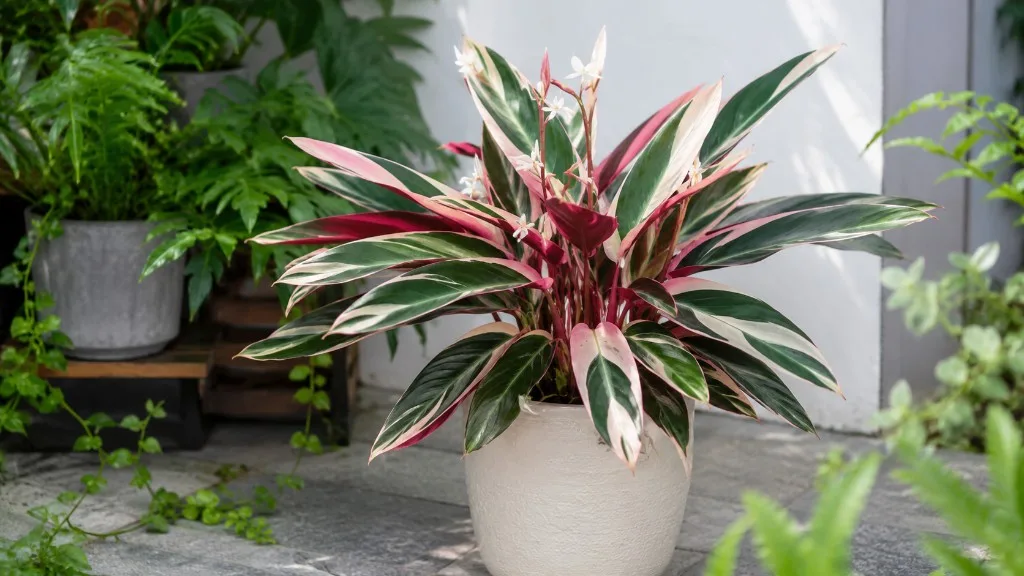
Stromanthe triostar watering sits in an awkward middle ground that trips up even experienced houseplant growers. Triostar wants soil that stays evenly moist, yet its fine roots suffocate quickly in stagnant wet mix. It comes from Brazilian rainforest understory, where moisture is reliable but drainage is excellent - not from a desert and not from a bog. Water too little and the pink-and-cream leaf panels crisp overnight. Water too much, or let the pot sit in runoff, and yellow leaves and soft stems follow within days. The fix is not a calendar reminder on your phone. It is a consistent check of root-zone moisture, pot weight, and the water you pour.
The practical starting rule most growers can trust: water when the top inch of mix feels dry, then soak thoroughly until water runs from the drainage holes and empty the saucer. During active spring and summer growth, that often means every five to ten days indoors. In cooler, dimmer months, stretch to ten to fourteen days or longer - but always confirm with a moisture check rather than a fixed day count. Use room-temperature filtered, distilled, or rainwater when possible, because Triostar is sensitive to chlorine, fluoride, and mineral buildup in ordinary tap water.
This guide walks through how often to water, the checks that matter more than any schedule, how to water cleanly, what water to use, how to read over- and underwatering on Stromanthe Triostar signals, and how to recover when you have already swung too far in either direction.
Why Watering Triostar Is Different From Most Houseplants
Stromanthe Triostar - botanically Stromanthe sanguinea ‘Triostar’, also sold under names like Stromanthe thalia ‘Triostar’, Magenta Triostar, or Tricolor Stromanthe - belongs to the Marantaceae, the prayer plant family alongside Calathea and Maranta. Like its relatives, it has thin leaves with dramatic variegation, nyctinastic movement that folds leaves upward at night, and a root system adapted to rainforest floor conditions where the upper soil dries slightly between rain events but the root zone rarely experiences prolonged drought.
The Missouri Botanical Garden notes that for Stromanthe Triostar overview, soils must never be allowed to dry out in ideal cultivation, while also requiring moist but well-drained conditions in fertile substrate (Missouri Botanical Garden - Stromanthe sanguinea ‘Tristar’). That combination - never fully dry, never waterlogged - is the entire challenge indoors. Most beginner houseplants tolerate a wide dry-down window. Triostar does not. A single episode of bone-dry soil can leave edges permanently crisp, and repeated drought damages the fine feeder roots that absorb water efficiently.
At the same time, Triostar is not a “wet feet” plant. Soggy mix drives out soil oxygen, encourages anaerobic microbes, and leads to root rot on Stromanthe Triostar faster than many tougher houseplants. The goal is light, even moisture through the root ball with a predictable dry-down at the surface - not permanently damp soil that never breathes. Think of watering as resetting a moisture buffer, then letting the top layer dry enough to pull fresh air into the mix before you reset again.
How Often to Water Stromanthe Triostar
There is no honest single answer to “how often” because pot size, soil composition, light intensity, humidity, temperature, and season all change evaporation and root uptake. A Triostar in a 4-inch nursery pot under a grow light may need water twice a week in July. The same cultivar in a 10-inch ceramic pot in a cool north room might go two weeks between drinks in January. Calendar schedules are reminders to check, not permission to water blindly.
What experienced growers converge on is a surface dry trigger: when the top 1 inch (2.5 cm) of mix feels dry to the touch, it is time to water - provided the deeper root zone is approaching dry but has not been desert-dry for days. If the surface is dry but the pot still feels heavy and cool at the base, the center may hold adequate moisture; wait another day and recheck. If the surface is dry and the pot lifts easily, water now.
Active Growth Season Rhythm (Spring and Summer)
From roughly late spring through early fall, Triostar pushes new spears, unfurls fresh pink-and-green leaves, and uses water at its fastest indoor rate. In typical home conditions - Stromanthe Triostar light guide, 65–80°F (18–27°C), and moderate humidity - expect to water about every 5 to 10 days. Plants in brighter, warmer, or drier rooms sit at the short end. Those in shadier, cooler, or more humid spots sit at the long end.
During this window, consistency matters more than volume per watering. A thorough soak that fully rewets the root ball, followed by a proper dry-down, beats daily sips that only wet the surface. Small top-ups keep the top inch moist while the center swings between too wet and too dry - exactly the pattern that produces brown tips and weak new growth. Wisconsin Horticulture Extension recommends keeping the medium evenly moist during active growth while allowing it to dry a little more between waterings in cooler, darker months.
| Season | Typical indoor interval | Trigger to water | Notes |
|---|---|---|---|
| Spring (active growth starting) | 7–10 days | Top 1 inch dry | Increase checks as new spears appear |
| Summer (peak growth) | 5–8 days | Top 1 inch dry | Bright windows and AC dry pots faster |
| Fall (growth slowing) | 8–12 days | Top 1 inch dry, pot lighter | Begin stretching interval |
| Winter (low growth) | 10–14+ days | Top 1–2 inches dry | Reduce volume slightly; never bone dry |
The table is a framework. Your plant’s pot weight and leaf turgor tell you more than any row in a chart.
Cool-Season Adjustments (Fall and Winter)
Triostar does not go fully dormant indoors, but growth slows sharply when days shorten and rooms cool. Roots take up water more slowly, and mix stays wet longer after each watering. Continuing a summer weekly schedule through December is one of the most common overwatering on Stromanthe Triostar paths.
From mid-fall through late winter, stretch your interval and deepen your dry-down slightly. Many growers wait until the top 1 to 2 inches feel dry before watering, and some reduce the pour volume slightly while still wetting the full root zone. The plant should never sit in bone-dry soil for days - winter adjustment means less frequent full drinks, not drought.
Watch heating vents and cold window sills. A pot on a drafty sill may dry fast on the exposed side while staying cold-stressed. A plant above a radiator may dry the surface in two days while the room air stays brutally dry - in that case, humidity support matters as much as the watering can. Triostar near a heat source often shows crispy edges from dry air plus fast surface evaporation, which can look like underwatering even when the root zone is adequate.
The Best Moisture Check Before Every Watering
The most reliable Stromanthe triostar watering habit is a short pre-water routine you repeat every time. Three signals together beat any single test:
- Surface feel: Dry to the first knuckle (about 1 inch deep)?
- Pot weight: Lifts noticeably lighter than right after a thorough watering?
- Plant posture: Leaves still firm and normally colored, or starting to curl and droop?
If the surface is dry, the pot is light, and leaves look normal, water. If the surface is dry but the pot is still heavy, wait. If leaves are limp but the pot is heavy and cool, suspect overwatering or poor drainage - not thirst. That last combination sends many growers to the watering can when they should be inspecting roots and mix instead.
Finger Test, Skewer Method, and Pot Weight
The finger test is the fastest check. Push your index finger into the mix up to the first knuckle. Moist, cool soil at that depth means wait. Dry, crumbly soil means proceed to the weight check. In very peat-heavy mixes, the surface can look pale and dry while the interior stays damp - another reason weight matters.
The skewer or chopstick method helps when you dislike dirty fingers or when the pot is deep. Insert a dry bamboo skewer to the bottom third of the pot, leave it thirty seconds, pull it out. Clinging particles and a darkened stick mean moisture remains. A clean, dry stick means the root zone is ready for water.
Pot weight is the skill that separates guesswork from confidence. Lift the pot right after a full watering and notice the heft. Lift it daily until you feel a clear lightening - that change tracks total moisture better than surface color alone. Within a few weeks you can often estimate readiness by weight alone, using the finger test as confirmation.
When a Moisture Meter Helps-and When It Misleads
A soil moisture meter can help beginners, especially in deep pots where finger depth is limited. Insert the probe midway between the stem and pot wall, read, and compare over time rather than chasing a universal number. Many meters read “moist” in the 4–6 range on a 1–10 scale when prayer plants are happy; a sudden drop toward “dry” after days of stability usually aligns with the top-inch rule.
Meters mislead when probes are placed too close to a recent pour - water channels down one side and the reading looks wet while the opposite zone is dry. They also fail in chunky, airy mixes where probe contact is poor. Treat a meter as one input alongside weight and leaf condition, not as an automatic watering robot. If the meter says moist but leaves are curling and the pot is light, trust the pot.
How to Water Stromanthe Triostar Correctly
Good technique is simple: water evenly across the soil surface until roughly 10–20% of the volume runs out the drainage holes, then discard all saucer water within thirty minutes. Use a narrow-spout can to control flow and avoid drenching the leaf crowns, because water trapped in folded Triostar foliage can leave marks on pale pink and cream tissue and encourage fungal spotting on thin leaves.
Water at room temperature. Cold tap water shocks warm roots and can contribute to leaf curl. Hot water damages roots immediately. If you store filtered water in a jug, let it sit out until it matches room temperature before pouring.
Top Watering vs Bottom Watering
Top watering is the default for most growers. It flushes salts downward, rewets the entire root zone evenly when done slowly, and lets you see runoff - confirming the mix actually absorbed water rather than channeling down the pot wall. Run water in two or three passes if the mix is very dry and initially repels moisture.
Bottom watering - setting the pot in a tray of water and letting capillary action pull moisture upward - works well for Triostar when the mix has dried unevenly or when you want to avoid splashing leaves. Submerge the bottom third of the pot for 20–45 minutes, then remove and drain fully. Bottom watering alone can leave mineral salts accumulating at the surface over months, so top water occasionally to leach salts, or flush the pot at the sink every four to six weeks.
Neither method fixes poor drainage. If mix stays swampy with either approach, the soil composition or pot setup - not the pour direction - needs correction.
Drainage, Saucers, and Cachepots
A drainage hole is non-negotiable for long-term Triostar care. Without one, you are guessing at root-zone oxygen, and prayer plant roots are among the first to fail in sealed containers. If you use a decorative cachepot, grow the plant in a plain nursery pot that lifts out, water at the sink, drain completely, then slide it back. Never let the outer pot hold standing water.
Saucers are for temporary collection, not permanent reservoirs. Roots wicking up from a full saucer recreate the overwatering conditions you just tried to avoid. After each watering, tip saucer water into the sink or use a turkey baster to remove it. In heavy pots, saucer mats with absorbent material still require checking - a mat soaked for days is the same problem in disguise.
Water Quality: Tap, Filtered, and Rainwater
Triostar is notoriously sensitive to water chemistry. Wisconsin Horticulture Extension notes that without adequate humidity, leaf edges dry out starting at the margins - a pattern that worsens when chlorine, fluoride, and dissolved minerals in ordinary tap water accumulate in the mix. That sensitivity is real, though it varies by municipality and season - some growers report acceptable results with tap water left to sit overnight, while others see crisping within weeks.
Best to good options, in order:
- Rainwater collected from clean surfaces - excellent when available
- Distilled or reverse-osmosis water - reliable, zero minerals, good for chronic tip burn
- Filtered water through a carbon block filter that reduces chlorine and some minerals
- Tap water left open 24 hours - reduces chlorine but not fluoride; partial fix only
If you must use tap water and see progressive edge burn on new leaves while moisture management is correct, switch water before chasing humidity gadgets or fertilizer changes. Mineral buildup in the mix amplifies sensitivity over time. A white crust on the soil surface or pot rim signals salts accumulating; flush the pot with several volumes of clean water at the sink, or refresh mix at the next repot.
Room temperature matters alongside chemistry. Refilling from a cold tap straight onto warm roots adds stress on top of chemical sensitivity. Keep a dedicated watering jug that reaches ambient temperature between uses.
Signs You Are Overwatering Stromanthe Triostar
Overwatering is the faster killer indoors because low light and cool rooms slow evaporation while well-meaning owners keep pouring on a summer schedule. Watch for these patterns together rather than isolated spots on old leaves:
- Yellowing leaves, often starting lower on the plant and spreading upward
- Soft, limp stems even though the mix feels wet
- Sour or musty smell from the pot - anaerobic soil
- Dark brown or black mushy roots if you slip the plant from the pot
- Edema or water-soaked patches on leaf surfaces in advanced cases
- Fungus gnats persisting because the surface never dries
Overwatering is more likely when moisture-retentive mix meets low light, oversized pots, or cachepots holding runoff. Missouri Botanical Garden culture notes that soils must never dry out yet must stay moist but well-drained - when yellow leaves accompany wet mix, let the root zone dry appropriately before the next watering and allow a couple of weeks for recovery.
If several signs appear together, stop watering and move the plant to bright indirect light with good airflow - not direct sun, which adds stress. Check drainage holes for blockage. If the mix stays wet more than ten days without improvement, unpot, trim black roots with clean shears, and repot into fresh, airy mix in a pot only slightly larger than the root ball. Do not fertilize during recovery.
Signs of Underwatering and Drought Stress
Underwatering shows up quickly on thin, variegated Triostar leaves because they lose turgor faster than thick succulent foliage. Common signals:
- Leaf curl or roll, especially on newer leaves during the day
- Drooping stems that perk after a thorough watering within hours
- Crispy brown edges and tips on pink and cream sections
- Dry, shrunken mix pulling away from the pot sides
- Slowed or stalled new spears during what should be active growth
- Faded variegation when drought repeats and the plant prioritizes survival over color
A single dry episode is often recoverable with one deep watering and drained runoff. Repeated drought damages fine roots, and when water finally returns, some leaves may still crisp because the root system cannot transport moisture fast enough to the most exposed tissue. After rehydrating, remove fully dead leaves but leave partially damaged ones if they still photosynthesize.
Do not “fix” underwatering with daily tiny sips. That wets the crown area repeatedly without rewetting the full root ball, encouraging shallow roots and surface mold. One full soak, proper drain, then wait for the legitimate dry-down at the top inch.
Crispy edges from underwatering look similar to tap water burn and low humidity damage. Context separates them: underwatering pairs with light pots and dry skewers; tap burn progresses steadily on new leaves despite even moisture; low humidity crisping often hits leaf edges while the mix moisture is fine and the plant sits near a heater or AC vent.
How Light, Humidity, and Pot Size Change Your Schedule
Watering never happens in isolation. The same Triostar changes its dry-down speed when you move it six feet toward a window or when October shortens the day. Treat light, humidity, and container geometry as multipliers on your base interval, not as separate problems to solve later.
Bright Light vs Low Light
Bright indirect light - an east window with morning sun filtered through sheer curtain, or a few feet back from a south or west exposure - drives photosynthesis and transpiration. The plant uses water faster and the top inch dries sooner. You water more often, but each watering still follows the same dry trigger.
Low light slows everything. Mix stays wet longer after each pour, which makes overwatering the dominant risk. If you move Triostar to a dimmer spot, extend the interval immediately and rely on weight checks. Leggy growth and fading pink variegation mean the plant wants more light, not more water - a common misdiagnosis.
Direct sun is not a watering fix. Hot afternoon rays scorch pale panels and increase evaporation unevenly. Correct placement is bright but filtered, with watering adjusted to the actual pot dry-down you observe.
Container Size and Fresh Stromanthe Triostar repotting guide
Pot size changes physics instantly. An oversized pot holds a large volume of mix that roots do not yet explore; that unused mix stays wet for days or weeks, suffocating the small root ball in the center. After repotting into a container one to two inches larger, expect slower dry-down until roots fill the new space - often several weeks to months. Water less often even if the plant looks unchanged above soil.
Undersized pots dry in a day or two during summer growth, causing drought swings. If you are watering every two days and the root ball is a dense mat circling the pot, upgrade size at the next appropriate repot window - spring - rather than increasing pour frequency indefinitely.
Plastic vs terracotta matters moderately. Terracotta breathes through porous walls and dries faster; glazed ceramic and plastic retain moisture longer. The same plant in terracotta may need water two days sooner than its plastic twin. Adjust by weight, not by copying a friend’s schedule in a different pot material.
Fresh peat-heavy mix holds water differently than aged, broken-down soil. New mix is often fluffier and dries unevenly at first. Check deeper with a skewer for the first month after repotting rather than trusting surface color alone.
Seasonal and Environmental Triggers to Watch
Beyond the spring-summer / fall-winter split, several environmental shifts should trigger an immediate schedule review:
- Moving day: Any relocation changes light, airflow, and temperature. Recheck daily for two weeks.
- New HVAC season: Central heating in autumn dries air and can dry surface mix faster while roots stay cooler - pair humidity support with careful moisture checks.
- Vacation: A dry Triostar declines visibly within days. Use a trusted sitter with written instructions tied to pot weight, not “once a week.”
- After pest treatment: Some sprays or systemic treatments stress roots; maintain even moisture without flooding.
- Grouping plants: Clustering raises local humidity and slightly slows evaporation - extend interval slightly.
- Grow lights added: Treat like a partial season shift toward summer; dry-down accelerates.
Humidity in the 60–70% range supports Triostar leaf quality but does not replace soil moisture. High humidity with dry roots still produces curl and crisping. Low humidity with correct watering still produces edge burn on sensitive cultivars. Address both variables when leaves look stressed, but diagnose soil moisture first because it is the lever you control most directly.
Misting briefly raises leaf-surface moisture but does not substitute for watering and can spread spotting on variegated leaves if water sits in folds. A humidifier or pebble tray under the pot - not touching standing water to roots - supports leaf tissue without confusing your watering rhythm.
Recovering From Watering Mistakes
Recovery depends on which mistake you made and how long it persisted. The good news: Triostar can push new spears from healthy rhizomes if the core root system survives.
Overwatering recovery:
- Stop watering until the top two inches dry and weight drops - this may take one to three weeks in severe cases.
- Provide bright indirect light and gentle airflow; avoid dark corners that slow evaporation further.
- If mix smells sour or stems stay soft, unpot, remove black mushy roots, dust cuts with cinnamon or let air-dry an hour, repot into fresh well-draining mix.
- Do not fertilize until new growth appears firm and green.
- Expect two to six weeks before confident new spears; patience beats repeated rescue watering.
Underwatering recovery:
- Water thoroughly at the sink until even runoff, drain fully, discard saucer water.
- If mix is hydrophobic - water runs down the sides - bottom-water thirty minutes, then top-water slowly in passes.
- Trim fully brown leaves; leave partial damage until the plant replaces tissue.
- Resume normal top-inch dry checks; do not compensate with twice-daily sips.
Tap water / salt recovery:
- Switch to filtered or rainwater immediately.
- Flush the pot with two to three pot volumes of clean water, draining fully each time.
- If crust persists, plan a mix refresh at repotting.
When limp leaves confuse you, use the wet-soil vs dry-soil fork: limp + wet + heavy pot = hold water and inspect drainage; limp + dry + light pot = thorough soak and drain. That single decision tree prevents half of watering rescue errors on prayer plants.
Conclusion
Stromanthe triostar watering rewards consistency and punishes extremes. The plant wants an evenly moist root zone in well-draining mix, checked by the top-inch dry rule and pot weight rather than a rigid calendar. During active growth, that usually means a full soak every five to ten days; in cooler months, stretch toward ten to fourteen days while never letting the root ball go desert-dry. Use filtered or rainwater when possible, drain every pour completely, and read yellow soft stems as too much water versus curled limp leaves with a light pot as too little.
Build one pre-water habit - finger or skewer, weight, leaf look - and adjust only when light, pot size, or season changes the dry-down speed. Triostar will never be as forgiving as a pothos, but growers who stop swinging between drought and flood rarely find it impossible. Get the moisture rhythm steady, match water quality to your tap, and the pink-and-cream foliage this plant is grown for stays worth the attention.
When to use this page vs other Stromanthe Triostar guides
- Stromanthe Triostar overview - Start here for whole-plant context before deep-diving this topic.
- Stromanthe Triostar problems hub - Jump to symptom-specific fix guides when this care topic does not resolve the issue.
- Overwatering on Stromanthe Triostar - Escalate here when watering adjustments are not enough.
- Underwatering on Stromanthe Triostar - Escalate here when watering adjustments are not enough.
- Root Rot on Stromanthe Triostar - Escalate here when watering adjustments are not enough.
Related Stromanthe Triostar guides
- Stromanthe Triostar overview
- Stromanthe Triostar light
- Stromanthe Triostar soil
- Stromanthe Triostar propagation
- Stromanthe Triostar fertilizer
- Stromanthe Triostar repotting
- Overwatering on Stromanthe Triostar
- Underwatering on Stromanthe Triostar
- Root Rot on Stromanthe Triostar
- Wilting on Stromanthe Triostar
- Drooping Leaves on Stromanthe Triostar
- Mold on Soil on Stromanthe Triostar
Related tool
Try the Plant Watering Calculator with stromanthe-triostar pre-selected to estimate needs for your setup.