Wilting on Stromanthe Triostar: Causes, Checks & Fixes
Quick answer
Wilting on Stromanthe Triostar usually means the root zone is too dry or too wet-never assume thirst. First step: lift the pot and check soil moisture at depth before you add water.
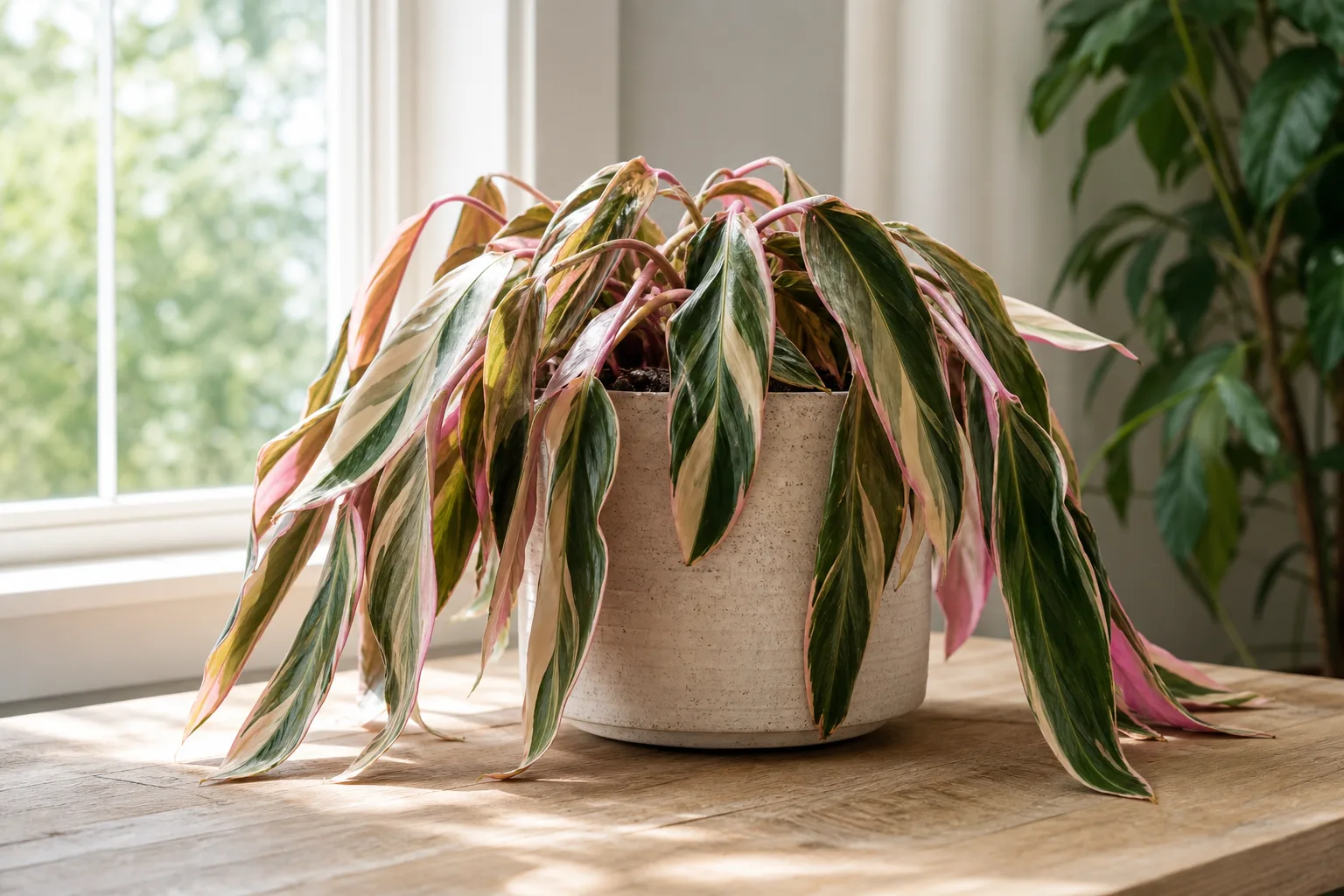
Wilting on Stromanthe Triostar: Causes, Checks & Fixes
This guide covers wilting on Stromanthe Triostar. See also the general Wilting guide, watering, and light pages for this plant.
Wilting on Stromanthe Triostar: Causes, Checks & Fixes
Quick answer
Wilting on Stromanthe Triostar (Stromanthe thalia ‘Triostar’-often sold as S. sanguinea ‘Triostar’ in trade and Missouri BG PlantFinder) is a water-pathway problem-roots either cannot reach moisture or cannot absorb it. The same limp look comes from opposite causes, so wilted leaves may mean soil too dry or too wet.
First step: lift the pot and check moisture at depth before you water. A light, dry pot needs a deep soak with filtered or room-temperature water. A heavy, wet pot needs drying and possible root inspection-not another drink.
Wet vs dry at a glance
| If you see… | Pot weight | Mix at 2–3 cm depth | First action |
|---|---|---|---|
| Soft limp blades, crispy edges | Light | Dry | Thorough soak with filtered water |
| Limp leaves, yellow lower foliage | Heavy | Wet, cool | Stop watering; inspect roots if smell is sour |
| Afternoon droop, firm by morning | Normal | Evenly moist | Filter sun; raise humidity-see low humidity |
| Upright fold at night, limp all day | Varies | Borderline dry | Water once; watch nightly movement return |
Wilting vs drooping leaves on this plant
Both symptoms look similar on Triostar, but they answer different search questions on this site.
Use this wilting page when leaves are soft, collapsed, and deflated-tissue has lost turgor and may not stand again even after you fix moisture. Think acute collapse, wet-soil paradox wilt, or drought so severe that nightly leaf folding stops.
Use the drooping leaves guide when blades hang downward but still feel somewhat pliable, especially if normal prayer-plant folding continues at night. Drooping often tracks humidity dips, heat stress, or gradual thirst without the all-day collapse wilt describes.
When in doubt, run the eight-check sequence below-pot weight and mix moisture decide the path, not the word you use for the symptom.
What wilting looks like on Stromanthe Triostar
True wilt shows as soft, limp leaf blades and drooping petioles that stay collapsed through the day. Variegated panels may curl inward, and pink or cream edges can crisp if drought has gone on for days. The whole clump looks deflated rather than merely relaxed.
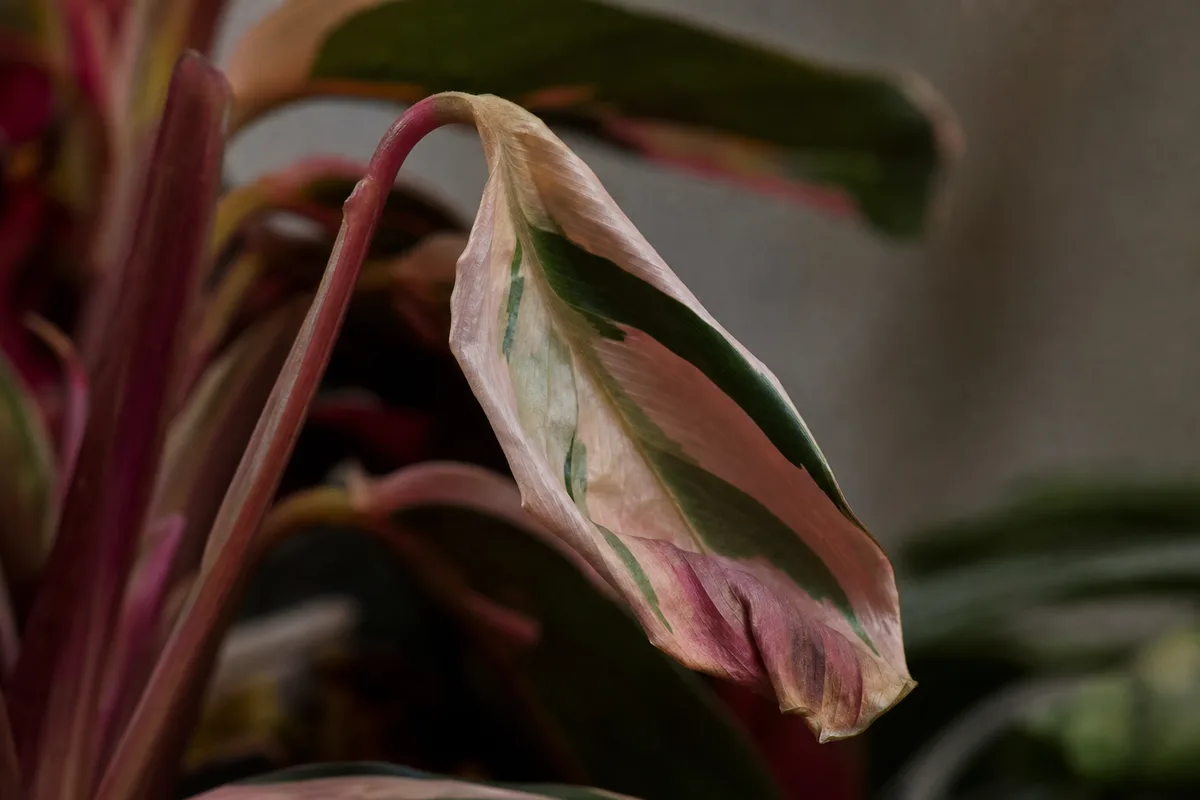
Wilting symptoms on Stromanthe Triostar - compare with healthy tissue on the same plant.
Do not confuse wilt with normal prayer-plant movement. Triostar is in the Marantaceae family-leaves fold upright at night via a pulvinus joint and lower again by morning. That nightly rise-and-fall is healthy. Wilt is tissue that never regains firmness after morning, or that collapses mid-day while mix is wrong for the symptom.
Drought wilt often pairs with:
- Light pot weight and dry mix 2–3 cm down
- Crispy brown tips or margins on thin variegated tissue
- Leaves curling inward to conserve moisture
- Stopped or weak daily leaf movement when dryness is severe
Overwatering / root-failure wilt often pairs with:
- Heavy pot and wet mix despite limp leaves
- Yellowing lower leaves while stems stay soft
- Sour or swampy smell from drainage holes
- Mushy roots if you unpot (brown, translucent, collapsing)
Heat or humidity stress can cause temporary afternoon droop in bright windows even when mix is adequate-leaves may perk overnight if roots are healthy and humidity recovers. Persistent edge crisping with moist soil points to low humidity rather than thirst alone.
Why Stromanthe Triostar wilts
Triostar evolved in Brazilian rainforest understory. It wants steady moisture, warm temperatures, and high humidity-not the feast-or-famine cycle many houseplants tolerate.
Underwatering
Missouri Botanical Garden notes that soils must never be allowed to dry out on this species. Thin, variegated leaves lose water fast in dry air. When the peat-based mix pulls away from the pot wall or the top inch is dusty-dry, fine roots die back and the plant cannot refill leaf cells even after you finally water.
Owners often underwater Triostar out of fear of root rot-but chronic dryness produces the same collapsed look from the opposite direction. Full drought triage lives on the underwatering page.
Overwatering and root rot
Triostar needs moist but aerated mix. When roots sit in stale, oxygen-poor soil-common in oversized pots, dense peat with no perlite, or low light that slows water use-rotting roots cannot take up water. Leaves wilt while soil stays wet. Root and stem rot are common Stromanthe problems when culture stays too wet.
Low humidity compounding water stress
Wisconsin Extension notes that without adequate humidity, leaf edges dry first-especially in heated winter rooms. Low humidity increases transpiration faster than roots can supply water, so the plant looks wilted or crispy even when mix moisture is borderline acceptable. Winter HVAC can accelerate this even when the top inch still reads slightly moist-a pattern covered in depth on low humidity.
Light mismatch
Triostar needs bright, indirect light. Too dim: growth slows, the pot stays wet longer, and roots suffocate-overlapping with overwatering. Too much direct sun: leaves scorch and transpire heavily, producing mid-day droop. Both patterns end in wilt if uncorrected. Compare placement against the light guide if variegation fades or one side burns.
Heat, cold, and drafts
Warm room temperatures above about 65°F suit this plant; cold drafts or chill below about 50°F damage tropical tissue. Chilling injury can show as wilting or discolored leaves, and wet cold soil accelerates root decay.
Transplant shock and recent moves
Repotting, division, or a sudden window change disrupts fine roots. Triostar wilts easily for several days after root disturbance if humidity drops or watering swings. This is temporary only when roots stay firm and mix moisture stays even-follow the repotting guide for timing and aftercare.
Severe pest feeding
Spider mites thrive in the hot, dry conditions that stress Triostar. Heavy feeding weakens leaves and stems, producing stippling, webbing, and limp tissue that mimics drought. Check undersides before you soak a plant that may already be overwatered. Active infestations need the spider mites protocol before you change watering.
How to confirm the cause
Work through these checks in order:
- Pot weight - Lift the pot. Light and airy = likely dry. Heavy and soggy = likely wet root zone.
- Moisture at depth - Insert a finger or wooden skewer 5–7 cm down. Dry throughout confirms drought. Wet deep mix with limp leaves suggests uptake failure, not thirst.
- Time of day pattern - Afternoon droop that recovers by morning with even moisture may be heat stress. All-day collapse points to root or moisture failure.
- Nightly folding - If leaves still fold up at night but look limp all day, suspect water stress. If folding stops entirely, drought has likely gone too far.
- Smell and drainage - Sour odor, algae on mix surface, or water sitting in a full saucer supports overwatering. Empty cachepots-hidden saucer water is a common hidden cause.
- Newest spear - A firm emerging leaf with wilted older ones often means recent underwatering. Yellow lower leaves plus wet mix suggests rot.
- Root spot-check - If the pot is heavy, wilt worsens daily, or smell is sour, slide the plant out. Healthy roots are pale and firm; rot is brown, mushy, and foul. See root rot criteria before surgery.
- Pest scan - Shake a leaf over white paper; stippling and fine webbing indicate spider mites, not a simple watering error.
Write down dry versus wet before acting. Adding water to a rotting root ball is the most common Triostar-killing mistake.
Cause comparison at a glance
| Pattern | Pot / soil | Leaf feel | Night folding | Likely cause |
|---|---|---|---|---|
| All-day soft collapse | Light, dry 2–3 cm down | Crispy edges possible | Slowed or stopped | Underwatering |
| Limp on wet mix | Heavy, sour smell | Soft, yellow lower leaves | May stop on chronic wet | Overwatering / root rot |
| Midday droop only | Normal moisture | Firm by morning | Normal fold continues | Heat / low humidity |
| Upright at night, limp by day | Borderline dry | Inward curl, crisp margins | Fold returns nightly | Humidity stress or mild thirst |
| Stippling + webbing | Moisture normal | Bronze patches, limp spread | Variable | Spider mites |
First fix for Stromanthe Triostar
Match your action to moisture state-do not water automatically.
If the pot is light and mix is dry 2–3 cm down: Water thoroughly with filtered, distilled, or rainwater until excess drains freely. Prayer plants are sensitive to tap-water minerals; room-temperature water reduces shock. Let the pot drain completely; empty the saucer. If mix repelled water and stayed dry in the center, bottom-soak for 20–30 minutes, then drain. Details on the underwatering guide.
If the pot is heavy and mix is wet: Stop watering. Move the plant to brighter indirect light and improve airflow. Do not fertilize. Do not mist heavily when soil is already wet-surface moisture on folded crowns invites stem rot on prayer plants. If wilt persists more than 48 hours on wet mix, unpot and inspect roots-trim mushy tissue, repot into fresh airy peat-perlite mix, and withhold water until the top inch is barely dry. Follow overwatering and root rot paths.
Pick one path. Splitting the difference-a small sip on a soggy pot-usually makes rot worse.
Step-by-step recovery
After drought wilt
- Soak as above, then drain fully.
- Raise humidity with a pebble tray or humidifier-Triostar needs high humidity to refill thin leaves without crisping edges.
- Keep bright indirect light; avoid hot direct sun on stressed tissue.
- Remove leaves that stay fully collapsed and brown after 48 hours-they will not re-turgify.
- Resume checking the top inch; keep mix evenly moist during growth, slightly drier in cool winter months per the watering guide.
After overwatering or root rot
- Stop watering and improve light and airflow immediately.
- Unpot if smell is sour or wilt worsens on wet mix.
- Rinse roots gently; cut brown mushy sections back to firm white tissue with clean shears.
- Repot into moisture-retentive but airy mix with perlite; use a pot only slightly larger with open drainage holes.
- Water lightly once after repotting, then let the top inch dry before the next drink.
- Discard severely rotted specimens if more than half the root mass is gone and the stem base is soft.
After heat or humidity wilt
- Filter afternoon sun with sheer curtain or move back from the glass.
- Boost humidity above roughly 50–60 percent-adequate humidity prevents edge drying on this species.
- Maintain even moisture-do not compensate with heavy watering alone.
After repot shock
- Keep humidity high and light stable.
- Water when the top inch dries-no extra soaking “to help it settle.”
- Wait 7–14 days before changing anything else.
Recovery timeline
Typical editorial ranges from indoor growing experience; individual plants vary with root health, season, and humidity.
Mild drought wilt: Firmness often returns within 2–6 hours after a proper soak; full leaf appearance may take several days.
Moderate underwatering with crispy edges: New growth looks better in 1–2 weeks; damaged margins stay brown permanently.
Root rot after repot and trim: Expect 2–4 weeks before a new spear unfurls upright. Judge success by firm roots and fresh rolled leaves, not old collapsed blades.
No improvement after 72 hours on corrected moisture with firm roots warrants rechecking for hidden rot, pests, or cold damage.
Lookalike symptoms to rule out
Normal nyctinastic folding - Upright leaves at night, lowered by morning, with firm tissue and appropriate soil moisture. Not wilt. If daytime posture is the only issue, see drooping leaves.
Drooping from low light alone - Leggy stems and pale variegation without the acute collapse of true wilt. Light correction helps more than extra water-see not enough light.
Curling from low humidity - Inward leaf curl with dry crisp edges but firm stems; pot weight may be normal. Humidity fix on the low-humidity page, not necessarily more water.
Spider mite damage - Bronze stippling, fine webbing, and progressive limpness; soil moisture checks look normal. Treat pests on the spider mites guide before soaking.
Cold draft injury - Darkened or water-soaked patches on exposed leaves after a cold window episode; distinct from gradual drought wilt.
Brown tips from minerals - Edge burn with otherwise firm tissue and normal pot weight; overlaps with humidity stress. See brown tips when margins crisp without whole-leaf collapse.
Mistakes to avoid
Do not water on a calendar without checking pot weight-Triostar’s peat mix hides dryness at the surface.
Do not soak a heavy, wet pot because leaves look limp. Penn State lists overwatered soggy soil as a cause of wilting alongside underwatering.
Do not move a wilted plant into harsh direct sun to “perk it up”-variegated panels burn quickly.
Do not repot on day one unless roots are clearly rotting or mix is failing. Unnecessary repotting adds shock.
Do not fertilize a wilted Triostar hoping to revive it-feed only after moisture is stable and new growth is active.
Do not confuse stopped nightly folding with ordinary evening relaxation; total loss of movement after chronic dryness means you waited too long between drinks.
Do not mist heavily as a humidity fix when soil is already wet-address air moisture with a humidifier instead.
Stromanthe Triostar care cross-check
Wilting often exposes a baseline care mismatch. Confirm:
- Light: Medium to bright indirect-enough to use water steadily, not so much that leaves scorch. See light guide.
- Water: Evenly moist; top inch dry before the next thorough drink; filtered or rainwater preferred per watering.
- Humidity: High-60 percent or more when possible; dry winter air drives repeat wilt cycles. See low humidity.
- Temperature: Roughly 65–80°F; avoid cold drafts and AC blasts.
- Mix and pot: Peaty, well-draining blend; drainage holes open; saucer emptied after watering. Soil guide.
- Pests: Mealybugs and spider mites are common on Stromanthe-scout undersides during any wilt episode.
How to prevent wilting next time
Learn your pot’s dry-down rhythm in its actual window rather than following generic schedules. Lift the pot when you walk by; light weight means check the top inch today.
Use filtered or rainwater to avoid mineral buildup that stresses prayer-plant roots.
Group Triostar with other humidity-loving plants or run a humidifier in heated rooms.
Match pot size to root mass-oversized containers stay wet and invite rot.
Rotate the pot weekly so variegated leaves develop evenly and the whole clump uses water consistently.
After travel or a missed watering, bottom-soak if mix has gone hydrophobic rather than giving repeated shallow sips that never reach the root ball.
When to worry
Treat as urgent when wilt persists on wet soil after 48 hours of drying effort, stems soften at soil line, roots are mostly mushy, or collapse spreads to new spears daily.
Recovery is unlikely when the crown feels hollow, most roots are gone, and no new rolled leaf appears within three to four weeks after corrective repotting.
Mild afternoon droop that resolves with stable moisture and humidity is not an emergency-confirm pests and root smell before escalating to surgery.
For advanced rot with spreading soft crown tissue, consider contacting your local extension office before repeated repot cycles.
3-step crisis checklist
When Triostar looks collapsed right now, screenshot this sequence:
- Lift the pot - Light and airy means dry path; heavy and cold means wet path. Do not water until you know which.
- Probe 5–7 cm deep - Skewer or finger test beats surface appearance on peat mix. Write down dry or wet.
- Pick one path - Dry → thorough filtered soak and drain. Wet → stop watering, brighter indirect light, root check if sour smell or 48-hour failure. Never split the difference.
Judge recovery by firm new spears and returning nightly fold, not by old limp blades standing up again.
Related Stromanthe Triostar guides
- Stromanthe Triostar overview
- Stromanthe Triostar watering
- Drooping leaves on Stromanthe Triostar
- Underwatering on Stromanthe Triostar
- Overwatering on Stromanthe Triostar
- Root rot on Stromanthe Triostar
- Low humidity on Stromanthe Triostar
- Spider mites on Stromanthe Triostar
- All Stromanthe Triostar problems