Overwatering on Stromanthe Triostar: Causes, Checks & Fixes
Quick answer
Overwatering Stromanthe Triostar means the root zone stays wet too long-not how much water you pour in one session. Stop watering, move the plant to brighter indirect light, and water again only when the top inch of mix feels dry.
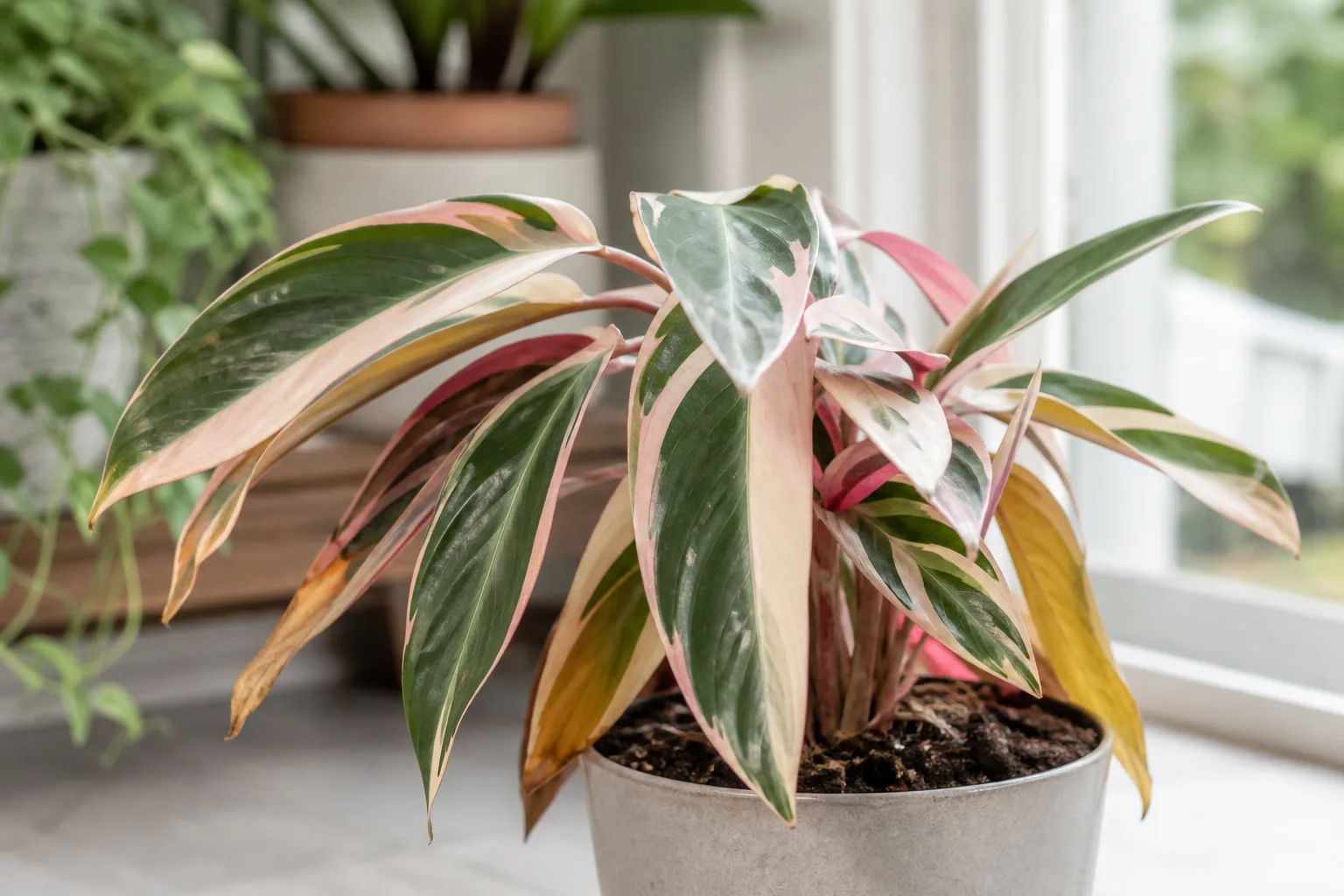
Overwatering on Stromanthe Triostar: Causes, Checks & Fixes
This guide covers overwatering on Stromanthe Triostar. See also the general Overwatering guide, watering, and light pages for this plant.
Overwatering on Stromanthe Triostar: Causes, Checks & Fixes
Quick answer
Overwatering Stromanthe Triostar is not about giving too much water in one pour. It is keeping the root zone saturated so long that roots lose oxygen and stop absorbing moisture-even while the mix feels wet. Triostar sits in the fussy middle ground of prayer-plant care: it wants evenly moist medium with excellent drainage, not a permanently wet sponge.
First step: stop watering. Move the plant to brighter indirect light so the pot can dry down, then water again only when the top inch of mix feels dry to your finger. Do not repot, fertilize, or mist heavily on day one unless you already smell rot or find mushy roots.
What overwatering looks like on Stromanthe Triostar
Triostar shows water stress through its thin, colorful leaves before the damage looks dramatic. Because it is a prayer plant family member, healthy plants fold leaves up at night and lower them by morning. When roots fail from chronic wet soil, that movement slows or stops while petioles go limp.
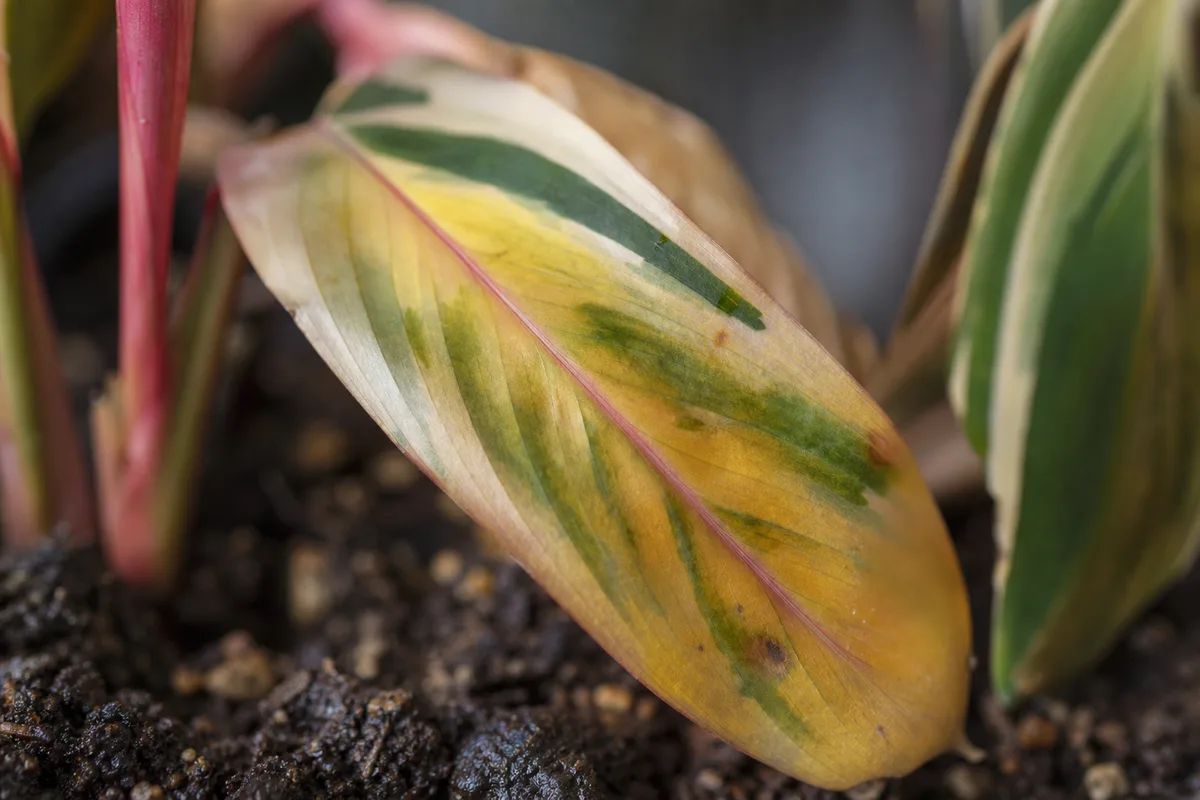
Overwatering symptoms on Stromanthe Triostar - compare with healthy tissue on the same plant.
Typical overwatering patterns on Triostar:
- Dull yellow lower leaves that stay soft, not crispy-often on an otherwise wet pot
- Limp or drooping stems despite damp mix; the plant looks thirsty in a puddle
- New spears stall, stay rolled, or open with pale washed-out color
- Fungus gnats hovering near the soil surface or white mold on top of the mix
- Sour, musty smell when you lift the pot or poke near the drainage holes
- Brown soft patches at the crown where water sat on folded leaves after top-watering
What is usually not overwatering alone:
- Crispy brown leaf edges with a light dry pot-more often low humidity or fluoride in tap water
- Pink and cream panels fading to mostly green-usually too little light, not wet roots
- A single old yellow leaf at the base while the pot dries normally-normal aging
Triostar’s variegated tissue is thin. Yellowing from root failure often starts on older lower leaves while the crown still looks green for a while. Do not wait for every leaf to collapse before you check the roots.
Why Stromanthe Triostar gets overwatered
The most common trap is treating “moisture-loving tropical” as “water constantly.” Triostar needs consistent moisture, but the surface should dry slightly between drinks. Growers who water on the same weekday regardless of season keep winter pots wet for days.
Plant-specific reasons Stromanthe Triostar overview stays wet too long:
- Peat-heavy mix - Triostar performs best in moisture-retentive, well-draining peat-based medium. That same mix holds water longer than bark-heavy blends, so a schedule that works for a pothos will swamp Triostar in winter.
- Low light corners - In medium or dim indirect light, the plant uses water slowly. Cooler rooms and short winter days compound the problem. A pot that dried in three days in summer may need ten in December.
- Oversized or cache pots - Extra soil volume without matching root mass stays wet at the center. Decorative pots without drainage trap saucer water against the root ball.
- Sympathy watering - Triostar droops when underwatering on Stromanthe Triostar, but it also droops when overwatered roots cannot take up water. Adding more water to already wet soil accelerates rot.
- Humidity confusion - High humidity keeps leaf edges from crisping, but misting or pebble trays do not replace soil moisture checks. Many growers overwater the pot while trying to fix dry air.
- Fresh repot into dense mix - New peat that has not opened up with roots can stay soggy at the bottom even when the top inch feels acceptable.
Triostar is rhizomatous and spreads at the soil line. Wet crowns rot faster than dry ones, especially if water pools where leaves fold together after top-watering.
How to confirm overwatering
Work through these checks before you change anything else:
- Finger test at the top inch - Insert your finger to the first knuckle. If it feels wet or cool and clings to your skin, do not water. Triostar’s trigger is dry at the surface, moist below-not wet throughout.
- Pot weight - Lift the container after you think it should have dried. A heavy, cold pot days after watering confirms slow drainage or excess retention.
- Drainage audit - Confirm holes are open, no roots plug the bottom, and the plant is not sitting in a full outer saucer or cache pot reservoir.
- Light and season check - Note if the plant moved to a dimmer spot or if outdoor temperatures dropped. Lower light plus unchanged watering is the classic winter overwatering setup.
- Smell and gnats - Anaerobic wet soil smells sour. Fungus gnats breed in constantly moist surface layers.
- Root peek if symptoms persist - Slide the root ball out gently. Healthy Triostar roots are firm and whitish to tan. Brown mushy roots with intact wet soil confirm chronic overwatering, not mere underwatering.
If the top inch is dry, the pot is light, and edges are crispy with no gnats, look at underwatering or low humidity before you assume overwatering.
First fix for Stromanthe Triostar
Stop watering and move the plant to bright, indirect light until the top two inches of mix feel dry.
Brighter light increases transpiration so the root zone can recover oxygen faster-without blasting variegated leaves in direct sun, which burns pale panels first. Tilt the pot slightly over a sink to drain any trapped saucer water. Do not fertilize, repot, or prune heavily until you know whether roots are firm.
After the dry-down, water thoroughly until a little runs from the drainage holes, then empty the saucer within 30 minutes. Resume the top-inch-dry rule-not a calendar.
Step-by-step recovery
Once the first dry-down is underway:
- Track dryness daily - Mark when the top inch dries. Triostar in active growth may need water every four to seven days; in cool dim months, ten to fourteen days is common.
- Improve airflow around the crown - Keep leaves from staying wet overnight. Water the soil directly rather than showering folded foliage if you have had crown soft spots.
- Repot only if roots fail the sniff test - If you find mushy brown roots or rotten smell, unpot, trim dead tissue with clean shears, and replant in fresh airy peat-based mix with perlite or bark. Use a pot only slightly larger than the trimmed root ball.
- Hold fertilizer - Wait until you see a new spear opening cleanly before feeding at half strength during active growth.
- Address humidity separately - Run a humidifier or pebble tray if edges crisp, but keep the soil on the dry-down schedule. Humidity and soil moisture are different levers.
- Remove only fully dead leaves - Yellow leaves that pull away easily can go. Do not strip half-green foliage; the plant still needs photosynthetic area while roots rebuild.
If the central rhizome is soft and black, recovery is unlikely. Salvage firm side shoots with healthy roots if any exist.
Recovery timeline
Minor overwatering without mushy roots often stabilizes within one to two weeks after you correct the Stromanthe Triostar watering guide. New spears may take two to four weeks to appear once roots regain function.
Yellow leaves rarely revert to full pink-and-green variegation-they stay yellow until they drop. Judge success by firm petioles, resumed nightly leaf movement, and clean new growth, not by old blemishes.
Severe root loss after repot can push full recovery into a full growing season. Some lost variegation on new leaves may occur while the plant prioritizes survival over color.
Lookalike symptoms to rule out
Underwatering - Pot is light, top two inches are dry, leaf edges curl inward and crisp, and the plant perks up within hours of a thorough soak. Wet soil rules this out.
Low humidity - Brown dry tips and margins with otherwise firm roots and normal dry-down timing. Common in heated winter rooms even when watering is correct.
root rot on Stromanthe Triostar (advanced overwatering) - Same wet-soil context but with black mushy roots and foul odor. Treat with trim-and-repot; stopping water alone is not enough once rot is established.
Spider mites - Fine stippling and webbing on undersides, often in dry warm air-not soggy soil. Confirm with a white paper tap test.
Cold draft damage - Maroon or translucent patches after exposure below comfortable room range. Soil moisture may be fine; placement near a cold window is the clue.
Mistakes to avoid
Do not water because leaves droop without checking soil first-Triostar droops from both too much and too little water.
Do not repot into a much larger pot to “help drainage.” Extra wet soil volume makes the problem worse.
Do not mist heavily as a substitute for fixing soil moisture. Wet foliage on folded leaves can mark pink and cream tissue.
Do not keep the plant in a dim corner while waiting for recovery. Light helps the pot dry; darkness prolongs saturation.
Do not fertilize a stressed root system hoping for new color. Feed only after stable new growth returns.
Stromanthe Triostar care cross-check
Triostar performs best with medium to Stromanthe Triostar light guide, high humidity, and filtered or rainwater when tap water is harsh. Its mix should stay evenly moist in the root zone but never waterlogged. Temperatures between roughly 18°C and 27°C (65–80°F) match its tropical origin.
If you recently changed water type, pot size, and placement at once, step back to one variable. Consistency matters more than constant tweaking for this species.
How to prevent overwatering next time
Water when the top inch of mix dries-not on a fixed weekday. Reduce frequency automatically in winter or when the plant sits farther from windows.
Use pots with drainage holes and empty saucers after every watering. Right-size containers: an inch or two of fresh mix around the root ball is enough at repot time.
Choose moisture-retentive mix with perlite, bark, or pumice so water drains while roots stay evenly supplied. Avoid letting the entire pot go bone dry; Triostar dislikes drought as much as swamp-but the surface must breathe between drinks.
Keep bright indirect light so the plant uses water predictably. Rotate the pot so growth stays even and you notice when the mix stops drying on one side.
Monitor new rolled spears. A healthy Triostar pushes colorful leaves regularly in warm months; stalled growth with wet soil is an early warning.
When to worry
Treat as urgent when stems collapse at the soil line, the mix smells rotten, yellowing spreads quickly across multiple leaves while soil stays wet, or soft crown tissue appears where water collected. Those signs mean root rot may already be active-inspect roots within a day.
Worry less about one yellow lower leaf on an otherwise drying pot, or minor fungus gnats that disappear after a single dry-down cycle.
If more than half the root mass is mushy after inspection, the parent clump may not be saveable. Propagation from any firm rhizome sections with roots is the last resort-not a day-one step.
Conclusion
Overwatering on Stromanthe Triostar is a timing and drainage problem disguised as a thirsty plant. The fix starts with stopping water, letting the surface dry, and placing the pot where it can use moisture at a healthy pace. Confirm with weight, smell, and root firmness-not leaf color alone-and you can usually recover variegated new growth before rot takes the crown.
When to use this page vs other Stromanthe Triostar guides
- Stromanthe Triostar watering guide - Use for routine moisture checks before assuming overwatering is the main issue.
- Stromanthe Triostar problems hub - Browse all 17 common issues on this species.
- Root Rot on Stromanthe Triostar - Different entry point when symptoms overlap with overwatering.
- Yellow Leaves on Stromanthe Triostar - Different entry point when symptoms overlap with overwatering.
- Wilting on Stromanthe Triostar - Different entry point when symptoms overlap with overwatering.
Related Stromanthe Triostar guides
- Stromanthe Triostar overview
- Stromanthe Triostar watering
- Stromanthe Triostar light
- Stromanthe Triostar soil
- Root Rot on Stromanthe Triostar
- Yellow Leaves on Stromanthe Triostar
- Wilting on Stromanthe Triostar
- Fungus Gnats on Stromanthe Triostar
- Mold on Soil on Stromanthe Triostar
- Drooping Leaves on Stromanthe Triostar
- Stromanthe Triostar problems