Yellow Leaves on Stromanthe Triostar: Causes, Checks & Fixes
Quick answer
Yellow leaves on Stromanthe Triostar usually trace to the root zone-overwatering, poor drainage, or low light slowing dry-down-not a missing fertilizer dose. Check soil moisture at the top inch (2–3 cm), humidity near 50–60% RH, and whether new tricolor spears still emerge before you change water, light, or pot size.
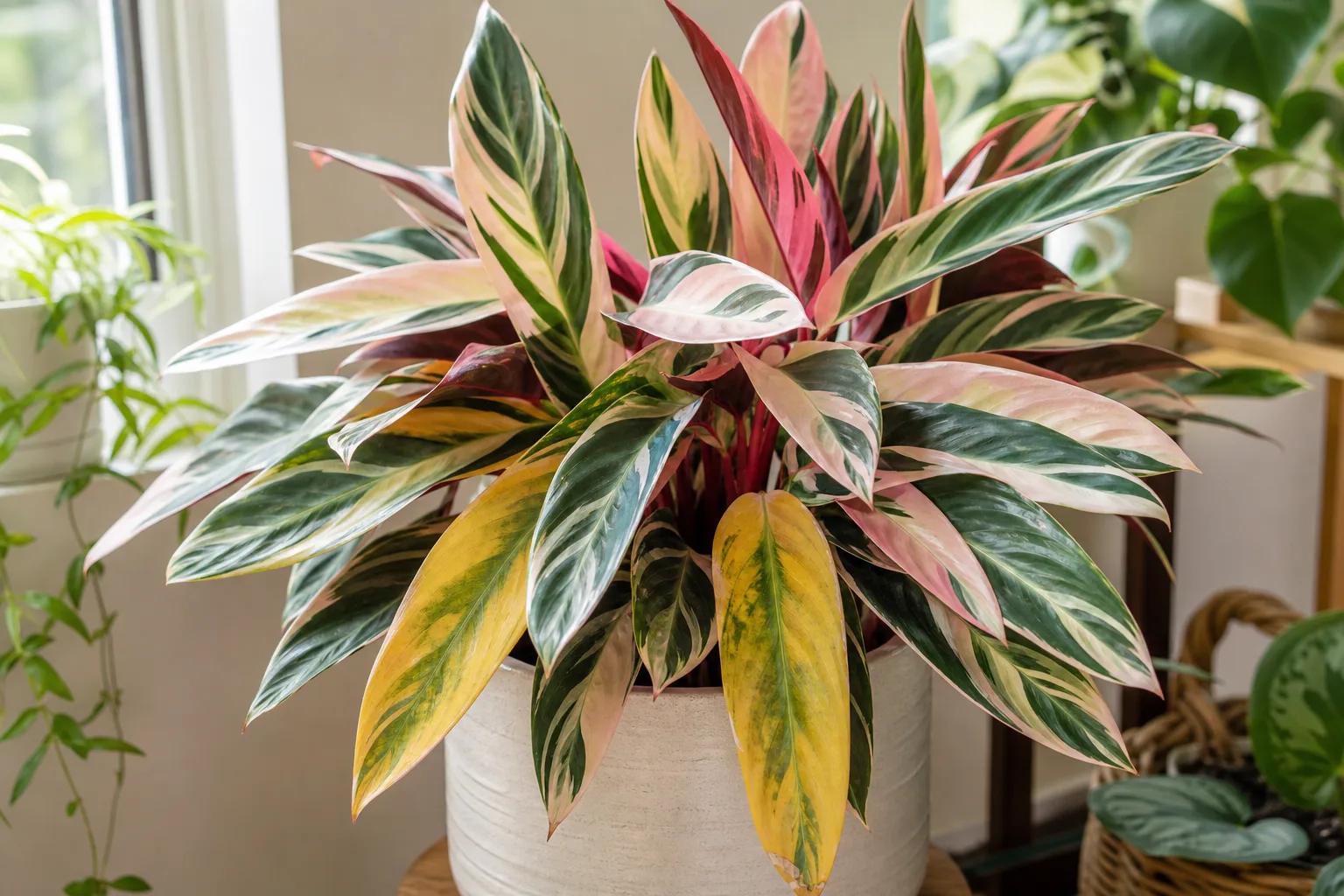
Yellow Leaves on Stromanthe Triostar: Causes, Checks & Fixes
This guide covers yellow leaves on Stromanthe Triostar. See also the general Yellow Leaves guide, watering, and light pages for this plant.
Yellow Leaves on Stromanthe Triostar: Causes, Checks & Fixes
Quick answer
Yellow leaves on Stromanthe Triostar (Stromanthe sanguinea ‘Triostar’, also sold as Stromanthe thalia ‘Triostar’) almost always trace to stress at the root zone or the air around the leaves-not a random nutrient shortage. This Marantaceae prayer plant needs moist but well-drained fertile soil, bright indirect light, and high humidity so it can use water at a healthy pace. When soil stays wet in a dim corner, roots lose oxygen and lower leaves yellow from the bottom up. Dry winter air, fluoride in tap water, and cold drafts can pale or yellow variegated tissue even when watering looks correct on paper.
First step: check the top inch (2–3 cm) of mix and pot weight before you water, fertilize, or repot. If soil is wet and heavy, stop watering and move to brighter filtered light so the mix can dry-see overwatering for the full dry-down path. If the top inch is dry and the pot is light with curled leaves, water thoroughly once. If moisture looks fine but leaves pale in a heated room, address humidity and water quality before you assume root failure.
What yellow leaves look like on Stromanthe Triostar
Triostar shows trouble through its thin tricolor blades and prayer-plant movement before every leaf goes uniformly yellow. Healthy plants fold leaves upward at night and lower them by morning. When roots fail or air is too dry, that nyctinasty slows or stops while color drains from older tissue first.
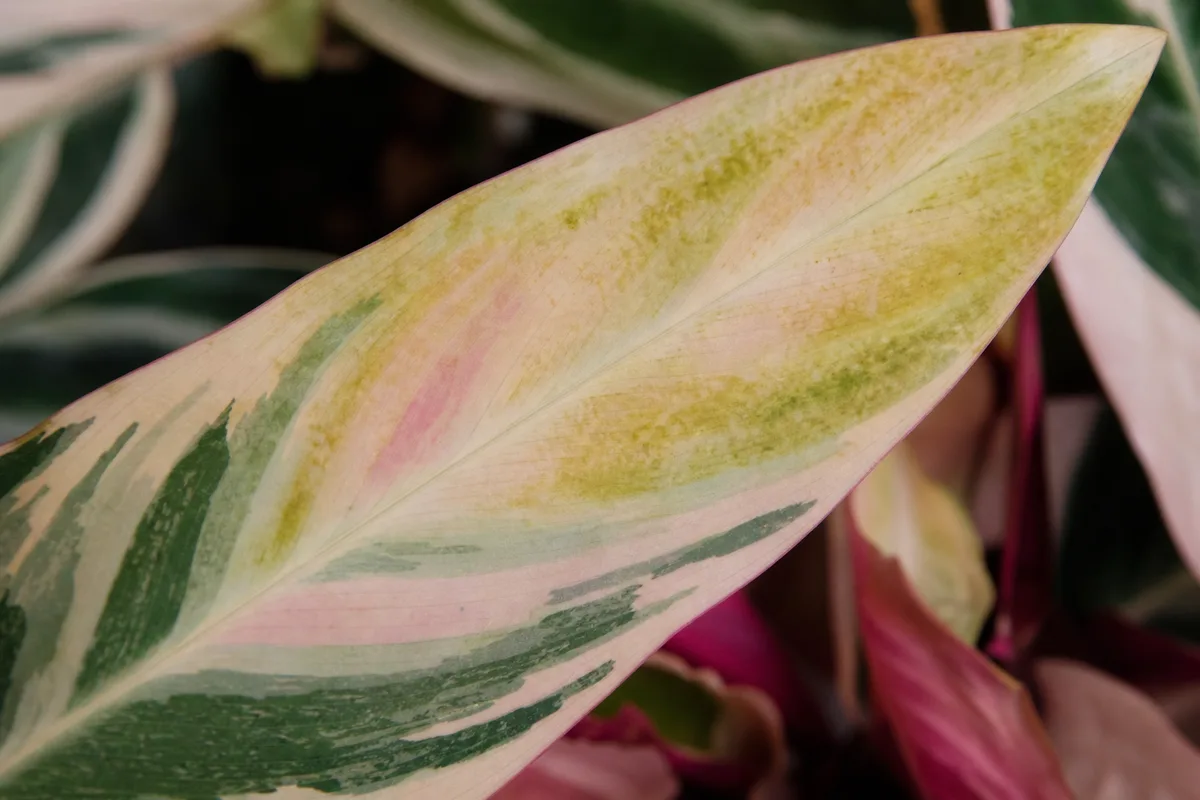
Yellow Leaves symptoms on Stromanthe Triostar - compare with healthy tissue on the same plant.
Typical yellowing patterns on Triostar:
- Overwatering / root stress - Dull yellow lower leaves that stay soft, not crispy, on a wet heavy pot; limp petioles despite damp mix; new spears stall or open washed-out; sour smell near drainage holes. Wilted leaves with wet soil can mean rotting roots that cannot move water-do not respond with more water.
- underwatering on Stromanthe Triostar - Yellow or tan leaves paired with crisp edges, inward curl, and a light dry pot; plant perks after one thorough soak.
- Low humidity - Whole panels pale or yellow before brown tips appear; common in heated winter rooms even when the watering rhythm is correct. See low humidity for RH targets.
- Tap-water minerals - Pale or yellow patches, sometimes with brown margins, after months on harsh tap water; filtered or rainwater often stabilizes new growth. Details on brown tips.
- Low light - Pink and cream panels fade toward mostly green on new spears without uniform yellow on older leaves first; same watering schedule overwaters in winter when transpiration drops.
- Cold drafts - Maroon or translucent yellowing after exposure below roughly 60°F (15°C) near windows or AC vents; soil moisture may be fine.
- Spider mites - Fine stippling and webbing on undersides in dry warm air-not soggy soil. Confirm with a white-paper tap test; see spider mites.
- Natural aging - One lower yellow leaf at the rhizome base while new spears stay vivid and the pot dries on schedule.
Do not wait for every leaf to collapse. Triostar’s variegated tissue yellows on older lower leaves while the crown still looks green for a while.
Why Stromanthe Triostar gets yellow leaves
Overwatering and poor drainage top the list. Oversized pots hold wet peat around fine roots for days. Low light slows water use, so the same summer schedule overwaters in winter. Sympathy watering when leaves droop on already wet soil accelerates root oxygen loss-the same paradox covered in root rot.
Low humidity in the 30–40% RH range common above radiators can pale or yellow whole leaves before crisp brown edges show. Triostar is a rain-forest understory plant that expects humid air; dry leaves transpire faster and stress faster than thick-leaved tropicals.
Tap water with chlorine or fluoride stresses thin variegated tissue over time. Yellowing may follow pale new spears rather than sudden uniform collapse.
Cold below comfortable room range slows metabolism and can yellow exposed leaves while inner growth looks fine.
Stromanthe Triostar repotting guide shock - Fresh dense peat that has not opened with roots can stay soggy at the bottom; temporary yellowing on older leaves is common for two to three weeks if crowns stay firm.
Nutrient deficiency is a late suspect on Triostar fed during active growth in fresh mix. Rule it out only after water, light, humidity, and root checks fail-and never fertilize a yellow stressed plant hoping for color.
Lookalike symptoms to rule out
| Likely cause | What you usually see | Quick check |
|---|---|---|
| Overwatering | Soft yellow lower leaves, wet heavy pot, limp stems, gnats | Top inch wet days after watering; sour smell |
| Underwatering | Crisp edges, curl inward, light pot | Top 2 in. dry; perks after soak |
| Low humidity | Pale or yellow panels, papery feel, brown tips may follow | RH below ~50%; pot dries normally |
| Tap water | Pale new growth, margin burn, gradual yellow | Switch to filtered water; compare new spears |
| Low light | Green drift on new spears, not bottom-up soft yellow | Far from window; wet pot in dim corner |
| Cold draft | Patchy yellow/translucent leaves after cold night | Near window or vent; soil OK |
| Spider mites | Stippling, webbing, dusty undersides | Tap test; dry warm air |
| Root rot (advanced) | Rapid yellow spread, wilt on wet soil, mushy roots | Unpot; firm white roots rule this out |
| Natural aging | One old lower leaf only | New spears vivid; normal dry-down |
How to confirm the cause
Work through these checks in order-one branch at a time:
- Wet-vs-dry branch - Push a finger into the top inch (2–3 cm). Heavy wet pot in a dim room confirms overwatering risk; start overwatering triage. Light dry pot with curled leaves suggests drought-water once, then wait.
- Drainage audit - Confirm holes are open, no roots plug the bottom, and the plant is not sitting in a full saucer or cache-pot reservoir.
- Nyctinasty check - Note whether leaves still fold at night. Stopped movement on wet soil often precedes visible root failure.
- Newest spear color - Green drift on rolled spears signals light stress overlapping with water issues. Washed-out pink on wet soil points to roots or repot stress.
- Humidity and air - Run a hygrometer near the plant. Below ~50% RH in winter with pale leaves favors humidity correction, not more soil water.
- Water source - If you use straight tap water and see pale margins, trial filtered or rainwater for four to six weeks while watching new growth.
- Placement - Cold window glass or AC blast after a cold night can yellow exposed leaves with otherwise normal roots.
- Pest tap test - Shake a yellowing leaf over white paper; orange-red streaks suggest mites, not water stress.
- Root peek if wet soil persists - Slide the root ball out gently. Firm whitish roots with yellow lower leaves may recover with dry-down alone; brown mush confirms root rot surgery.
If the top inch is dry, the pot is light, edges are crispy, and RH is low, fix humidity and watering rhythm before you assume overwatering.
First fix for Stromanthe Triostar
Match the first fix to what you confirmed-one change at a time.
- Wet soil, firm roots suspected - Stop watering. Move to brighter indirect light until the top two inches (5 cm) feel dry. Empty saucers. Do not repot or fertilize on day one.
- Mushy roots or sour smell - Stop watering, unpot within a day, trim rot, and repot into fresh airy peat-based mix per the root-rot guide.
- Dry soil with curl - Water thoroughly with room-temperature filtered water until a little runs from holes; empty the saucer within 30 minutes.
- Low humidity with normal dry-down - Run a humidifier or group plants to reach roughly 50–60% RH; do not keep soil soggy to compensate for dry air.
- Tap-water stress - Switch to filtered or rainwater for new growth; hold fertilizer until spears open cleanly.
- Low light in a wet corner - Relocate to bright indirect light first; then adjust watering to the top-inch-dry rule from the watering guide.
Do not stack fertilizer, repotting, and a new water type on the same day.
Recovery timeline
Minor overwatering without mushy roots often stabilizes within one to two weeks after you correct the watering rhythm and light. New tricolor spears may take two to four weeks to appear once roots regain function.
Humidity or tap-water corrections show in new leaves first-old yellow blades rarely re-green; they drop when the plant no longer needs them. Expect four to six weeks to judge filtered-water trials.
Low-light recovery after relocation may take a full warm season for strong pink-and-cream color to return on new growth.
Severe root loss after trim-and-repot can push full recovery into a full growing season. Judge success by firm petioles, resumed nightly folding, and clean new spears-not by old blemishes.
What not to do
Do not water because leaves droop without checking soil first-Triostar droops from both too much and too little water.
Do not fertilize yellow stressed plants hoping for variegation. Feed only after stable new growth returns during active months.
Do not mist heavily as a humidity fix when soil is already wet. Wet foliage on folded leaves can mark pale panels and invite crown issues.
Do not repot into a much larger pot to “help drainage.” Extra wet soil volume makes yellowing worse.
Do not keep the plant in a dim corner while waiting for recovery. Light helps the pot dry predictably; darkness prolongs saturation.
Do not strip half-green leaves. The plant still needs photosynthetic area while roots rebuild.
How to prevent yellow leaves on Stromanthe Triostar
Keep medium evenly moist during active growth while allowing the top inch to dry slightly between drinks-never a permanently wet sponge. Pair high humidity with airflow, not constant soil saturation.
Water when the top inch dries, not on a fixed weekday. Reduce frequency in winter or when the plant sits farther from windows. Use filtered or rainwater if tap water marks margins.
Keep bright indirect light so the plant uses water predictably. Avoid cold drafts below roughly 60°F (15°C). Right-size pots with drainage holes and empty saucers after every watering.
Monitor new rolled spears. A healthy Triostar pushes colorful leaves regularly in warm months; stalled growth with wet soil is an early warning. For the full care picture, see the Stromanthe Triostar overview.
When to worry
Treat as urgent when stems collapse at the soil line, the mix smells rotten, yellowing spreads quickly across multiple leaves while soil stays wet, or soft crown tissue appears where water collected. Those signs mean root rot may already be active-inspect roots within a day.
Worry less about one yellow lower leaf on an otherwise drying pot, or pale winter color that improves after a humidifier and filtered water without wet soil.
If more than half the root mass is mushy after inspection, the parent clump may not be saveable. Propagation from any firm rhizome sections is the last resort-not a day-one step.
Conclusion
Yellow leaves on Stromanthe Triostar are a diagnostic puzzle tied to Marantaceae biology-thin variegated tissue, nyctinastic movement, and roots that suffocate in wet peat. Start with the top inch of soil and pot weight, then branch to humidity, water quality, light, cold, and pests before you reach for fertilizer or a bigger pot. Most cases recover through one clear correction and patience for new tricolor spears. When wet soil, sour smell, and limp stems align, escalate to root inspection without delay.
When to use this page vs other Stromanthe Triostar guides
- Stromanthe Triostar watering guide - Use for routine moisture checks before assuming yellow leaves is the main issue.
- Stromanthe Triostar problems hub - Browse all 17 common issues on this species.
- Overwatering on Stromanthe Triostar - Different entry point when symptoms overlap with yellow leaves.
- Underwatering on Stromanthe Triostar - Different entry point when symptoms overlap with yellow leaves.
- Not Enough Light on Stromanthe Triostar - Different entry point when symptoms overlap with yellow leaves.