Curling Leaves on Stromanthe Triostar: Causes, Checks &
Quick answer
Curling leaves on Stromanthe Triostar during daylight usually mean underwatering, low humidity, or cold shock-not normal nyctinasty. First step: lift the pot and check whether the top inch is dry or wet before you water.
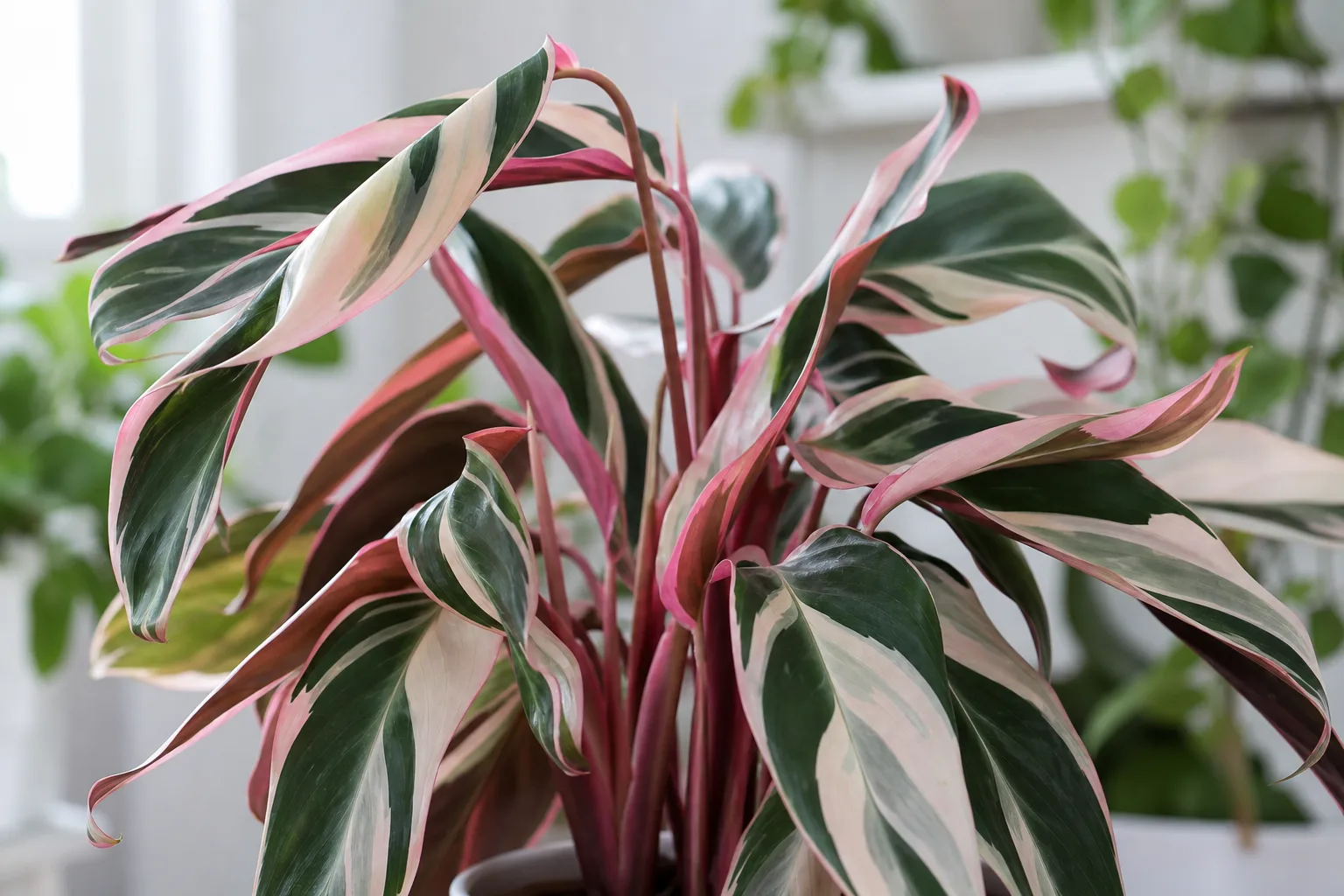
Curling Leaves on Stromanthe Triostar: Causes, Checks & Fixes
This guide covers curling leaves on Stromanthe Triostar. See also the general Curling Leaves guide, watering, and light pages for this plant.
Curling Leaves on Stromanthe Triostar: Causes, Checks & Fixes
Quick answer
Curling leaves on Stromanthe Triostar (Stromanthe thalia ‘Triostar’-often sold under the trade name Stromanthe sanguinea ‘Triostar’) look alarming on a plant known for nyctinastic prayer-plant movement, but daytime curling usually signals stress. Normal night folding raises variegated blades upright and lowers them by morning. Inward cupping that persists through midday is the pattern worth diagnosing.
This page covers curl as a symptom-how rolled leaves look, how to confirm the cause, and which first fix to try. If you already know the pot is bone dry, start with underwatering triage. If soil moisture is fine but pale edges crisp inward, see low humidity. For limp hanging blades rather than tight cupping, compare drooping leaves.
First step: lift the pot and check whether the top inch of mix is dry or wet before you water. A light, dry pot needs a thorough soak with filtered or rainwater. A heavy, wet pot with curled leaves means roots cannot move water upward-adding more water deepens rot, not recovery.
What curling looks like on Stromanthe Triostar
Triostar carries lance-shaped cream, pink, and green blades on long pink petioles. When turgor drops, thin leaf panels roll inward along the midrib or cup like a taco rather than hanging limp. The pattern you see-and what the pot and air feel like-tells you which branch of care to fix.
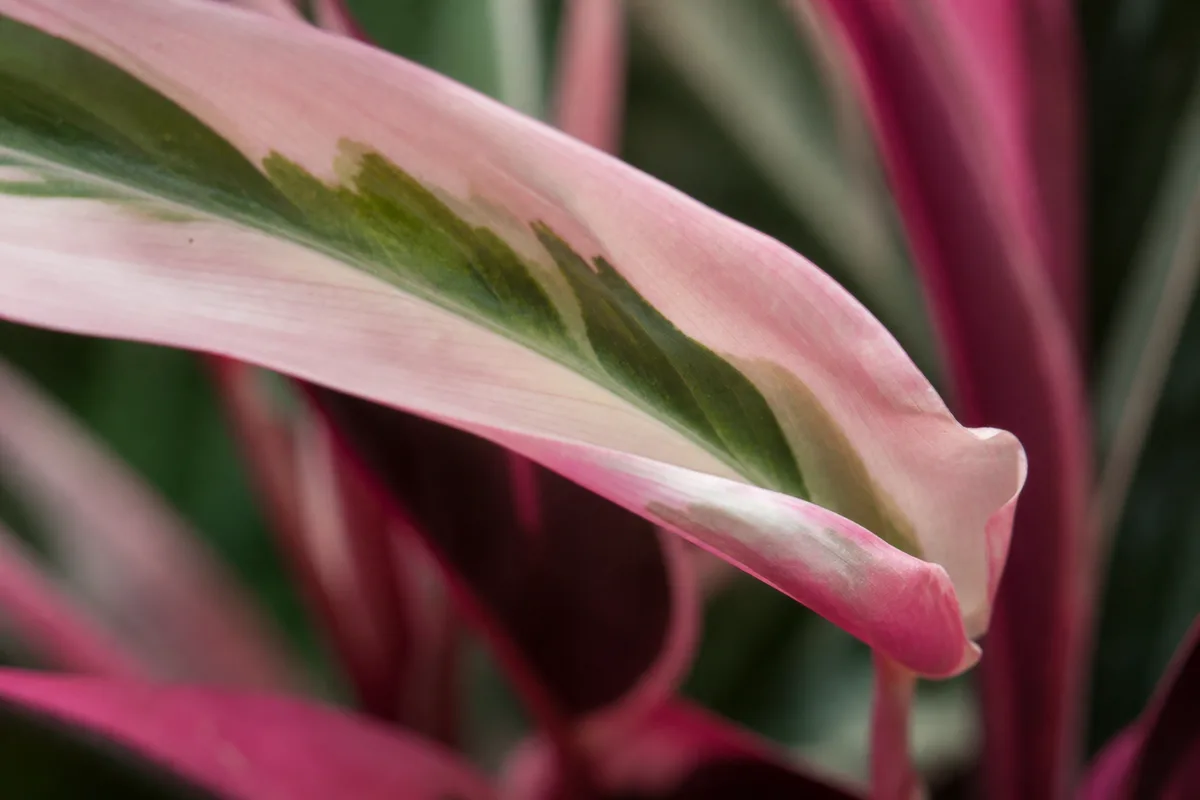
Curling Leaves symptoms on Stromanthe Triostar - compare with healthy tissue on the same plant.
Normal nyctinastic folding (not a problem)
- Leaves rise and fold together after sunset, showing burgundy undersides
- Foliage opens and faces outward again by morning
- Stems stay firm; soil moisture reads normal
- Pattern repeats daily without worsening through the week
Drought curl pattern
- Inward roll or cupping during daylight hours
- Pot feels light for its size; top inch of mix is dry and crumbly
- Leaf edges may crisp on cream and pink panels before full cupping
- Stems remain firm when pressed gently
- Plant often relaxes within hours after proper rehydration
Wet-soil curl pattern
- Leaves curl or cup despite heavy, damp mix for days
- Yellowing may appear on lower leaves; petioles feel limp
- Sour smell from drainage holes or soft tissue at the soil line
- Nightly leaf movement may stop when stress has persisted too long
- More water makes the pattern worse, not better
Humidity and cold curl patterns
- Inward edge roll while soil moisture is adequate-pot weight normal
- Tan or brown crisping on pale variegated panels, worst near vents or winter glass
- Sudden curl within hours after cold tap water or an AC blast
- Damage clustered on the side facing the dry or cold source
Spider mite damage adds fine webbing, stippled pale spots on undersides, and progressive weakening-not the clean symmetric cupping drought usually shows.
Why Stromanthe Triostar leaves curl
Stromanthe Triostar evolved in Brazilian rainforest understory where humidity stays high and soil remains consistently moist but never stagnant. Indoors, thin colorful leaves lose water fast when roots, humidity, or temperature fall outside that narrow comfort zone-and curling is one way the plant conserves moisture.
Underwatering and dry pockets
When the top inch goes dry and stays dry, fine roots lose function and turgor pressure inside leaf cells drops. Leaves roll inward to reduce exposed surface area. Missouri Botanical Garden notes that for this species, soils must never be allowed to dry out indoors-even though the mix must drain well and never sit soggy. Wisconsin Extension adds that if the plant wilts or stops its daily leaf raising and lowering, you have waited too long between waterings.
Hydrophobic peat mix can trap dry pockets: the surface looks briefly damp after a quick pour while the center stays bone dry. That still produces drought curl until the full root ball rewets.
Low humidity
Dry indoor air strips moisture from thin leaf tissue faster than roots replace it-even when soil moisture is borderline adequate. Without adequate humidity, leaf edges dry out starting along the margins, and blades may cup inward as the plant conserves water. Winter heating and air conditioning drop relative humidity below what this Marantaceae family member tolerates. Target 50 to 60 percent RH or higher at leaf height; see the low-humidity guide for humidifier setup.
Cold drafts and cold water
Cold water or air below the comfort range stresses prayer plant relatives. Wisconsin Extension notes that marantaceae members suffer when temperatures fall below about 60°F; Triostar prefers warm conditions above 65°F. A plant beside an AC vent, winter window, or freshly poured cold tap water may curl within hours with otherwise normal soil moisture.
Overwatering and root damage
Saturated mix drives out soil oxygen, roots die back, and the plant curls while sitting in wet soil-the wilt paradox. Wilting can indicate overwatering as well as thirst. Owners see cupped leaves and water again, worsening the cycle. If the pot stays heavy for days, hold the watering can and inspect roots per the overwatering or root rot guides before assuming thirst.
Spider mites and thrips
Low humidity favors spider mites on stressed houseplants. Stippling, fine webbing, and distorted new growth weaken leaves until they cup or hang. Thrips can scar pale Triostar panels and cause new spears to stick partially rolled. Treat pests only after confirming them-see spider mites on Stromanthe Triostar when webbing or stippling is present.
How to confirm the cause
Work through these checks in order before treating:
- Time of day - Folded leaves at night that open by morning are normal. All-day cupping through midday needs investigation.
- Pot weight - Lift the container. Light and dry suggests underwatering; heavy and wet suggests oversaturation or rot.
- Finger test at depth - Probe the top inch of mix. Dry at that depth with firm stems fits drought. Wet at depth with curled leaves fits uptake failure.
- Humidity reading - Hold a hygrometer 15–30 cm above the pot. Below 50 percent RH near the canopy supports dry-air curl when soil is not bone dry.
- Cold and airflow map - Note AC vents, winter glass, and whether curling followed cold tap water.
- Smell and stem firmness - Sour odor from drainage holes or soft stem tissue at the soil line strongly suggests root decay.
- Pest check - Inspect leaf undersides and joints for stippling, webbing, or tiny moving mites with a hand lens.
- New spear condition - A firm emerging leaf suggests functional roots remain. Browning or stuck roll on the newest growth while soil stays wet is urgent.
If the pot is heavy, soil stays wet several days after watering, and stems feel soft, inspect roots before watering again. Healthy roots are generally white; dark brown to black roots indicate overwatering.
First fix for Stromanthe Triostar
Lift the pot and check whether the top inch of soil is dry or wet-then act on that reading, not on how dramatic the curl looks.
- If dry: Water thoroughly with room-temperature filtered, distilled, or rainwater until excess drains from the bottom. Empty the saucer within 20 minutes. Triostar is sensitive to tap water contaminants that show up as edge burn during recovery.
- If wet: Stop watering immediately. Move to brighter indirect light so the mix can dry on a corrected schedule. Do not mist, fertilize, or repot until you know whether roots are firm or mushy.
- If soil is moist but edges crisp inward: Run a humidifier near the canopy and target 50 to 60 percent RH at leaf height before adding more water.
This single diagnostic step prevents the most common mistake-watering a curling Triostar that is already drowning.
Step-by-step recovery
After the initial moisture or humidity correction:
- Wait 24 hours before stacking changes. Let the plant respond to one correction so you can read the result clearly.
- Bottom-soak if soil repelled water during severe dryness. Set the pot in a few inches of room-temperature water for 20 to 30 minutes, then drain fully. Repeat top watering once the mix softens.
- Raise humidity if edges are crisping alongside cupping. Run a humidifier or group plants so levels stay at 50 to 60 percent or higher. Misting alone does not fix root-zone balance.
- Move off cold drafts and hot glass if curling followed environmental shock. Triostar wants bright indirect light without direct hot sun on variegated panels.
- Inspect roots if wet-soil curl persists beyond 48 hours. Trim mushy tissue and repot into fresh well-draining peat-based mix only if roots are actively decaying-see root rot recovery for trim-and-repot criteria. Do not repot a merely stressed plant on day one.
- Treat spider mites if confirmed. Rinse leaf undersides, raise humidity, and isolate from other prayer plants until populations clear.
- Hold fertilizer until turgor stabilizes and new growth looks firm. Feeding a stressed Triostar pushes soft tissue that fails faster in dry air.
Full long-term watering rhythm lives in the Stromanthe Triostar watering guide.
Recovery timeline
Mild drought curl often shows flatter leaves within 6 to 24 hours after proper rehydration when roots are still healthy. Humidity-related edge curl improves over several days once RH stays consistently above 50 to 60 percent.
Overwatering without advanced rot may take one to three weeks for leaves to relax once the mix dries on a corrected schedule and roots regrow fine tips. Advanced root decay recovery depends on how much firm white root tissue remains-expect weeks, not hours. Follow timelines in root rot if mushy roots were confirmed.
Cold-shock curl may ease within days after moving away from the draft, but panels that crisped fully stay damaged until new leaves replace them.
Signs you are improving: daytime blades lie flatter, pot weight cycles predictably between heavy and light, new spears emerge without browning at the tip, and nightly folding returns on schedule.
Signs the problem is worsening: continued cupping after two proper soak cycles on dry soil, curl spreading while soil stays wet and sour, or new spears dying before opening.
Lookalike symptoms to rule out
Use this table before you commit to a fix path:
| Pattern | Pot / soil | Air / environment | Likely cause | First move |
|---|---|---|---|---|
| Inward daytime cup, firm stems | Light; top inch dry | Any RH | Underwatering | Full soak-and-drain |
| Edge curl, pale panels crisp | Normal weight; moist mix | RH below 50% | Low humidity | Humidifier at canopy |
| Cup on wet soil, yellow lower leaves | Heavy; damp days | Normal | Overwatering / rot | Stop water; inspect roots |
| Upright fold after dark, open by morning | Normal | Normal | Normal nyctinasty | No fix needed |
| Limp hang, not tight cup | Dry or wet | Any | Drooping leaves | Pot-weight fork |
| Stippling + webbing on undersides | Often dry surface | Low RH | Spider mites | Rinse + humidity + isolate |
Curling vs underwatering vs low humidity on Triostar: Underwatering curl pairs with a light pot and dry mix an inch down-water fixes it. Low-humidity curl often shows crisp pale margins while the pot still feels adequately heavy; a humidifier fixes it without extra soakings. Both can overlap in winter; fix soil moisture first, then RH, then reassess after 48 hours.
What not to do
Do not water on a fixed calendar without checking soil. Wet-soil curl needs the opposite fix from drought curl.
Do not assume all daytime curling is thirst-soggy soil with sour smell means stop watering, not another pour.
Do not blast leaves with cold mist from a refrigerator water line or water with ice-cold tap water on a dry plant.
Do not mist heavily in the evening on crowded foliage. Water standing on crowns rots stems easily on prayer plants.
Do not repot, fertilize, and prune heavily the same week a curling Triostar is already stressed.
Do not confuse healthy night folding with daytime cupping. Diagnose during daylight hours.
How to prevent curling next time
Water when the top inch of mix dries, not on a fixed Tuesday schedule. Test soil with your finger before every major watering-Triostar uses moisture faster in bright light and slower in winter shade. Full rhythm is in the watering guide.
Keep humidity at 50 to 60 percent or higher year-round near the canopy. Winter heating drops indoor humidity sharply even in humid climates.
Place in bright indirect light without hot direct sun on variegated panels. Adequate light helps the plant use water predictably.
Use filtered, distilled, or rainwater consistently. Mineral sensitivity shows up as edge burn and weak tissue long before owners connect water quality to curl.
Avoid cold drafts below about 65°F and sudden moves after purchase. Let new plants acclimate in one stable spot for the first month.
Match pot size to the plant. Oversized containers hold excess wet soil that roots cannot use, inviting the wet-curl cycle described in overwatering triage.
When to worry
Treat curling as urgent when cupping persists more than 48 hours after correcting moisture or humidity, soil stays wet with sour smell, stems soften at the base, or yellowing spreads while the mix remains saturated. Also act promptly if nightly leaf movement has stopped and the top inch of soil is bone dry-prolonged drought on this species damages fine roots quickly.
Escalate to root inspection when wet-soil curl does not improve after a full dry-down cycle in brighter indirect light. Black mushy roots, not simple surface dampness, need the root rot protocol.
A single older leaf curling slowly while new spears stay firm is lower urgency. Confirm the pattern before escalating to root surgery or pesticides.
Replace the plant only when most roots are mushy after inspection, new growth collapses repeatedly on corrected care, or rot odor returns within days of Stromanthe Triostar repotting guide into fresh mix.
Conclusion
Curling Stromanthe Triostar leaves are usually a moisture, humidity, or environment signal-not a mystery disease. Separate normal night folding from daytime cupping, lift the pot before you water, and fix one variable at a time. When new spears come in firm and nightly movement returns, the plant is recovering-even if older variegated blades never lie perfectly flat again.
When to use this page vs other Stromanthe Triostar guides
- Stromanthe Triostar watering guide - Use for routine moisture checks before assuming curling leaves is the main issue.
- Stromanthe Triostar problems hub - Browse all 17 common issues on this species.
- Low Humidity on Stromanthe Triostar - Different entry point when symptoms overlap with curling leaves.
- Spider Mites on Stromanthe Triostar - Different entry point when symptoms overlap with curling leaves.
- Underwatering on Stromanthe Triostar - Different entry point when symptoms overlap with curling leaves.