Leggy Growth on Stromanthe Triostar: Causes, Checks & Fixes
Quick answer
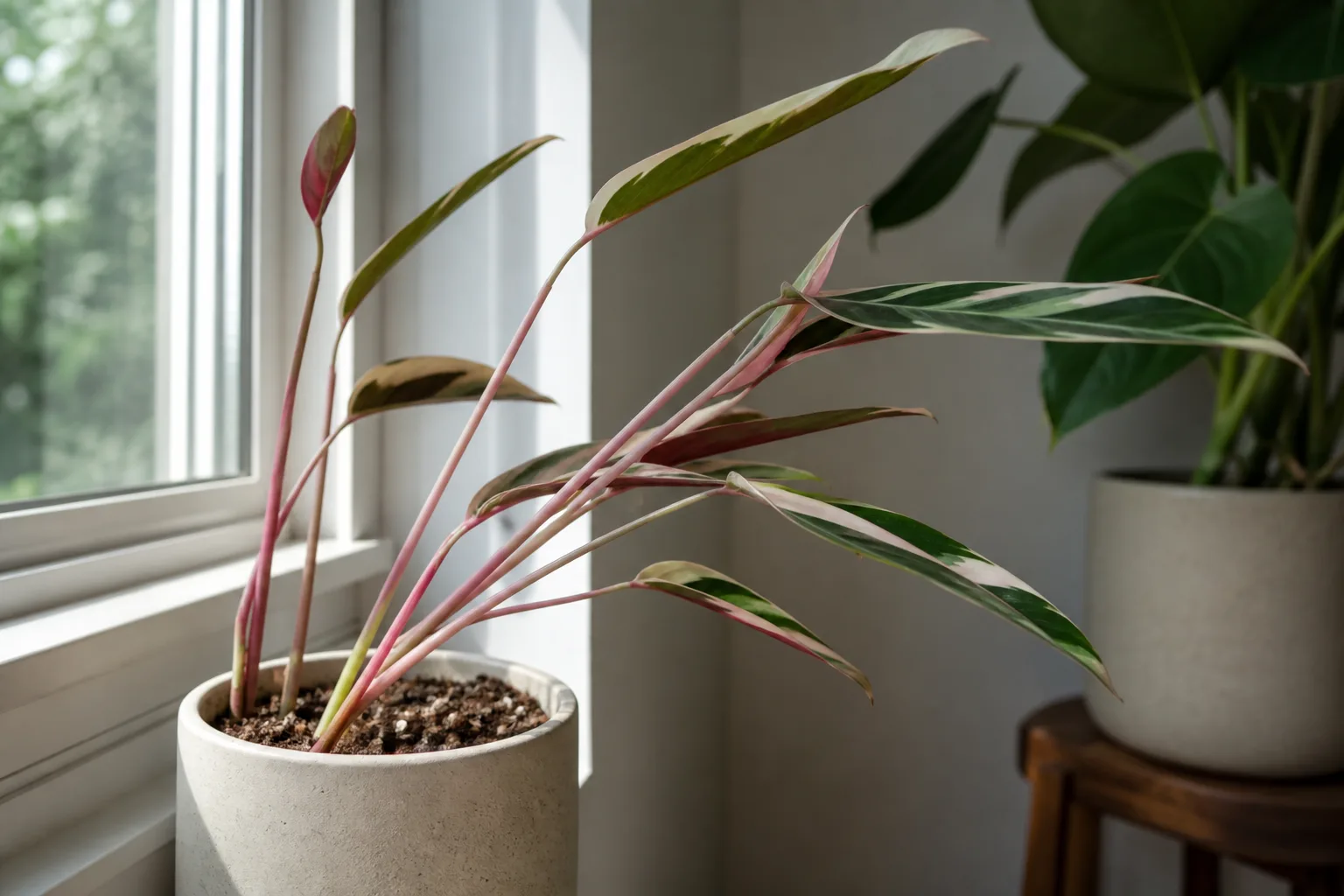
Leggy growth on Stromanthe Triostar is etiolation from too little usable light. Long pink petioles, a lean toward the window, and new leaves turning mostly green are the telltales. First step: move the plant to bright filtered light within a few feet of an east or sheer-curtained south window, or add a grow light.
Leggy Growth on Stromanthe Triostar: Causes, Checks & Fixes
This guide covers leggy growth on Stromanthe Triostar. See also the general Leggy Growth guide, watering, and light pages for this plant.
Leggy Growth on Stromanthe Triostar: Causes, Checks & Fixes
Quick answer
Leggy growth on Stromanthe Triostar almost always means the plant is stretching toward brighter light-a process called etiolation. Triostar is a color-forward prayer plant that needs bright filtered light to hold its pink, cream, and green pattern. In dim corners, petioles elongate, the clump leans toward the window, and new leaves lose pink and open mostly green.
First step: move the plant closer to bright, indirect light-within a few feet of an east window or a south or west window softened by a sheer curtain. If the room stays dim, add a full-spectrum grow light for 12–14 hours daily. Do not prune heavily until light is fixed; cutting without brighter exposure usually produces another round of weak stretch.
Why Stromanthe Triostar gets leggy
Stromanthe Triostar belongs to the prayer plant family and evolved under rainforest canopy in Brazil, where light is bright but filtered-not the deep shade many houseplant labels suggest. Wisconsin Extension notes that Tricolor grows best in bright light for strongest color, though it will survive lower light at the cost of weaker form. When usable light drops, the plant invests in longer petioles and thinner stems to reach a brighter zone rather than building compact, colorful foliage.
Several home conditions push Triostar into stretch mode:
Insufficient light intensity is the main driver. Interior rooms, north-facing windows far from the glass, shelves blocked by furniture, and winter day-length drops all reduce the photosynthetic energy available for dense growth. The plant responds by elongating toward the brightest patch it can find.
One-sided light causes uneven legginess. Triostar leaves orient toward light through the day and fold at night-normal nyctinasty for Marantaceae. When only one side receives usable brightness, stems lean and lower leaves on the shaded side may drop, leaving bare, stretched sections.
Seasonal light decline often triggers winter legginess on plants that looked fine in summer. Shorter days and lower sun angle cut effective footcandles at the same window seat. Many growers mistake the resulting pale, sparse new growth for a watering or humidity problem.
Over-fertilizing in low light can add soft, weak elongation. Nutrients push growth the plant cannot structurally support without adequate light. Triostar should only receive light feeding during active growth-and only after placement and moisture are stable.
Low humidity and underwatering on Stromanthe Triostar can make a Triostar look sad, but they rarely cause the long internodes and directional lean that define legginess. If stretch is the main symptom, light is the first suspect.
What leggy growth looks like on Stromanthe Triostar
Leggy Triostar is recognizable once you separate normal prayer-plant movement from true etiolation.
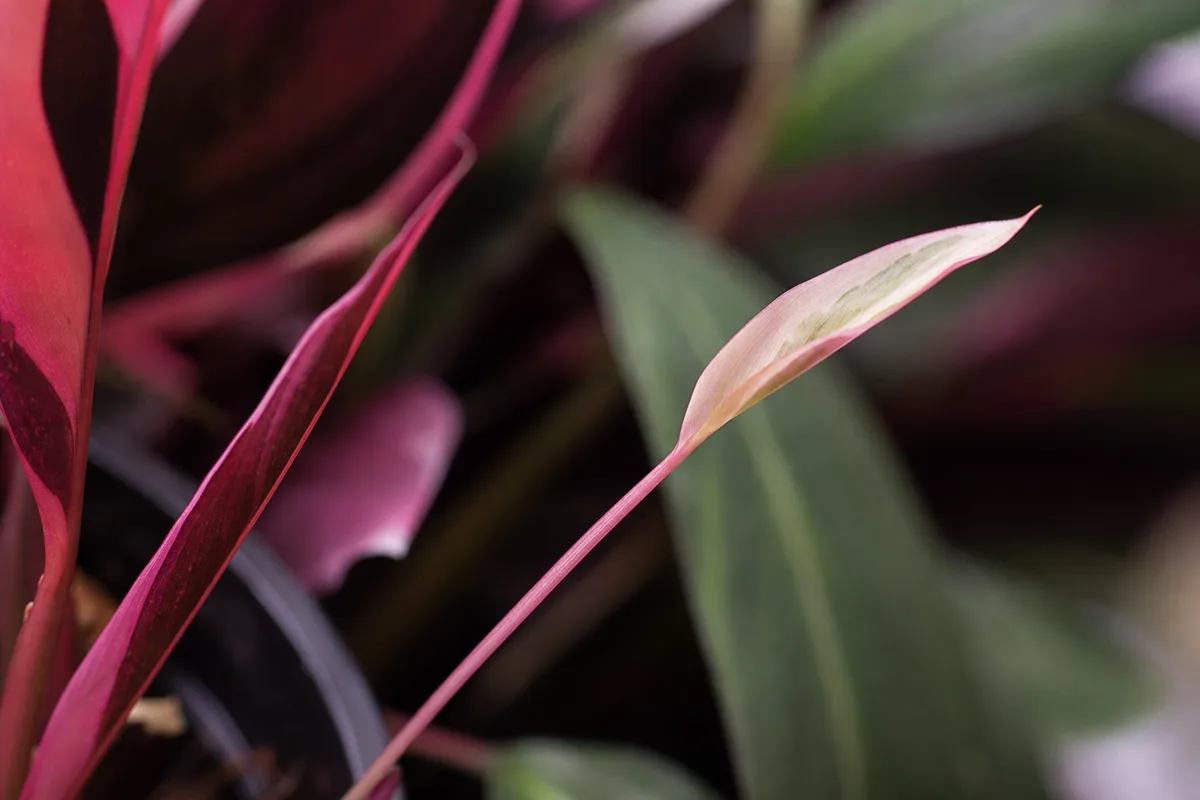
Leggy Growth symptoms on Stromanthe Triostar - compare with healthy tissue on the same plant.
Typical leggy signs:
- Long gaps between leaves along upright stems, especially on new growth
- Thin, wiry petioles that feel weaker than older compact sections
- Strong lean toward one window or light source
- New spears opening with reduced pink and cream-mostly green variegation
- Lower leaves yellowing and dropping, leaving bare stem on the shaded side
- Slower or smaller new leaves compared with summer growth at the same temperature
What is normal, not leggy:
- Leaves folding upward at night and reopening by morning-that is nyctinasty, not stretch
- Slight orientation of blades toward the brightest side when light is adequate but uneven for a few days
- Older outer leaves fading while new spears still show strong tricolor (age, not etiolation)
Triostar’s variegation loss in low light is a useful diagnostic clue. In bright filtered light, anthocyanin pigments support the pink panels. In dim conditions, the plant produces more chlorophyll and less pigment, so new growth looks greener even before stems fully elongate. If your plant is both pale and stretched, light is the confirmed issue.
How to confirm the cause
Work through these checks in order before pruning or Stromanthe Triostar repotting guide:
- Light at canopy height - Hold your hand above the foliage at midday. A sharp, dark shadow suggests enough brightness for compact growth. A faint or absent shadow at the leaf surface means light is too low for Triostar’s color and form goals.
- Distance and obstruction - Note feet from glass, curtain type, and whether overhangs, trees, or neighboring plants block sky brightness. Triostar needs open-sky indirect light, not just a bright-looking room.
- Newest leaf color - Inspect the last one or two unfurled spears. Mostly green new leaves with long petioles confirm light stress more reliably than old faded foliage alone.
- Direction of lean - Consistent lean toward one window points to uneven or insufficient light, not root rot on Stromanthe Triostar or pests.
- Soil dry-down speed - Push a finger into the top inch of mix. Leggy plants in low light often stay wet longer because photosynthesis and transpiration slow. Wet soil plus stretch suggests you should fix light before watering on the old schedule.
- Pest check - Inspect leaf undersides for spider mites or mealybugs. Heavy infestations can stunt growth, but they do not typically produce long internodes and window-ward lean. Rule out pests, then stay with the light diagnosis if stretch patterns match.
If light checks fail and the plant still stretches after several weeks in a brighter spot, reassess whether direct sun scorch caused partial retreat to shade, or whether overcrowded pots are blocking light to inner stems.
The first fix to try
Move Stromanthe Triostar to bright, indirect light within a few feet of an east-facing window, or near a south or west window filtered by a sheer curtain.
This single placement change addresses the root cause. East exposure gives gentle morning brightness without the scorch risk that hits Triostar’s pale panels in unfiltered afternoon sun. If only a dim north window or interior shelf is available, skip the window shuffle and set a full-spectrum LED grow light 6–12 inches above the canopy for 12–14 hours daily instead.
When you move the plant, rotate the pot a quarter turn so all sides begin receiving similar exposure. Do not jump from a dark corner to harsh direct sun in one step-sunburn on cream and pink tissue shows up faster than recovery from legginess.
After improving light, adjust watering. Brighter conditions increase dry-down speed. Check the top inch of mix before each watering rather than following the calendar you used in the dim spot.
Hold off on heavy pruning, repotting, and fertilizer until the plant produces at least one new spear in the brighter location. Those spears tell you the fix is working.
Step-by-step recovery
Once light is corrected:
- Monitor new spears for two to three weeks - Look for shorter petioles and stronger pink/cream on unfolding leaves. That confirms recovery is underway.
- Rotate the pot weekly - Even bright windows deliver uneven light. Regular rotation prevents repeat one-sided lean.
- Prune stretched stems selectively - Cut just above a node on the worst leggy canes once new compact growth appears. Remove no more than one-third of the plant at once on a stressed specimen.
- Add supplemental lighting through winter - If stretch returned last winter, plan grow-light hours before day length drops rather than reacting after stems elongate.
- Dial back fertilizer - Feed lightly at half strength during active spring and summer growth only. Skip feeding on a recently moved or pruned plant until new leaves harden.
- Propagate healthy tip cuttings if the base is bare - Division and stem cuttings can restart a fuller clump while the parent regrows from pruned nodes. Propagation is optional recovery, not day-one treatment.
If soil stayed wet in the old dim spot, let the mix dry slightly more between waterings now that light is stronger. Do not repot unless roots smell sour or the medium has collapsed-legginess alone does not require a new pot.
Recovery timeline
Light correction works gradually. Expect to see direction of new growth change within one to two weeks as spears orient toward the improved source. Compact internodes and stronger variegation on new leaves usually take three to six weeks in active growth season, longer in winter when Triostar naturally slows.
Old stretched petioles and long internodes never shorten. Judge success by new spears, not by old leaves shrinking back. One or two compact, colorful new leaves are a better recovery signal than glossy older foliage on elongated stems.
If no improvement appears after six weeks in clearly brighter light-with stable humidity and appropriate watering-the plant may be root-bound, pest-stressed, or sitting in a spot that still falls below usable intensity. Re-check footcandles at the leaf surface before adding more interventions.
Lookalike symptoms to rule out
Not enough light without stretch yet - Fading variegation and slow spears can precede obvious legginess. Treat both the same way: increase light.
overwatering on Stromanthe Triostar in dim conditions - Yellow lower leaves and soft stems can overlap with legginess when low light slows water use. Sour-smelling soil and mushy roots point to moisture failure; long petioles and window lean point to light. Fix light first, then adjust watering.
Underwatering - Crisp brown tips and curled, dry leaves are humidity or drought signals, not etiolation. Leggy stems stay pliable and reach toward light.
Normal nyctinasty - Nightly folding can make the plant look taller or thinner in the evening. Check shape in midday light for a true stretch diagnosis.
Fast healthy growth in bright light - New spears in good light open tightly with vivid color. Leggy growth is weak, pale, and directional-not vigorous tricolor flush.
Mistakes to avoid
Do not assume rapid stem extension equals healthy vigor. On Triostar, stretch is a stress response.
Do not prune hard before improving light. You often get another layer of weak, elongated shoots from remaining buds.
Do not move abruptly into direct afternoon sun to “fix” legginess. Scorch on variegated panels damages tissue that cannot revert.
Do not increase fertilizer in a dim spot hoping for fuller growth. That combination produces soft, pale elongation.
Do not ignore one-sided lean until stems flop. Weekly rotation is cheaper than staking a lopsided clump.
Do not repot on day one. Legginess is not a root-volume problem unless separate root checks show failure.
Stromanthe Triostar care cross-check
Leggy recovery sticks only when baseline care matches brighter light:
- Humidity - Triostar prefers high humidity; dry air crisps pale leaf edges but does not cause stretch. A humidifier helps new compact leaves look their best after light correction.
- Water - Keep evenly moist; water when the top inch dries. Brighter light means faster dry-down-recalibrate rather than keeping the old dim-corner schedule.
- Temperature - Warm room temperatures (roughly 65–80°F) support steady new growth once light is adequate. Cold drafts slow recovery without causing etiolation.
- Water quality - Filtered or rainwater reduces edge burn on new variegated tissue; it does not replace the need for brightness.
Balance matters: Triostar is less about surviving in shade and more about holding color and form in filtered brightness with consistent moisture and humidity.
How to prevent leggy growth next time
Place Triostar where it receives Stromanthe Triostar light guide for most of the day-not a spot that merely looks acceptable to you at purchase time. East windows and filtered south or west exposures are reliable anchors; deep interior shelves are not.
Rotate the pot a quarter turn every week so all sides stay evenly exposed. Triostar’s leaf movements make directional lean easy to miss until stems are already elongated.
Add grow lights before winter stretch begins if last year’s short days caused pale, sparse growth. Consistent supplemental hours beat reactive moves after stems lengthen.
Scout new spears monthly. Early color fade and slightly longer petioles are warnings before full legginess sets in.
Match feeding to season and light. Light half-strength fertilizer during active growth; withhold on stressed or winter-slow plants.
Avoid placing Triostar where taller plants or furniture cast moving shadows that cut effective brightness at the crown.
When to worry
Leggy growth alone is a gradual cosmetic and structural issue, not an overnight crisis. Prioritize faster action when low light combines with wet, slow-drying soil, widespread yellowing, or no new spears for many weeks in warm months-those patterns suggest compounding stress.
Replace the recovery plan if, after six weeks in verified brighter light with corrected watering, new growth remains pale and elongated. Persistent stretch with sour soil or mushy roots may require root inspection and repot into fresh, airy mix-but only after light is genuinely adequate.
A Triostar that only greened out without physical stretch still needs brighter light, but you have more time to adjust before stems weaken. Act on color loss early to prevent the lean and bare stems that follow.
Conclusion
Leggy Stromanthe Triostar is a light problem dressed up as growth. Long petioles, window-ward lean, and green-shifted new leaves mean the plant is reaching for brightness it is not getting. Move it to filtered bright light or add a grow light first, rotate weekly, adjust watering as dry-down changes, and prune only after compact new spears prove the placement works. Old stretch will not reverse, but new tricolor foliage can-if you give the plant the light its variegation was bred to show.
When to use this page vs other Stromanthe Triostar guides
- Stromanthe Triostar watering guide - Use for routine moisture checks before assuming leggy growth is the main issue.
- Stromanthe Triostar problems hub - Browse all 17 common issues on this species.
- Not Enough Light on Stromanthe Triostar - Different entry point when symptoms overlap with leggy growth.
- Slow Growth on Stromanthe Triostar - Different entry point when symptoms overlap with leggy growth.
- Yellow Leaves on Stromanthe Triostar - Different entry point when symptoms overlap with leggy growth.