How to Prune String of Pearls: When, Where & What to Cut
How to Prune String of Pearls: When, Where & What to Cut
How to Prune String of Pearls: When, Where & What to Cut
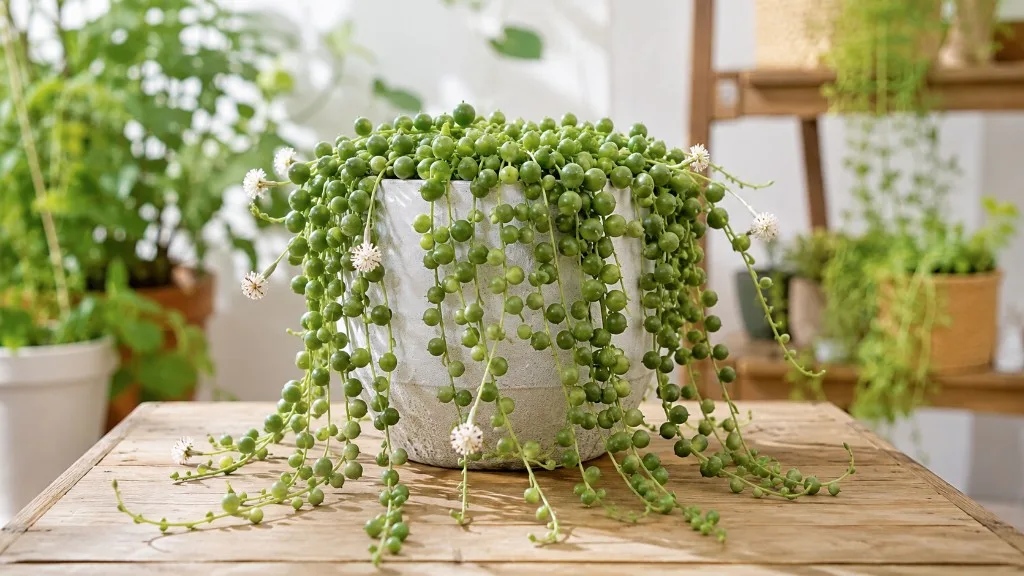
String of pearls pruning is not like trimming a pothos. Curio rowleyanus - still widely sold as Senecio rowleyanus - grows as hair-thin trailing stems lined with water-filled pearl leaves that detach easily and rot fast when the crown stays wet. First, trace any brown mushy stem back to firm green tissue and cut out rot with clean sharp snips - before you shorten a single healthy trailer for shape. Once diseased sections are gone, decide whether sparse strands, overlong hangers, or a shaded crown need selective trimming.
NC State Extension describes string of pearls as a cascading succulent vine from dry South Africa, rooting wherever stems contact soil. Missouri Botanical Garden notes mature plants reach 1–2 feet in length in cultivation. Unlike bushy herbs, you cannot pinch one tip and expect dense branching everywhere - fullness comes from multiple rooted strands, node cuts that fork lower stems, and bright enough light to keep pearls plump and close together.
Quick Answer
Prune string of pearls to remove rot and dead stems any time, and for shape or length control during active growth in spring through early summer. Make clean cuts just below a leaf node on firm green stem. Remove mushy tissue first, never more than about one-third of healthy foliage in one session, and wear gloves because sap can irritate skin and all plant parts are toxic to pets. Trimmed strands root easily if you let cut ends dry before planting.
What Pruning Means for a Trailing Pearl Succulent
On string of pearls, pruning covers four related jobs:
- Rot removal - cutting out mushy, overwatered stem sections before decay reaches the crown
- Cleanup - snipping fully shriveled brown stems and bare dead sections with no live pearls
- Length and density control - shortening sparse or overlong trailers and thinning top growth that shades the crown
- Propagation harvest - taking healthy stem sections to root new strands in the same pot or a propagation tray
Pruning does not fix chronically leggy growth with tiny pearls spaced far apart on thin bare stem. That pattern usually means insufficient light - move the plant gradually to brighter indirect light with some morning sun before relying on scissors. The RHS string of beads guide warns that weak, straggly growth and small leaves follow low light; trimming alone cannot restore compact spacing without better illumination.
What to Check Before You Cut
Work over a tray or newspaper - pearls fall off with the slightest bump. Run your inspection in order:
- Stem firmness - green and taut versus brown, translucent, or mushy
- Pearl condition - plump and round versus shriveled, yellowing, or missing along long bare gaps
- Crown density - is new growth at the soil line thin and shaded by longer top strands?
- Pot moisture - wet mix after a recent soak means defer cosmetic trimming until soil dries
- Recent stress - hold off on heavy shortening right after String of Pearls repotting guide, pest treatment, or drought recovery
NC State Extension lists soggy soil as the primary cause of root rot on String of Pearls and plant death. If several strands show simultaneous mushiness, correct drainage and watering before aggressive cosmetic pruning.
The First Cut to Make
When any strand shows rot, that is always the first cut - not a length trim. Follow mushy tissue toward the crown until the stem feels firm and attached pearls look plump. Make one clean slice at the transition from healthy to diseased tissue. Discard rotted sections in the trash; do not compost wet succulent rot indoors.
If all strands are healthy, your first cut is optional: remove only a fully dead stem that has no firm pearls and no green tissue - usually a brown crisp section that will not recover. Cosmetic shortening comes after the plant is disease-free and stable.
When to Prune String of Pearls
Planned shortening and crown thinning
Late spring through early summer is the safest window for shortening healthy trailers or thinning dense top growth. Active warmth and bright light help cut surfaces callus quickly and new forks emerge from nodes within weeks. The RHS recommends trimming overlong stems with scissors during the growing season when they exceed your display space.
Indoor growers follow room conditions, not outdoor calendars. A plant in a warm bright window can handle light shaping in late winter if new pearls are actively forming along stems.
Emergency removal any time
Some cuts ignore the seasonal calendar:
- Mushy brown stems - remove immediately; rot spreads through wet succulent tissue fast
- Completely shriveled dead strands - cut out once you confirm tissue is dry and firm pearls are absent
- Pest-infested stem sections - remove mealybug-colonized crown areas after treatment begins
- Broken strands crushed by hangers or pets - clean removal before infection sets in
When to wait
Defer cosmetic pruning when:
- Soil is still wet several days after watering
- The plant was repotted within the last two weeks
- Most pearls are wrinkled from drought - water first, reassess in 24–48 hours
- Winter light is weak and the room is cool - wounds stay open longer and crowns stay damp
How to Prune String of Pearls Step by Step
Tools and handling
Use fine sharp scissors or snips, not dull blades that crush hair-thin stems. Wipe blades with 70% isopropyl alcohol before cutting and between strands if you touched rot. Penn State Extension notes that succulents need sharp tools and minimal wound area.
Wear gloves. NC State Extension documents that sap can cause skin irritation and rash, and ingestion causes vomiting and diarrhea. ASPCA lists string of pearls as toxic to cats and dogs. Keep trimmings off floors where pets explore.
Support each strand from below with an open palm while cutting. Expect some pearl drop - collect firm pearls only if you plan to discard them; single pearls rarely produce full plants.
Removing rot and dead stems
- Lift the hanger or tilt the pot to expose the crown without pulling strands.
- Identify the lowest firm green point above mushy tissue.
- Cut once through firm stem, leaving a clean edge.
- Inspect neighboring strands for early translucence - repeat only on affected stems.
- Let the crown dry several days before the next watering if you removed multiple wet sections.
Shortening leggy or sparse trailers
Identify strands with long bare stem between pearls or pearls that look smaller and farther apart than strands near the window. These are safer to shorten than dense healthy sections anchoring the visual shape.
Cut just below a node - the point where a pearl attaches to the stem. Nodes carry the tissue that can fork into two stems after a cut. Remove roughly 3–5 inches (8–13 cm) from sparse tips per strand unless length control requires more. Work strand by strand rather than shearing the whole plant to one length.
Thinning dense crown growth for light and airflow
When long top strands shade the crown and the base looks thin, selectively shorten a few of the longest healthy trailers near the soil line. The goal is more light and airflow at the crown, not a uniform haircut. Remove fewer, targeted strands rather than cutting every vine.
Where to Cut on Thin Stems
Always cut on firm green stem tissue, ideally just below a node where a pearl attaches. That placement gives the plant the best chance to branch from latent buds at the node.
Avoid:
- Cutting through the middle of a long bare internode with no pearls nearby - the stub may dry out without branching
- Slicing into mushy yellow tissue hoping it recovers - trace rot upward first
- Crushing stems with fingernails instead of a clean blade cut
If a strand is healthy but simply too long for your shelf, removing the terminal 4–6 inches (10–15 cm) at the last dense node cluster is usually enough.
How Much You Can Safely Remove
There is no limit on fully dead or rotting tissue - remove all of it back to firm stem.
For healthy green growth, stay near the one-third rule: do not remove more than about one-third of living strands in one session. String of pearls stores water in pearls and thin stems but has a shallow root system; stripping too many photosynthesizing strands at once stresses a plant already sensitive to watering mistakes.
If the pot looks bare after rot cleanup, root healthy trimmings into the same container rather than cutting more living strands for appearance.
What Not to Cut
- Firm plump pearls on healthy green stem - cosmetic pearl removal does not encourage bushiness and opens wounds on water-filled leaves
- Every long strand at once - leaves the crown without enough leaf surface to recover
- Yellow pearls still firmly attached - confirm whether overwatering on String of Pearls, underwatering on String of Pearls, or pests caused the color change before cutting into live tissue
- New white roots or aerial nubs at nodes - these are active rooting points; reroute the strand or pin it to soil instead of severing
- Flower stalks unless in the way - blooms are rare indoors; if one appears in summer, you may trim after flowering without harming the plant
Using Pruning Trimmings
Healthy stem sections are valuable propagation material. NC State Extension recommends 3–5 inch stem cuttings with a few nodes buried in potting mix for new roots. The RHS notes stem cuttings root in about a month and layering can fill sparse pots.
After pruning:
- Choose strands with plump pearls and firm green stems.
- Cut 4–6 inch (10–15 cm) sections just below a node.
- Strip pearls from the bottom third to expose bare nodes.
- Let cut ends dry 24–48 hours in String of Pearls light guide.
- Lay stripped stems on lightly moist gritty succulent mix or pin into the parent pot.
This turns a shape-control trim into a fuller crown without buying new plants.
Aftercare and Recovery
After any pruning session:
- Return the plant to bright indirect light with some morning sun - not hot afternoon direct sun on fresh cuts
- Hold water 3–5 days if you removed rot or multiple healthy strands; let cut surfaces callus
- Resume sparse watering only when soil at the crown dries and pearls feel firm
- Keep the hanger stable - swinging pots knock pearls loose while wounds are open
- Dispose of trimmings where pets cannot reach them
Do not fertilize immediately after heavy pruning. Wait until new growth is visible and String of Pearls watering guide is stable.
Recovery timeline
During active growth, forked stems and new pearls along shortened nodes often appear within two to four weeks. Rot removal recovery depends on how much crown tissue was lost - sparse crowns may need four to eight weeks and rooted cuttings to look full again. Winter or dim-room cuts can stall visibly for weeks without indicating failure.
Signs pruning worked
- New pearls forming along stems just below cut points
- Forked double stems emerging from node cuts
- Firm green crown tissue with no spread of translucence
- Rooted trimmings resisting a very gentle tug after three to four weeks
Signs you cut too much or timed it wrong
- Crown pearls shriveling across many strands at once after a heavy session
- Cut stubs turning mushy brown - often wet soil plus cool dim conditions
- Continued bare stem elongation with tiny pearls - light is still too weak
- Pearl drop accelerating beyond normal handling loss
If bare elongation continues after a conservative trim, improve light before cutting again.
Mistakes to Avoid
- Pruning before fixing overwatering - scissors cannot cure soggy crown rot
- Wet-day cosmetic trims - open cuts on wet crowns invite secondary rot
- Pulling yellow pearls - tearing tissue damages stem; snip only confirmed dead sections
- Bare-hand handling - sap irritation and pet exposure are avoidable risks
- Expecting one trim to create a dense basket - fullness needs light, multiple strands, and often rooted cuttings
- Discarding every trimming - healthy sections are the fastest way to refill a thin pot
Keeping Shape With Less Pruning Next Time
Rotate the pot weekly so all sides receive similar light and strands trail evenly. Position growing tips over the pot rim so weight distributes naturally. Water only when soil dries and pearls feel firm - chronic overwatering produces weak crowns that need repeated rot pruning.
NC State Extension notes these plants tend to die back after several years in cultivation. Plan on periodic propagation from healthy strands rather than trying to preserve one aging trailer indefinitely. A light inspection trim once or twice a year - dead stems out, one or two sparse tips shortened - usually beats a dramatic rescue cut after years of neglect.
When to use this page vs other String of Pearls guides
- String of Pearls overview - Start here for whole-plant context before deep-diving this topic.
- String of Pearls problems hub - Jump to symptom-specific fix guides when this care topic does not resolve the issue.
- Leggy Growth on String of Pearls - Escalate here when pruning adjustments are not enough.
- Slow Growth on String of Pearls - Escalate here when pruning adjustments are not enough.
- Brown Tips on String of Pearls - Escalate here when pruning adjustments are not enough.