Slow Growth on String of Pearls: Causes, Checks & Fixes
Quick answer
On String of Pearls, slow growth is often low light or root stress, but winter slowdown can be normal. First, confirm the crown is firm and move the plant to brighter light before changing anything else.
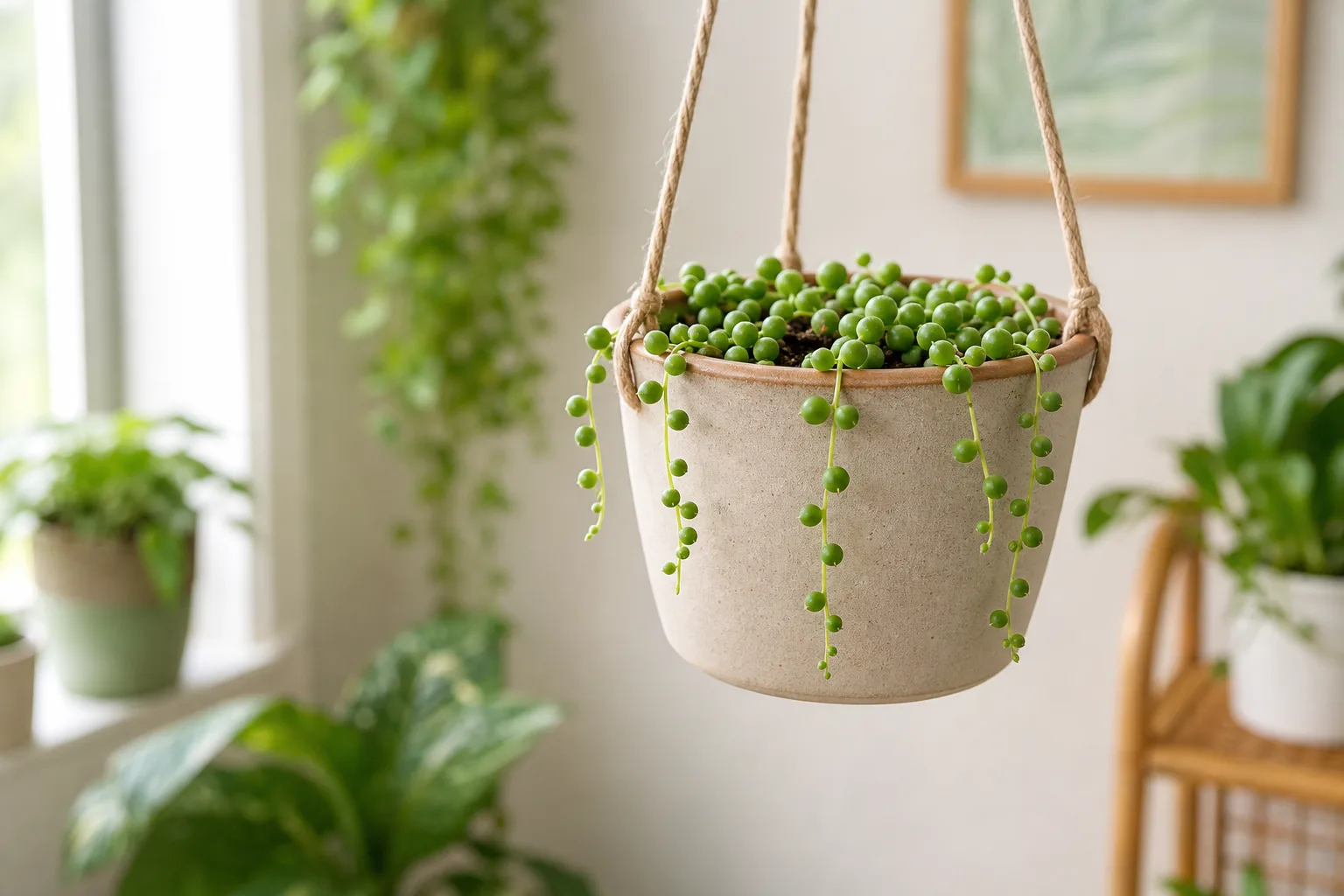
Slow Growth on String of Pearls: Causes, Checks & Fixes
This guide covers slow growth on String of Pearls. See also the general Slow Growth guide, watering, and light pages for this plant.
Slow Growth on String of Pearls: Causes, Checks & Fixes
Quick answer
String of Pearls (Curio rowleyanus) is not a fast tropical vine. Even healthy plants trail gradually, with mature stems often around 2 to 3 feet. The key is whether growth is slow but steady or stalled.
If your plant is barely making any new pearls in warm months, treat low light and root stress as top suspects. Start with one first fix: move it to brighter light and monitor the crown for firmness before changing watering, fertilizer, or pot size.
Why String of Pearls grows slowly
String of Pearls overview is a succulent that stores water in spherical leaves, so it does not push constant fast extension like pothos. Indoors, light is usually the main limiter: String of Pearls performs best with very bright conditions and some direct sun exposure in cultivation guidance from NC State Extension and Missouri Botanical Garden.
Growth also slows when roots are stressed by chronically wet mix. In a pot that is too large or poorly draining, oxygen drops around roots and new growth can stall even before obvious collapse. Seasonal slowdown also matters: lower light and cooler indoor conditions in winter can reduce growth for many succulents, including this one.
What slow growth looks like on String of Pearls
Use this pattern check:
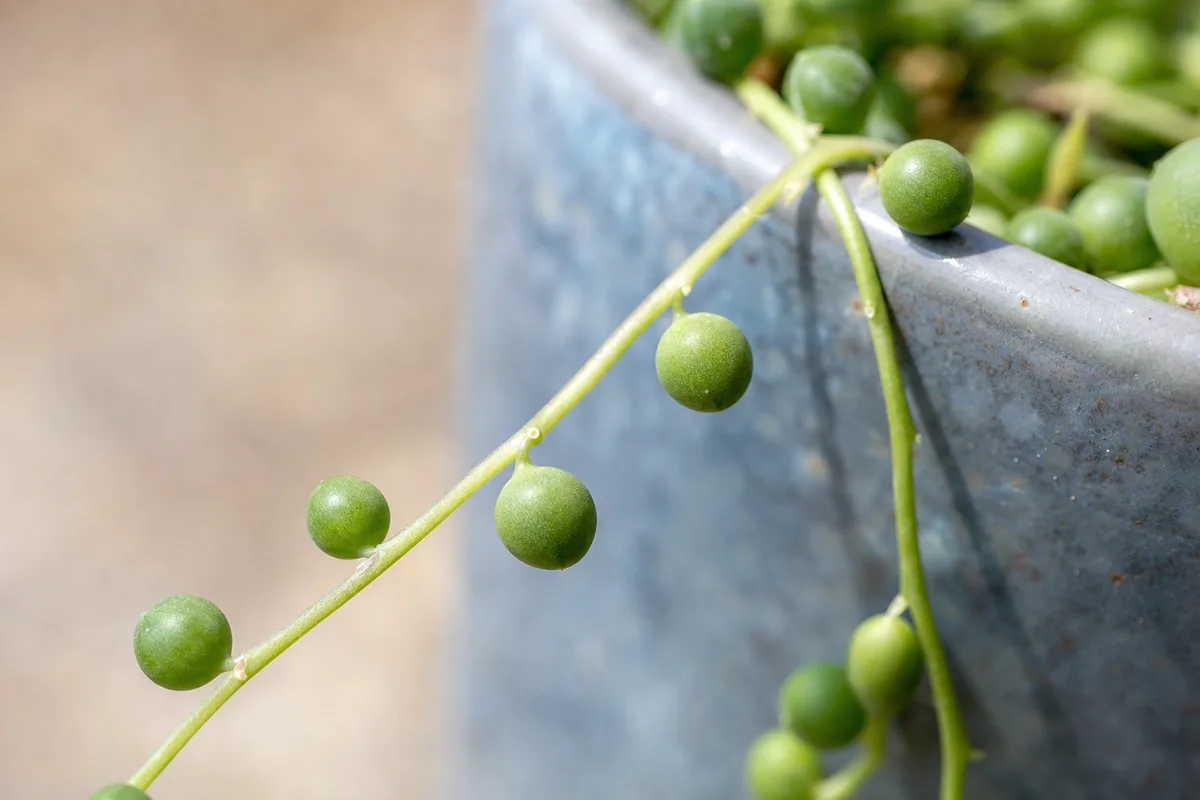
Slow Growth symptoms on String of Pearls - compare with healthy tissue on the same plant.
- Likely normal slow growth: crown is firm, pearls stay plump, and you still see occasional new pearls or short strand extension in active season.
- Likely stalled growth: no meaningful new pearls through spring and summer, beads shrink or flatten, and strands look weak for weeks.
- Likely wrong diagnosis (lookalike): very long spacing between pearls with stretching toward light usually indicates etiolation, which fits better with a low-light problem page than pure slow growth.
Compare your plant to its own prior season, not to fast-growing houseplants. String of Pearls can be healthy and still look conservative in pace.
How to confirm the cause
1) Confirm season first
If winter just ended, give it a short transition window. A modest lag before new pearls appears can be normal.
2) Check light at the crown
For hanging plants, the strands may be bright while the crown at soil level is dim. Growth starts at the crown, so that area needs strong light too. Move closer to a brighter window if needed.
3) Check crown and stem texture
A healthy crown should feel firm. Soft tissue, collapse, or persistent wetness points away from simple slow growth and toward overwatering on String of Pearls/rot risk.
4) Check root-zone drying speed
String of Pearls prefers a sharply draining medium and drying between thorough waterings per RHS guidance and Missouri Botanical Garden. If the mix stays wet for many days, root stress can suppress growth.
5) Rule out root crowding
If roots are tightly circling with little mix left, growth may slow from crowding. String of Pearls repotting guide one size up in active season can help.
First fix for String of Pearls
Move the plant to brighter light over 7 to 14 days. Choose String of Pearls light guide with some gentle direct morning sun where possible, then hold that position and observe for 3 to 4 weeks before stacking other interventions.
After the move:
- water deeply, then let mix dry well before watering again
- avoid fertilizing immediately if the plant looks stressed
- keep airflow good and avoid a suddenly much bigger pot
If no improvement appears after light correction and the crown remains firm, then address secondary causes (root crowding, spent mix, mild nutrient depletion) one at a time.
Step-by-step recovery by cause
If light is too low
Increase light first and keep watering conservative while the plant adjusts. New pearls usually resume before dramatic strand length changes, so watch for fresh bead formation as your earliest success marker.
If roots are crowded but healthy
Repot in spring or early active growth into a fast-draining cactus/succulent mix in a container one size larger, not two. Oversizing can keep mix wet too long and delay recovery.
If wet soil and softness suggest rot risk
Pause fertilizing and reduce watering frequency immediately. Move to brighter conditions, inspect roots and crown, and shift to your overwatering/rot workflow if tissue is soft or darkening rather than waiting for growth to restart.
Recovery timeline: what to expect
- Week 1-2: plant stabilizes after light correction; little visible change is normal.
- Week 3-6: first small signs of improvement often appear as new pearls near growth points.
- Week 6-10: strand extension becomes more obvious if root health and light are both adequate.
If there is still no progress by late active season after correcting light and root conditions, reassess for hidden root issues or chronic moisture stress.
Lookalikes to rule out
- Leggy growth: on String of Pearls longer bare stem sections between pearls, usually from persistent low light.
- Overwatering stress: mushy crown, translucent or collapsing pearls, sour wet mix.
- underwatering on String of Pearls stress: wrinkled pearls and stalled tips, but crown stays firm and recovers after proper soak/dry cycles.
Slow growth alone should not come with soft, rotting tissue.
What not to do
Do not over-fertilize to force speed. Do not jump to a much larger pot. Do not water heavily during winter slowdown. And keep the plant away from pets because String of Pearls is toxic to cats and dogs.
How to prevent chronic slow growth
Use a simple prevention baseline:
- keep the crown in very bright light year-round
- water only after meaningful dry-down in a fast-draining mix
- repot one size up when roots are clearly crowded
- feed lightly only during active growth, not winter rest
For adjacent issues, use the related guides: not enough light, leggy growth, and overwatering.
When to worry
Escalate quickly if slow growth comes with a soft crown, stem collapse, foul wet mix, or ongoing decline despite brighter light. Those signs are not routine slow growth and often indicate root-zone failure that needs immediate correction.
When to use this page vs other String of Pearls guides
- String of Pearls watering guide - Use for routine moisture checks before assuming slow growth is the main issue.
- String of Pearls problems hub - Browse all 17 common issues on this species.
- Not Enough Light on String of Pearls - Different entry point when symptoms overlap with slow growth.
- Leggy Growth on String of Pearls - Different entry point when symptoms overlap with slow growth.
- Yellow Leaves on String of Pearls - Different entry point when symptoms overlap with slow growth.