Not Enough Light on String of Pearls: Causes, Checks & Fixes
Quick answer
Not enough light makes String of Pearls stretch with long gaps between small, flat pearls and stall new growth. First step: move the pot to your brightest east or south window for bright indirect light plus gentle morning sun-acclimate over one to two weeks, then adjust watering.
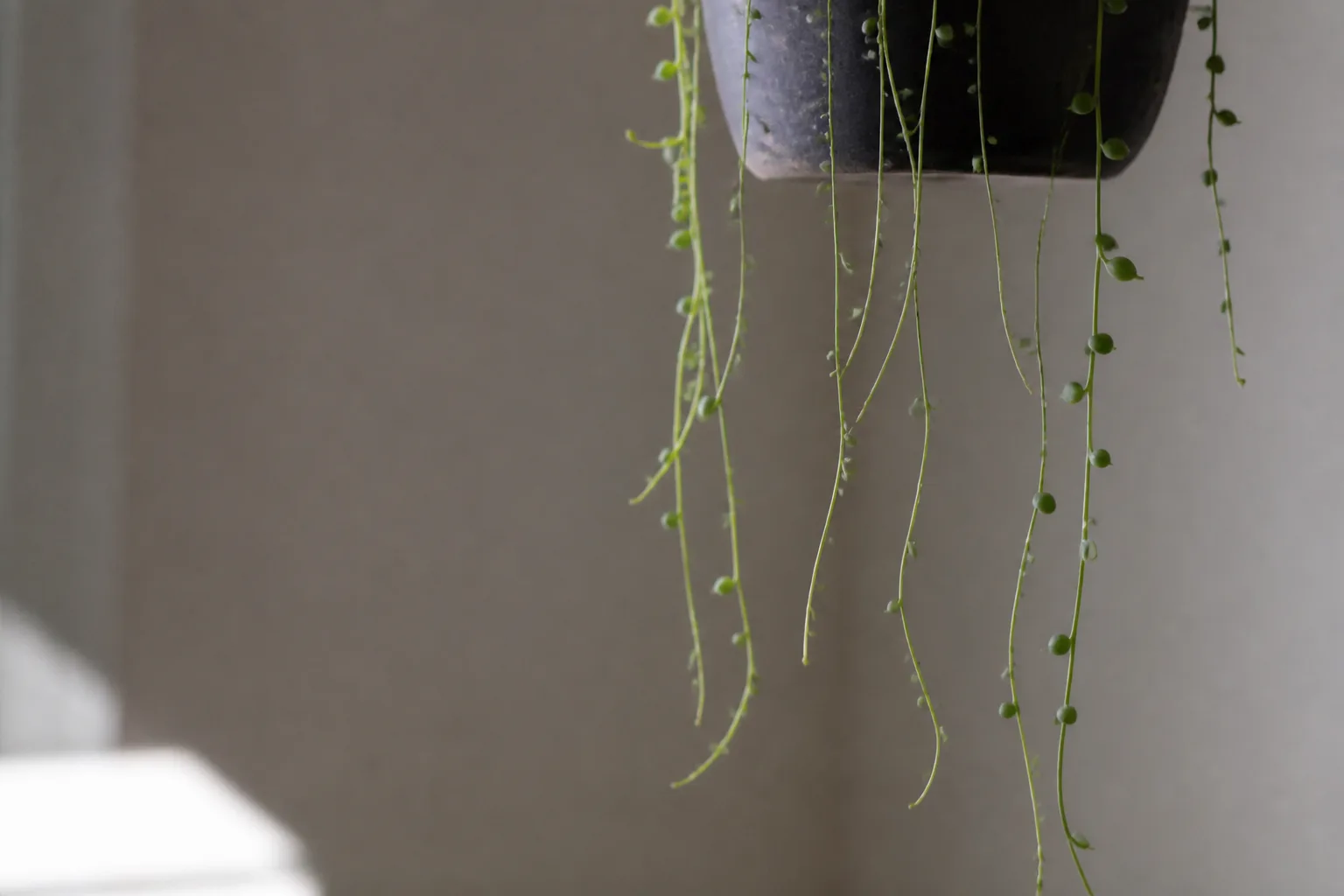
Not Enough Light on String of Pearls: Causes, Checks & Fixes
This guide covers not enough light on String of Pearls. See also the general Not Enough Light guide, watering, and light pages for this plant.
Not Enough Light on String of Pearls: Causes, Checks & Fixes
Quick answer
String of Pearls is not a low-light plant. Curio rowleyanus evolved in dry areas of South Africa where its bead-like leaves store water and capture light through a translucent epidermal window on each pearl. Indoors it needs bright, indirect sunlight with some direct sun-think east- or west-facing window light, not a dim hallway shelf.
When light is too weak, strands become weak and straggly and pearls stay small and sparse. The plant leans toward glass, growth stalls, and soil dries slowly-raising overwatering on String of Pearls risk on a succulent that rots easily in wet mix.
First step: move the pot to your brightest location and acclimate over one to two weeks. Do not fertilize, repot, or prune heavily on day one. Better light is the fix; everything else follows once the plant is photosynthesizing normally again.
What not enough light looks like on String of Pearls
Low light on String of Pearls overview shows up in the pearls themselves, not just the stems.
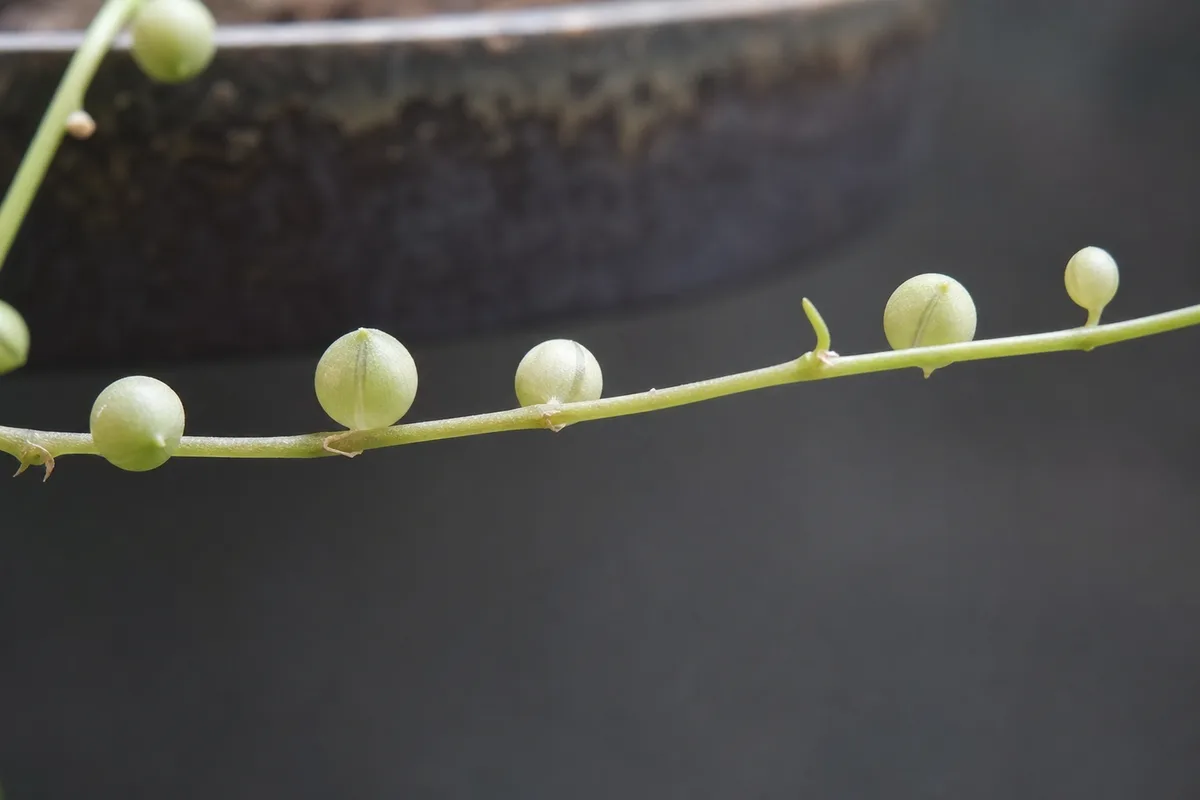
Not Enough Light symptoms on String of Pearls - compare with healthy tissue on the same plant.
Typical signs:
- Long bare gaps between pearls along trailing strands-internodes stretch as the plant searches for light
- Pearls look smaller, flatter, or paler than when you bought the plant
- Strands lean or grow toward the brightest window; one side stays thinner
- Little or no new bead formation for weeks during what should be active growth (spring through early fall)
- Soil stays damp longer than expected because the plant is using water slowly
- Crown or top of the plant looks sparse while only the dangling tips near a window stay green-common when a hanging basket sits too high for light to reach the soil line
Each pearl is a modified leaf roughly a quarter inch across. The dark translucent stripe on each bead is an epidermal window that lets light reach interior tissue for photosynthesis. Without adequate light hitting those windows-especially at the crown-growth cannot stay compact.
This is different from underwatering on String of Pearls, which shrivels and wrinkles firm pearls, and from overwatering, which turns pearls mushy and yellow with sour-smelling soil. Low-light pearls often stay plump but spaced out and dull.
Why String of Pearls struggles in low light
String of Pearls is a trailing succulent vine adapted to bright conditions with partial shade outdoors and strong indirect light indoors. Missouri Botanical Garden lists it for part shade in a dry, sandy mix-not deep shade.
Several factors make this species especially light-sensitive compared with true low-light houseplants:
Etiolation. Like other succulents moved too far from a window, String of Pearls stretches toward light and develops a lean. The stem elongates between pearls, producing the classic stringy look people mistake for a watering problem.
Slow metabolism in shade. In weak light the plant photosynthesizes less, so it draws less water from soil. Many owners keep the same String of Pearls watering guide-and wet mix in dim corners is a common path to root rot on String of Pearls on Curio rowleyanus, which does not tolerate inadequate light alongside overwatering.
Hanging-basket blind spots. Displayed on a high shelf or in a macramé hanger, trailing stems may get window light while the crown and soil surface sit in shadow. RHS notes these plants are often grown to show off stems up to 90 cm (3 ft) long-but the top needs light too, or new growth falters.
Seasonal drop indoors. Winter short days reduce light even at the same window. Some slowdown is normal, but continued stretch and pale pearls through spring mean the spot is still too dim-not just seasonal rest.
Misplaced “succulents need String of Pearls light guide” advice. String of Pearls wants bright light, yet harsh midday direct sun can scorch leaves. The fix for low light is more bright indirect and gentle morning sun-not blasting a shade-adapted plant with afternoon rays on day one.
How to confirm insufficient light
Work through these checks before you change watering, repot, or feed:
- Window direction and distance - East or west windows within one to two feet of glass are usually adequate. North windows or spots more than four to six feet from any window are often too dim for compact growth. UMD Extension classifies succulents and cacti among high-light plants needing strong indoor light.
- Hours on the beads - Watch the pot through a day. Do pearls receive several hours of bright indirect light, plus some gentle direct morning sun? A room that looks bright to your eyes may still be low light at plant level.
- Pattern on the plant - Stretching toward one window, sparse crown with healthier dangling tips, and long internodes together strongly suggest light-not random pest or disease damage.
- Soil dry-down speed - Push a finger into the mix or lift the pot. If soil stays wet for two weeks or more without mushy pearls, the plant may not be using water because light is low. Confirm roots are firm and not black before assuming rot alone.
- Compare to summer vs. winter - If problems appeared after days shortened or after moving the pot for décor, light is the likely trigger. True dormancy shows reduced growth without ongoing stretch toward glass.
- Rule out lookalikes - Wrinkled, deflated pearls with bone-dry soil point to underwatering. Mushy pearls and sour mix point to overwatering. Brown crispy patches on sun-facing pearls point to sunburn, not shade.
If four or more light checks match and watering is otherwise reasonable, you have a confirmed diagnosis.
First fix to try
Move the pot to your brightest suitable window and acclimate over one to two weeks.
Choose an east-facing window for morning direct sun plus bright indirect light the rest of the day, or a south-facing window set back a foot or two or filtered with a sheer curtain so midday rays do not scorch pearls. RHS recommends bright light near east- or west-facing windows while avoiding harsh midday sun in summer.
Acclimation steps:
- Week one: place the pot where it receives stronger indirect light but not yet full morning sun if coming from deep shade
- Week two: slide closer to the glass or allow one to two hours of gentle direct morning sun
- Rotate the pot a quarter turn every few days so strands do not lean heavily one way
Do not fertilize a light-starved plant hoping to push growth-new tissue in weak light stays thin. Do not repot on day one unless root rot is confirmed. Do not prune more than a few weak strands until you see plumper new pearls forming.
Once light improves, recheck watering. Brighter conditions dry soil faster; resume the usual sparing schedule only when the top of the mix has dried. Missouri Botanical Garden advises to allow roots to dry between waterings in this species.
Step-by-step recovery
After the initial move:
- Monitor new growth at the crown and along stem tips - the first plump pearls sitting close together mean light is working.
- Adjust watering to the new dry-down rate - summer may need water every two to three weeks in bright light; winter stays sparse. Never let pearls shrivel from drought while fixing light, but avoid keeping old shade-era wet schedules.
- Add a grow light if windows are insufficient - Full-spectrum LED positioned 30 to 45 cm (12 to 18 in) above the crown, on 12 to 14 hours daily, supports succulents in dark rooms. UMD Extension notes most plants need a dark period and no more than 16 hours total light daily.
- Trim only after stabilization - Cut leggy bare strands once new compact growth appears if you want a fuller look. Use trimmed sections for propagation in dry soil rather than discarding them.
- Keep airflow and low humidity - String of Pearls dislikes high humidity; do not mist. Good air circulation in brighter spots helps soil dry evenly.
If pearls were mushy or stems black before the light fix, inspect roots. Low light plus chronic wet soil may have caused rot that light alone will not reverse.
Recovery timeline
Expect visible change in four to eight weeks during active growth once light is adequate-not overnight.
- Week 1 to 2: Lean may slow; soil should begin drying faster in brighter spot
- Week 3 to 4: First new pearls appear smaller but rounder than stretched sections above them
- Week 6 to 8: New strands look noticeably tighter; old stretched tissue remains unless trimmed
Winter moves may show little new growth until days lengthen-that is normal if pearls are not continuing to stretch or pale. Judge success by new bead quality, not length of old strands.
Sunburn from moving too fast shows as brown or reddish crispy patches on pearls that faced sudden direct sun. Back the pot slightly and acclimate more slowly.
Lookalike symptoms to rule out
Underwatering - Pearls wrinkle and feel soft or deflated; soil is dusty dry throughout. Plumps within 24 hours of a thorough soak.
Overwatering / root rot - Pearls turn yellow or translucent and mushy; soil smells sour; roots are brown and slimy. Needs dry-down and possible repot, not just light.
Sunburn - Brown, crispy, or reddish pearls on the side facing intense afternoon sun. Occurs after sudden exposure to harsh direct rays, opposite of shade stretch.
Leggy growth from age - Very old strands naturally elongate somewhat, but widespread long gaps with pale small pearls across the whole plant still mean insufficient light today.
Dormancy - Reduced growth in winter with firm green pearls and stable spacing is normal. Continued stretch toward glass in spring is not.
Mistakes to avoid
Do not leave String of Pearls in a north-facing room long term without a grow light-it rarely stays compact there.
Do not jump from a dark corner to unfiltered south-window afternoon sun in one day. Shade-adapted pearls burn easily.
Do not increase watering to “help” a struggling plant in a dim spot. Wet soil in low light accelerates rot.
Do not assume fertilizer will replace light. Without adequate photosynthesis, feeding produces weak pale growth.
Do not ignore the crown. If you hang the basket high, ensure the top of the plant receives light-not just the trailing ends.
String of Pearls care cross-check
Light ties directly to this plant’s other needs:
- Water: Sparingly every two to three weeks in summer, barely monthly in winter when growth is slow-always after the mix dries. Brighter light shortens the interval slightly; adjust by pot weight, not calendar alone.
- Soil: Fast-draining cactus or succulent mix; moisture retention in dim corners is especially dangerous.
- Temperature: Best around 21 to 29°C (70 to 84°F) in active growth; cooler in winter rest. Avoid cold drafts on stretched weak stems that snap easily.
- Pet safety: String of Pearls is toxic to cats and dogs if ingested. Bright high shelves solve both light and safety-keep trailing strands out of reach.
How to prevent low light problems
Before you buy, identify the brightest window or plan for a grow light. String of Pearls belongs where east or filtered south light is realistic most of the day-not where the pot looks best in a dark corner.
Rotate weekly once lean starts. Clean windows seasonally; grime cuts light more than owners expect.
In autumn, watch for renewed stretch as days shorten. A supplemental LED for a few months prevents winter etiolation that carries into spring.
When propagating, place cuttings in the same bright indirect conditions as the parent. Low-light propagation produces thin strands from the start.
When to worry
Low light alone is rarely fatal if you correct placement-but low light plus wet soil can kill String of Pearls quickly through root rot. Act promptly if pearls are pale and flat while mix stays soggy for weeks.
If moving to better light produces no new pearls after eight to ten weeks in warm active-season conditions, recheck that the crown receives light, not just dangling tips. Consider a stronger grow light or closer window placement.
Mushy stems, black roots, or widespread pearl drop need rot assessment-not more light alone. If most of the crown is mushy with no firm roots, recovery may not be possible; salvage firm strands as cuttings in dry bright conditions.
Otherwise, stretched strands are a cosmetic issue. The plant can live and look full again once new compact growth takes over or you trim and propagate.
Conclusion
Not enough light on String of Pearls shows up as stretched strands, small pale pearls, stalled growth, and soil that never dries. The plant needs bright indirect light with gentle morning sun-not a low-light shelf. Move to your brightest window, acclimate gradually, then match watering to the faster dry-down in sun. New pearls tell you the fix worked; old stretched sections can stay or be trimmed once growth tightens. Keep this toxic trailing succulent on a bright high perch, and it will stay dense, green, and far less vulnerable to the rot that dim corners invite.
When to use this page vs other String of Pearls guides
- String of Pearls watering guide - Use for routine moisture checks before assuming not enough light is the main issue.
- String of Pearls problems hub - Browse all 17 common issues on this species.
- Leggy Growth on String of Pearls - Different entry point when symptoms overlap with not enough light.
- Slow Growth on String of Pearls - Different entry point when symptoms overlap with not enough light.
- Yellow Leaves on String of Pearls - Different entry point when symptoms overlap with not enough light.