String of Pearls Watering: Schedule, Checks & Mistakes
String of Pearls Watering: Schedule, Checks & Mistakes
String of Pearls Watering: Schedule, Checks & Mistakes
String of pearls watering is less about memorizing a schedule and more about learning how your specific pot dries down between drinks. Curio rowleyanus - still widely sold as Senecio rowleyanus or string of beads - is a trailing succulent from the dry scrublands of southwest Africa. Its round leaves are living water tanks: each pearl minimizes surface area and stores moisture so the plant survives long droughts in its native range. Indoors, that adaptation becomes a double-edged sword. The same tissue that keeps the plant alive through dry spells also makes it vulnerable to rot when roots sit in wet mix for days.
The practical goal for most home growers is straightforward: use a soak-and-dry rhythm on fast-draining succulent mix in a pot with drainage holes, water only when the root zone has dried and the pearls show they are ready, and stretch intervals sharply in cool, dim winter months. overwatering on String of Pearls - especially in winter, in low light, or in a decorative pot with no exit for runoff - is the most common reason string of pearls fail. underwatering on String of Pearls happens too, but it is usually easier to recover from than blackened, mushy roots.
This guide covers why dry-down care matters, how to read the pearls themselves, seasonal starting intervals, the checks that beat a calendar, and the mistakes that turn a beautiful trailing plant into a compost-bin lesson.
Why Watering String of Pearls Is Different From Most Houseplants
Most popular houseplants - pothos, peace lilies, many ferns - prefer evenly moist soil and forgive a weekly watering habit. String of pearls does not. Missouri Botanical Garden describes Curio rowleyanus as drought-tolerant and notes that roots should dry between waterings, with poorly drained or persistently moist soils leading inevitably to root rot on String of Pearls (Missouri Botanical Garden - Curio rowleyanus). The Royal Horticultural Society similarly advises watering lightly and allowing compost to dry between waterings, with winter watering reduced to sparingly or not at all unless pearls begin to shrivel (RHS - String of beads).
That puts string of pearls in the same mental category as echeveria, haworthia, and other succulents - not as a “water when the top inch feels dry” foliage plant. The difference is structural. String of pearls has thin stems that can only move water from roots to distant pearls at a limited rate. You are balancing two risks at once: keeping the root zone dry enough to breathe, and giving the plant enough periodic deep drinks that pearls at the strand tips do not stay dehydrated for weeks.
Treat light, pot size, soil texture, and season as variables that change the interval - not a sticker on the nursery pot that says “water weekly.” A plant under strong grow lights in a small terra-cotta hanging basket may need water every ten days in July. The same cultivar in a large glazed pot in a north-facing room in January may go a month between drinks. Both can be correct.
How String of Pearls Stores and Uses Water
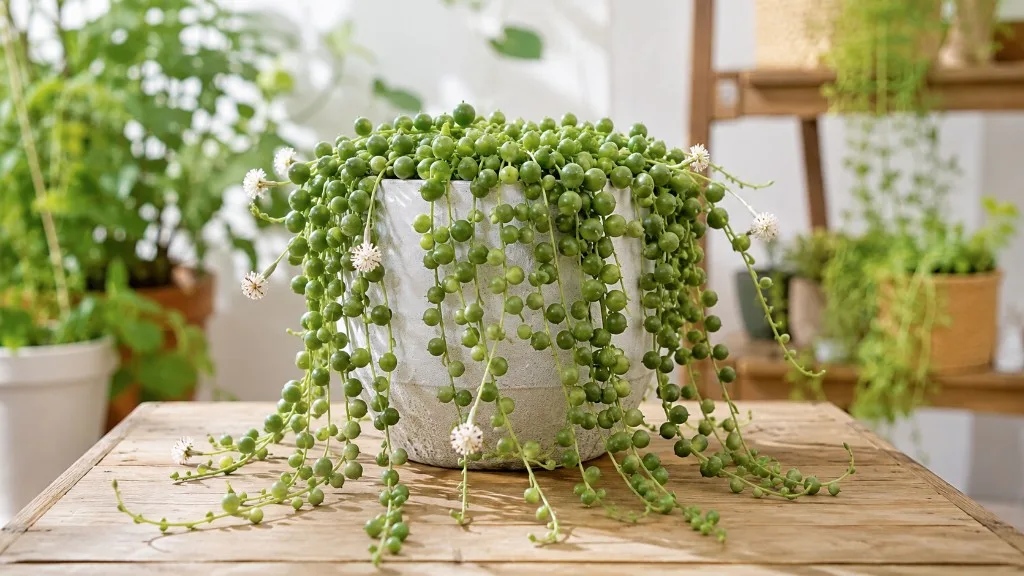
Each pearl is a modified leaf shaped like a sphere - an adaptation that reduces evaporation and stores water in tissue that stays partially shaded by neighboring pearls on the strand. When moisture is plentiful, pearls feel firm, smooth, and plump, like fresh green peas. As the plant draws on stored reserves, pearls lose turgor: they look slightly flattened or wrinkled, with a subtle raisin-like texture. That visual shift is one of the most reliable watering signals for String of Pearls overview, often more informative than surface soil color alone.
Roots matter too, but they are easy to overlook because the show is above the rim. Healthy roots are firm and pale. They need air in the mix between waterings; saturated anaerobic soil invites fungal rot within days in a cool room. String of pearls tolerates infrequent deep watering and extended drought far better than frequent shallow sips that keep the crown damp without flushing salts or reaching the full root mass.
Temperature shapes demand. Missouri Botanical Garden notes best growth around 70–80°F (21–27°C) in summer and 50–60°F (10–16°C) in winter. In cooler winter rooms, metabolic activity drops, transpiration slows, and the same volume of water lasts much longer - which is why winter overwatering is so common among attentive owners who keep summer habits into December.
What the Pearls Tell You About Moisture
Before you touch the soil, look at the pearls on the oldest, most exposed strands - usually the ones hanging farthest from the pot lip where air movement is highest. Plump, firm pearls with a consistent green tone mean the plant is not urgently thirsty. Pearls that look deflated, slightly wrinkled, or soft to a gentle pinch (not mushy) typically mean it is time to check soil and pot weight. If several strands show this texture and the pot feels light, water.
Do not rely on pearls alone after a suspected overwatering episode. Rotting roots cannot take up water, so pearls may shrivel even while mix stays damp - a dangerous combination that looks like underwatering but is the opposite. If pearls are wrinkled and soil smells sour, feels cool and heavy, or a wooden skewer pulled from the center comes out dark and clinging, suspect rot before you add more water.
Pearls also signal overwatering early if you know what to compare. Translucent, yellowing, or mushy pearls that detach with a wet slide rather than a dry snap often mean cells have burst from excess uptake. Firm wrinkling points toward dry-down; squishy translucence points toward too much water or failing roots.
The Soak-and-Dry Method for String of Pearls
The soak-and-dry method means one thorough watering that wets the entire root zone, followed by a full dry-down before the next drink - not a little splash every few days. For string of pearls, let the mix dry through most of the pot depth between sessions. Most succulent-focused sources, including RHS, frame this as letting compost dry between waterings; a few extension guides caution against letting the plant stay bone dry for prolonged periods, which is a useful nuance rather than a contradiction - you want dry, airy mix, not a permanently desiccated root ball that repels water.
Think in cycles: wet flush → drain → dry → wait → check → repeat. The “wait” phase is where inexperienced growers get anxious and pour “just a bit” on top. That keeps the upper layer intermittently damp, encourages shallow rooting, and prevents the deep soak the plant needs when it is truly ready.
Step-by-Step: How to Water Without Rot
A reliable routine keeps foliage dry and roots fully hydrated without stale saucer water:
- Confirm readiness. Soil is dry at least halfway down (or fully dry in a small pot), the container feels noticeably lighter than after a recent watering, and pearls show mild deflation - not mushiness.
- Use room-temperature water and a narrow-spout can or bottle to direct flow onto the soil surface, not over the hanging strands.
- Water slowly and evenly until water runs freely from drainage holes. For shallow pots, pause once, let it soak, then finish so the full mix wets through.
- Empty the saucer or cachepot within 30 minutes. Never leave the pot standing in runoff.
- Do not mist pearls or stems as a substitute for root watering. Wet foliage in low airflow promotes rot on a plant already sensitive to excess moisture.
- Log the date and note room conditions. Over a few cycles you will learn this pot’s rhythm in your home.
Morning watering is a reasonable habit because any accidental splash on pearls can dry during the day, but drainage and dry-down matter more than the clock. If you water in the evening, still discard saucer water promptly.
How Often to Water String of Pearls
There is no universal interval - only starting ranges you adjust with checks. Treat published schedules as hypotheses to test, not commandments.
Summer and Active Growth Intervals
During bright, warm months when string of pearls is actively producing new pearls and extending strands, many indoor plants need water roughly every 10 to 14 days. Plants in small terra-cotta pots, bright south or west windows, or warm rooms above 75°F (24°C) may sit at the shorter end. Large plastic pots in moderate light may stretch toward two to three weeks.
Growth and heat increase transpiration even though the plant is succulent. A string of pearls on a hot balcony can dry in a week; verify with soil and pearl texture rather than assuming. If new white roots appear at the soil line and strands lengthen steadily, your interval is probably in range. If mix stays wet ten days after a soak, light or drainage - not more patience with water - is the fix.
Fall and Winter Dry-Down
As days shorten and rooms cool, reduce frequency sharply. Every three to five weeks is a common winter range for indoor plants in temperate climates, and some cool, dim setups go longer. RHS advises watering sparingly in winter, only when pearls begin to shrivel. That aligns with metabolic slowdown: roots absorb less, pearls consume stored water slowly, and excess irrigation sits unused - the classic path to stem rot in February.
Do not interpret winter rest as “no water ever.” An occasional deep drink when pearls and soil confirm dryness prevents chronic dehydration. Do interpret it as far fewer drinks than summer, with longer mandatory dry phases between them.
| Season / conditions | Typical starting interval | Decision gate |
|---|---|---|
| Spring–summer, bright light, active growth | Every 10–14 days | Dry mix + slightly deflated pearls |
| Fall, moderate light, slowing growth | Every 2–3 weeks | Mostly dry mix throughout pot |
| Winter, cool room, low growth | Every 3–5 weeks | Pearls beginning to shrivel; mix dry |
| Small terra-cotta, high light, warm | As often as every 7–10 days | Pot light; dry deep mix |
| Large pot, low light, cool | Up to 4–6+ weeks | Confirm with skewer, not calendar |
The table is a framework. Your home humidity, AC, and potting mix change outcomes within a week in either direction.
Moisture Checks That Beat a Calendar
Calendar watering fails because it ignores the three variables that actually control dry-down: how much light hits the pot, how much mix the roots occupy, and how porous that mix is. Build a short checklist you run before every watering decision.
Soil, Pot Weight, and Pearl Texture Tests
Soil depth check: Insert a dry finger, bamboo skewer, or chopstick into the drainage hole or through the top, aiming for the lower half of the root zone. If the tool pulls out with dark, cool, clinging particles, wait. If it is clean and dry, proceed to pot weight and pearls.
Pot weight check: Lift the container after a known good watering and notice the heft. When dry, the same pot feels distinctly lighter - a skill that becomes automatic after a few cycles. Weight catches hidden moisture when the top crust looks pale and dry but the center is still damp, a common situation in peat-heavy mixes.
Pearl texture check: Scan hanging strands for uniform plumpness versus localized wrinkling. Mild wrinkling on outer strands plus dry soil means water. Wrinkling with wet soil means investigate roots.
Optional moisture meter: A meter can help beginners but is not mandatory. Read low in the root zone, not at the surface, and remember that chunky perlite pockets read inconsistently. Treat meters as one input, not a override for foul smell, mushy pearls, or a pot that has not lost weight in three weeks.
Signs You Are Overwatering String of Pearls
Overwatering is the number one killer of string of pearls indoors. It often progresses invisibly until strands collapse. Catch it early by watching pearls, soil, and smell together.
Common overwatering signals include:
- Translucent, mushy, or yellow pearls that fall off with a wet feel rather than a crisp snap
- Blackened, mushy stems at the soil line or mid-strand, sometimes with a sour smell
- Soil that stays damp more than ten to fourteen days after watering in ordinary room conditions
- White fuzzy mold on the soil surface in cool, low-light setups
- Gnats hovering around persistently wet mix
- Wilting or shriveling pearls while soil is still wet on String of Pearls - a rot warning, not a call for more water
NC State Extension notes that soggy wet soil results in root rot and that wilting can occur from both underwatering and overwatering, which is why moisture checks must come before any reflex to pour (NC State Extension - Curio rowleyanus). If several overwatering signs appear together, stop watering, move the plant to brighter indirect light if it was in dim conditions, and inspect roots by unpotting if decline continues. Trim black mushy roots, repot into fresh gritty mix, and wait seven to ten days before the first cautious rewater.
Signs of Underwatering and Dehydration
Underwatering is usually recoverable if caught before fine roots desiccate completely. Signs include:
- Uniformly wrinkled, firm pearls on many strands, with soil pulling slightly away from the pot edge
- Light pot weight and dry skewer throughout the mix
- Slow strand tip dieback or dry, papery pearls at the ends only
- Temporary limpness that improves within 24–48 hours after a thorough soak
Rehydrate with one full soak-and-drain cycle, not daily teaspoons. Tiny sips wet the surface repeatedly without rewetting the core - especially in compacted peat mixes that turn hydrophobic when dry. Water may run down the inside wall and out the hole without ever reaching the root ball. If that happens, bottom-water for 20–30 minutes in a basin, then let drain fully, or repot into fresh succulent mix with added perlite or pumice.
Chronic underwatering in bright light can make pearls smaller and spaced farther apart on new growth. Fix the interval before blaming fertilizer or pests.
Seasonal Adjustments Beyond the Calendar
Season changes light duration, room temperature, and heating or AC airflow - all of which alter evaporation more than the month name on the calendar. A string of pearls near a heating vent in January may dry faster than one in an unheated spare room, even though both are “winter.”
Light: More light increases water use and speeds dry-down. If you move a plant to a brighter window for winter (a good idea for health), revisit your interval - it may need water sooner than a dim-room plant despite the season.
Heat and AC: Dry forced-air heat pulls moisture from exposed hanging strands quickly. AC reduces humidity but also cools soil and slows root activity. Adjust based on pot weight, not assumptions about humidity alone.
Humidity: String of pearls tolerates average indoor humidity and does not need misting. High humidity slows evaporation and extends dry-down - a reason plants in steamy bathrooms can stay wet dangerously long unless light is excellent.
Some growers report a summer slowdown in very hot climates where extreme heat stresses the plant; others see peak water use in heat. Your local pattern matters. If pearls shrivel in a heat wave despite damp soil, suspect root damage or poor oxygen, not automatic thirst.
Pot, Soil, and Drainage Basics for Watering Success
Watering technique cannot fix the wrong container or mix. Drainage holes are non-negotiable for string of pearls as a long-term houseplant. Decorative cachepots are fine only if the inner nursery pot lifts out and saucers empty after every watering.
Soil: Use cactus or succulent mix amended with extra perlite, pumice, or coarse sand if your brand is peat-heavy. Missouri Botanical Garden recommends dry, sandy, well-drained cactus-type mix (Missouri Botanical Garden - Curio rowleyanus). Mix should release water in seconds, not hold a wet sponge shape when squeezed.
Pot size: Oversized pots stay wet longer because unused mix holds moisture without roots to pull it. String of pearls prefers moderately tight root conditions; String of Pearls repotting guide up one size at a time reduces winter sogginess. Fresh repotting also temporarily slows dry-down until roots explore new mix - check more, water less for the first month.
Material: Unglazed terra-cotta wicks moisture and forgives slight overwatering better than glazed ceramic. Plastic hangs onto water longer; compensate with grittier mix and longer intervals.
Hanging Baskets and Shallow Root Zones
String of pearls is often sold in ** shallow hanging baskets** where the root mass is a thin pad and strands trail two feet or more. That geometry creates uneven drying: the top surface may crust dry while the center stays damp, or the basket dries rapidly on windy sunny days while a table pot would not.
Water until runoff appears, but also learn whether your basket wets evenly. Sometimes a brief pause mid-water lets dry pockets absorb. Rotate the hanger quarterly so one side is not permanently shaded and soggy. After watering, ensure the basket liner or moss - if present - is not trapping water against stems.
Because strands are long relative to roots, underwatering shows at the tips first while the crown still looks fine. If only distal pearls wrinkle, you may be waiting too long between soaks or failing to wet the full shallow root pad. A full soak fixes tip shrivel faster than misting ever will.
Water Quality and Temperature
String of pearls is not the most sensitive succulent to tap water, but accumulated salts from hard water and fertilizer can stress roots over time. If leaf tips brown despite good watering rhythm, consider filtered water, overnight-set tap water, or rainwater for a season and compare response.
Use room-temperature water. Cold water shocks warm roots; hot water damages fine root hairs. Neither is common advice because it sounds obvious - until someone waters straight from a sun-heated hose or an icy kitchen tap.
Avoid water softener discharge; sodium is particularly harmful to container plants. If you use softened water for household plumbing, route unsoftened cold to your watering can if possible.
Watering After Repotting or Propagation
Freshly repotted or newly rooted cuttings need a deliberate pause before the first full soak. Trimmed roots and open cuts are entry points for rot if buried in wet mix immediately. A widely used safe window is seven to ten days of dry mix after repot into fresh gritty soil, then resume soak-and-dry when pearls and a skewer confirm dryness - not on autopilot day seven if the plant was heavily trimmed for rot.
Propagation trays with barely rooted pearls need light moisture at the base, not strand-soaking. Misting propagation soil lightly differs from misting mature hanging strands; mature plants want root-zone soaks, not foliar spritzing.
After rot surgery, treat the plant like a new cutting: String of Pearls light guide, no fertilizer until stable new growth, and conservative water until you see firm new pearls forming.
Common String of Pearls Watering Mistakes
Watering on a fixed weekly schedule without checking soil or pearls - the fastest route to winter rot.
Misting pearls instead of watering soil - raises foliar rot risk without hydrating roots.
Leaving the pot in a full saucer or sealed cachepot - re-saturates mix from below and anaerobic conditions follow.
Using regular potting soil without amendment - holds water too long; compaction mimics underwatering when water channels out.
Pouring when pearls shrivel without checking soil - rot mimics thirst; wet soil plus wrinkled pearls means stop, not soak.
Changing three variables at once after a problem - moving, repotting, and increasing water simultaneously hides what actually helped. Fix drainage and interval first; adjust light second.
Ignoring pet safety when handling wet soil or dropped pearls - ASPCA lists string of pearls (Curio rowleyanus / Senecio rowleyanus) as toxic to cats and dogs, with ingestion causing vomiting, diarrhea, and related signs (ASPCA - Senecio). Keep plants and runoff away from pets that chew foliage.
Conclusion
String of pearls rewards growers who treat watering as dry-down management, not calendar obedience. Learn your pot’s weight, read pearl turgor on exposed strands, and use seasonal starting ranges - roughly every 10 to 14 days in bright active growth and every 3 to 5 weeks in cool winter rest - as hypotheses you confirm with soil checks before every soak. One thorough drink followed by full drainage beats frequent shallow splashes. Fast gritty mix, drainage holes, and empty saucers do more for success than any single “perfect” day of the week.
When pearls look wrong, diagnose in order: soil moisture first, then texture (firm wrinkle vs mushy translucence), then light and pot context. Overwatering kills more string of pearls than underwatering; when uncertain, waiting a few extra days is usually safer than pouring. Once the rhythm matches your room, this plant becomes predictable - plump pearls, steady strands, and far fewer emergency repots.
When to use this page vs other String of Pearls guides
- String of Pearls overview - Start here for whole-plant context before deep-diving this topic.
- String of Pearls problems hub - Jump to symptom-specific fix guides when this care topic does not resolve the issue.
- Overwatering on String of Pearls - Escalate here when watering adjustments are not enough.
- Underwatering on String of Pearls - Escalate here when watering adjustments are not enough.
- Root Rot on String of Pearls - Escalate here when watering adjustments are not enough.
Related String of Pearls guides
- String of Pearls overview
- String of Pearls light
- String of Pearls soil
- String of Pearls propagation
- String of Pearls fertilizer
- String of Pearls repotting
- Overwatering on String of Pearls
- Underwatering on String of Pearls
- Root Rot on String of Pearls
- Wilting on String of Pearls
- Drooping Leaves on String of Pearls
- Mold on Soil on String of Pearls
Related tool
Try the Plant Watering Calculator with string-of-pearls pre-selected to estimate needs for your setup.