String of Pearls Repotting: When, How, and Mistakes to Avoid
String of Pearls Repotting: When, How, and Mistakes to Avoid
String of Pearls Repotting: When, How, and Mistakes to Avoid
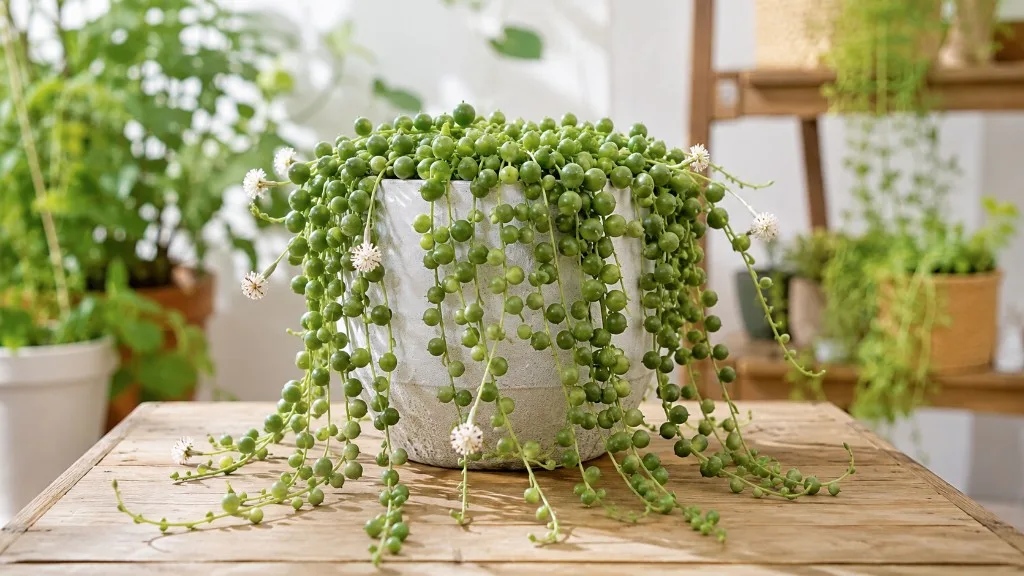
String of pearls (Curio rowleyanus, still widely sold under the older name Senecio rowleyanus) looks delicate from across the room - bead-like leaves on thin trailing stems that spill over a hanging basket like jewelry. That fragility is real, but it does not mean string of pearls repotting follows the same rules as a fast-growing pothos or a deep-rooted fiddle-leaf fig. String of pearls stores water in its spherical leaves, spreads through shallow roots that rarely extend more than 5–8 cm (2–3 inches) deep in pot culture, and often performs better when slightly root-bound than when given a roomy container with a large volume of wet soil beneath unused root space.
Done well, string of pearls repotting is a quiet maintenance job: a slightly wider shallow pot, fresh gritty mix, careful handling of trailing stems, and a few weeks of restrained watering while roots settle. Done poorly - deep oversized pot, wet soil during removal, stems buried at the crown, immediate heavy watering - the same plant drops pearls by the dozen, stems turn mushy at the soil line, and you are troubleshooting rot instead of enjoying longer trails. This guide covers when to repot, why shallow wide pots matter, how to move the plant without destroying fragile stems, and the mistakes that turn a routine upgrade into a recovery project.
Why String of Pearls Repotting Is Different from Most Houseplants
Repotting solves three problems that eventually show up as pearl drop, stalled trails, or mushy stems if you ignore them long enough. First, even string of pearls’ modest root growth eventually fills a small pot, circling at the bottom and reducing the air pockets mix needs to breathe. Second, organic components in potting soil break down over time - peat and coir compress, perlite crumbles, and the blend that drained perfectly in year one holds water too long in year three. Third, salts from tap water and occasional fertilizer accumulate at the root zone, which can stress fine roots and show up as flat or wrinkled pearls even when you think you are watering correctly.
String of pearls belongs to Asteraceae and evolved in South African habitats where brief rains drain quickly through gritty soil and long dry periods follow. NC State Extension notes the species is native to dry areas of South Africa, where it creeps along the ground and roots wherever stems touch soil. That matters because the most common repotting failure - choosing a pot that is much too large or too deep - creates exactly the environment these roots hate. The plant above the rim looks like a tough succulent, but below the soil it behaves like a shallow-rooted trailer that wants the mix to dry quickly through the entire root zone, not linger wet at the bottom of a tall container where roots never reach.
Shallow roots and slight root-bound preference
In cultivation, string of pearls typically reaches 30–90 cm (12–36 inches) of trailing length indoors. NC State Extension lists mature size around 1–2 feet tall and 1–3 feet long. The Old Farmer’s Almanac notes that although string of pearls grows rapidly above ground, it carries shallow roots that do not need frequent repotting - generally every 2–3 years after an initial repot when you bring the plant home, with some healthy plants going 5 years between upgrades. Treat those ranges as check-in reminders, not calendar commands.
Unlike many tropical houseplants, string of pearls tolerates being slightly root-bound and can trail more densely when the root zone is snug. Tight roots reduce moist soil volume around a small root system, which lowers rot risk. That tolerance is not permission to leave degraded, compacted soil indefinitely - repot for clear signals, not because a schedule says so, and resist upsizing dramatically “to give it room.”
When repotting helps vs when it creates new problems
Repot when roots circle heavily or emerge from drainage holes, water runs through without absorbing, the plant wobbles in its pot despite normal care, mix smells sour or drains in seconds, or you find mushy brown roots during inspection - not when a few outer pearls wrinkle after a missed watering on an otherwise healthy plant. Emergency repotting for root rot on String of Pearls is justified even outside the ideal season; routine repotting for a plant still draining well and pushing new pearls at stem tips is optional. When in doubt, top-dressing the top 2–3 cm in early spring can buy time until a full repot is clearly needed.
Also repot when you first bring a nursery plant home if it sits in dense, moisture-retentive mix that does not match succulent needs. Almanac.com recommends repotting string of pearls when you bring them home, then on a 2–3 year cycle afterward - a sensible baseline because commercial growers often use mixes optimized for greenhouse turnover, not long-term indoor drainage. If your new plant already sits in gritty cactus mix with healthy roots and good drainage, a full repot can wait until the next clear signal rather than disturbing trails unnecessarily.
Signs Your String of Pearls Needs Repotting
The clearest sign is visual: roots emerging from drainage holes or a root ball that slips out as a perfect pot-shaped mold with almost no loose mix on the sides. Less obvious but equally reliable signals include water that channels through the pot in seconds without wetting the center, a hanging basket that tips or wobbles because the trail weight exceeds what the root mass can anchor, and new pearls arriving smaller or flatter than older ones when light has not changed. When two or more of these appear together during the active growing season, plan a repot. Do not repot solely because a few pearls at the end of a long trail look dry - that often reflects normal aging or underwatering on String of Pearls at the farthest point from the root zone, not a pot problem.
Pearl drop alone is rarely a repot signal - string of pearls sheds pearls from overwatering on String of Pearls, underwatering, temperature shock, pests, and transplant stress. Confirm that roots or soil structure are the bottleneck before disturbing a plant stressed for other reasons. If stem tips still produce firm new pearls and the crown looks plump and green, adjust watering or light first.
Root-bound, drainage, and stability signals
Lift the pot and inspect drainage holes first. Roots peeking through mean the plant has used its volume. Slide the plant out gently - if the root mass holds the pot shape and old mix looks like dense mud, you have a root-bound situation. On string of pearls, the root mat often looks modest compared to long trails above, so check the bottom rather than judging by trail length.
Fast drainage after watering can mean water bypasses a hydrophobic center because mix has broken down. Slow drainage with sour smell, soft stems at the soil line, or pearls detaching easily points to rot requiring immediate repot with trimmed roots and dry fresh mix. Work with dry soil when removing the plant - brittle roots break less and inspection is easier. Top-heavy instability also warrants repotting: when trails exceed a meter in a 10 cm nursery cup, weight pulls the plant forward even before roots circle. A slightly wider, heavier shallow container restores balance without jumping multiple pot sizes.
Soil breakdown and salt buildup warnings
Even when roots still fit, spent mix is a valid repot trigger. Organic matter decomposes, pore spaces collapse, and the blend shifts from fast-draining to sponge-like over 2–4 years indoors depending on watering frequency and pot material. White mineral crust on the mix surface, a chalky ring on the pot rim, or pearls that stay slightly flat despite consistent soak-and-dry watering suggest salt accumulation that a full refresh addresses better than repeated flushing alone.
A sour or stagnant smell when you lift a trail to check the soil surface means anaerobic conditions may already be stressing roots, even before stems turn visibly mushy. NC State Extension lists soggy wet soil as a primary cause of root rot and plant demise for string of pearls - a reminder that repotting into fresh gritty mix is sometimes the only way to reset a root zone that compacted mix has already compromised. If only the top layer has crusted while lower mix still drains acceptably, top-dressing in spring can help; if the entire column feels tight and water runs down the sides, plan a full repot.
Best Time of Year to Repot String of Pearls
Timing matters because string of pearls recovers fastest when it is already geared for growth. Spring through early summer is the safest window for most indoor growers in the Northern Hemisphere. Rising temperatures and lengthening days trigger root activity, so the plant can colonize fresh mix and heal any minor root damage before short days return. Almanac.com notes that spring is the best time for repotting, though houseplants can technically be repotted in any season as long as they are not in bloom - advice that aligns with how the species grows in brighter, warmer months.
Avoid repotting during peak summer heat in a sun-heated south window without air conditioning - disturbed roots plus wet mix invite rot even in shallow pots. If midsummer is your only option, use String of Pearls light guide for two weeks and delay the first watering longer than in spring.
Spring and early summer windows
During active growth, firm new pearls at stem tips can appear within two to four weeks after a well-executed repot, though full root establishment takes longer. Spring pairs well with propagation if you need trimmings, but that is optional during a mix refresh. Early summer works if temperatures stay in the 21–29°C (70–84°F) range string of pearls prefers. Hold fertilizer until new growth appears - at least one month, often longer after major root disturbance.
When emergency winter repotting is justified
Winter repotting is a backup plan, not a default. Growth slows, days are short, and a disturbed root system sits in mix longer because the plant is not pulling water actively. That combination increases rot risk for any succulent, including string of pearls. Skip winter repotting if the plant is merely slightly tight but still producing new pearls at stem tips and drying on a normal winter schedule - often every three to four weeks between thorough waterings in cool dim conditions.
Repot in winter only when delay would clearly harm the plant: active root rot requiring trimming and fresh dry mix, severe root-binding with repeated watering problems, or a container that has cracked or become unusable. If you must repot then, use a modest size increase, keep temperatures above roughly 18°C (65°F), provide bright indirect light, and wait five to seven days before the first light watering. Avoid heavy trail pruning in winter unless rot forces stem removal - healing and rerooting are slower when the plant is not in active growth.
Choosing the Right Pot for String of Pearls
The single most important pot decision for string of pearls is shape, not decoration. This trailing succulent wants a wide, shallow container with drainage holes, not a deep tub meant for tree roots. Jumping from a 10 cm shallow dish to a 15 cm deep pot feels generous, but the lower volume of unused mix stays wet for days while the shallow root mass never reaches it. That wet zone is where string of pearls roots rot, and the plant shows the problem as mushy stems at the soil line and pearls dropping in clusters - symptoms that look like overwatering because they are.
Measure the current inner diameter and choose a new pot 2.5–5 cm (about 1–2 inches) wider, keeping depth similar to or slightly less than the previous container. For a string of pearls in a 10 cm wide shallow pot, a 12–13 cm wide shallow pot is appropriate. From a 12 cm pot, move to 14–15 cm. Repeat the one-size-up rule each time rather than skipping sizes to reduce future work - oversized jumps cause more trouble than repeated modest upgrades on a plant that prefers snug roots.
Why shallow and wide beats deep and tall
String of pearls root systems are predominantly shallow and spreading, evolved to capture sparse rainfall near the soil surface in semi-arid habitats. A deep pot concentrates moisture below the zone where the plant actually absorbs water, extending drying time and encouraging rot at the center of the root ball. University of Wisconsin–Madison Extension recommends a shallow container because string of pearls does not produce an extensive root system - and going up only one pot size at a time reduces excess wet soil around unused root space.
Wide geometry also suits the trailing growth habit. Hanging baskets that are wider than they are deep give stems room to drape naturally while keeping the root zone proportionate. A practical example from experienced repotting guides: moving from a 15 cm nursery hanging pot into a decorative basket roughly 25 cm wide and 13 cm deep can work when width supports trail display without adding excessive depth beneath roots. If more than the bottom third of a deep pot would sit as empty mix beneath the root ball, you chose the wrong shape regardless of how attractive the container looks.
Terracotta, drainage holes, and hanging baskets
Every string of pearls pot needs drainage holes - at least one, and preferably several for larger baskets. No exceptions for long-term indoor care. Decorative cache pots without holes are fine only if the plant remains in a nursery pot that drains freely into a saucer you empty after every watering. Terracotta is excellent for string of pearls because porous walls pull moisture from the mix and speed drying - a practical advantage if you tend to water on the generous side. Plastic hanging baskets retain moisture longer, which can help in very dry, bright rooms but increases rot risk if you already struggle with overwatering. Glazed ceramic sits between the two; choose it for stability if long trails make the display top-heavy.
A wide terracotta dish dries faster than a deep plastic cylinder at similar soil volume. Verify hanging basket hooks support the weight of pot, mix, and fully watered trails before you finish.
Best Soil Mix for Repotting String of Pearls
String of pearls wants fast-draining succulent mix that stays airy after repeated watering. NC State Extension and standard succulent references describe the species as sensitive to soggy soil, with root rot as a primary failure mode. The Old Farmer’s Almanac recommends well-draining potting mix intended for cacti and succulents, or a DIY blend of 3 parts potting soil and 1 part coarse sand. The principle matters more than a single sacred ratio: the mix should drain within seconds of watering while holding enough moisture that pearls do not shrivel between checks.
A reliable DIY blend for repotting:
- 50% quality potting compost or coir-based mix
- 30% perlite, pumice, or coarse grit for aeration
- 20% coarse sand, fine gravel, or additional grit for drainage speed
Some growers prefer 50% cactus compost and 50% pumice or perlite for maximum porosity in humid homes. Pumice is slightly heavier than perlite and stays in place better when you water from above, which matters for a plant whose pearls should stay dry when possible. Commercial cactus and succulent potting mix works if you amend it with extra perlite or pumice - many bagged blends are still too peat-heavy for long-term string of pearls health in shallow pots.
DIY gritty blend ratios and commercial options
Mix ingredients in a tub before you repot rather than layering them in the pot. Dry blending distributes perlite and grit evenly and prevents the common mistake of placing all drainage material at the bottom, which does not create the layered drainage people expect - water moves through the whole column according to pore structure, and a gravel layer can actually create a perched water table that keeps the root zone wetter, not drier. Avoid garden soil, which compacts and introduces pathogens. Avoid pure dense indoor mix without amendment; it suffocates shallow roots within a year and is the fastest route to crown rot on a trailing succulent.
Full repot - removing the plant, loosening outer roots, and replacing essentially all old mix - is appropriate when roots are bound, mix is compacted or sour, or you are correcting rot. Top-dressing - scraping out the top 2–3 cm and replacing it with fresh blend without lifting the plant - is a gentler mid-season option when drainage is still acceptable but salts have built up. Top-dressing will not solve circling roots at the bottom of a shallow pot; it only buys time. Never reuse old mix from a rot case; fresh dry mix is simpler and safer.
Step-by-Step: How to Repot String of Pearls
Repotting string of pearls is straightforward if you prepare materials first and minimize time with roots exposed. Gather the new shallow pot or basket, pre-mixed soil, clean scissors, soft plant ties, a chopstick, and a watering can with a narrow spout. Work when the plant is fully dry - allow the mix to dry completely before you start, as multiple experienced guides recommend. Dry mix releases more cleanly, brittle roots break less than soggy ones, and pearls stay firmer when handled. If you plan to take cuttings for propagation, add small pots and labels before you begin so you are not mid-repot searching for supplies.
Start with fully dry soil unless you are rescuing active rot. Gather trails loosely into one or two bundles over the pot rim so stems stay out of the work zone - never pull tight. Add a bottom mound of fresh mix so the root ball sits slightly above the rim (about 2.5 cm), preventing the crown from sinking after watering. Turn the pot on its side, slide the plant out supporting the root ball, and never yank by trails. Brush away old mix, trim brown mushy roots back to firm white or tan tissue, and tease outer circling roots outward without aggressive bare-rooting.
Set the plant so the previous soil line matches or sits slightly higher - never bury stems at the crown. Backfill with a chopstick, firming lightly. Wait 3–5 days before the first light water (up to 5–10 days after heavy root trimming or in humid homes). Hold fertilizer at least four weeks. Keep the plant in bright indirect light for 7–14 days, untie trails gradually, and resume soak-and-dry checks only after one full dry cycle.
Preparing trails, removing the plant, and inspecting roots
Trail management separates a smooth repot from a pearl-strewn mess. If your string of pearls has trails under 30 cm, you may manage without tying by draping them over a towel on the table. Longer specimens benefit from soft twine or velcro plant ties gathered into loose pigtails. Work over a wide surface so fallen pearls can be collected for propagation if they are healthy and firm - dropped pearls are not always dead, but crushed or mushy ones should be discarded.
During removal, support the root ball, not the stems. If the plant is severely root-bound, you may need to score the bottom of the root mat lightly with a clean knife to encourage outward growth - one or two shallow cuts, not shredding the entire mass. Rot rescue is the exception where washing roots gently under lukewarm water may be necessary to find all mushy tissue; routine repotting rarely requires washing. After rot trimming, let the root ball air-dry for 1–2 hours before planting into dry mix.
Setting depth, backfilling, and the first watering wait
Crown depth is the detail most generic repotting articles skip, and it is where string of pearls fails most often after an otherwise careful transplant. The point where stems emerge from the root crown should sit at or slightly above the final mix surface. If stems sink below mix level when you water, moisture wicks into tissue that evolved to stay dry. Elevation at planting - using a bottom mound so the root ball sits high - prevents the slow sink that heavy watering causes in light gritty mix.
The first watering after the dry wait should be light: enough to settle mix and reach roots, not a flood that saturates unused soil in an oversized pot. Water at the soil surface or from below through a saucer if you prefer to keep pearls dry, which Almanac.com recommends as a general care practice. Empty saucers promptly. For the first two weeks, err on the dry side - string of pearls tolerates short dry spells far better than wet feet in fresh mix. A few wrinkled pearls on outer trails for a few days can occur; widespread mushiness from the crown upward is not normal shock and warrants inspection for buried stems, rot, or a pot that is too deep or too large.
Common String of Pearls Repotting Mistakes and Recovery
The most common failures follow predictable patterns. Oversized or too-deep pots create chronic bottom wetness - stick to one size up in width and shallow depth. Repotting into wet mix or watering immediately invites rot at damaged root tips; start dry, wait 3–5 days, then water lightly. If stems soften at the base, unpot, trim mushy tissue, air-dry an hour, and replant in dry mix.
Burying stems at the crown causes stems to rot within days - lift the plant, brush mix away, and replant higher with a bottom mound. Rough trail handling drops pearls through physical damage, not shock; propagate snapped healthy cuttings rather than expecting crushed stems to rebound. Bare-rooting, immediate fertilizing, and peat-heavy mix without grit all slow or sabotage recovery. Repotting an overwatered plant without fixing the watering habit adds stress without solving the trigger.
NC State Extension lists string of pearls as toxic to humans and pets, with ingestion causing vomiting and diarrhea and sap causing skin irritation; the ASPCA notes toxicity to cats and dogs. Wear gloves if needed and keep debris away from pets and children. If recovery stalls beyond six weeks with a firm crown but no new pearls, recheck crown depth, pot depth, and hidden rot before disturbing the plant again.
Conclusion
String of pearls repotting comes down to reading the shallow root zone, choosing spring or early summer when you can, moving the plant to a slightly wider shallow pot with fresh fast-draining mix, and handling trailing stems with more care than the roots themselves demand. The species grows rapidly above ground but slowly enough below that checking every 2–5 years beats repotting on autopilot - yet never ignore circling roots, spent mix, or rot because string of pearls tolerates tight quarters better than wet ones.
Get pot shape, mix dryness, crown depth, and the post-repot watering wait right and string of pearls rewards you with longer trails and firm new pearls without drama. Oversize the container, bury the stems, or water too soon and the same plant drops pearls and softens at the crown despite its jewel-like appearance. Watch roots and soil structure, not just trail length, and treat repotting as a targeted refresh - not a reflex - and you will rarely lose a healthy string of pearls to a routine upgrade.
When to use this page vs other String of Pearls guides
- String of Pearls overview - Start here for whole-plant context before deep-diving this topic.
- String of Pearls problems hub - Jump to symptom-specific fix guides when this care topic does not resolve the issue.
- Root Rot on String of Pearls - Escalate here when repotting adjustments are not enough.
Related String of Pearls guides
- String of Pearls overview
- String of Pearls watering
- String of Pearls light
- String of Pearls soil
- String of Pearls propagation
- String of Pearls fertilizer
- Root Rot on String of Pearls
- String of Pearls problems
Related tool
Try the Pot Size Calculator with string-of-pearls pre-selected to estimate needs for your setup.