Root Rot on String of Pearls: Causes, Checks & Fixes
Quick answer
Root rot on String of Pearls follows chronic wet mix-especially in winter or low light. Stop watering, unpot, trim black mushy roots and stems, repot in dry cactus mix, and wait until mix is fully dry before the first soak. A collapsed crown means propagate firm cuttings instead.
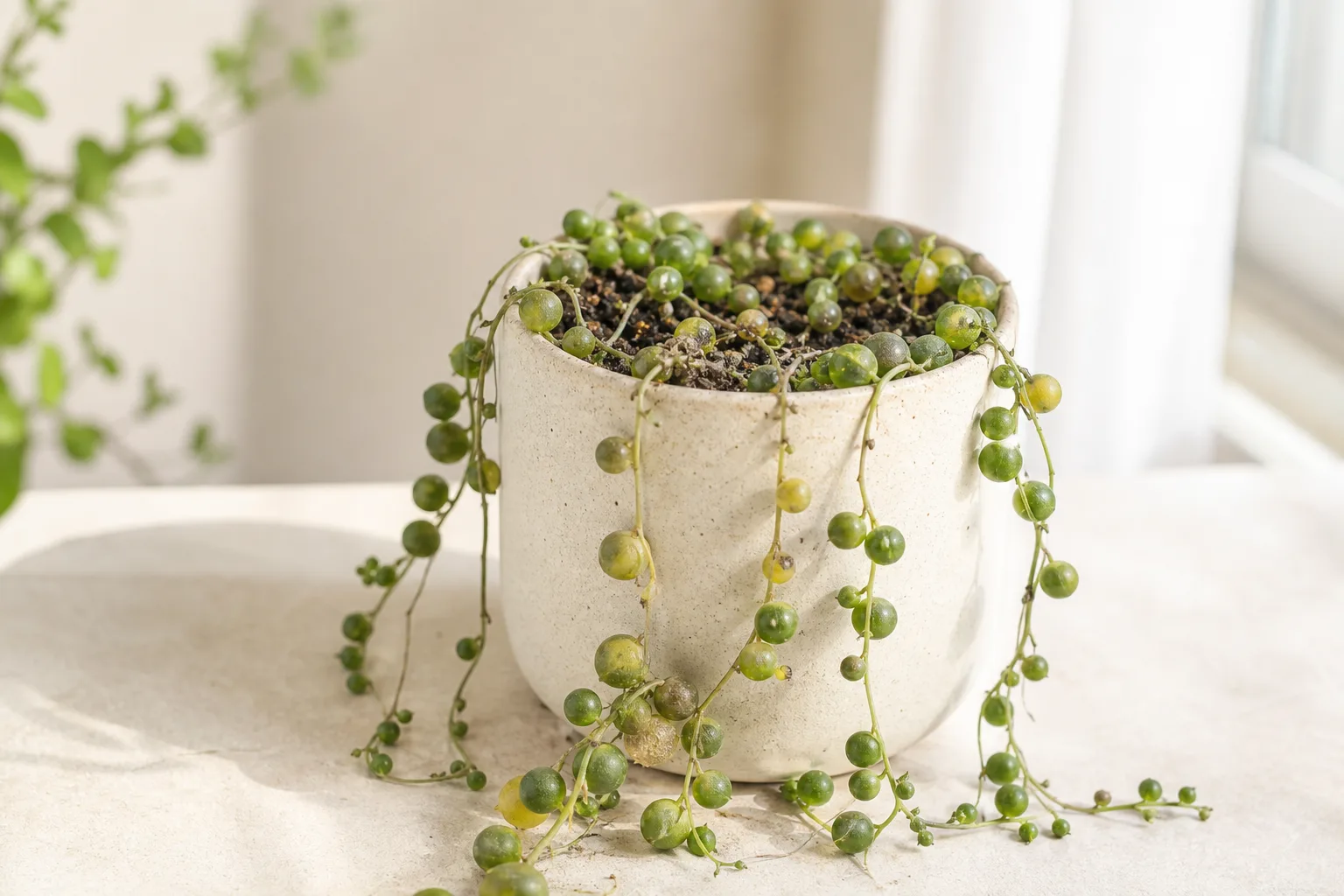
Root Rot on String of Pearls: Causes, Checks & Fixes
This guide covers root rot on String of Pearls. See also the general Root Rot guide, watering, and light pages for this plant.
Root Rot on String of Pearls: Causes, Checks & Fixes
Quick answer
Root rot on String of Pearls (Curio rowleyanus, still widely sold as Senecio rowleyanus) is almost always the end stage of roots sitting in wet, airless mix too long-not a random fungal attack you catch from the air. Each round pearl stores water, but thin roots still need oxygen between drinks in dry, sandy, well-drained cactus-type mix.
The hallmark trap is wilt-on-wet-soil: pearls shrivel and look thirsty while the pot stays heavy and mix stays damp, because damaged roots cannot move water into leaf tissue despite saturated soil. That paradox sends many owners to pour again-and accelerates crown decay.
First fix: stop all watering and unpot to inspect roots before you repot. Trim mushy black tissue, air-dry cut surfaces, and repot downsized into dry cactus mix. If the crown is black and mushy throughout, salvage firm stem cuttings above the rot per the propagation guide instead of watering the collapsed base.
If you are still at soft translucent pearls with a firm crown and merely damp mix, start with overwatering triage-this page assumes confirmed or strongly suspected active root decay after inspection.
Why String of Pearls gets root rot
Pearl water storage vs. root oxygen needs
Each pearl is a modified leaf shaped to minimize surface area and store moisture-an adaptation from dry areas of southwest Africa. That storage lets the plant tolerate infrequent watering and extended drought, but it does not protect roots from drowning. Avoid poorly-drained and/or moist soils which inevitably lead to root rot; saturated anaerobic mix invites decay within days in a cool room.
Pearl water storage also delays visible strand collapse. Soft translucent pearls often appear before long trailing vines droop noticeably-the earliest rot signal on this species is texture at the bead, not posture at the strand tip.
Oversized pots and peat-heavy mix
Growers often size pots to trailing canopy length, not to the thin root mass underneath. An oversized plastic hanging basket holds wet soil around fine roots for days after one watering-one of the most common String of Pearls rot setups. Standard peat-heavy potting soil compounds the problem by staying damp in the center while the surface looks dry.
Calendar watering vs. real dry-down
In cool dim winter, metabolic activity drops and the same volume of water lasts much longer-best growth occurs around 70–80°F in summer and 50–60°F in winter. Owners who keep a summer rhythm into December pour water the plant cannot use. Cool north-facing rooms plus unchanged summer schedules are the highest-risk combination for repeat rot on otherwise healthy specimens.
Hanging-basket crown moisture pooling
Dense trailing growth traps moisture where strands meet the soil. Beads piled at the crown create a microclimate that stays damp longer than open outer strands-exactly where rot starts. Water directed over hanging foliage instead of onto soil surface worsens crown pooling.
What root rot looks like on String of Pearls
Early signs: translucent pearls and wilt on wet mix
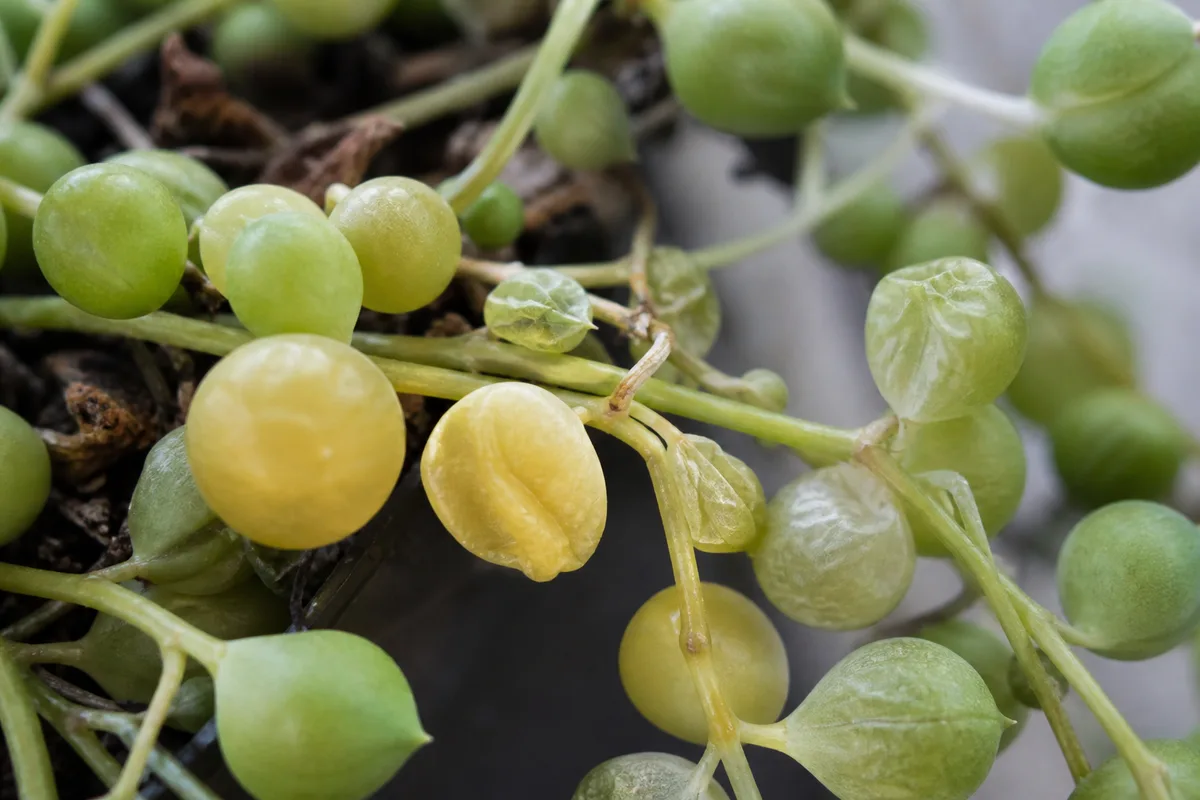
Root Rot symptoms on String of Pearls - compare with healthy tissue on the same plant.
Early rot shows soft, translucent, or yellow-tinged pearls that may burst or flatten while mix is still damp. Strands may droop even though you watered recently-the wilt-on-wet-soil paradox. The pot feels heavier than it should for a succulent. At this stage the crown is often still firm green; catching rot here gives the best recovery odds.
Pearl firmness check: mushy vs. firm-wrinkled
Pinch a suspect pearl gently. Soft, squishy, or translucent texture with wet mix points toward rot or advanced overwatering. Firm raisin wrinkles in a light dry pot point toward underwatering instead. Old damaged pearls may not re-plump after rescue-judge recovery by firm new growth on upper stems, not by old beads reverting.
Advanced signs: black crown and sour smell
Unchecked wet soil advances to black mushy stems at the crown, pearls sliding off wet strands, and a sour or rotten smell from drainage holes. Once the crown collapses, salvage shifts from rescue to propagation from any firm stem segments above the rot.
Root rot vs. underwatering vs. overwatering vs. transplant shock
Use pot weight, skewer depth moisture, pearl texture, crown firmness, and smell-not strand limpness alone.
| Signal | Confirmed root rot | Overwatering (pre-rot triage) | Underwatering | Transplant shock |
|---|---|---|---|---|
| Pot weight | Heavy, cool for days | Heavy several days after watering | Noticeably light | Moderate; may feel uneven |
| Skewer at center | Cool, dark, clinging | Cool and damp | Dry or dusty | Damp if recently repotted |
| Pearl texture | Soft, translucent, mushy | Soft translucent early; mushy if advanced | Firm raisin wrinkles | Mostly plump; some stress wrinkle |
| Crown at soil line | Blackening or mushy | Firm early; darkening = escalate here | Firm green | Firm green |
| Wilt pattern | Shrivel on wet heavy mix | Droopy on wet mix | Limp on dry light mix | Limp 1–2 weeks post-repot |
| Mix smell | Sour or musty | Sour if advanced | Neutral or dusty-dry | Earthy; no sour rot odor |
| First fix | Stop water → unpot → trim → repot | Stop water; dry-down; inspect if declining | One deep soak after dry confirmed | Hold water; bright indirect light |
When symptoms sit between early overwatering and confirmed rot, follow overwatering checks first. Return here once mushy roots, sour odor, or crown-base softening confirm decay.
How to confirm the cause (inspection checklist)
Run this sequence before repotting:
- Pot weight test - Lift the container 5 to 7 days after the last watering. Still heavy? Root zone is likely saturated.
- Skewer depth test - Push a dry wooden skewer into the center of the mix. Cool, stained wood that clings means wait-not water. This is the same depth protocol from the watering guide.
- Pearl firmness - Pinch pearls on outermost exposed strands. Mushy translucent beads with wet mix confirm rot risk; firm wrinkles with dry mix mean look elsewhere.
- Crown inspection - Press where strands meet soil. Firm green stems are better; give-way or black mush is urgent.
- Smell - Sour or swampy odor from drainage holes or lifted root ball suggests active decay.
- Unpot and rinse - Gently remove the plant and rinse old mix from roots. Healthy String of Pearls roots are firm and pale. Rotted roots are brown, black, slimy, or hollow.
Confirmation heuristic (starting point, not a lab rule): If more than roughly a third of the root mass is mushy and the mix smells bad, treat root rot as confirmed. Persistent fungus gnats around a heavy wet pot strengthen the rot diagnosis-soggy wet soil will result in root rot and the plant’s demise.
Severity ladder
Branch rescue by how much tissue is still sound.
Mild: partial root loss, firm upper stems
Some brown mushy roots, but stems above the soil line are firm throughout and odor is mild or absent. Trim affected roots and any black stem tissue, air-dry briefly, repot downsized into fresh dry cactus mix, and resume conservative dry-down. Old burst or translucent pearls may stay marked permanently-watch for new pearl growth along firm stems.
Moderate: more than half mushy roots, firm upper vine
More than half the roots are decayed, yet stems above the crown stay firm green. Aggressive root and stem prune, 24 to 48 hour air-dry in bright indirect light (home-climate starting point-extend in cool humid rooms), then repot into a pot matched to the trimmed root ball, not the old oversized hanging basket. Expect one to three weeks before new pearl growth signals stable roots.
Severe: collapsed crown - propagate only
When the crown is black and mushy throughout, repotting the main plant rarely saves it. Cut firm stem sections above all soft tissue-this species is easily propagated by stem cuttings-callous cut ends 24 to 48 hours, and root in dry gritty mix per the propagation guide. Do not propagate from cuttings taken below rotted tissue. Do not water the collapsed base hoping it revives.
First fix for String of Pearls
Stop all watering immediately. Do not add fertilizer, peroxide drenches, or “corrective” extra irrigation on day one.
Then:
- Unpot and rinse roots to see true damage.
- Trim all soft, brown, black, or smelly roots and stems back to firm green tissue with sterilized scissors; sterilize between cuts.
- Let cut surfaces air-dry in bright indirect light for about 24 to 48 hours if damage is moderate (adjust longer in cool, humid rooms).
- Repot into fresh dry fast-draining cactus or succulent mix in a pot only slightly larger than the trimmed root mass-see the soil guide for mix proportions.
- Water lightly only when mix is genuinely dry throughout and pearls on exposed strands show mild firm deflation-a starting range is about 7 to 10 days after repot, but confirm with weight and skewer checks rather than a calendar.
Terracotta or unglazed pots can speed re-wet cycles on the remaining root mass after trim; plastic hanging baskets slow drying. Size the pot to roots, not trailing length.
Step-by-step recovery
- Unpot and gently rinse away old wet mix to expose root condition.
- Cut all soft, brown, black, or smelly roots and crown stems; sterilize tools between cuts.
- Air-dry the trimmed plant before repotting unless rot is mild and odor is absent.
- Repot with a drainage hole into dry gritty mix at the same planting depth-never bury strands deeper to stabilize a wobbly plant. Full repotting mechanics apply.
- Resume conservative dry-down per light level in the watering guide-intervals stretch sharply in cool dim winter.
Worked example (oversized hanging basket): A String of Pearls in a large plastic basket was watered every ten days year-round in a north-facing room. The pot stayed heavy, mix smelled sour on unpot, roughly 40% of roots were mushy, but upper stems were firm. After trim, 48-hour air-dry, downsized repot into terra-cotta with cactus mix, and first water delayed until day 12 when skewer and weight confirmed dry-down, new pearls appeared along firm stems in about three weeks. Old translucent beads did not re-plump-that is normal.
Recovery timeline
Recovery is gradual; damaged pearl tissue does not bounce back overnight.
| Phase | What to expect |
|---|---|
| Days 0–2 | Stop water; unpot, trim, air-dry. Pearl drop on wet strands may continue-do not interpret as failure yet. |
| Days 3–7 | Repot downsized; mix should dry steadily at the surface. Crown should stay firm. |
| Week 2 | First cautious soak only if depth tests read dry. No fertilizer. |
| Weeks 2–4 | Pot weight normalizes for your light level; new pearl growth along firm stems signals real recovery. |
| Weeks 4–8+ | Trailing fill resumes slowly. Old marked pearls may persist until you prune strands. |
If softness climbs the crown, odor returns on dry mix, or the pot stays heavy without new growth after eight weeks of corrected dry-down, re-inspect roots or shift to propagation salvage.
Propagation salvage when the crown is lost
When the base is mushy throughout, repotting the intact plant is usually futile. Instead:
- Identify the highest point on each strand where tissue is firm when squeezed.
- Cut 4 to 6 inches of healthy strand with clean scissors.
- Strip pearls from the bottom third to expose bare nodes; let cut ends callous 24 to 48 hours.
- Lay stripped stems on lightly moist-not saturated-gritty mix with pearls above the soil line, per the propagation guide.
- Discard all soft basal tissue and contaminated old mix.
String of Pearls roots slowly from cuttings; bright indirect light and patience matter more than frequent watering during callus formation.
What not to do
Do not keep watering because pearls look shriveled when soil is already wet-that deepens the wilt-on-wet-soil trap. Do not mist strands or use humidity trays; surface moisture does not help roots and encourages rot where beads cluster at the crown. Do not repot into standard peat-heavy potting soil or wet mix on day one. Do not fertilize during recovery. Do not propagate from stem sections below soft rotted tissue.
Keep away from pets when handling trimmed tissue-String of Pearls is toxic to cats and dogs. Wear gloves if you have sensitive skin; if a pet ingests plant material or contaminated soil, contact your veterinarian promptly.
How to prevent root rot next time
Match watering to your pot’s dry-down in your light and season-not a fixed weekly calendar:
- Water only when mix is dry throughout, the pot feels noticeably lighter, and pearls on exposed strands begin mild firm deflation.
- Use mineral-heavy cactus mix with perlite or pumice in a hanging pot with open drainage-details in the soil guide.
- Empty saucers within 30 minutes after every soak.
- Size pots to trimmed root mass, not trailing canopy length.
- Reduce winter watering sharply when pearls stay plump in cool rooms-water sparingly in winter; sparse winter strands often reflect dormancy, not neglect.
- Treat fungus gnats as a moisture warning.
Cross-check routines with the String of Pearls watering guide before rot returns.
When to worry
Act the same day if any of these appear:
- Crown turns black or mushy at the soil line
- Mix smells sour while the pot stays wet
- Pearls burst translucent across multiple strands
- More than half the roots are mushy on inspection
- Pearls keep shriveling on wet heavy mix after a full dry-down week
Those signs mean progressing root failure-not another wait-and-see watering experiment. Escalate to full trim-and-repot here, or to propagation if the crown is lost.
Related String of Pearls guides
- String of Pearls overview - species hub and care context
- Watering guide - soak-and-dry rhythm, pot weight, skewer depth
- Soil guide - cactus mix recipes and drainage
- Repotting guide - post-trim pot sizing
- Propagation guide - stem-cutting salvage
- Overwatering - early triage before confirmed rot
- Underwatering - firm wrinkles in a light dry pot
- Fungus gnats - wet-soil companion pest
Related tool
Use the Root Rot Risk Checker to narrow causes for root rot on this plant before changing multiple variables at once.