Best Soil for String of Pearls: Mix, Drainage & Recipes
Best Soil for String of Pearls: Mix, Drainage & Recipes
Best Soil for String of Pearls: Mix, Drainage & Recipes
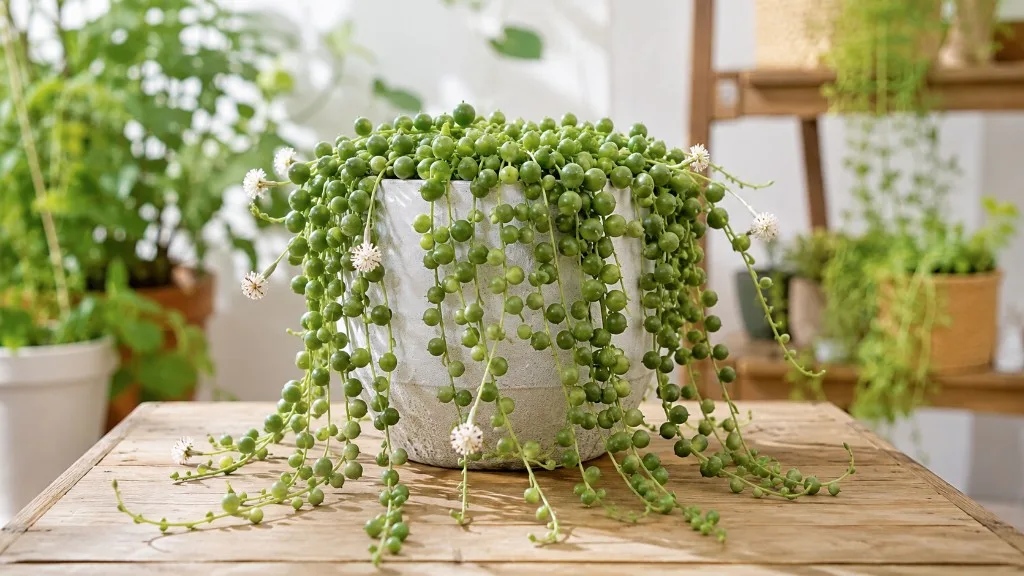
String of pearls (Curio rowleyanus, formerly classified as Senecio rowleyanus) is one of the most distinctive trailing succulents in indoor horticulture - and one of the most commonly killed by the wrong substrate. The beads store water, the roots are fine and shallow, and the whole plant is built for soils that drain almost immediately after watering. Standard houseplant potting mix, no matter how “premium” the bag looks, holds too much moisture around those roots for too long. If you are searching for the best soil for string of pearls succulent care, the answer is not a single branded product. It is a fast-draining, gritty, low-organic mix paired with a shallow pot that dries predictably in your room. Get those two pieces right and your String of Pearls watering guide becomes forgiving. Get them wrong and even careful watering will still produce mushy stems and collapsed pearls.
Why Soil Matters More Than Watering Schedules for String of Pearls
Most string of pearls troubleshooting threads start with watering - how often, how much, top vs bottom. That is understandable because overwatering on String of Pearls is the leading cause of death. But watering frequency is only half the equation. Soil texture decides how long moisture stays in the root zone after you water, and that dry-down window is what actually protects or endangers the plant. Two growers can water on the same calendar and get opposite outcomes because one uses a gritty, open mix in a shallow terracotta pot while the other uses peat-heavy potting soil in a deep glazed ceramic container. The plant that rots is not necessarily being watered more often. Its roots are simply sitting in wet substrate longer than Curio rowleyanus can tolerate.
University of Wisconsin–Madison Extension notes that string of pearls should be allowed to dry completely between waterings and that clay containers dry more quickly than plastic or glazed ceramic because moisture evaporates through the pot walls. That observation only works when the soil inside the pot is porous enough to cooperate. Dense mix in a terracotta pot is better than dense mix in plastic, but gritty mix in terracotta is dramatically better than either alternative. Soil is the foundation. Watering is the rhythm built on top of it.
Water Storage in Pearls and Fine Roots
Each spherical leaf on string of pearls is a modified storage organ. The translucent stripe along one side - often called a leaf window - allows light into the interior tissue, which is an adaptation to low, filtered light in its native Southwest African habitats. Those pearls hold reserves the plant can draw on during dry periods. The root system, by contrast, is small, fibrous, and concentrated in the upper few inches of substrate. In container culture, roots rarely extend deeper than roughly 5–8 cm (2–3 inches). They are not digging for groundwater. They are scanning the top layer for brief moisture pulses and oxygen between them.
That biology sets a clear soil priority: the upper root zone must drain fast and dry fast. A deep column of moist mix beneath shallow roots is wasted volume at best and a rot reservoir at worst. When you choose soil and pot depth together, you are either matching the plant’s architecture or working against it.
What Happens When Mix Stays Wet Too Long
When soil pores stay filled with water, oxygen is pushed out. Fine succulent roots need oxygen at the root surface to function. Prolonged saturation creates anaerobic conditions where decay organisms thrive. NC State Extension notes that overwatering can result in root rot on String of Pearls for String of Pearls overview. Above ground, you may see yellowing pearls, soft translucent beads, stem collapse near the soil line, or a sour smell when you lift the plant. By the time leaves show dramatic symptoms, root damage is often advanced.
This is why “fast-draining” is not an aesthetic preference for string of pearls. It is a respiration requirement. The best soil for string of pearls succulent growing indoors is one that lets water pass through in seconds, not minutes, and returns to a barely damp state within a few days under typical bright-indoor conditions - faster in strong light and heat, slower in cool winter rooms.
What String of Pearls Needs From a Soil Mix
The best soil for string of pearls combines three traits: rapid water movement, stable air pockets, and modest organic content. Think gritty desert edge soil, not rich forest floor. You want a mix that feels loose and crumbly in your hand, makes a light scratching sound when you stir it, and does not clump into a wet ball after watering.
Fast Drainage and Open Air Pockets
Drainage speed depends on particle size and pore space. Succulent soil experts often recommend components screened to roughly 6 mm (¼ inch) because uniform coarse particles create channels water can follow without getting trapped in fine pockets. Perlite, pumice, coarse horticultural sand, crushed granite, and quality commercial cactus mixes all contribute to this structure. When you squeeze a properly mixed handful and release it, it should fall apart rather than hold a mold shape.
For string of pearls specifically, aim for a mix where a full watering runs through the pot within seconds and the top inch feels dry again within two to four days in active summer growth at normal indoor temperatures. If the mix is still visibly damp a week after a moderate watering in bright light, it is too heavy for this species - even if it might be acceptable for a peace lily or pothos.
Low Organic Matter and Minimal Nutrient Density
Peat and fine compost retain moisture and break down into finer particles over time. A little organic matter helps anchor roots and provides slow nutrients, but string of pearls does not need rich soil. Excess organic material is the main reason store-bought “indoor plant” mixes fail this plant. They are engineered for tropical foliage that wants steady moisture. String of pearls wants the opposite.
NC State Extension recommends cactus potting mix or potting soil blended with sand or perlite as the ideal container medium for string of pearls.
A practical target is 40–60% inorganic amendment (perlite, pumice, coarse sand, grit) to 40–60% succulent-appropriate base (commercial cactus mix or a light potting soil component). Lean toward more inorganic material if you tend to water generously, if the plant sits in moderate light, or if humidity in your home runs above 50%. Lean slightly more organic only if the plant dries out so fast that pearls shrivel between waterings despite thorough soaks - a less common problem indoors.
Target pH Range for Curio rowleyanus
String of pearls grows well in slightly acidic to neutral soil, roughly pH 6.0–7.0. In that range, basic nutrients remain available without the extremes that lock out iron or manganese. Most quality cactus mixes and DIY blends with peat or coco coir fall inside this band without adjustment. Hobbyists rarely need to micromanage pH unless tap water is very alkaline and salt crust builds on the soil surface over months.
If you see white mineral deposits on the mix surface and leaf tips browning despite good watering habits, flush the pot with plain water several times during an active growth month or refresh the substrate at String of Pearls repotting guide. For most indoor growers, drainage quality matters far more than pH tuning.
Best Pre-Mixed Soils to Start With
Buying a dedicated cactus and succulent potting mix is the fastest path to acceptable soil for string of pearls. These products are widely available at garden centers and online. Quality varies by brand and batch, so treat commercial mix as a starting point, not a finished solution.
Commercial Cactus and Succulent Mixes Worth Using
Look for bags labeled specifically for cacti and succulents, not general-purpose potting soil with a succulent photo on the marketing panel. Reputable lines - including widely sold options such as Black Gold Cactus Mix, Espoma Organic Cactus Mix, Hoffman Cactus and Succulent Soil, and Miracle-Gro Cactus, Palm and Citrus Mix - typically include a peat or bark base plus perlite or sand. They are usable straight from the bag for experienced growers in bright, warm conditions who water conservatively.
For string of pearls in average indoor conditions, amend even good commercial mix with extra perlite or pumice. Missouri Botanical Garden recommends growing string of pearls in a dry, sandy, well-drained, cactus-type potting mix. A bag that drains well for a echeveria rosette in a sunny greenhouse may still stay too wet for a dense hanging basket of pearls in a north-facing room. Think of commercial cactus soil as the base layer of a custom blend, especially if this is your first string of pearls.
Pre-mixed gritty succulent soils with larger uniform particles - popularized in specialty succulent communities and sold by suppliers such as Bonsai Jack - are excellent for string of pearls because they prioritize porosity over moisture retention. They cost more and can dry quickly in small pots, but they dramatically reduce rot risk for beginners who overwater.
How to Improve Store-Bought Mix Before Planting
Open the bag and feel the texture. If it compacts when wet and feels fluffy-fine when dry, upgrade it before potting. The most reliable amendment ratio for string of pearls is 50% commercial cactus/succulent mix plus 50% perlite or pumice by volume. Measure with a scoop, not by eye, the first time. Mix thoroughly in a bucket so perlite is distributed evenly - isolated pockets of dense peat will still hold water and create weak points in the root zone.
If you only have general potting soil on hand, do not use it alone. Blend one part potting soil, one part coarse sand, and one part perlite or pumice as a minimum rescue formula. Better yet, buy cactus mix instead of retrofitting heavy soil. Every tablespoon of extra peat you add is moisture retention string of pearls did not ask for.
DIY Soil Recipes That Work Indoors
Making your own mix is straightforward and often cheaper over multiple repots. You gain control over drainage and can tune the blend to your home’s light, humidity, and watering habits.
The 50/50 Gritty Upgrade Formula
This is the single most dependable recipe for string of pearls indoors:
- 50% cactus or succulent potting mix
- 50% perlite or pumice
Combine in a clean bucket, dry or slightly moist, until the texture is uniform. The result should look pale and speckled, with visible white or gray mineral particles throughout. Pot your plant, water once to settle the mix, and observe dry-down speed over the next week. If the top stays cool and damp beyond four days in summer, increase the inorganic percentage on the next refresh. If pearls shrivel hard between waterings every two days, add a small amount of extra cactus base - no more than 10% at a time.
Three-Part Custom Blend for Hanging Baskets
Hanging baskets dry faster than table pots because air circulates on all sides. They also tempt growers to use deep pots for visual proportion, which backfires. For baskets, this three-part blend performs well:
- 2 parts cactus/succulent mix
- 1 part coarse sand (horticultural sand, not play sand)
- 1 part perlite or pumice
The sand adds weight and stability so trailing stems do not pull a light mix loose on the first watering. Pumice is especially valuable in baskets because it will not float to the surface the way perlite sometimes does when you water from above. If you bottom-water - placing the pot in shallow water and letting the mix wick upward - pumice-heavy blends also resist collapsing into a soggy layer at the base.
Pumice vs Perlite vs Coarse Sand
All three improve drainage, but they behave differently over time.
Perlite is lightweight, cheap, and excellent at creating air pockets. It crushes into powder over years of handling and repotting, which slowly reduces porosity. It can float upward during repeated top watering, leaving denser material at the bottom of the pot - exactly where string of pearls roots are most vulnerable.
Pumice is heavier, more durable, and holds a little moisture inside its pores without feeling wet to the touch. Its angular shape maintains drainage channels longer than crushed perlite. For string of pearls, pumice is the premium choice when you can source it affordably.
Coarse sand improves drainage and mimics natural gritty soils. Fine sand or beach sand compacts and worsens drainage - avoid it. Sand adds weight, which helps top-heavy hanging displays stay stable.
A balanced approach many experienced growers use: pumice as the primary amendment, coarse sand for stability, perlite to fill gaps if cost matters. Any combination that produces a loose, fast-drying mix beats a precise brand-name formula that stays wet in your conditions.
Pot Choice Affects How Soil Performs
Soil does not perform in isolation. Container material, depth, and drainage holes change how fast the same mix dries. A perfect gritty blend in a sealed decorative pot with no holes will still kill string of pearls.
Always use a pot with at least one drainage hole, and preferably several in larger containers. If you want a cachepot for aesthetics, keep the plant in a plastic or terracotta nursery pot inside the decorative shell and empty runoff after every watering. Never let the inner pot sit in a permanent puddle.
Unglazed terracotta is the classic choice for string of pearls because water evaporates through the walls, adding dry-down capacity beyond what soil porosity alone provides. Plastic is fine if the mix is gritty and you monitor moisture carefully. Glazed ceramic holds moisture longest and demands the most aggressive soil amendments.
Shallow Wide Pots Match a Shallow Root System
Because Curio rowleyanus roots occupy only the top few inches of substrate, a shallow, wide pot outperforms a deep, narrow one. A deep pot with a short root system means a large volume of soil stays moist below the roots - unused space that only increases rot risk. Choose a container where the root ball sits near the top third after repotting, not buried in a deep cylinder of mix.
For a typical indoor plant, a pot roughly as deep as the root mass plus one inch of fresh mix below and around is sufficient. Wider pots accommodate trailing stems and future offset growth without forcing you to add deep wet soil the roots will never explore. When repotting, size up gradually. Jumping to an oversized pot is one of the fastest ways to turn good soil into a chronic overwatering trap.
Testing Drainage Before You Plant
Do not wait for yellow pearls to learn your mix fails. Run a simple drainage test before you pot string of pearls:
- Fill a disposable cup with holes or a small nursery pot with your mixed substrate.
- Saturate the mix evenly with water until it runs from the bottom.
- Time how long water pools on the surface - it should absorb within seconds, not sit in a puddle for minutes.
- Weigh or feel the cup daily - in a warm indoor room, the top inch should approach dryness within two to four days after a full soak.
If water sheets across the top and runs down the sides without penetrating, the mix is too peat-heavy or too dry to accept water - add pumice and pre-moisten while blending next time. If it drains instantly but the cup still feels saturated days later, organic content is too high or particles are too fine. Adjust before risking your plant.
After planting, repeat a lighter version of this test in the actual pot: water thoroughly, confirm runoff exits freely, and track how many days until a finger inserted to the first knuckle feels dry. That real-world dry-down interval becomes your personal watering guide - far more reliable than any calendar pulled from a blog.
Common Soil Mistakes That Kill String of Pearls
Using regular potting soil alone is the most common error. It holds too much moisture and compacts as peat breaks down. String of pearls may look fine for weeks, then collapse suddenly once roots weaken.
Adding a gravel layer at the bottom of the pot does not improve drainage. It creates a perched water table where fine soil above meets coarse gravel below, sometimes keeping the root zone wetter, not drier. Mix amendments throughout the entire volume instead.
Choosing a pot that is too deep or too large surrounds shallow roots with chronic moisture. Match pot volume to root mass.
Repotting into wet mix after root rot surgery without letting trimmed roots air-dry invites secondary infection. Use fresh dry gritty mix and wait several days before the first cautious watering.
Ignoring compaction - even good soil breaks down over 12–24 months as watering, roots, and mineral salts compress particles. Refresh or repot when water runs straight down the sides, pearls stop plumping despite correct watering, or the mix smells stale.
Propagating in dense soil causes the same rot that kills mature plants. Stem cuttings root best when buried nodes contact a lightly moist, fast-draining blend - the same 50/50 philosophy, not seed-starting mix.
Assuming all succulents share identical soil - string of pearls tolerates less root disturbance and needs sharper drainage than many rosette succulents. Treat it as a high-drainage specialty case within the succulent group.
If you are also adjusting light or watering, change one variable at a time after a soil fix. Otherwise you cannot tell which correction helped.
Conclusion
The best soil for string of pearls succulent success is a gritty, fast-draining, low-organic mix - typically half cactus or succulent base and half perlite or pumice, tuned drier if your home runs humid or your pot is deep. Pair that substrate with a shallow, wide, drainage-holed container, ideally unglazed terracotta if you want extra forgiveness. Test your blend before planting, watch how many days your pot takes to dry in your actual room, and refresh the mix when compaction or salt buildup slows drainage.
String of pearls does not reward rich soil. It rewards desert logic: store water in the pearls, breathe between drinks at the roots, and never sit in stale wet substrate. Nail the soil system and watering becomes simpler. Skip it and no amount of careful scheduling will fully protect the plant. Start with the 50/50 upgrade, match pot depth to shallow roots, and adjust only when your dry-down test - not a calendar - tells you to.
When to use this page vs other String of Pearls guides
- String of Pearls overview - Start here for whole-plant context before deep-diving this topic.
- String of Pearls problems hub - Jump to symptom-specific fix guides when this care topic does not resolve the issue.
- Root Rot on String of Pearls - Escalate here when soil adjustments are not enough.
- Mold on Soil on String of Pearls - Escalate here when soil adjustments are not enough.
Related String of Pearls guides
- String of Pearls overview
- String of Pearls watering
- String of Pearls light
- String of Pearls propagation
- String of Pearls fertilizer
- String of Pearls repotting
- Root Rot on String of Pearls
- Mold on Soil on String of Pearls
- String of Pearls problems
Related tool
Try the Soil Mix Calculator with string-of-pearls pre-selected to estimate needs for your setup.