String of Pearls Propagation: Stem Cuttings Guide
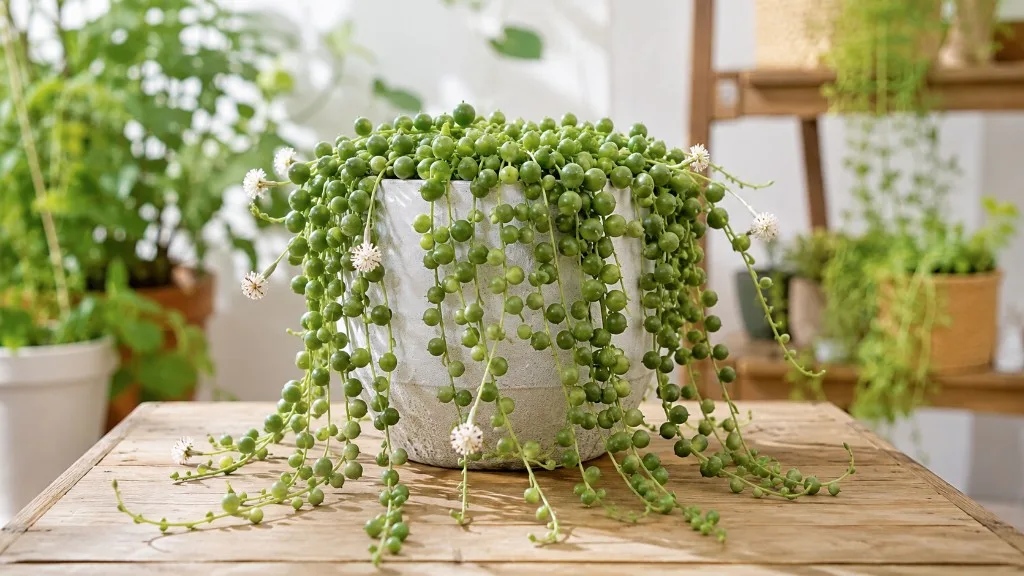
String of Pearls Propagation: Stem Cuttings Guide
String of Pearls Propagation: Stem Cuttings Guide
String of pearls propagation succeeds when you work with how the plant grows in nature, not against it. Curio rowleyanus - the accepted botanical name for string of pearls, string of beads, or string of peas, formerly sold as Senecio rowleyanus - is a trailing succulent from arid South Africa where it sprawls across rocky ground as a living mat. Whenever a stem touches soil, the node between pearls contacts moisture and sends out roots. Home propagation is a scaled-down version of that habit: take a healthy strand, expose bare nodes on the stem, keep those nodes in lightly moist well-draining mix or clean water, and wait for roots. The pearls themselves are modified leaves storing water; the nodes carry the meristematic tissue that actually regenerates roots and new stems.
Most failures come from one predictable mistake - keeping pearls wet before roots exist. Rot travels fast through succulent leaf tissue. This guide covers every step of stem cutting propagation at nodes: when to cut, how many pearls to strip, soil versus water versus layering on the parent pot, realistic rooting timelines, aftercare for fragile new plants, and how to fix the problems that send beginners back to the nursery.
Why Node-Based Stem Cuttings Work Best
String of pearls is not propagated reliably from a single detached pearl the way some echeverias root from a leaf. Each round pearl attaches to the thin stem at a node - the junction where vascular tissue and undifferentiated cells can switch from stem growth to root production when conditions align. NC State Extension lists stem cutting as the recommended propagation strategy for String of Pearls overview. Strip the pearls from a section of stem and you reveal a chain of rooting points. Cover or submerge those bare nodes in appropriate moisture and String of Pearls light guide, and roots emerge along the stem rather than only at one cut tip.
That biology explains why two methods dominate home propagation: laying a stripped strand across the soil surface so multiple nodes contact mix simultaneously, and inserting the bare end of a cutting into moist gritty compost with several nodes buried. Both outperform trying to root intact strands with pearls still attached below the soil line - buried pearls rot before nodes root. Water propagation works too, but only when the bare stem section sits below the waterline and every pearl stays above it. Submerged pearls turn translucent, then mushy, within days.
How Nodes Produce Roots on Curio rowleyanus
In its native range, string of pearls behaves as a ground-cover succulent, spreading outward until stem nodes touch soil pockets between rocks. The Royal Horticultural Society notes that stem cuttings root easily in about a month and that layering - pinning a stem to compost without severing it - mirrors how the plant fills sparse pots in cultivation. Each node holds meristematic cells capable of generating root initials when warmth, oxygen at the stem surface, and consistent light moisture combine.
You do not need rooting hormone for string of pearls; the species roots willingly when material is healthy. What you need is node exposure. A 10 cm (4 inch) cutting with three to four bare nodes at the base gives multiple chances for root contact if one section sits slightly above the mix. Longer cuttings with six to eight pearls still attached at the top provide photosynthetic surface while the stripped base roots. If you inspect a trailing strand and see tiny white nubs at nodes where the vine touched potting mix or a neighbor plant, you are looking at root primordia - proof the node system is already active and propagation will move quickly once you formalize contact with fresh medium.
Soil Layering vs End-Stem Insertion
Both methods use the same stripped cutting; they differ in orientation and use case. Surface layering - laying the bare stem horizontally across pre-moistened mix and pinning it so nodes press into the surface - produces a wider root zone faster and suits filling a shallow propagation tray or topping off a sparse hanging basket. End-stem insertion - standing the stripped base vertically in a small hole with three to four nodes buried - creates a compact upright start that transitions neatly into a single trailing strand in a small pot.
The RHS describes inserting the lower part of a 10 cm cutting into moist peat-free compost with added grit, which maps to end-stem insertion. Experienced growers often combine both in one pot: lay two or three pinned strands across the surface and insert one tip cutting at the edge for a fuller crown sooner. Choose surface pinning when you want maximum node contact; choose end insertion when you want a clean single-trail plant in a small nursery pot without transplant disturbance later.
When to Propagate String of Pearls
Timing influences speed more than success. String of pearls can root year-round indoors with stable warmth and grow lights, but active growth months compress the waiting window and reduce rot risk because the parent and cutting both metabolize faster. Propagation during stress - right after shipping, mid root-rot recovery, or while mealybugs colonize leaf axils - wastes good technique on weak tissue.
Consider the calendar second and the plant’s condition first. A firm, bright green strand taken in November from a healthy parent under lights may outroot a stressed spring cutting from a waterlogged pot. Still, aligning with natural growth rhythm saves patience.
Best Season for Fast Rooting
Spring through early summer is the best window for string of pearls propagation in most homes. Rising temperatures in the 18–27°C (65–80°F) range speed cell division at nodes, and lengthening daylight supports the pearls still attached to your cutting. If new pearls near the strand tip look slightly plump and evenly green in March or April, the parent is in growth mode and cuttings will likely root within two to four weeks in soil.
Late autumn and winter slow everything. Short days and cooler rooms can stretch rooting to five to eight weeks without indicating failure. Reduce watering frequency accordingly - mix that dries in five days during July may stay damp for two weeks in January, and idle wet mix is where node rot begins. If you propagate in winter, use the smallest pot that fits your setup, maximize bright indirect light within a foot of an east or west window, and skip misting entirely; string of pearls prefers low humidity and good airflow, not tropical greenhouse conditions.
Signs Your Parent Plant Is Ready
Before you cut, confirm the donor plant shows firm pearls without widespread shriveling, evenly green color on most of the strand, and no sticky residue suggesting scale or mealybugs. Lift the pot mentally: if the mix drains within a few days after watering and the plant is actively trailing, you are harvesting strong material. Weak strands from chronic overwatering on String of Pearls - pearls soft and translucent, stems limp - often rot instead of rooting because internal water balance is already compromised.
Also consider display and recovery. Removing long sections at once can leave a hanging basket looking bare until side branching fills in. Trim gradually across two sessions two weeks apart if you want both new plants and a full parent. If the parent recently moved windows or was repotted, wait three to four weeks so it exits transplant shock before you add cutting stress. Wear gloves when handling string of pearls: sap can cause skin irritation, and the plant is toxic to children and pets if ingested - the ASPCA lists it as toxic to dogs and cats. That matters when passing cuttings to friends with curious animals.
Tools and Preparation Before You Cut
Gather sharp pruning shears or scissors, 70% isopropyl alcohol for sterilization, floral pins, bent paperclips, or wire staples for surface pinning, a shallow pot or tray with drainage, and peat-free succulent mix blended with grit or perlite. Work over a paper towel or tray - stripped pearls scatter easily. Label batches if you compare water versus soil side by side.
Sterilize blades before cutting and between plants if pests were ever an issue. String of pearls hides mealybugs in leaf-stem crevices; propagation transfers infestations silently. Prepare your rooting container before you cut so stripped strands spend minimal time drying on the counter. Pre-moisten mix until it holds together when squeezed but does not drip - lightly damp throughout, not wet. For water propagation, fill a clear jar with room-temperature water and set it within reach. The less handling after stripping, the fewer pearls you crush and the faster nodes contact their medium.
How to Take Stem Cuttings at the Right Nodes
Taking the cutting is brief but precise. You are harvesting living stem with multiple nodes, not randomly snipping pearls. Slow down at this step: strand length, cut placement, and pearl removal determine everything downstream.
Choosing Healthy Strand Length
Select 10–15 cm (4–6 inches) of healthy stem for a standard propagation cutting, though 5–10 cm (2–4 inches) works in tight trays if at least three nodes will be exposed. Longer strands up to 20 cm (8 inches) propagate fine but need more pinning and may overlap awkwardly in small pots. Shorter than 8 cm with only one or two nodes leaves little margin if the base rots and you need to trim back.
Run the strand between your fingers: pearls should feel firm and round, not deflated or squishy. Avoid sections with brown mushy stems, sun-bleached pearls covering most of the length, or mechanical damage from tight packaging. The best material is often mid-strand - mature enough to store water, not the oldest basal tissue nearest the soil that may be slower. Strands that already show visible root nubs at nodes where they touched mix are premium propagation stock; treat them like pre-started cuttings and pin or plant immediately after stripping.
Make one clean cut just below a node with sterilized scissors. A crushed or torn cut heals poorly and invites rot. You can take cuttings from strand tips or divide one long vine into several pieces - each section needs pearls at the top for photosynthesis and bare nodes at the bottom for rooting.
Stripping Pearls to Expose Bare Nodes
Pearl removal is the step generic tutorials mention in one sentence and beginners skip entirely. Hold the cut strand with the base facing you. Starting from the cut end, pinch each pearl and tug gently sideways along the stem - healthy pearls detach cleanly with a small scar left on the stem. Remove enough pearls to expose three to four bare nodes at the base, roughly the bottom third of a standard cutting.
Each removed pearl reveals a slightly raised node ring on the stem - that is your rooting zone. Do not strip so aggressively that you damage the stem cortex; if the stem looks frayed or wet inside, trim back to firm tissue and recount your nodes. Leave at least four to six pearls attached at the top so the cutting can photosynthesize while rootless. More pearls mean more energy, up to the point where the strand becomes unwieldy to pin.
For water propagation, strip the same three to four nodes, then verify no pearl hangs low enough to touch water once the bare stem rests in the jar. For surface soil propagation, you may strip an extra node or two if the strand will curve across the pot - any node hovering above dry air will not root until you reposition and pin it down.
Callusing the Cut End (Optional but Helpful)
Unlike thick-stemmed cacti where callus is mandatory, string of pearls cuttings tolerate immediate planting in many indoor conditions because the stem is thin and dries quickly. In humid kitchens or rainy spring weather, letting the fresh cut air-dry for one to two days before soil or water contact reduces base rot. In hot dry air, 12–24 hours on dry paper towel is often enough.
Lay cuttings horizontally on paper towel in bright indirect room light, not direct sun - desiccation shrivels pearls fast on rootless strands. The cut face should look matte and dry, not glossy wet, before planting. Callus is less critical for nodes along the stem than for the terminal cut; those nodes root from lateral contact, while the open cut end is the main entry point for fungi if planted wet into saturated mix.
If you must plant immediately - a strand knocked loose from the parent during String of Pearls repotting guide, for example - use barely moist mix, keep pearls out of contact with wet soil, and withhold further watering until the top of the mix dries slightly. Over-drying on the counter is the opposite risk: pearls wrinkle and the stem softens if callus periods exceed three days in air conditioning. Balance dry cut face with firm attached pearls, then move promptly to your rooting setup.
Soil Propagation: The Most Reliable Method
Soil propagation is the method most growers should default to for string of pearls. Roots that form in gritty mix transition to normal pot culture without the shock of water-to-soil transfer, and surface pinning lets multiple nodes root in parallel, producing a stable plant faster than a single tip root. Success rate is high when node exposure, mix structure, and watering discipline align.
Choose a shallow container - 7–10 cm (3–4 inches) deep with a drainage hole - rather than a deep pot. Shallow trays maximize horizontal pinning space and dry predictably. Terracotta saucers with drainage or plastic nursery trays both work; drainage matters more than material.
Pinning Vines Across the Mix Surface
Fill your container with pre-moistened mix and lay the stripped strand across the surface so bare nodes touch mix along their length. Curves are fine; contact points matter, not straight geometry. Use floral pins, bent paperclips, or wire staples to gently press the stem into the mix at each node without piercing through the stem. Pins should hold contact, not speared damage.
You can pack multiple cuttings in one tray until the surface is full - string of pearls tolerates close spacing during rooting because the phase is short. Some growers lightly cover the stripped section with a thin veil of vermiculite to hold humidity at the stem without burying pearls; that is optional, not required. Pearls must remain above the mix line with only bare stem touching soil. If a pearl sits in wet compost, expect rot within a week.
Alternatively, poke a small pilot hole with a pencil and insert the stripped end vertically so three to four nodes sit below the surface and pearls remain above. Firm mix lightly around the stem without compacting. Do not water immediately if mix was pre-moistened; wait two to three days, then water lightly near the edge of the pot so moisture migrates toward nodes without flooding the stem base.
Place the container in bright indirect light - an east window or several feet back from south glass. Avoid direct midday sun on rootless cuttings; pearls desiccate faster than nodes root. Rooting time in active growth typically falls between two and four weeks, sometimes faster on strands that already showed aerial roots.
Mix and Moisture for New Cuttings
String of pearls needs fast-draining, airy mix similar to mature plant culture. A reliable propagation blend:
- 50% peat-free succulent or cactus compost
- 25% perlite or pumice
- 25% horticultural grit or coarse sand
The RHS recommends peat-free multi-purpose compost with added grit for cuttings - the same principle. Pre-moisten before planting. After the initial waiting period, water when the top centimeter of mix dries, using a narrow spout to moisten near nodes without splashing pearls. Splashed water on pearls in cool dim conditions can invite fungal spotting.
Rooting hormone is optional and rarely necessary for Curio rowleyanus. If you use powder hormone on slow winter batches, dip the callused base lightly, tap off excess, and plant immediately. Success signals include subtle resistance on a very gentle tug after week three, new pearl formation along the strand, or white root tips visible at drainage holes if your container is clear or mesh-bottomed. Resist daily unpotting - broken fresh roots set you back more than patience costs.
Water Propagation as an Alternative
Water propagation satisfies curiosity: roots appear in a jar where you can see them. It works for string of pearls when you follow the bare-stem-only rule and change water before it clouds. Expect roots in roughly two to four weeks in warm bright conditions, comparable to soil, though transferred plants need careful hardening off afterward.
Use a clear glass or jar tall enough that the strand rests on the rim with pearls draped outside or above the waterline. Submerge only the stripped section - typically 3–5 cm (1–2 inches) of bare stem - so multiple nodes sit below water. No pearl may touch water; contact causes translucent rot within days. Place in bright indirect light and change water every three to five days to limit bacteria. Cloudy water or a slimy stem base means restart with a fresh cut and shorter submersion.
When roots reach 2–5 cm (1–2 inches) from several nodes, transplant to the same gritty mix described above. Water the mix thoroughly once, then let the top dry slightly before the next drink. The first two to three weeks after transfer are fragile; keep light bright but filtered and skip fertilizer until new pearls firm up. Many growers report slightly higher rot rates on water-started plants compared with soil-started ones during transition; if your priority is a durable hanging basket rather than a demo jar, soil remains the safer default.
Layering Without Detaching the Parent Vine
Layering propagates string of pearls without a separate cutting phase - ideal when long strands already reach the floor or you want to fill out a sparse parent pot. Loop a trailing stem across the soil surface of the same pot or a tray of moist mix beside it, strip pearls from the section that will contact soil, pin nodes down with wire staples, and wait for roots.
The parent plant continues feeding the strand through the attached stem, giving the rooting section more energy than a detached cutting during the first weeks. Once roots anchor firmly - usually three to five weeks in active growth - sever the strand between the parent and the rooted section with sterilized scissors and optionally transplant the new clump. Alternatively, leave it attached until the rooted section clearly thrives, then cut for a fuller single pot.
Layering also rescues accidentally detached strands that still look firm: treat them exactly like deliberate cuttings after stripping and pinning. In nature, this is how string of pearls expands its mat; in your home, it is how a one-sided hanging basket becomes symmetrical without buying a second plant.
Aftercare for Newly Rooted String of Pearls
Newly rooted string of pearls is not a mature trailing specimen - it is a small root system with limited water storage in a thin stem. Treat the first four to six weeks after confirmed rooting as stabilization. Light stays bright indirect; acclimate gradually to slightly stronger morning sun only after new pearls appear along the strand and roots resist a feather-light tug.
Water when mix approaches dry one knuckle deep, typically every 7–14 days in active growth and less in cool months. String of pearls stores water in pearls and tolerates brief dry spells better than wet feet - the same rule that protected the cutting protects the juvenile plant. Fertilizer is unnecessary until roots clearly support new pearl growth; a quarter-strength balanced liquid feed once monthly in spring is enough after the strand lengthens noticeably.
Do not repot into a huge hanging basket immediately. Upsize one container size at a time so roots colonize mix evenly. If you rooted multiple strands in a propagation tray, transplant the whole clump together for a fuller initial display rather than separating fragile roots. Quarantine new propagations from your main collection for two weeks if pests ever troubled the parent.
When the plant fills its starter pot with roots at drainage holes - often two to three months after rooting - move to a hanging basket or shelf pot with the same gritty mix ratio. Position where bright indirect light with some morning direct sun is realistic most of the day, not only where the display looks best. Low humidity below 40% suits this arid native better than misting routines borrowed from tropical ferns.
Common Propagation Mistakes and How to Fix Them
Most string of pearls propagation failures trace to moisture on the wrong tissue, not bad luck or missing green thumb credentials.
Pearls rotting in soil or water means pearls were buried, splashed, or submerged while rootless. Remove the cutting, trim back to firm green stem with sterile scissors, re-strip nodes, re-callus the cut one day if humid, and restart in fresh lightly moist mix with pearls strictly above the surface. Discard strands where the stem is mushy throughout.
Stem base rot in wet mix usually means planting before the cut dried, watering too soon after planting, or mix staying saturated in a cold dim room. Trim to healthy tissue, dry the cut 24–48 hours, restart in a smaller pot with drier initial mix, and improve light and airflow.
Shriveling pearls during rooting signals underwatering on String of Pearls in bright conditions or a cutting that was too weak to start. If the stem remains firm, increase light slightly and moisten mix near nodes without soaking pearls. If the whole strand is soft, the cutting may be past recovery - take fresh material from a healthier parent section.
No roots after six to eight weeks in cool dim conditions is often slow metabolism, not death. Move warmer and brighter, confirm nodes actually contact mix or water, and check that the base is not silently rotting underground. One gentle unpot inspection beats repeated tugs that break fragile new roots.
Single-pearl propagation attempts fail because a detached pearl lacks the node tissue needed for stem and root regeneration. Only stem sections with exposed nodes produce full plants reliably.
Propagating from a sick parent spreads pests and weakness. Stabilize the donor first - treat mealybugs, fix chronic overwatering, refresh sour mix - then take cuttings from clean regrowth.
Overpotting leaves a tiny root zone swimming in wet mix. Match pot depth and width to propagation scale until strands justify a statement hanging basket.
Conclusion
String of pearls propagation is straightforward once you respect node biology. Curio rowleyanus evolved to root wherever bare stem contacts soil; your job is to strip pearls from the base, expose three to four nodes, and keep those nodes in lightly moist gritty mix or clean shallow water while pearls stay dry above the line. Spring and early summer speed results, but firm material and moisture discipline matter more than the calendar. Surface pinning, end insertion, and layering on the parent pot all use the same node logic - choose the orientation that matches whether you want one trailing strand, a full propagation tray, or a denser existing pot.
If you remember only three rules, make them these: never let pearls sit wet before roots exist, expose multiple bare nodes rather than burying intact strands, and start from a healthy parent with firm green pearls. Get those right and string of pearls becomes one of the most rewarding succulents to multiply - trailing curtains of beads for every bright shelf, shared with the confidence that comes from understanding nodes, not guessing.
When to use this page vs other String of Pearls guides
- String of Pearls overview - Start here for whole-plant context before deep-diving this topic.
- String of Pearls problems hub - Jump to symptom-specific fix guides when this care topic does not resolve the issue.