Overwatering on String of Pearls: Causes, Checks & Fixes
Quick answer
Overwatering is the main killer of String of Pearls-soft translucent pearls, black stems at the crown, and sour wet mix follow. Stop watering immediately, confirm with pot weight and pearl firmness, and inspect roots before the crown collapses. Mild cases dry out; confirmed rot needs the root rot rescue path.
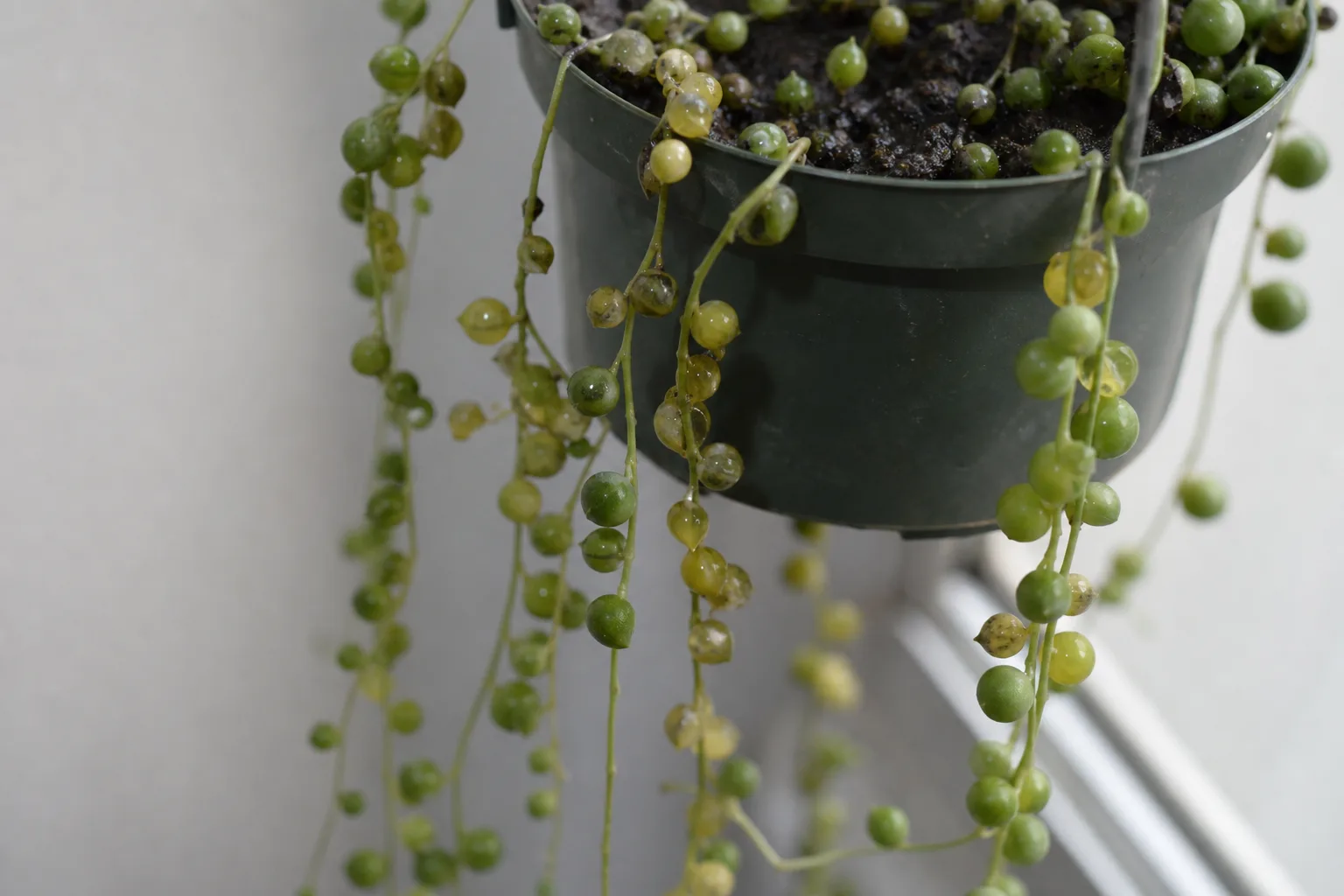
Overwatering on String of Pearls: Causes, Checks & Fixes
This guide covers overwatering on String of Pearls. See also the general Overwatering guide, watering, and light pages for this plant.
Overwatering on String of Pearls: Causes, Checks & Fixes
Quick answer
Overwatering is the most common cause of death in String of Pearls. Curio rowleyanus stores water inside each round leaf, but roots still need oxygen in dry, sandy, well-drained cactus-type mix. When roots sit in wet soil, they lose oxygen; roots in waterlogged soil cannot absorb the oxygen they need. The first warning is often soft translucent pearls-not the firm raisin wrinkles of thirst.
First fix: stop watering immediately. Move the pot to String of Pearls light guide with airflow. If the crown stays firm and mix is merely damp, dry-down alone may work. If stems blacken at the soil line, mix smells sour, or pearls stay mushy after a week dry, unpot and inspect roots-or follow the root rot rescue guide for confirmed rot.
For the full soak-and-dry rhythm String of Pearls overview needs, see the String of Pearls watering guide. For the inverse problem-firm wrinkled pearls in a light dry pot-see underwatering.
Why String of Pearls is sensitive to overwatering
Pearl water storage vs. root oxygen needs
Each pearl is a modified leaf shaped to minimize surface area and store water-an adaptation from dry southwest African scrublands. That storage lets the plant survive missed waterings, but it does not protect roots from drowning. Avoid poorly-drained and/or moist soils which inevitably lead to root rot. Roots need air between drinks; saturated anaerobic mix invites decay within days in a cool room.
When pearls take up excess water faster than cell walls can hold, they turn translucent and squishy-cell rupture from overhydration, not thirst. That texture shift is one of the earliest overwatering signals on this species.
Crown moisture trapping and winter schedule mismatch
Dense trailing growth can trap moisture where strands meet the soil. Hanging baskets with beads piled at the crown create a microclimate that stays damp longer than open outer strands-exactly where rot starts.
Season compounds the risk. In cool dim winter, metabolic activity drops and the same volume of water lasts much longer. Missouri Botanical Garden notes best growth around 70–80°F (21–27°C) in summer and 50–60°F (10–16°C) in winter. Owners who keep a summer calendar into December pour water the plant cannot use. Soggy wet soil will result in root rot and the plant’s demise-especially when light is low and evaporation is slow.
What overwatering looks like on String of Pearls
Early signs: soft translucent pearls
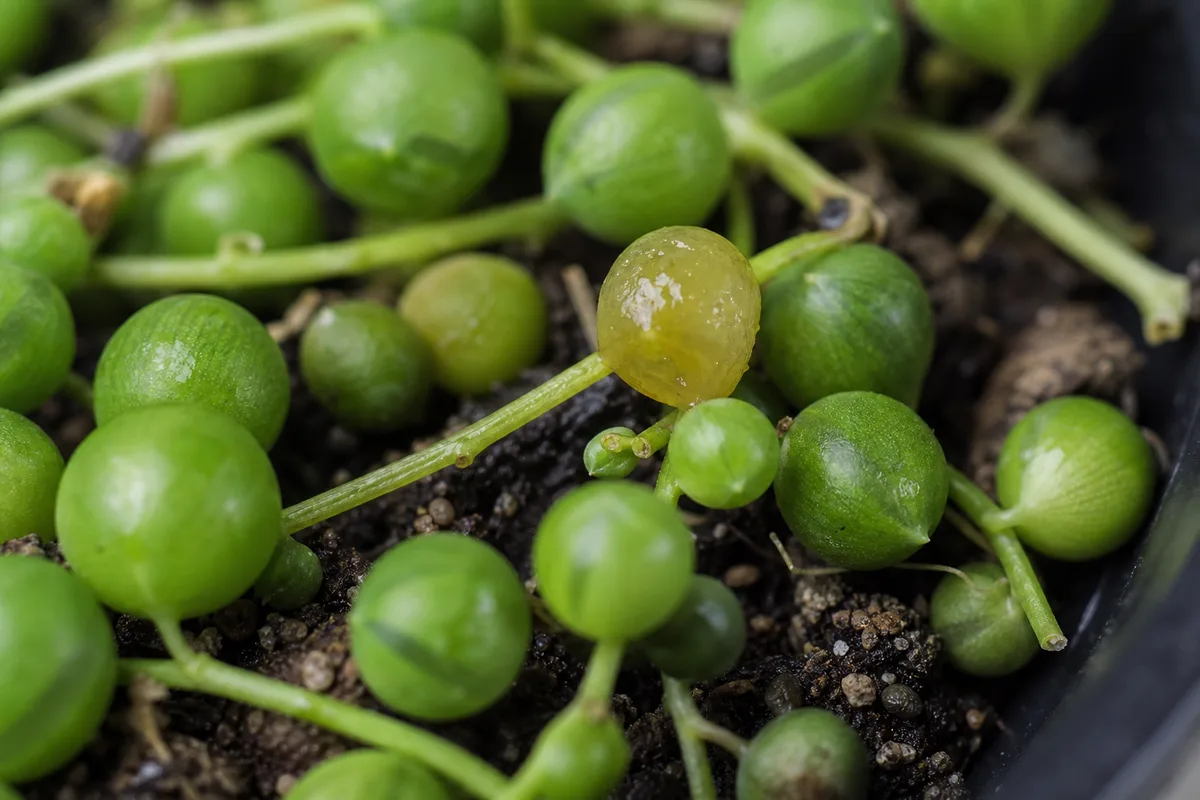
Overwatering symptoms on String of Pearls - compare with healthy tissue on the same plant.
The first stage is subtle. Pearls lose their firm pea-like feel and become soft, slightly translucent, or yellow-tinged while mix is still damp. Strands may droop even though you watered recently. A few pearls may burst or flatten. The pot still feels heavier than it should for a succulent.
At this stage the crown is usually still firm green. Catching overwatering here-before roots decay-gives the best recovery odds.
Advanced signs: crown blackening and sour smell
Unchecked wet soil advances to black mushy stems at the crown, pearls sliding off wet strands, and a sour or rotten smell from drainage holes. Wilted leaves may indicate soil too dry or too wet-on String of Pearls, wilting with persistently damp mix means root failure, not thirst.
Once the crown collapses, salvage shifts from rescue to propagation from any firm stem segments above the rot.
The shrivel-on-wet-soil paradox
This trap confuses many owners. Pearls shrivel and look thirsty while soil stays wet and the pot feels heavy. Damaged roots cannot move water into leaf tissue, so pearls lose turgor despite saturated mix. Adding more water worsens rot.
The texture fork matters: firm raisin wrinkles in a light dry pot mean underwatering. Soft translucent or mushy pearls in a heavy wet pot mean overwatering. Wrinkled pearls with wet heavy mix mean failing roots-treat as overwatering until proven otherwise.
How to confirm the cause
Work through these checks in order before you act:
- Pot weight - Lift the container. A heavy pot days after watering points to poor drainage or excess frequency. A light pot with wrinkled firm pearls means thirst, not overwatering.
- Soil moisture at depth - Push a finger or wooden skewer into the center of the mix. Overwatering shows damp or clinging material deep in the pot, not merely a dry surface crust.
- Pearl firmness - Pinch a suspect pearl gently. Soft, translucent, or mushy texture with wet mix confirms overwatering. Firm raisin wrinkles with dry soil mean look elsewhere.
- Crown inspection - Look where strands meet the soil. Firm green stems suggest early overwatering you may reverse with dry-down. Black mushy tissue at the crown means confirmed rot-proceed to unpotting.
- Smell and drainage - Sour odor from holes or saucer water that never empties supports rot. Mix that stays cool and damp a week after watering confirms poor dry-down.
- Season and light context - Cool dim winter with a summer watering habit is a common trigger. Low light slows water use even when you pour on schedule.
Lookalikes: underwatering vs. root rot vs. winter dormancy
| Signal | Overwatering | Underwatering | Winter rest |
|---|---|---|---|
| Pot weight | Heavy, wet | Light, dry | Light to moderate |
| Pearl texture | Soft, translucent, mushy | Firm, raisin-wrinkled | Mostly plump |
| Crown | May blacken if advanced | Firm green | Firm green |
| Soil | Damp throughout | Dry throughout | Dry; sparse growth normal |
| Smell | Sour if advanced | None | None |
Root rot is the advanced stage of chronic overwatering-mushy roots on inspection, black crown, sour smell. This page covers early overwatering triage; confirmed rot with extensive tissue loss follows the dedicated root rot guide.
Winter dormancy slows growth and reduces water demand. Sparse trailing strands with plump inner pearls in a cool room may reflect seasonal rest-especially if you have been watering sparingly in winter and soil is not waterlogged.
First fix for String of Pearls
Stop watering immediately. That single action is the correct first response-not String of Pearls repotting guide, fertilizing, or misting on day one.
Mild cases: stop watering and improve airflow
When pearls are soft but the crown is still firm, mix is damp but not sour, and no black stems appear:
- Move the pot to bright indirect light with gentle airflow-not a dark corner where evaporation stalls.
- Empty any saucer water and confirm drainage holes are open.
- Wait until mix dries through most of the pot. Lift daily; weight should drop noticeably within several days.
- Re-check pearl firmness. Pearls that regain plumpness as mix dries confirm mild overwatering caught early.
Do not water again until mix is dry throughout and pearls on exposed strands show mild deflation-the readiness check from the watering guide.
Moderate cases: unpot, trim, air-dry, repot
When mix stays wet a week after your last drink, pearls remain mushy, or you see early crown darkening:
- Gently unpot and shake away wet soil to expose roots.
- Trim brown, black, or mushy roots and stems back to firm green tissue with clean scissors.
- Air-dry the plant in bright indirect light for 24 to 48 hours before repotting.
- Repot into fresh dry fast-draining cactus or succulent mix in a pot only slightly larger than the root mass.
- Wait 7 to 10 days before the first light watering-only when mix is fully dry and pearls show readiness.
Full numbered rescue detail for advanced rot lives on the root rot page.
Severe crown collapse: propagation salvage
If the crown is black and mushy throughout, the main plant is unlikely to recover. Take firm stem cuttings from healthy segments above the rot, let cut ends callous 24 to 48 hours, and root in dry gritty mix. This is propagation, not more watering or repotting of the collapsed base.
Recovery timeline
Mild overwatering caught at soft-pearl stage often shows improvement within three to seven days of dry-down-pearls regain firmness and strands lift slightly as mix dries.
Moderate cases requiring trim and repot need one to three weeks before new pearl growth along firm stems signals stable roots. Old burst or translucent pearls may stay marked permanently; judge recovery by new tissue, not old beads reverting.
Advanced crown rot may not recover the original plant at all. Firm cuttings rooted in four to six weeks are the realistic salvage path.
If pearls keep shriveling, mix smells sour after a dry week, or crown tissue softens further, escalate to the root rot guide within days-not another watering cycle.
What not to do
Do not water on a fixed weekly schedule year-round-intervals must shrink in cool dim winter. Do not add water because pearls look shriveled when soil is already wet; that deepens the shrivel-on-wet-soil trap. Do not mist strands or use humidity trays; surface moisture does not help roots and can encourage rot where beads cluster at the crown. Do not use standard peat-heavy potting mix. Do not fertilize a stressed plant hoping to push growth. Do not repot into wet mix on day one when simple dry-down might suffice-but do not delay unpotting once crown blackening or sour smell appears.
Keep away from pets when handling trimmed tissue-String of Pearls is toxic to cats and dogs.
How to prevent overwatering next time
Learn how fast your pot dries in your light and season. Track weight after watering and again when pearls first show mild deflation. In bright summer growth, many indoor plants need a deep soak every 10 to 14 days; in cool winter rest, every three to five weeks is common-but these are starting ranges from the watering guide, not calendar rules.
Water when three signals align: mix dry throughout, pot noticeably lighter, and pearls on exposed strands begin mild deflation while still firm-not mushy. Use mineral-heavy cactus mix with perlite or pumice in a hanging pot with open drainage. Empty saucers within 30 minutes. Size the pot to the root mass; oversized containers hold moisture around thin roots.
Remember that minimal winter watering when pearls stay plump is correct care-not underwatering. Sparse winter strands with firm pearls in a cool room often reflect dormancy, not neglect.
When to move to the root rot guide
Stay on this page for early overwatering triage: soft pearls, heavy wet pot, and firm crown where dry-down or one careful rescue cycle may work.
Move to root rot when you confirm mushy roots on inspection, black mushy crown tissue, sour smell that persists after stopping water, or pearls bursting across multiple strands with stem blackening at the soil line. That page covers full unpot-trim-air-dry-repot protocol and cutting salvage in depth.
For species biology and general care context, see the String of Pearls overview.
Conclusion
Overwatering on String of Pearls is preventable and often reversible when caught at soft translucent pearls before the crown fails. The diagnostic fork is practical: heavy wet pot plus mushy pearls means stop watering now; light dry pot plus firm wrinkles means thirst instead. The shrivel-on-wet-soil paradox is the mistake that turns a recoverable plant into a compost-bin lesson-never add water to wet mix because pearls look deflated.
Match your watering to dry-down and pearl readiness, not a calendar. When in doubt after a rot scare, wait and check weight before you pour. Your plant tolerates infrequent watering and extended drought far better than soggy roots.
When to use this page vs other String of Pearls guides
- String of Pearls watering guide - Use for routine moisture checks before assuming overwatering is the main issue.
- String of Pearls problems hub - Browse all 17 common issues on this species.
- Root Rot on String of Pearls - Different entry point when symptoms overlap with overwatering.
- Yellow Leaves on String of Pearls - Different entry point when symptoms overlap with overwatering.
- Wilting on String of Pearls - Different entry point when symptoms overlap with overwatering.
Related String of Pearls guides
- String of Pearls overview
- String of Pearls watering
- String of Pearls light
- String of Pearls soil
- Root Rot on String of Pearls
- Yellow Leaves on String of Pearls
- Wilting on String of Pearls
- Fungus Gnats on String of Pearls
- Mold on Soil on String of Pearls
- Drooping Leaves on String of Pearls
- String of Pearls problems