Drooping Leaves on String of Pearls: Causes, Checks & Fixes
Quick answer
Drooping strands on String of Pearls usually mean underwatering-wrinkled, firm pearls and a light dry pot. Pinch a pearl and lift the pot before you water. If mix is wet and pearls are soft, suspect root rot instead of thirst.
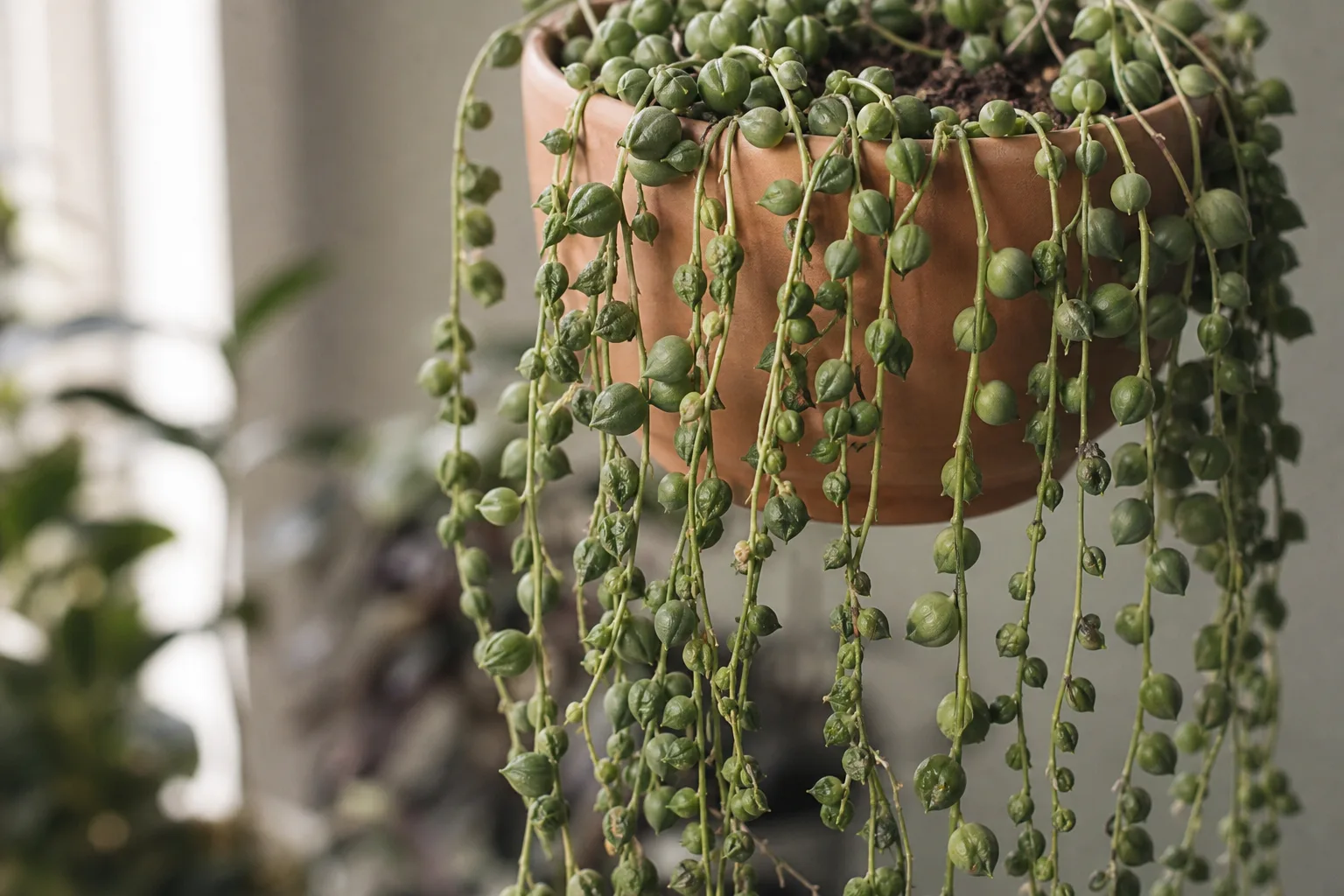
Drooping Leaves on String of Pearls: Causes, Checks & Fixes
This guide covers drooping leaves on String of Pearls. See also the general Drooping Leaves guide, watering, and light pages for this plant.
Drooping Leaves on String of Pearls: Causes, Checks & Fixes
Quick answer
Drooping on String of Pearls (Curio rowleyanus) shows up first in the trailing strands-long chains of pea-shaped pearls hang straight down with less spring, often before you notice color change. Unlike broad-leaf houseplants that fold visibly, this succulent droops through bead-like leaves that store water in spherical tissue with a translucent epidermal window.
The most common cause is underwatering: deflated pearls lose turgor and pull strands downward. But overwatering causes a dangerous lookalike-limp strands with wet soil when rotting roots cannot take up water despite saturation.
First step: pinch one pearl and lift the pot before you water. Wrinkled firm pearls with a light dry pot mean a deep drink. Soft translucent pearls with a heavy damp pot mean stop watering and inspect roots. Getting this fork wrong is the fastest way to lose a String of Pearls.
Thirst vs rot at a glance
| Signal | Pearl texture | Pot weight | Soil at depth | Urgency | First action |
|---|---|---|---|---|---|
| Thirst droop | Firm but wrinkled; epidermal window narrows to a slit | Light | Dry throughout | Low | One deep soak; empty saucer |
| Rot droop | Soft, translucent, or bursting | Heavy | Wet or damp | High | Stop water; inspect roots - see root rot |
| Heat droop | Slightly deflated after hot afternoon | Normal | Even moisture | Low | Filter afternoon sun; recheck next morning |
| Leggy stretch | Plump pearls; long bare gaps between beads | Normal | Slow dry-down | Low | Improve light - see not enough light |
Visual check - thirst droop: Pearls look like small raisins but stay firm when squeezed; the hanging pot feels noticeably light. Visual check - rot droop: Pearls turn mushy or see-through while the mix stays damp and the crown may darken.
On this species, drooping and wilting overlap heavily-both describe limp trailing strands. This page focuses on posture droop: why strands hang, how to separate thirst from rot, and the edge cases (heat, repot shock, leggy stretch) that do not fit a simple water calendar.
Drooping vs wilting on String of Pearls
Owners search both terms because the visual is the same from across the room: strands that once arched now hang limply. The distinction matters less than the texture fork-but the pages serve different search intents.
Scope comparison
| Topic | This page (drooping leaves) | Wilting guide |
|---|---|---|
| Primary symptom | Strands hang with less tension; posture droop | Turgor loss; pearls lose glossy roundness |
| Best for | ”Why are my strands hanging down?" | "Why is my plant wilting/shriveling?” |
| Water-stress fork | Covered here with comparison tables | Full diagnostic path including hydrophobic soil |
| Recovery detail | First fixes + links to sibling pages | Numbered thirst and rot recovery protocols |
| Overlap | Both cover thirst vs rot texture fork | Both cover thirst vs rot texture fork |
Use this page when strand posture is your main concern. Use the wilting guide when you need the full water-stress workflow, hydrophobic-mix rescue, or detailed rot recovery steps.
The texture fork still applies on both pages:
- Thirst droop - Pearls wrinkle like raisins but stay firm when squeezed; pot feels light; mix is dry throughout.
- Rot droop - Pearls turn soft, translucent, or burst; pot feels heavy; mix stays damp; stems may darken at the crown.
- Heat droop - Pearls may look slightly deflated after a hot afternoon; moisture reads normal; crown stays firm.
- Leggy stretch - Pearls stay plump while stems elongate with bare gaps-low light, not water stress. See leggy growth if strands are long and sparse but not wrinkled.
For thirst-only depth, see underwatering.
What drooping looks like on String of Pearls
Thirst droop (underwatering)
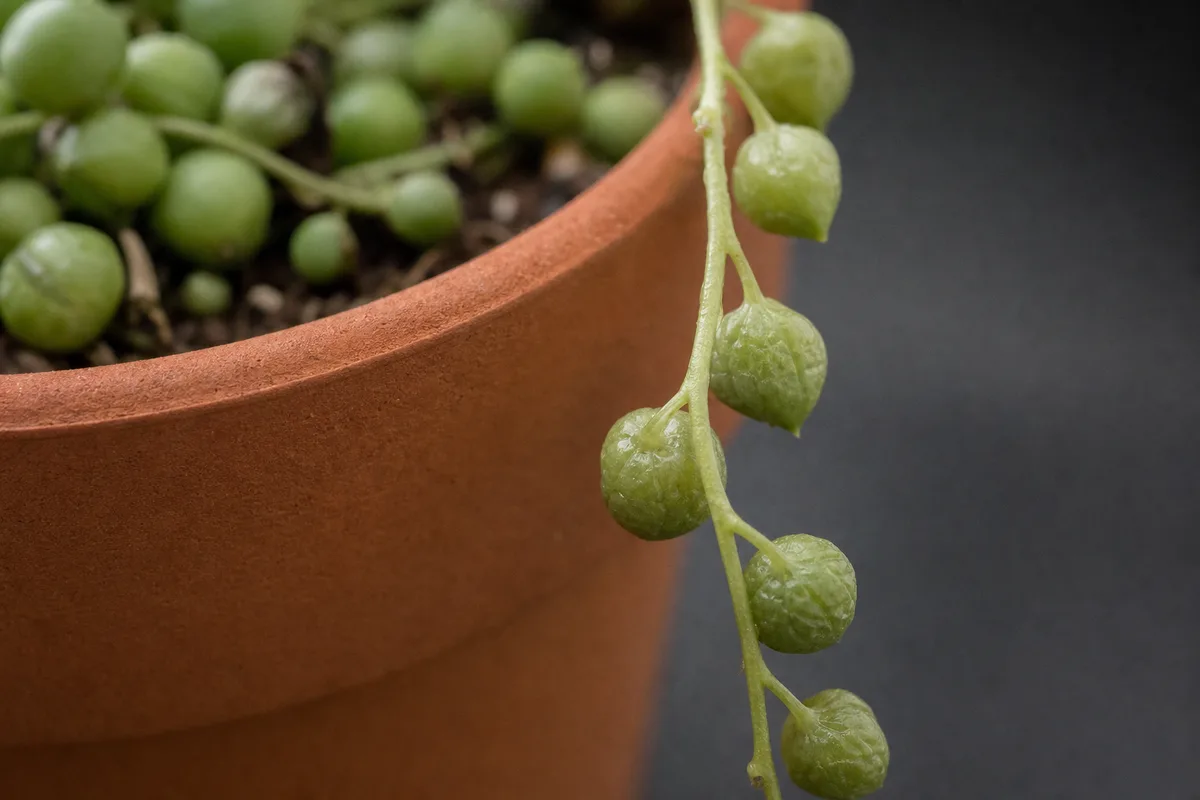
Drooping Leaves symptoms on String of Pearls - compare with healthy tissue on the same plant.
- Pearls look deflated and wrinkled, like small raisins, but feel firm when pinched
- The epidermal window narrows to a thin slit on severely dry pearls
- Strands hang straight down with less tension; outermost hanging chains droop first
- Pot feels noticeably light; mix is dry several centimeters deep
- No sour smell; stems stay green and firm at the crown
Wisconsin Extension recommends watering when leaves start to look shriveled-that shrivel point is your signal, not a calendar date. Full thirst protocol: underwatering page.
Rot droop (overwatering or root failure)
- Pearls turn soft, mushy, or translucent and may burst or flatten
- Strands droop despite wet soil-the paradox that kills many plants when owners keep watering “because it looks thirsty”
- Mix feels heavy and damp; pot may smell sour or musty
- Stems darken or blacken where they meet the soil line
- Yellowing or graying pearls may appear alongside the droop
Overwatering can result in root rot on this species, and soggy wet soil will result in root rot and the plant’s demise. See root rot and overwatering for full rescue protocols.
Heat or sun stress droop
- Pearls may look slightly deflated after a hot afternoon in strong direct sun
- Soil moisture reads normal; crown stays firm
- Often improves overnight if light is filtered and the plant is not also underwatered
- Scorching of the leaves can occur from direct sunlight on this species, which can compound the limp appearance
Repotting or handling droop
- Temporary limpness for a few days after repotting or heavy handling
- Pearls may drop easily when stems are bumped-this plant’s trailing habit makes physical damage look like droop
- Mix moisture is usually moderate; no rot smell unless repotting masked an existing problem
Drooping vs leggy stretch (lookalike)
Long bare gaps between plump pearls signal the plant is reaching for light, not collapsing from thirst. Strands may trail downward by weight alone while pearls stay round and firm. If this matches your plant, adjust light before changing your watering rhythm.
Why String of Pearls strands droop
Curio rowleyanus evolved in dry areas of South Africa where it trails along the ground. Each pearl is a modified leaf that stores its own water reserve. When reserves deplete, pearls lose turgor and strands lose the tension that keeps them arched. The rounded shape decreases surface area exposed to arid air, so each pearl acts as an individual reservoir-making the squeeze test more reliable than broad-leaf wilt checks.
Underwatering is the everyday cause. Hot bright windows, small hanging pots, and long gaps between waterings drain pearl reserves quickly. Winter heating and AC drafts also dry pots faster than many growers expect. String of Pearls does not tolerate underwatering well when combined with inadequate light or extended drought.
Overwatering and root rot is the more dangerous droop cause. Poorly drained moist soils inevitably lead to root rot. When roots decay, they cannot move water upward. Pearls shrivel and strands droop while the mix stays wet.
Heat stress can outpace root supply on a hot afternoon-especially in a south-facing window or above a heat vent. The droop is real, but adding water without checking soil may worsen rot if the mix is already wet from earlier overcare.
Hydrophobic or compacted soil causes droop despite recent watering attempts. Dry peat or coco coir repels water; the surface feels dry while the root ball starves. Pearls wrinkle, strands droop, and the pot may feel oddly light. The wilting guide covers hydrophobic-mix rescue in detail.
Repotting shock breaks fine roots temporarily. Drooping for a few days after repotting is common, especially if done in heat or if the plant was watered immediately afterward.
Hanging-basket moisture traps: In deep hanging baskets, trailing tips can look thirsty while the crown sits in damp mix where strands cluster at the soil line. Crown rot develops even when outer pearls wrinkle from uneven drying. Lift the pot and check moisture at the crown-not just at the longest hanging chain.
How to confirm the cause
Work through these checks in order. Each step narrows the diagnosis before you commit to watering or surgery.
- Pearl squeeze test - Pinch one pearl gently. Firm but wrinkled means dry reserves. Soft or squishy means excess moisture or rot.
- Pot weight - Lift the hanging basket or pot. Light and dry versus heavy and damp is often the fastest clue.
- Deep soil check - Push a finger or dry skewer into the mix near the drainage hole, not just the surface. Dry throughout confirms thirst. Wet at depth with limp pearls confirms uptake failure.
- Crown inspection - Look where stems meet soil. Green firm tissue is reassuring. Black mushy stems mean rot is advancing.
- Smell test - Sour or rotten odor from the mix strongly suggests root decay, not simple underwatering.
- Recent care review - Did you water in the last 48 hours? Move the plant to stronger sun? Repot? Heat and handling explain droop when moisture readings are normal.
- Epidermal window check - On healthy hydrated pearls, the translucent stripe is wide. A narrow slit signals the plant has used stored water and is heading toward droop.
Thirst vs rot decision table
| Pattern | Pearl squeeze | Pot weight | Crown | Smell | Likely cause | First action |
|---|---|---|---|---|---|---|
| Classic thirst | Firm, wrinkled | Light | Green, firm | None | Underwatering | Deep soak once |
| Rot paradox | Soft or squishy | Heavy | May darken | Sour/musty | Root rot | Stop water; see root rot |
| Heat afternoon | Slightly deflated | Normal | Firm | None | Sun/heat stress | Filter light; recheck AM |
| Hydrophobic | Firm, wrinkled | Light-moderate | Firm | None | Dry root ball | Bottom-water; see wilting |
| Leggy lookalike | Plump, round | Normal | Firm | None | Low light | Brighten spot |
If pearls are wrinkled-firm with dry gritty mix, underwatering is confirmed. If pearls are soft with wet mix and darkening stems, treat as overwatering or root rot confirmed. When in doubt between the two, trust pot weight and deep soil moisture over appearance alone.
First fix for String of Pearls
Pinch a pearl and check deep soil moisture-then act on what you find, not what the limp strands suggest.
For thirst droop: Water thoroughly until excess runs from the drainage holes, then empty the saucer immediately. Wait 24 hours and recheck pearl plumpness. One deep watering beats several shallow splashes on this plant.
For wet droop: Do not water. Unpot gently, shake away wet mix, and inspect roots. Trim brown or mushy roots and any black stem tissue with clean scissors. Let cut surfaces air-dry in bright indirect light for 24 to 48 hours, then repot into fresh dry cactus-type potting mix. Wait 7 to 10 days before the first light watering. Full protocol: root rot guide.
For heat droop with normal moisture: Move the plant out of harsh afternoon sun, ensure even moisture without soaking, and recheck the next morning. Do not fertilize or repot while the plant is stressed.
This single diagnostic pause prevents the most common fatal error on String of Pearls: watering rot because the pearls look shriveled.
Step-by-step recovery
Recovery paths differ by cause. These are starting points-follow the linked sibling guides for full numbered protocols.
Recovering from thirst droop
- Confirm mix is dry throughout and pearls are firm-wrinkled.
- Water deeply once; bottom-water through the drainage hole if the mix has gone hydrophobic.
- Discard any water sitting in the saucer.
- Recheck pearls after 24 hours-they should begin to round up.
- Adjust rhythm per the underwatering guide and watering guide.
Recovering from wet rot droop
- Stop all watering immediately.
- Follow the root rot protocol-unpot, trim mushy tissue, air-dry, repot into gritty mix.
- Do not bottom-water into standing saucer water on rot-suspect plants.
Recovering from heat stress droop
- Filter afternoon sun or move the basket back from the glass.
- Confirm soil moisture is even-not bone dry, not soggy.
- Avoid handling trailing strands while the plant recovers; pearls detach easily.
- Give one to two weeks of stable conditions before changing pot or fertilizer.
Recovering from repot shock droop
- Keep the plant in bright indirect light with stable temperature.
- Do not water again until mix has dried through most of the pot unless it was bone dry at repotting.
- Avoid fertilizing for four weeks while roots re-establish.
- Expect strands to regain tension within three to seven days if crown tissue stays firm.
Recovery timeline
Mild thirst droop often shows improvement within 24 hours of a proper soak, with pearls noticeably plumper by the second day. This is typical, not guaranteed-large hanging baskets or hydrophobic mix may take three to five days to fully refill.
Wet droop from early overwatering can stabilize within a week after drying out, but root rot recovery takes two to four weeks minimum-and only if firm stems remain above the damage. Heat-stressed droop typically resolves overnight to within a few days once light and moisture stabilize.
Example walkthrough (thirst droop, June 2026): A 10-inch hanging basket showed firm-wrinkled pearls on the outermost chains and a light pot on Friday morning. One bottom-water soak until the mix was saturated, saucer emptied within 20 minutes. By Saturday afternoon pearls on the lower third of strands had rounded; by Monday the epidermal windows widened again on previously shriveled beads. Crown tissue stayed firm throughout-confirming thirst, not rot.
Judge recovery by new pearl firmness and whether droop stops spreading up the strands-not by whether old shriveled pearls return to perfect shape. Damaged pearls may stay slightly flat; new growth along stems is the better signal.
Lookalike symptoms to rule out
Drooping versus wilting: On String of Pearls the terms overlap-both show limp trailing strands. Use the scope table above to pick the right guide; the wilting page carries the full water-stress fork.
Shriveling without full droop: Early underwatering may show wrinkled pearls on a few strands before the whole plant collapses. Catch it here and one watering fixes it.
Yellow or gray pearls: Yellow or graying leaves may be caused by insects rather than water stress. Check for mealybugs in the crown if color change accompanies droop.
Leggy stretched strands: Long bare gaps between pearls signal low light, not droop from thirst. Pearls may still be plump while stems stretch toward the window.
Crispy outer pearls: Sun scorch or extreme drought can brown tips before full strand collapse. See crispy leaves if damage is tan or brown rather than simply limp.
What not to do
Do not water automatically because strands look limp-confirm soil moisture first. Do not mist drooping pearls; surface moisture around the crown promotes rot on this trailing succulent. Do not move a drooping plant into harsh direct sun to “perk it up.” Do not fertilize a drooping plant; stressed roots cannot use it and salts worsen the problem. Do not repot on day one unless wet rot is confirmed-unnecessary repotting adds shock. Do not increase watering when droop is from rot-the mix may look dry on the surface while the crown is failing. Do not bottom-water rot-suspect plants into a full saucer.
Keep the plant out of pet reach; String of Pearls is toxic to cats and dogs if ingested. If a pet eats pearls or contaminated soil, contact your veterinarian promptly.
How to prevent drooping next time
Match watering to how fast your pot dries in your actual light, not a generic schedule. Use dry, sandy, well-drained cactus-type mix and a container with open drainage. Allow roots to dry out between waterings during active growth, watering when pearls begin to wrinkle slightly.
In winter, water sparingly-often once a month or less in cool rooms. The RHS recommends watering only when leaves begin to shrivel in the dormant season. Provide bright indirect light with some morning sun so the plant uses water efficiently. Empty saucers after every watering. Acclimate to stronger light gradually to avoid heat droop spikes.
Hanging-basket tip: Check moisture at the crown where strands cluster, not only on the longest trailing tips. A light-feeling outer chain can mask a wet crown that is already rotting. Lift the pot weekly until you learn the rhythm-a light pot with early pearl wrinkling means water soon; a heavy pot with firm pearls means wait.
For the full care context, see the String of Pearls overview and watering guide.
When to worry
Treat drooping as urgent when soft pearls spread across multiple strands while the mix stays wet, the crown turns black and mushy, or the pot smells sour. Those signs mean root rot is advanced and the clock is short on this species.
Salvage-cutting steps when the crown is partially damaged:
- Identify the highest point on each strand where tissue is still firm and green.
- Cut 2 to 3 inches above that line with clean scissors.
- Lay cuttings on dry cactus mix so nodes touch the surface; do not water for 5 to 7 days.
- Mist only the soil surface lightly if mix dries completely-never soak rot-suspect salvage trays.
- Treat the parent plant separately per the root rot guide if any firm crown tissue remains.
Salvage is still possible if firm green stems remain above the rot line. If the entire crown collapses and roots are mostly mushy on inspection, propagation from firm cuttings is usually the only path forward-see the propagation guide.
Mild wrinkling on an otherwise firm plant with dry soil is not urgent-one thorough watering typically resolves it. Temporary afternoon limpness that recovers by morning is low urgency unless it repeats daily, which suggests the light placement needs adjustment.
Related String of Pearls guides
- String of Pearls overview - species hub and care context
- Watering guide - soak-and-dry rhythm, pot weight, skewer depth
- Wilting - full water-stress diagnostic path
- Underwatering - firm wrinkles in a light dry pot
- Overwatering - early triage before confirmed rot
- Root rot - trim, air-dry, and repot protocol
- Leggy growth - plump pearls with bare gaps
- Not enough light - stretch before droop
- All String of Pearls problems
FAQs
Is drooping the same as wilting on String of Pearls?
The symptoms overlap-both show limp trailing strands. Drooping from thirst usually comes with firm wrinkled pearls and a light pot. Rot droop adds soft translucent pearls and wet heavy mix. Use the scope comparison table above; see the wilting guide for the full water-stress fork if both terms confuse you.
Why are my String of Pearls drooping but the soil is wet?
Wet soil with shriveled pearls is the classic rot paradox-damaged roots cannot move water upward even when the mix is saturated. Stop watering, inspect the crown for black mushy stems, and unpot to check root firmness before adding more water. Follow the root rot guide if tissue is mushy.
Will drooping String of Pearls strands stand back up?
Thirst droop usually improves within 24 to 48 hours after one deep watering if roots are healthy. Rot droop will not recover until mushy tissue is removed and the plant dries out in fresh gritty mix. Heat-stressed droop often resolves overnight once harsh afternoon sun is filtered.
When is drooping urgent on String of Pearls?
Urgent when drooping pairs with wet soil, a sour smell, black stems at the crown, or pearls turning translucent and bursting. That pattern means roots are failing fast-not simple thirst. Mild wrinkling on a light dry pot is low urgency.
How do I prevent drooping on String of Pearls?
Track pot weight weekly until you learn your dry-down rhythm, water deeply when pearls begin to wrinkle, use fast-draining cactus mix, and cut back sharply in winter. Check crown moisture in hanging baskets-not just trailing tips-and never let the pot sit in a full saucer after watering.