Fungus Gnats on String of Pearls: Causes, Checks & Fixes
Quick answer
Fungus gnats on String of Pearls mean the mix has stayed wet on top too long. First step: let the surface dry completely between waterings and set yellow sticky traps while you check that pearls and the crown are still firm-not soft from chronic moisture.
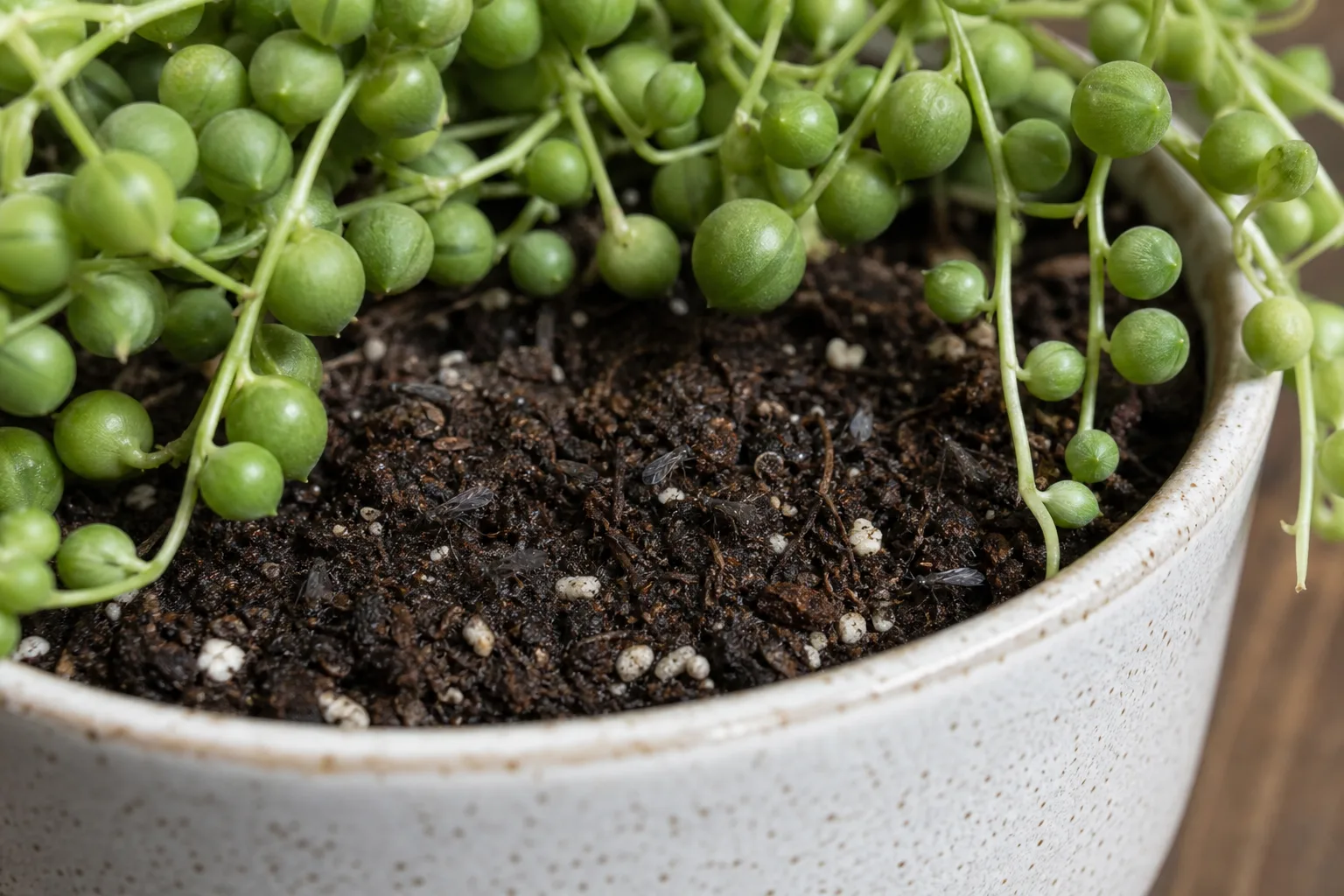
Fungus Gnats on String of Pearls: Causes, Checks & Fixes
This guide covers fungus gnats on String of Pearls. See also the general Fungus Gnats guide, watering, and light pages for this plant.
Fungus Gnats on String of Pearls: Causes, Checks & Fixes
Quick answer
Fungus gnats on String of Pearls (Curio rowleyanus, still widely sold as Senecio rowleyanus) are almost always a moisture signal, not a mysterious pest attack on trailing pearl strands. The small dark flies breed in damp organic topsoil-the same conditions that cause root rot in soggy wet soil, the most common killer of this South African succulent.
First step: let the top 1–2 inches of mix dry completely before you water again, and place yellow sticky traps at the pot rim. That breaks the gnat life cycle while you confirm whether pearls along the strands and the crown where stems meet soil are still firm. Do not spray adults in the air, mist the vines, or drench the soil on day one-dry surface soil and fewer egg-laying adults are the correct opening move for this plant.
For seasonal dry-down rhythm - roughly every 10 to 14 days in bright summer growth and every 3 to 5 weeks in cool winter rest - see the watering guide. Gnats appear when that rhythm breaks and the surface stays damp.
What fungus gnats look like on String of Pearls
Adult fungus gnats are tiny, delicate flies-often mistaken for fruit flies-that hover near soil and windows. On a hanging String of Pearls, you usually notice them when:
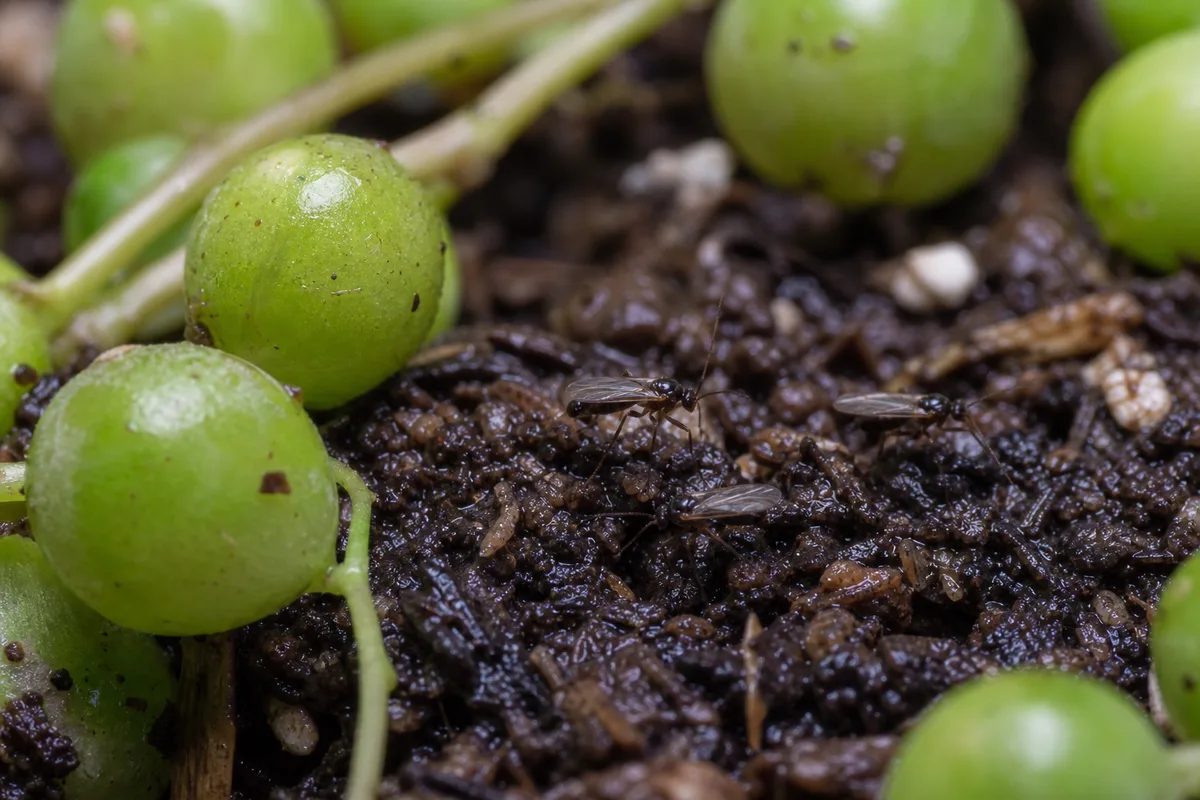
Fungus Gnats symptoms on String of Pearls - compare with healthy tissue on the same plant.
- Flies rise in a cloud when you water or brush the pot rim beneath trailing strands
- Adults rest on the soil surface or on yellow sticky traps placed near the basket
- Surface mix stays damp for days after watering while deeper soil may still be wet
- Fine translucent larvae appear in the top inch of mix if you scrape gently with a spoon
The pearl-shaped leaves themselves rarely show direct gnat damage. Gnats do not stipple or web the foliage. Instead, look for secondary stress from the wet habitat gnats prefer: soft or mushy pearls, a limp crown where strands attach to soil, translucent yellowing beads, or sour smell from the pot when mix has been heavy and wet too long.
Gnats and surface mold often appear together on peaty mix that never dries on top. Both point to the same overwatering pattern-not separate unrelated problems. NC State lists gnats among insects to monitor on String of Pearls, alongside mealybugs and aphids-but on this plant the gnats are usually telling you about soil moisture, not attacking the pearls directly.
Why String of Pearls gets fungus gnats
Curio rowleyanus evolved in dry scrublands of southwest Africa, storing water in spherical leaves on thin stems. Indoors, fungus gnats need moist organic topsoil to reproduce. Colorado State Extension notes that eggs and larvae develop in the growing medium when the surface stays damp; allowing the top inch to dry before watering is the single most important control step.
String of Pearls invites gnats when care fights that dry-down rhythm:
- Peaty or water-retentive mix holds moisture on the surface while the plant needs dry, sandy, well-drained cactus-type potting mix
- Calendar watering every few days in winter or low light, when growth slows and RHS advises watering sparingly, only when pearls begin to shrivel
- Deep or oversized pots where a shallow root system sits in a large wet zone that never dries through
- Decorative oversized hanging baskets chosen for trailing drama while the root ball occupies only the top third - owners water generously so long strands look lush while the crown sits in a permanently damp base
- Trailing-length panic watering - limp-looking pearls tempt another drink even when the pot is still heavy and mix is wet deep down; gnats confirm you watered too soon
- Hanging baskets with dense trailing cover that slows airflow over the soil surface
- Full saucers or cachepot liners without drainage that keep the root zone saturated
- Decaying debris - fallen pearls and spent flowers on wet mix feed larvae and fungi
Each round pearl minimizes evaporation and stores moisture. Missouri Botanical Garden notes Curio rowleyanus is highly sensitive to overwatering and that poorly drained moist soils inevitably lead to root rot. When you water before the pot dries, unabsorbed moisture sits in organic topsoil-ideal for gnat reproduction and dangerous for shallow succulent roots.
Larvae feed on algae, fungi, and plant roots in growing medium. On a mature String of Pearls, larval feeding is often mild, but chronic wet conditions weaken feeder roots and compound overwatering damage. Over-watering and poor drainage encourage fungus gnats alongside fungal issues-the gnats are the visible alarm; wet soil is the fire.
How to confirm the cause
Work through these checks before escalating to drenches or repotting:
- Fly identity - Confirm small dark gnats (not whiteflies, which fly from foliage when shaken). Adults do not bite; they are a nuisance around soil.
- Surface moisture - Is the top inch wet while you have not watered recently? Chronic surface dampness confirms breeding habitat.
- Pot weight and drainage - A heavy pot days after watering, blocked holes, or standing water in a saucer support gnats and rot risk.
- Pearl and crown firmness - Press pearls along strands and the soil-line crown. Firm, plump pearls with gnats suggest surface moisture alone; soft, squishy, or translucent pearls with sour smell suggest deeper overwatering damage - see root rot if crown tissue is mushy.
- Potato-slice larval test - Colorado State Extension recommends inserting 1/4-inch potato wedges into the surface mix beside the crown. Check the underside after three to four days for translucent wormlike larvae. On shallow String of Pearls pots, one slice near the soil line is enough - larvae stay in the top inch.
- Sticky trap count - Yellow sticky traps capture adult fungus gnats and show whether adults are still emerging after you dry the surface.
- Season and light - Lower winter light slows dry-down. Gnats appearing while you still water on a summer schedule fit a moisture mismatch, not a random pest invasion.
If flies are absent but soil stays moldy and wet, fix drainage and watering first - gnats may follow if the surface stays damp. For fuzzy white or gray mats without many flies yet, start with mold on soil triage.
Lookalike quick reference
| What you see | Where it appears | String of Pearls clue |
|---|---|---|
| Fungus gnats | Rise from soil when watered; rest on rim | Wet top inch; often with surface mold |
| Fruit flies | Kitchen, compost, drains | Not tied to one pot; clean food sources |
| Whiteflies | Fly from foliage when shaken | Sticky honeydew on pearls, not soil flies |
| Shore flies | Algae on wet saucers, greenhouse benches | Strong green algae on pot rims |
| Surface mold alone | White/gray fuzz on damp topsoil | Few flies; same wet-surface fix as gnats |
| Underwatering | Wrinkled firm pearls, light dry pot | No larvae in mix; gnats absent |
First fix for String of Pearls
Let the top 1–2 inches of mix dry completely before the next watering, and set yellow sticky traps at the pot rim.
Skip watering until the surface is dry to your finger-not just the strands looking perky. Place traps horizontally near the soil line where adults rest. Replace traps as they fill. This single move disrupts the life cycle because larvae cannot survive in dry soil and reduces egg-laying adults without soaking a plant that needs dry-down.
Do not respond with more water, misting, or humidity boosts. Do not repot on day one unless pearls are mushy or mix smells sour - drying and trapping come first when tissue is still firm. If crown is already soft, escalate to root rot rescue instead of waiting on traps alone.
Step-by-step recovery
After the initial dry-down and traps:
- Adjust watering to dry-down - Water only when the pot is light and mix is dry several centimeters down. In bright active summer growth, many indoor plants need water roughly every 10 to 14 days; in cool winter rest, every 3 to 5 weeks is common per the watering guide - not on a fixed calendar.
- Empty saucers - After every drink, discard standing water so the bottom of the mix does not re-saturate from below.
- Remove surface debris - Pick off fallen pearls and organic litter on wet soil that larvae feed on.
- Bottom-water selectively - Bottom-watering can keep the surface drier while hydrating roots: set the pot in a tray of water 15–30 minutes, then remove excess. Useful if top-dress drying is hard in a dense hanging basket.
- Apply BTI if gnats persist - If adults still appear on traps after two weeks of proper dry-down, use a biological control with Bacillus thuringiensis subsp. israelensis (BTI) such as Mosquito Bits steeped in watering water. BTI targets larvae in moist soil; repeat applications every five to seven days because it does not kill eggs, pupae, or adults.
- Improve mix if surface never dries - Repot into gritty cactus blend with perlite or coarse sand when firm roots and pearls are present but peaty mix stays damp on top for weeks. Follow the repotting guide for shallow container sizing so the root zone dries predictably. Repot in spring if possible; avoid disturbing rotting tissue without trimming first.
- Surface barrier optional - A thin layer of coarse sand or fine gravel on top can keep the surface less attractive for egg-laying after you have corrected watering - not as a substitute for drying. Do not apply a thick layer on shallow pots; it can slow evaporation from the crown zone.
Isolate heavily infested pots from other houseplants until trap counts fall for at least a week.
Treatment observation (indoor hanging basket)
In a documented indoor case - 8-inch shallow hanging basket, peat-heavy nursery mix, watered every five days because trailing strands looked limp while the crown sat in damp soil - a horizontal sticky trap at the soil line caught roughly 28 adults on day 1. Holding the top 2 inches dry between drinks per the watering guide, scraping fallen pearls from the surface, and two weekly BTI drenches dropped counts to about 4 adults by week 3; new firm beads appeared along upper strands in week 5 once trap captures stayed low and surface dry-down held for seven consecutive days. Crown tissue stayed firm throughout - no repot was needed. Your timeline will vary with light, basket size, and room humidity, but falling trap counts plus consistent surface dryness are the reliable progress markers.
Recovery timeline
Expect two to six weeks for full suppression with consistent surface drying, trapping, and larval control if needed. Life stages overlap-eggs and pupae continue hatching even when adults decline.
Improvement signs: fewer flies on traps each week, surface mix drying within a few days of watering, firm pearls and crown, and new beads forming along strands without yellowing or translucence.
Worsening signs: increasing fly swarms despite dry surface, pearls turning soft or mushy, sour smell, or translucent yellow beads while soil stays wet - escalate to root inspection and repot with decay trimmed.
Old pearls that yellowed or shriveled from chronic wetness will not plump up again; judge recovery by firm crown tissue and clean new growth along strands, not old damaged beads.
Mistakes to avoid
Do not spray adults in the air - aerosol treatments miss larvae in soil and can stress trailing vines unnecessarily.
Do not keep watering on schedule while running traps. Wet topsoil resets the life cycle daily.
Do not use heavy peat mix without grit for a plant that needs fast drainage. Gnats return when the surface never dries.
Do not drench with hydrogen peroxide as a first response - it keeps soil wet, which is the exact condition that rots String of Pearls roots while only briefly reducing larvae.
Do not mist established pearls to raise humidity. This plant prefers low humidity; misting wets foliage and nearby soil without helping the gnat problem.
Do not rely on neem or soap foliar sprays without drying soil - Penn State Extension notes short-residual sprays miss emerging adults and do not reach larvae in mix.
Do not stop treatment after a few days when adult numbers dip. Pupae and eggs still hatch; maintain dry-down and traps for several weeks.
Do not reuse soggy infested mix on shallow roots without replacing or sterilizing - it reintroduces larvae.
String of Pearls care cross-check during treatment
While correcting gnats, align pot moisture with what this succulent needs - pearl appearance and soil-surface dryness are separate variables:
| Factor | Gnat-friendly mistake | String of Pearls target |
|---|---|---|
| Water timing | Calendar watering when strands look limp | Dry mix deep in pot + mild pearl deflation - watering guide |
| Summer interval | Watering every few days regardless of weight | Roughly every 10–14 days in bright active growth |
| Winter interval | Same summer schedule in dim cool rooms | Every 3–5 weeks; RHS sparing winter watering |
| Pot size | Oversized decorative basket for trailing length | Shallow pot sized to root mass per repotting guide |
| Mix | Peaty nursery soil without grit | Fast-draining cactus blend |
| Saucers / liners | Standing water in hanging-basket liner | Empty within 30 minutes of every drink |
| New plants | Hung beside main vine immediately | Quarantine two weeks with soil-level trap |
How to prevent fungus gnats next time
Match watering to how fast the pot dries in your light and season. Bright indirect light with some morning sun dries mix faster; winter dormancy needs minimum watering when growth slows.
Use fast-draining cactus blend in a shallow pot with open drainage, and empty saucers after every drink. Avoid poorly-drained and moist soils that invite both gnats and rot.
Scrape fallen debris from the soil surface weekly in dense hanging baskets. Quarantine new plants two to three weeks before hanging them near established strands - UC IPM reports gnats commonly arrive on newly purchased houseplants.
Keep yellow sticky traps in place during high-risk months when indoor heating and reduced light slow dry-down. When outdoor succulents move inside in fall, inspect nursery mix and isolate pots that release flies when bumped.
Improve airflow around crowded hanging displays - stagnant humid pockets above wet soil extend gnat breeding windows.
Gnats vs. mold on soil - which page do you need?
Both problems share chronically wet surface mix on String of Pearls, and they often appear together on the same overwatered hanging basket.
| Your main complaint | Start here | Sibling page |
|---|---|---|
| Tiny flies rising when you water; larvae in top soil | This page (fungus gnats) | - |
| White/gray fuzzy layer on soil; few or no flies yet | Mold on soil | Scrape-and-dry workflow |
| Translucent mushy pearls, heavy pot, sour smell - flies optional | Overwatering | Root inspection |
| Mushy roots, soft crown at soil line | Root rot | Same-week unpot |
Fix surface dry-down for gnats and mold together. If crown softens or soil smells sour, escalate to root-rot guidance even if fly counts are moderate.
When to worry
Escalate immediately if gnats accompany a soft crown, mushy pearls, blackened roots on inspection, or a sour swamp smell from the pot. Unpot, trim decay to firm tissue, and repot dry into gritty mix per root rot rescue - that is root rescue, not fly control alone.
A moderate gnat count with firm pearls and a drying surface after you adjust watering is annoying but not an emergency. Stay consistent with dry-down and traps.
If swarms increase weekly despite correct drying, larvae visible in topsoil, and BTI drenches for three weeks, repot into fresh gritty mix via the repotting guide and discard water-retentive soil - the mix itself may be holding moisture and organic matter larvae need.
Pet safety: toxic String of Pearls and treatment precautions
String of Pearls is toxic to cats and dogs if chewed - vomiting, diarrhea, and drooling are common signs. Gnats themselves are not a pet hazard, but keep BTI products, sticky traps, and the plant out of reach of pets that chew basket liners or fallen traps.
Hang baskets above cat-jump height or behind closed doors when possible - trailing strands invite batting and soil disturbance that keeps the surface wet. If a pet ingests pearls or chews a trap, contact your veterinarian or the ASPCA Animal Poison Control Center with plant and product details.
Related String of Pearls guides
- String of Pearls overview - species hub and care context
- Watering guide - soak-and-dry rhythm, summer vs winter intervals, pearl readiness checks
- Soil guide - cactus mix recipes and drainage
- Repotting guide - shallow pot sizing after gnat-driven mix refresh
- Overwatering - early triage when gnats are a moisture alarm
- Root rot - mushy crown and sour-soil escalation
- Mold on soil - surface fungi on persistently damp peat
This URL is the fungus-gnat and wet-surface hub for the String of Pearls cluster. Sibling pages go deeper on one cause; start here when tiny flies rise from a damp hanging basket after pearl-firmness checks.
FAQs
My trailing strands look limp but I see gnats - should I water?
No. Limp-looking pearls with a heavy wet pot and flies at the soil line usually mean the crown is sitting in damp mix, not that the plant is thirsty. Press pearls along the strands and the soil-line crown - firm wrinkles in a light dry pot mean underwatering; soft translucent pearls with wet heavy soil mean overwatering. Dry the surface and read the watering guide before you pour.
Can I use neem oil on String of Pearls for fungus gnats?
Neem and soap sprays on foliage do not reach larvae in soil and can stress succulent pearls with repeated wetting. Dry the top inch of mix, trap adults, and use Bti drenches only if larvae persist after two weeks of proper dry-down. Foliar sprays are a poor first move on this low-humidity trailing succulent.
Should I repot immediately when I see gnats on my String of Pearls?
Not if pearls and crown are still firm. Start with surface dry-down and sticky traps for two weeks. Repot into gritty cactus mix per the repotting guide when peaty nursery soil never dries on top despite corrected watering, or when pearls turn mushy, mix smells sour, or trap counts rise weekly - that pattern may need root inspection, not fly control alone.
Why do fungus gnats spike on String of Pearls in winter?
Cool dim rooms slow dry-down while many owners keep summer watering habits. RHS advises watering sparingly in winter, only when pearls begin to shrivel. A pot that took ten days to dry in July may stay wet three weeks in January - perfect for gnat generations unless you stretch intervals per the watering guide.
Are fungus gnats and mold on soil the same problem on String of Pearls?
They share chronically wet surface mix and often appear together on overwatered hanging baskets. Gnats are tiny flies breeding in damp organic topsoil; mold is the white or gray fuzzy layer on that same wet surface. Fix dry-down for both - use the mold-on-soil page if scraping fuzzy mats is your main task.
Conclusion
Fungus gnats on String of Pearls tell you the soil surface has stayed too wet for a succulent that stores water in pearl-shaped leaves and rots quickly in damp mix. Confirm flies with a potato slice or trap count, dry the top inch, trap adults, and verify pearls and crown are firm. Fix moisture before you chase chemical shortcuts - Curio rowleyanus recovers from dry soil far more reliably than from chronic sogginess, and dry surface soil is what breaks the gnat cycle for good.