Mold on Soil on String of Pearls: Causes, Checks & Fixes
Quick answer
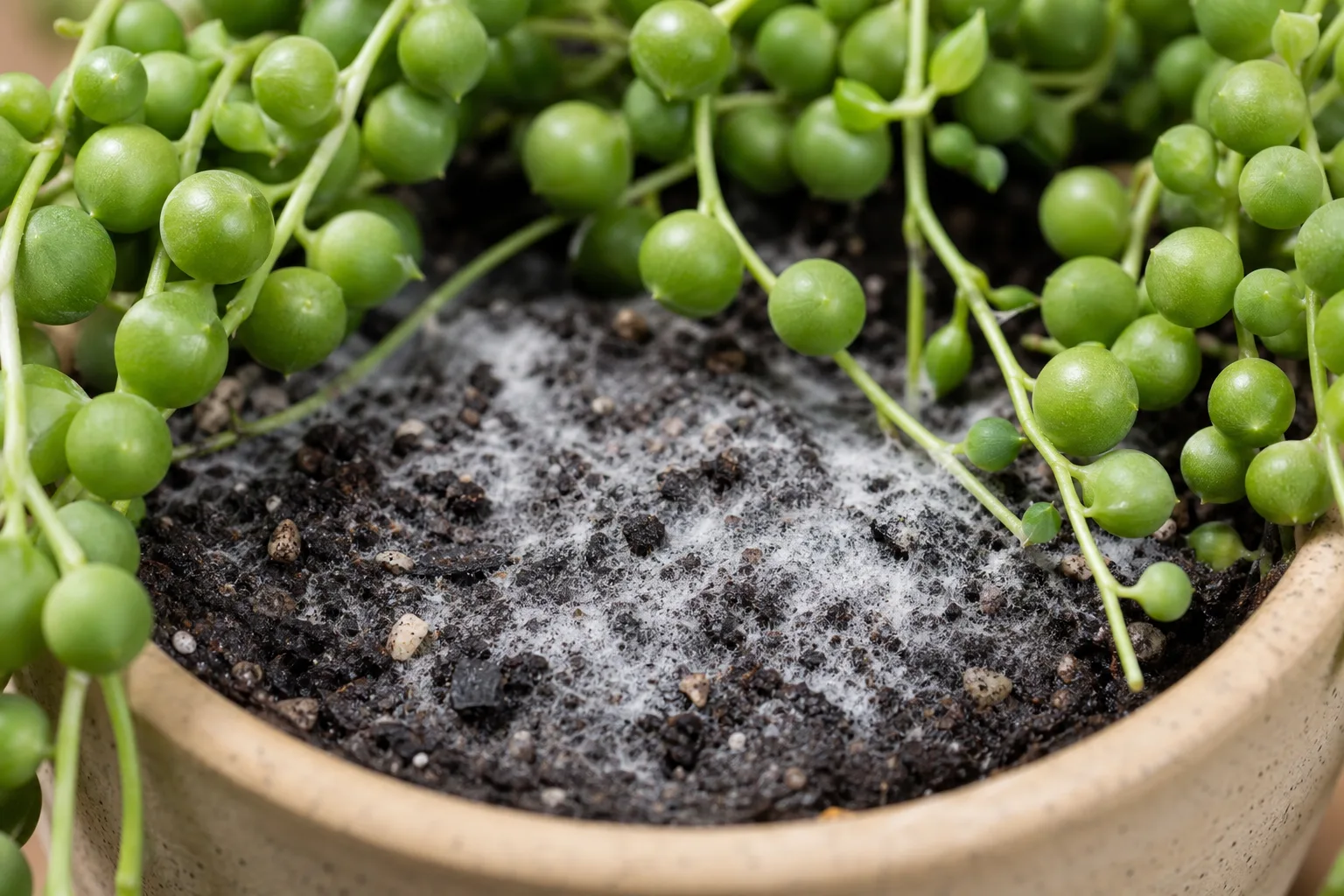
Surface mold on String of Pearls usually means the top of the mix stays damp from overwatering or peaty soil-not a leaf disease on a healthy crown. First step: stop watering, let the surface dry completely, then scrape off the fuzzy layer.
Mold on Soil on String of Pearls: Causes, Checks & Fixes
This guide covers mold on soil on String of Pearls. See also the general Mold on Soil guide, watering, and light pages for this plant.
Mold on Soil on String of Pearls: Causes, Checks & Fixes
Quick answer
White or gray fuzz on the soil surface of your String of Pearls (Curio rowleyanus) almost always means the top layer of mix has stayed damp too long. This trailing succulent stores water in its bead-like leaves and needs a fast-draining cactus mix that dries quickly-not a peaty blend that holds moisture at the surface for days.
The mold is usually harmless saprophytic fungus feeding on organic particles in wet mix. It is not attacking the pearls directly. On String of Pearls, the real danger is the chronic moisture that grows the mold: shallow roots sitting in damp compost are how String of Pearls overview develops crown rot and stem collapse.
First fix: stop watering and let the top 1–2 inches of mix dry completely before you scrape the mold or water again. Do not repot, spray fungicide, or drench the soil on day one.
What mold on soil looks like on String of Pearls
On String of Pearls pots, mold most often appears as a thin white, gray, or yellowish fuzzy film across the soil surface. It may show up in patches near where trailing strands meet the crown or cover the entire top of the pot. You might notice it after a heavy winter watering, when a hanging basket has not dried for a week, or alongside small flies that rise when you disturb the mix.
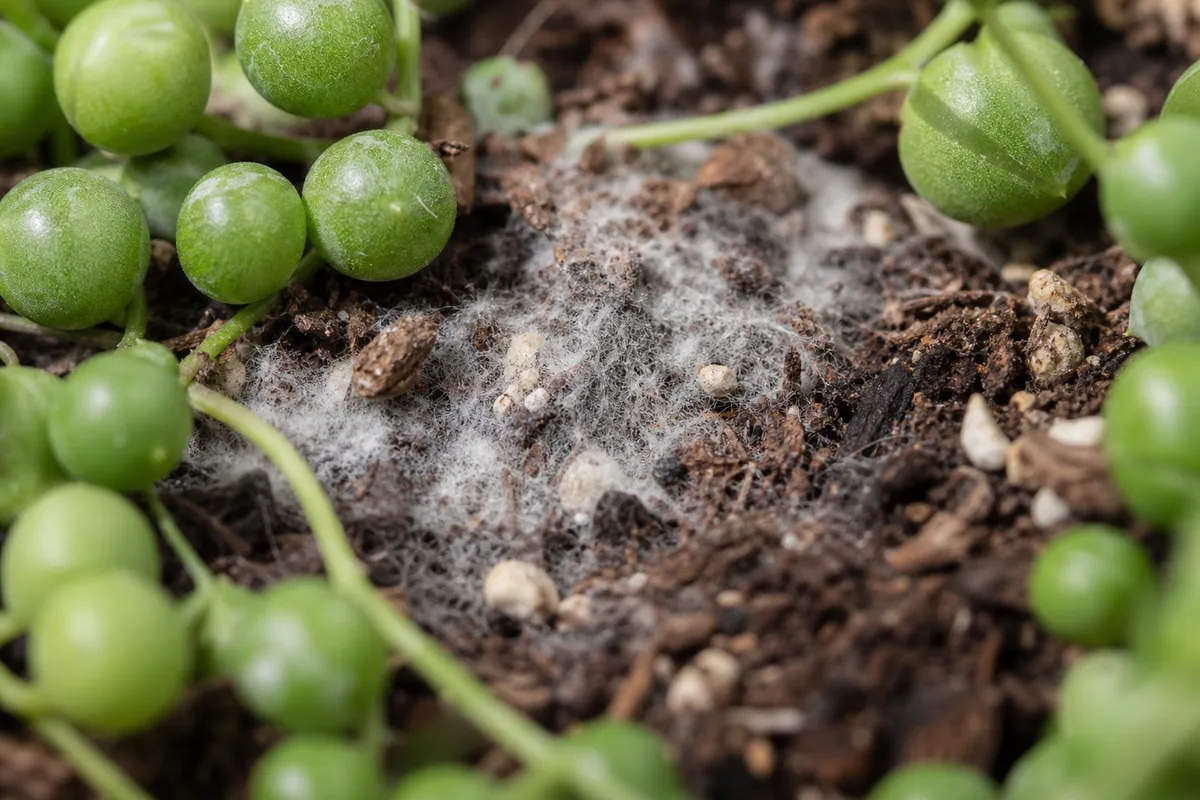
Mold on Soil symptoms on String of Pearls - compare with healthy tissue on the same plant.
Healthy String of Pearls should have a soil surface that dries within a few days of watering. The spherical pearls may still look plump and green even when the surface is too wet-each leaf holds its own water reserve, so foliage can mask soil problems longer than on thin-leaved houseplants.
Watch for these patterns:
- Surface fuzz only - White or gray film on damp topsoil; pearls firm; stems hard at the crown
- Crown-adjacent mold - Fuzz where dense strands pile over the pot rim and trap humidity
- Companion signs - Fungus gnats hovering at soil level, green algae on the pot rim, musty smell from organic mix
- Advanced trouble - Yellow or mushy pearls, black soft stems at soil line, sour-smelling mix (these mean rot, not just cosmetic mold)
Mold on the soil is different from white spots on the pearls themselves. Mealybugs leave cottony patches on stems and leaf joints; hard water can leave mineral crust on pearl windows. Soil mold stays on the mix surface and follows wet conditions, not pest clusters on the plant body.
Why String of Pearls gets mold on soil
String of Pearls evolved for arid dry habitats where stems trail along the ground. Indoors it needs sharp drainage and infrequent watering. Spores of saprophytic fungi are everywhere; they germinate when the surface stays moist and organic matter-peat fines, bark, fallen pearls-is available to break down.
Several String of Pearls care patterns create surface mold more predictably than on moisture-loving tropicals:
overwatering on String of Pearls before the mix dries. Pearls store water internally. Many owners water on a calendar because the beads still look full. Each extra drink keeps the top layer moist long enough for fungal colonies to spread. Overwatering and excessively damp compost can cause stem rotting-the leading killer of this succulent, not underwatering on String of Pearls.
Peaty or moisture-retaining nursery mix. String of Pearls is often sold in dense organic blend that holds surface moisture even when lower layers feel slightly drier. That upper damp zone is where mold and fungus gnat larvae live.
Winter rhythm mismatch. Growth slows and water use drops when daylight shortens and indoor temperatures cool. Pots dry more slowly near windows, yet many growers keep the same summer watering frequency-leaving the surface chronically damp through heating season.
Shallow roots in oversized pots. String of Pearls has thin, shallow roots that do not fill a large container quickly. Excess compost in an oversized pot stays damp around a small root ball at the edges and surface, especially in deep pots that retain moisture below the crown.
Crown humidity in hanging baskets. Trailing strands piled over the pot rim shade the soil surface and trap humid air at the crown-exactly where stem rot starts when moisture lingers.
Debris on the soil surface. Fallen pearls and old leaf tissue add organic food for fungi when they sit on damp mix instead of being cleared.
How to confirm the cause
Work through these checks before String of Pearls repotting guide or reaching for fungicide:
- Pearl firmness. Pinch a bead on a lower strand. Firm and slightly springy is normal. Squishy, translucent-mushy, or yellow-collapsing pearls suggest overwatering damage-not surface mold alone.
- Crown and stem check. Pinch the stem where it enters the soil. Hard tissue is reassuring. Soft, black, or hollow stems at the crown mean rot may already be underway.
- Top inch moisture. Push your finger into the upper soil. If it comes away cool and clinging days after watering, overwatering is confirmed. String of Pearls should be watered when this layer dries-allowing the compost to dry out between waterings-not while it stays damp.
- Pearl windows as a thirst cue. Hydrated pearls show a clear stripe (epidermal window) on the sun-facing side. When pearls lose that translucency and feel slightly soft, the plant is ready for a drink. Watering while windows stay bright and pearls are firm adds moisture the plant is not using.
- Pot weight and drainage. Lift the container. A pot that feels heavy days after watering holds too much moisture. Confirm drainage holes are open and the saucer is empty.
- Season and light. Mold appearing November through February while you water weekly often means the plant is in slow growth and not using water at summer rates.
If pearls are firm, new beads are forming along strands, and only the top centimeter is fuzzy after one overwatering event, you likely caught it early. Soft crown tissue plus sour-smelling mix means escalate toward root inspection-not just scraping.
First fix for String of Pearls
Stop watering and let the top 1–2 inches of mix dry completely before you scrape the mold or water again.
Do not repot on day one. Pausing surface moisture gives you a clear read on whether the problem was a single overwatering event or a chronic wet-soil pattern. In bright light during active growth, the top inch often dries within five to ten days depending on pot size, mix, and season-resist watering “just a little” mid-cycle.
Once that layer is dry:
- Scrape off the top 1–2 cm of fuzzy soil with a spoon and discard it in the trash
- Move the pot to brighter indirect light with some morning sun if it has been sitting in deep shade, which speeds drying without scorching pearls
- Resume watering only when the top inch is dry and pearls show thirst cues-not on a fixed calendar
That single correction resolves most first-time mold cases on String of Pearls.
Step-by-step recovery
After the first dry-down and scrape, continue based on severity:
Mild case (surface fuzz, firm crown)
- Maintain the dry-top-inch rule at every watering through the growing season
- Remove fallen pearls from the soil surface promptly
- Empty saucers within an hour of watering
- Expect the fuzzy layer not to return once the surface dries between drinks
Mold returns within a week
- Complete another full dry cycle before watering again
- Top-dress with a thin layer of dry gritty mix (cactus blend with extra perlite or pumice) to replace the removed surface
- Consider bottom-watering once so roots absorb moisture while the top inch stays drier
- Add yellow sticky traps at soil level if small flies appear-mold and fungus gnats share the same wet habitat
Chronic case (repeated fuzz, sour smell, soft crown)
- Confirm no nearby pots are still overwatered-spores travel, but moisture keeps them alive
- Unpot only if mix is degraded, compacted, or smells sour; inspect shallow roots for brown mushy tissue
- Trim clearly rotted roots and any black soft stems back to firm tissue with clean scissors
- Repot into fresh fast-draining cactus mix in a pot only slightly larger than the root ball, with open drainage holes
- Let the plant rest dry for several days before the first light watering
- Hold fertilizer until new pearl growth looks stable for two weeks
Avoid misting strands, covering soil with decorative moss, or spraying leaves with fungicide for soil mold-the issue is in the mix, not the pearl foliage.
Recovery timeline and warning signs
Surface mold should not return once the top inch dries between drinks on a healthy String of Pearls. Improvement usually shows within one dry-down cycle-roughly one to two weeks depending on pot size, light, and season.
Signs the fix is working:
- Soil surface stays dry for several days between waterings
- No new fuzzy growth after scraping
- New pearls forming along strand tips
- Crown stems remain firm when pinched
- Fungus gnat numbers drop as the surface stays dry
Signs the problem is worsening:
- Mold reappears within days of scraping despite dry surface attempts
- Pearls turn yellow, mushy, or drop in clusters
- Stems blacken and soften at the soil line
- Mix smells sour even when the surface looks dry
- Plant stops producing new beads while older strands go bare
String of Pearls cannot regenerate mushy pearls-damaged beads shrivel and fall. Judge recovery by firm crown tissue and new growth at strand tips, not by old pearls plumping back up.
Lookalike symptoms
White on pearls, not soil: Mealybugs form cottony white clusters in the crown and leaf joints; dab with alcohol on a swab if confirmed. Hard water deposits leave crusty white on pearl surfaces that does not spread as fuzzy soil film.
Shriveled pearls with dry soil: Underwatering causes wrinkled, deflated beads and drooping strands-the opposite problem. Lift the pot; light weight and bone-dry mix through the top half mean the plant needs water, not less.
Green algae on pot rim: Constant surface moisture and low light; scrape algae, dry the surface, and brighten placement slightly.
Mistakes to avoid
- Scraping mold without fixing moisture - Spores return within days if the top layer stays wet
- Watering on a calendar - String of Pearls needs soil and pearl cues, not a fixed weekly schedule
- Repotting into more peaty mix - Fresh dense organic blend can repeat the same surface-damp problem
- Using a deep pot - Shallow roots in a tall wet column invite crown rot
- Misting trailing strands - Adds humidity at the crown without helping the plant drink
- Cinnamon or baking soda as the only fix - Cosmetic at best; drying the mix solves the cause
- Ignoring fungus gnats on String of Pearls - Adults and larvae signal the same wet-soil habitat mold does
String of Pearls care cross-check
Mold is a moisture symptom. Align these basics before expecting lasting improvement:
- Light: String of Pearls light guide with some morning direct sun so the pot cycles moisture faster
- Mix: Fast-draining succulent or cactus blend-moisture retention in standard potting soil causes inevitable rot on this species
- Watering: Sparingly every two to three weeks in summer; barely once a month in winter when growth slows-water only sparingly in winter, if at all
- Pot: Drainage holes, saucer emptied after every drink, size matched to shallow roots-not an oversized decorative container
- Humidity: Low humidity below 40% suits this plant; stagnant damp air around a wet crown accelerates problems
How to prevent mold next time
Prevention is mostly keeping the surface dry between drinks:
- Check the top inch and pearl firmness before every watering-never assume the same interval works year-round
- Match pot size to the root ball; shallow terracotta dries faster than glazed deep pots
- Reduce watering frequency in low winter light before mold appears
- Keep fallen pearls and debris off the soil surface
- Improve airflow around hanging baskets so strands do not trap humidity over the crown
- Quarantine new plants for two to three weeks-nursery media often arrives damp and already fuzzy
A String of Pearls in bright light, gritty mix, and an appropriately sized pot with a strict dry-top-inch routine rarely supports lasting surface mold.
When to worry
A patch of white fuzz on an otherwise healthy plant with firm crown stems is a moisture warning-not a death sentence. Act more aggressively when:
- Mold returns weekly despite dry surface cycles
- Crown stems soften or blacken from the base upward
- Pearls turn yellow and mushy while mix stays wet
- Soil smells sour or roots are brown and collapsing on inspection
- Fungus gnat swarms increase alongside recurring mold and soft tissue
In those cases, trim rotted roots and stems, repot into dry gritty mix, and rest the plant before the first cautious drink. String of Pearls with a firm crown and some healthy roots can recover slowly-take firm stem cuttings as backup if rot has hollowed the base, since healthy wood roots easily after callusing.
When to use this page vs other String of Pearls guides
- String of Pearls watering guide - Use for routine moisture checks before assuming mold on soil is the main issue.
- String of Pearls problems hub - Browse all 17 common issues on this species.
- Fungus Gnats on String of Pearls - Different entry point when symptoms overlap with mold on soil.
- Overwatering on String of Pearls - Different entry point when symptoms overlap with mold on soil.
- Root Rot on String of Pearls - Different entry point when symptoms overlap with mold on soil.