Leggy Growth on String of Pearls: Causes, Checks & Fixes
Quick answer
Leggy String of Pearls almost always means too little light, not too little fertilizer. Long bare gaps between small pearls and a lean toward the window point to etiolation. First step: move the crown into bright indirect light with gentle morning sun before you trim or repot.
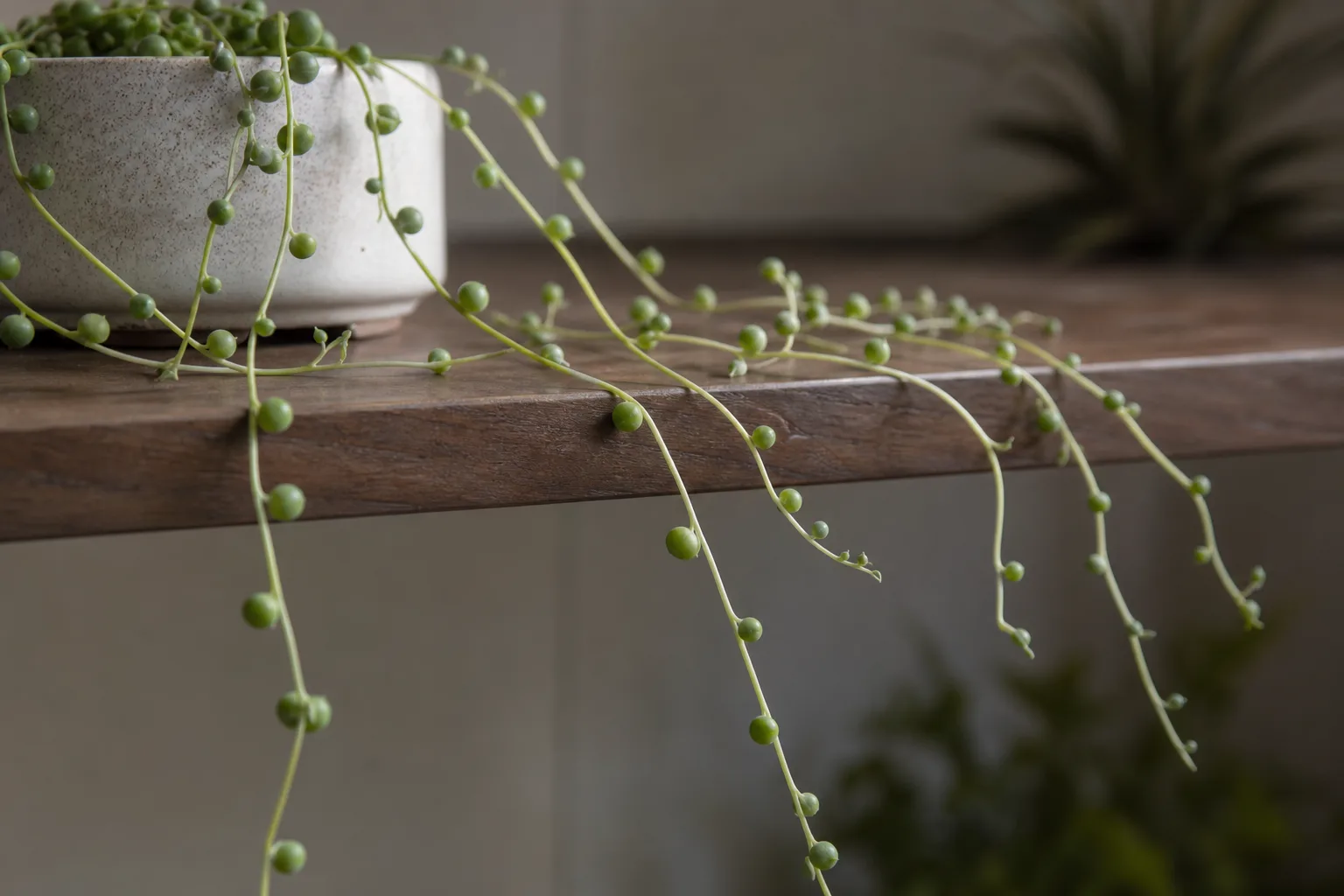
Leggy Growth on String of Pearls: Causes, Checks & Fixes
This guide covers leggy growth on String of Pearls. See also the general Leggy Growth guide, watering, and light pages for this plant.
Leggy Growth on String of Pearls: Causes, Checks & Fixes
Quick answer
Leggy String of Pearls (Curio rowleyanus) is a light problem dressed up as a watering or feeding problem. When usable light is too weak, the plant stretches-etiolation-producing long thin stems with small, flat pearls spaced far apart instead of the tight beaded curtain healthy plants show.
First step: move the crown into String of Pearls light guide with one to three hours of gentle morning sun. Hold off on fertilizer, String of Pearls repotting guide, or heavy pruning until the growth point receives stronger light for one to two weeks. Trimming sparse strands without fixing light only produces more stretched regrowth.
What leggy growth looks like on String of Pearls
Healthy String of Pearls forms trailing strands of spherical green pearls along thin cascading stems. In good light, pearls sit close together-roughly every few centimeters-with plump round beads and a subtle dark stripe along one side. That stripe is an epidermal window that lets light reach interior tissue, an adaptation from dry South African habitats where the plant often grows under bushes for filtered sun.
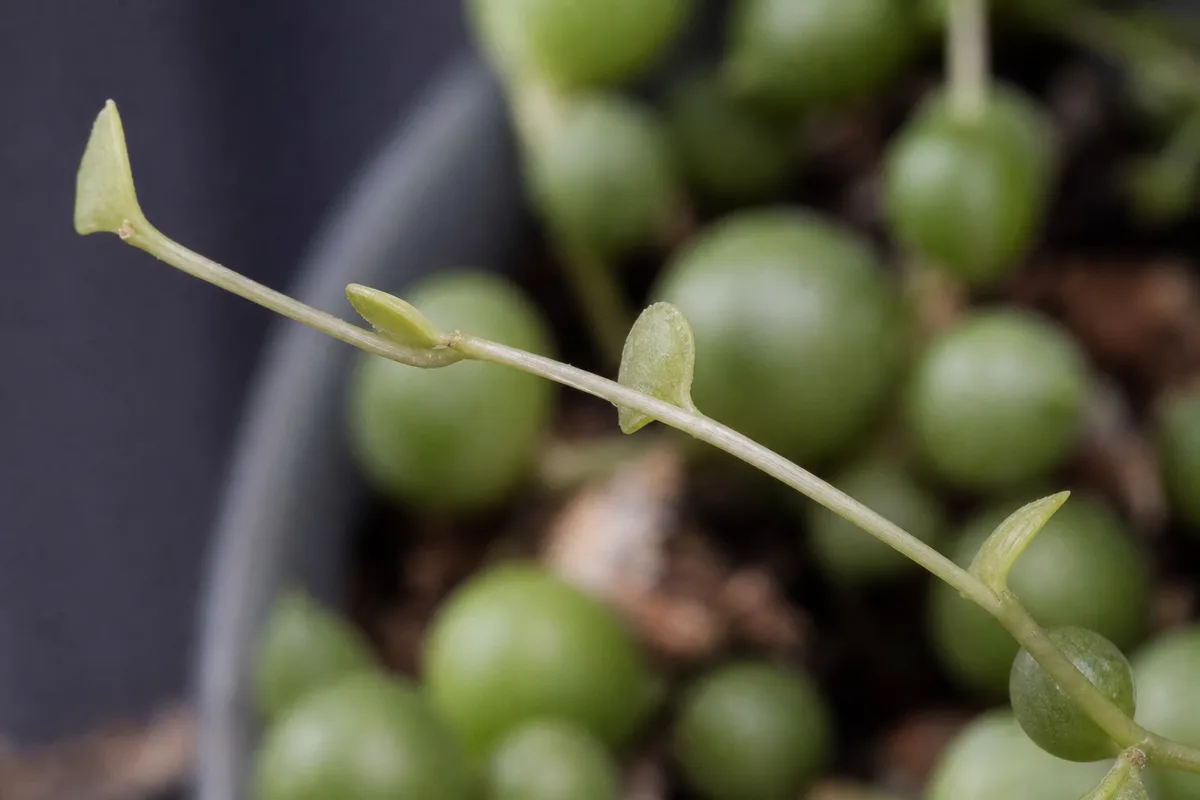
Leggy Growth symptoms on String of Pearls - compare with healthy tissue on the same plant.
Leggy growth reverses those proportions:
- Long bare gaps between pearls along otherwise thin stems-the beaded chain looks like missing links
- Smaller, flatter pearls than older compact sections on the same plant; beads may look pale or slightly deflated before stretching worsens
- One-sided lean toward the window or lamp, with the shaded side staying sparse
- Bare crown or base when a hanging basket sits too high, too far from glass, or above the window so only dangling tips get light
- Upward or sideways reach instead of dense trailing when the plant hunts for brighter conditions
This is not the same as normal trailing length. A mature String of Pearls can trail 90 cm (3 ft) or more from a basket while still holding pearls closely along each strand. Legginess is the spacing between pearls, not total vine length.
Why String of Pearls gets leggy
Curio rowleyanus evolved as a trailing succulent from arid eastern Cape regions of South Africa, storing water in its spherical leaves but unable to store light. When intensity or duration falls below what the plant needs for compact photosynthesis, stems elongate and pearls shrink so the vine can reach brighter conditions. The RHS notes that without enough light, string of beads becomes weak and straggly, and leaves may stay small.
Several home setups trigger this pattern on String of Pearls specifically:
Distance from the window. Medium light across a room is not enough for String of Pearls overview despite its reputation as an easy succulent. Succulents and cacti need brighter light than typical tropical houseplants and sit closer to high-light windowsills than to true low-light species.
Hanging placement. Baskets hung high above a window, beside glass instead of in front of it, or on a shelf with only the tips near light leave the crown-the growth point-in shade. The base goes bare while a few long strands reach for light.
Winter light drop. Shorter days and lower sun angle reduce usable light even at the same window. Growth that was compact in summer stretches indoors from late fall through early spring unless you move the plant closer or add supplemental lighting.
overwatering on String of Pearls in dim conditions. Leggy plants photosynthesize less and drink slowly. Soil that stays wet for weeks in weak light does not cause etiolation directly, but it weakens shallow roots and makes sparse vines more fragile. Fix light first; then reassess String of Pearls watering guide.
Overfertilizing without matching light. Extra nitrogen in dim rooms can push soft, elongated shoots that still look leggy because tissue cannot densify without adequate light.
How to confirm the cause
Work through these checks before you trim or repot:
- Internode spacing on newest growth - Measure gaps between the last four to six pearls on active tips. Widening gaps on fresh growth confirm ongoing etiolation. Old stretched sections may stay sparse even after light improves.
- Pearl shape and color - Compare new pearls to older sections from when the plant looked fuller. Small, flat, pale beads on thin stems point to light stress. Yellowing with wet soil and mushy stems suggests overwatering-a separate issue.
- Direction of lean - Strong tilt toward one window or lamp confirms the plant is actively seeking light. Rotate the pot and watch whether new tips bend back within days.
- Crown light exposure - Lift trailing strands aside and look at the soil surface and base stems. If the crown sits in shadow while tips hang in light, placement-not genetics-is the problem.
- Soil dryness rhythm - Pick up the pot after your usual watering interval. A lightweight dry pot with wrinkled pearls may indicate underwatering on String of Pearls; a heavy damp pot with sparse pale growth in a dim spot suggests slow uptake from weak light plus excess moisture.
- Season and window orientation - Note whether stretching worsened after days shortened or after moving the plant away from a summer outdoor spot. East- or west-facing windows provide the bright indirect light these succulents prefer; north-facing rooms alone rarely sustain compact growth year-round without a grow light.
If internodes are lengthening, pearls are shrinking on new growth, and the plant leans toward light while roots are firm and pest-free, insufficient light is confirmed. Nutrient deficiency is unlikely without other chlorosis patterns on well-lit growth.
First fix for String of Pearls
Move the plant so the crown sits in bright indirect light with one to three hours of gentle morning sun-directly in front of an east window or filtered west window, not above or across the room from glass.
Gradually increase exposure over seven to ten days if the plant came from very dim conditions. Sudden harsh afternoon sun on a stretched indoor plant can scorch pearls that developed in shade. Shift the pot a foot closer every few days, or add a sheer curtain on west exposures during summer.
Do not fertilize, repot, or prune heavily on day one. Light correction is the lever; other interventions come after you see tighter new pearls.
Step-by-step recovery
Once brighter light is in place:
- Wait two to four weeks for new growth to show closer pearl spacing and plumper beads before judging success.
- Rotate the pot a quarter turn weekly so all sides receive similar exposure and the plant stops leaning one direction.
- Trim the worst stretched sections after compact new growth appears on at least one strand. Use clean scissors. Cuttings can be coiled onto moist succulent mix at the pot rim to root and fill sparse areas-the same layering method the RHS recommends for propagating string of beads.
- Adjust watering to match slower uptake during the light transition-check that the mix dries on your normal schedule before soaking again. Leggy plants in dim wet corners often need less water, not more.
- Add a full-spectrum grow light if your best window is north-facing or obstructed. Position it twelve to eighteen inches above the crown for ten to twelve hours daily during winter.
- Reduce feeding until growth looks normal again, then resume diluted fertilizer at half strength once a month during active spring and summer growth only.
Stagger hard pruning if the plant is large-remove no more than one third of total length per round so the remaining foliage can support shallow roots through recovery.
Recovery timeline
Light improvement shows in new growth first, not old stretched tissue. Expect tighter pearl spacing on fresh tips within two to four weeks after the crown receives adequate light. Flat or pale pearls on older stretched sections may not fully plump again even after placement improves.
Bare crown sections fill slowly. Side shoots from pruning or rooted cuttings typically appear within three to six weeks in warm active growth. Winter rest slows everything-hold major trimming until spring unless strands are breaking.
Judge success by new internode length, not by old bare stem shrinking. If gaps on fresh growth keep widening after four weeks in brighter light, the spot is still too dim or the crown remains shaded.
Lookalike symptoms to rule out
Underwatering makes pearls wrinkled, soft, and slightly deflated with dry lightweight soil. Internodes do not usually stretch dramatically; the whole strand shrivels rather than reaching toward light.
root rot on String of Pearls from overwatering shows yellowing, mushy stems, sour soil smell, and collapse despite damp mix. Leggy etiolation can coexist if the plant sits in dim wet soil, but soft black roots point to rot-not light alone.
Normal long trailing on an otherwise dense plant is healthy. Mature vines naturally lengthen while keeping pearls close along the stem.
Mealybugs at nodes leave white cottony patches and sticky residue, not uniform long gaps. Inspect where strands meet the crown before assuming light is the only issue.
Sunburn browns or reddens pearls on the sun-exposed side with crisp texture-not long bare gaps. That follows a sudden move to harsh midday sun, not chronic dim conditions.
Mistakes to avoid
Do not assume String of Pearls is a low-light plant because it survives in shade. It tolerates neglect better than darkness; survival with long bare stems is not healthy compact growth.
Do not prune aggressively without improving light first. Fresh cuts in dim conditions often produce another wave of stretched regrowth.
Do not jump to fertilizer when pearls look pale. Pale stretched beads in a dim corner are etiolation, not nitrogen deficiency.
Do not move directly from a dark room to harsh south-window midday sun. Acclimate gradually to prevent scorched pearls.
Do not hang the basket so only trailing tips see the window while the crown sits in shadow-that pattern causes bare bases on otherwise long vines.
Do not increase watering to “help” a sparse plant. Weak light slows water use; extra moisture raises root rot risk on shallow succulent roots.
String of Pearls care cross-check
Leggy growth often appears alongside watering confusion because sparse vines drink slowly. Curio rowleyanus prefers fast-draining gritty compost and should dry mostly or completely between waterings-roughly every two to three weeks in summer and sparingly in winter for many homes.
Strong appropriate light helps the mix dry predictably. A plant in a dim corner may stay wet too long even when you water on the same calendar as a compact plant in a bright window. After you move to better light, recheck pot weight before each soak rather than following the old schedule automatically.
Temperature between 21–29°C (70–84°F) supports steady growth. Cooler winter rest with reduced watering is normal; do not confuse seasonal slow growth with a light crisis unless stretching continues on new tips.
How to prevent leggy growth next time
Place new String of Pearls with the crown directly in front of your brightest suitable window-not above the frame, not on a side shelf with only tips lit. East windows with morning sun are ideal; west windows work with afternoon filtering in hot summers.
Rotate weekly from the start so the plant grows evenly rather than correcting a heavy lean later.
If you summer the plant outdoors, acclimate to brighter exposure gradually before bringing it in, then place it at a window that matches outdoor intensity as closely as possible. The stretch after moving from patio to dim indoor corner is a common seasonal pattern.
Use grow lights in north rooms or offices before the plant stretches-not after half the pot is bare.
Accept slower, slightly more open growth in winter, or supplement light rather than letting vines etiolate for months.
When to worry
Leggy String of Pearls is rarely an emergency. Treat it as priority when bare base stems exceed healthy foliage, strands snap under their own weight, or the plant sits in damp soil for weeks without drying-weak light plus wet shallow roots raises rot risk.
Replace hope with action if new growth continues to stretch after four to six weeks in your brightest acclimated spot; the location may not be viable without a grow light.
No need to panic over long trailing vines that still hold pearls closely-length alone is not legginess. Worry when spacing, pearl size, and crown density decline together.
Conclusion
Sparse String of Pearls with long gaps between small flat pearls is almost always etiolation from insufficient light at the crown, not a mystery feeding problem. Move the plant into bright indirect light with gentle morning sun, wait for tighter new growth, then trim or propagate cuttings to rebuild density. Old stretched sections will not compact on their own, but correct light plus patient pruning turns a stringy hanger back into the beaded cascade this succulent is meant to be.
When to use this page vs other String of Pearls guides
- String of Pearls watering guide - Use for routine moisture checks before assuming leggy growth is the main issue.
- String of Pearls problems hub - Browse all 17 common issues on this species.
- Not Enough Light on String of Pearls - Different entry point when symptoms overlap with leggy growth.
- Slow Growth on String of Pearls - Different entry point when symptoms overlap with leggy growth.
- Yellow Leaves on String of Pearls - Different entry point when symptoms overlap with leggy growth.