Brown Tips on String of Pearls: Causes, Checks & Fixes
Quick answer
Brown or tan marks on String of Pearls pearls usually mean sun scorch or drought stress-not dry air. Move the plant out of harsh direct afternoon sun, then check whether the mix is bone dry before you buy a humidifier.
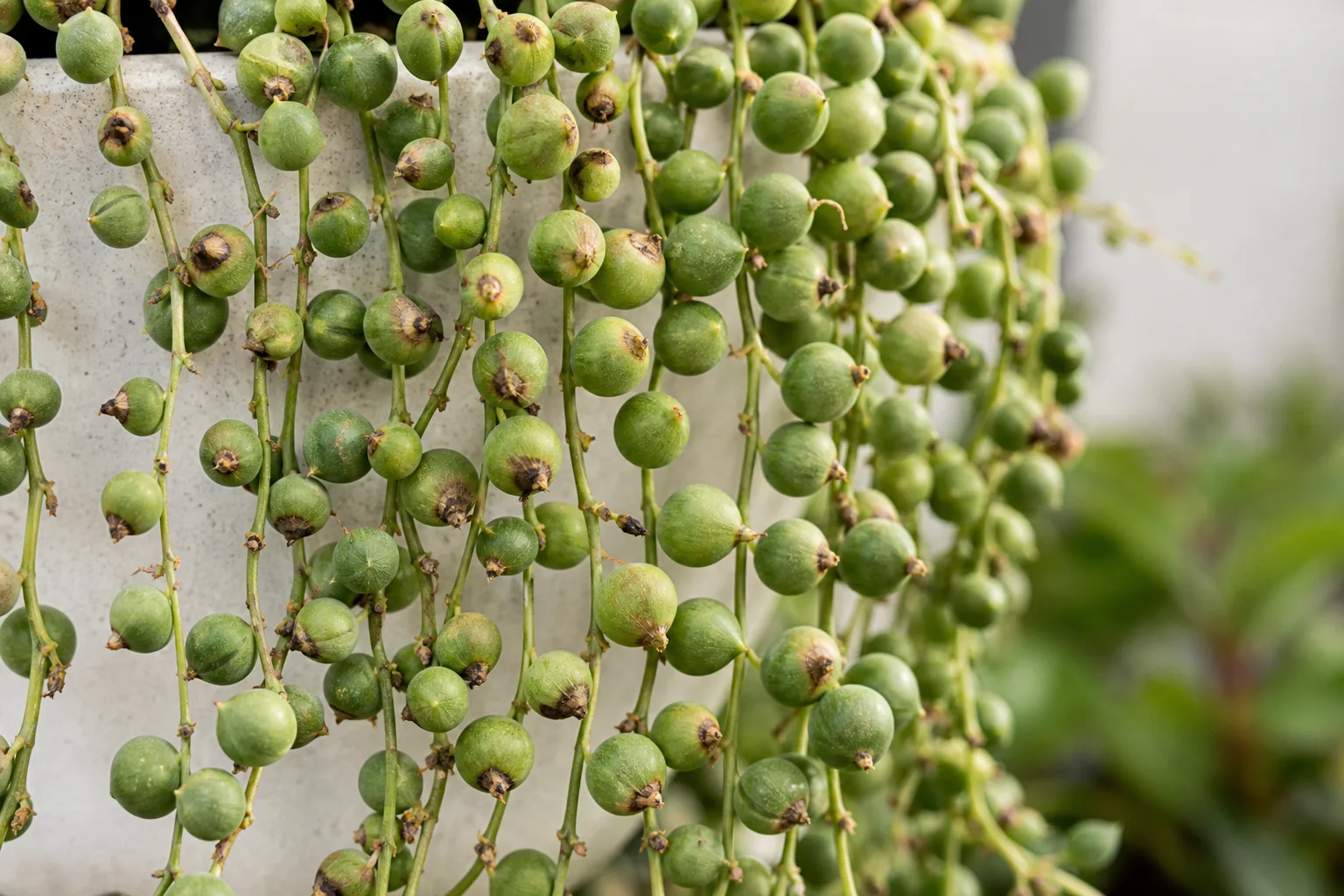
Brown Tips on String of Pearls: Causes, Checks & Fixes
This guide covers brown tips on String of Pearls. See also the general Brown Tips guide, watering, and light pages for this plant.
Brown Tips on String of Pearls: Causes, Checks & Fixes
Quick answer
Brown or tan marks on String of Pearls (Curio rowleyanus) pearls are a stress signal, not a disease. On this trailing succulent, the problem is almost never “dry air”-it is usually too much direct sun, too little water for too long, or salt stress from fertilizer and hard tap water. Each pearl is a tiny water-storage leaf with a small pointed tip and a translucent window; that delicate tissue burns easily when hot afternoon sun hits glass or when roots cannot deliver moisture.
First step: move the plant out of harsh direct afternoon sun and note which side of the strands browns. If damage clusters on the window-facing side, sun scorch is the likely cause. If pearls brown evenly while the mix is dusty dry, underwatering on String of Pearls is more likely. Do not reach for a humidifier-String of Pearls overview is unaffected by high humidity and prefers dry indoor air.
What brown tips look like on String of Pearls
String of Pearls does not have long strap leaves with classic tip burn like a peace lily. Browning shows on individual round pearls or short sections of stem.
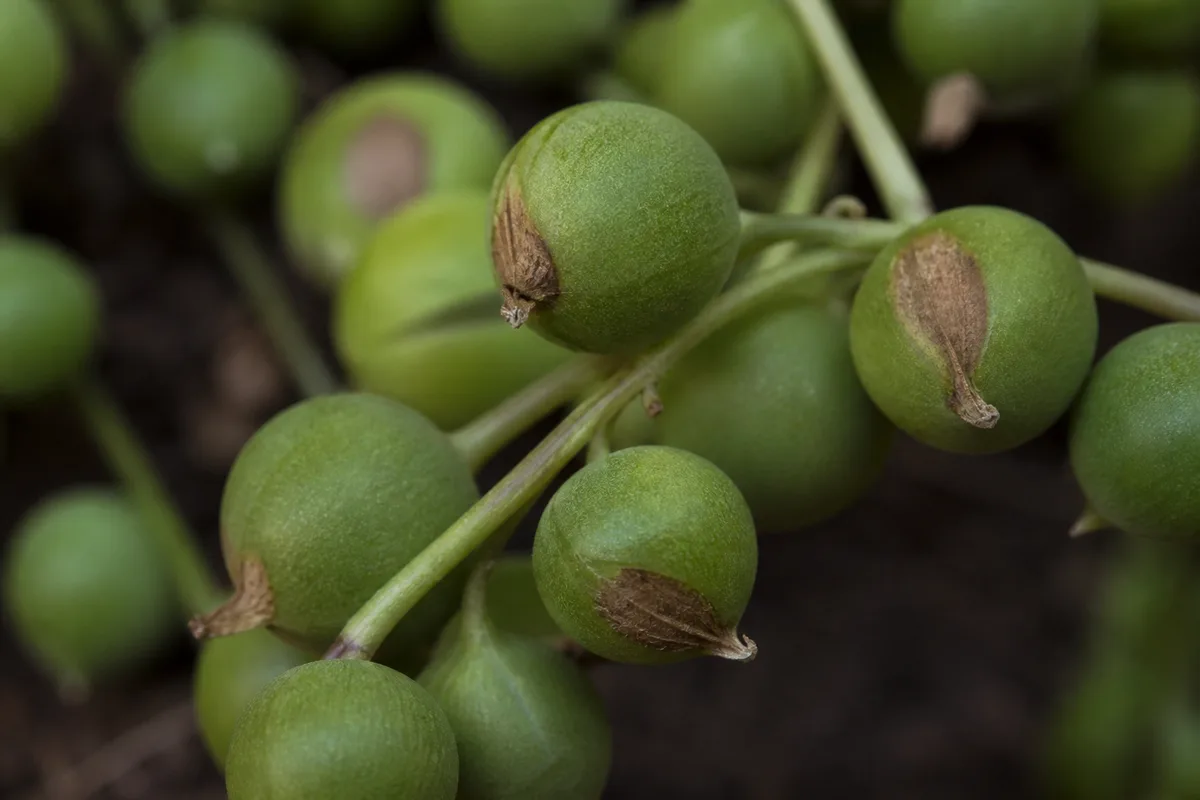
Brown Tips symptoms on String of Pearls - compare with healthy tissue on the same plant.
Sun scorch pattern:
- Dry tan, brown, or reddish patches on pearls that face the brightest window
- Damage often one-sided on outer trailing strands that get the most light
- Pearls feel firm and dry, not soft or squishy
- Mix may be normally dry; watering alone will not fix sun-facing burn if light stays too harsh
Underwatering pattern:
- Brown or tan at pearl tips before pearls fully shrivel and harden
- Wrinkled, deflated pearls along multiple strands, not just the sun side
- Pot feels very light; mix is dusty dry several centimeters down
- Strands may droop as pearls lose internal water
Salt or fertilizer stress:
- Brown tips or margins on newer pearls after recent feeding
- White crust on soil surface or pot rim
- Damage may appear on pearls not directly in sun, often after several weeks of repeated fertilizer
root rot on String of Pearls lookalike (not true tip burn):
- Brown pearls that feel soft, translucent, or burst
- Blackening stems at the crown with wet, sour-smelling mix
- Plant may look “thirsty” despite damp soil because rotted roots cannot move water
The epidermal window on each pearl helps photosynthesis in low light in the wild, but exposed pearls in intense direct sun can scorch through that thin tissue-brown often starts at the window stripe or the pearl tip.
Why String of Pearls gets brown tips
Curio rowleyanus evolved in dry South African habitats where it grows under bushes and between rocks that filter harsh sunlight. Indoors, owners often place it in a south window where magnified afternoon rays through glass exceed what the plant tolerates. Scorching of the leaves can occur from direct sunlight, and NC State lists partial shade-not full baking sun-as the appropriate light level.
Underwatering causes a different brown. Pearls store water internally; when roots stay dry too long, the farthest tissue-the pearl surface and tip-desiccates first. The plant exhibits shriveled pearls when overwatered, underwatered, or with improper light conditions. String of Pearls withstands extended drought better than soggy soil, but weeks without water still browns tips before strands go fully crisp.
Salt buildup is a quieter cause. Succulents in small pots accumulate minerals from tap water and fertilizer. Excess salts in the root zone pull moisture away from tissue and can scorch pearl edges-similar to tip burn on foliage plants, though less common here than sun or drought.
overwatering on String of Pearls rarely produces dry brown tips. Wet roots cause mushy brown pearls and crown rot instead. If your mix stays damp and stems blacken, the fix is drying out and trimming rot-not adding water because tips look “dry.”
Low humidity is a common misdiagnosis. Generic houseplant advice blames brown tips on dry air, but String of Pearls is adapted to arid climates and is unaffected by high humidity. Raising humidity can slow soil drying and increase rot risk without fixing sun or water stress.
How to confirm the cause
Work through these checks in order:
- Light direction - Note which pearls brown. One-sided damage on the brightest-facing strands strongly suggests scorch. Even brown on all sides after a sudden move to stronger sun can still be light stress.
- Soil moisture and pot weight - Stick a finger or skewer into the mix. Dusty dry with light pot weight supports underwatering. Wet, heavy mix with soft pearls points away from tip burn and toward rot.
- Pearl texture - Firm dry brown pearls fit sun or drought. Soft translucent brown pearls fit overwatering.
- Recent care changes - Did you move it closer to a window, skip several waterings, or fertilize heavily in the last month? Timing often confirms salt or sun stress.
- Salt check - Look for white crust on soil or pot edges. If present, flush before assuming humidity is the issue.
- Smell and stem color - Sour soil or black mushy stems mean rot, not cosmetic browning.
If pearls are firm, mix is appropriately dry, and browning is localized to sun-exposed strands, sun scorch is confirmed enough to act on light first.
First fix for String of Pearls
Move the plant to String of Pearls light guide with gentle morning sun only-away from hot afternoon rays through south or west glass.
Hang it farther from the window, add a sheer curtain, or shift to an east exposure. Do not jump from deep shade to a new hot window in one step; acclimate over a week if you increase light later. If underwatering clearly matches the pattern-widespread wrinkling and bone-dry mix-give one thorough watering until water runs from drainage holes, then let the mix dry out completely between waterings before the next drink.
Pick one primary fix based on your confirmation check. Do not simultaneously repot, fertilize, mist, and move to a new window-that makes it impossible to see what worked.
Step-by-step recovery
After the first light or water correction:
- Observe for one week without changing anything else. New browning should stop if the cause was identified correctly.
- Trim cosmetic damage - Snip fully dead brown pearls or short stem sections with clean scissors. Leave slightly brown tissue if unsure; healthy pearls nearby will keep photosynthesizing.
- Flush salts if crust is visible - Run plain water through the pot at two to three times the pot volume, let drain fully, and skip fertilizer for four to six weeks.
- Resume String of Pearls watering guide - Water when mix is fully dry and pearls show early wrinkling, not on a calendar. Water more in summer than in winter when growth slows.
- Adjust outdoor summer moves - If you bring the plant outside, acclimate gradually to prevent sunburn and protect from excess rainfall.
- Inspect for rot if mix was wet - If soft stems appeared during checks, unpot and trim mushy roots before returning to a dry cactus mix.
Wear gloves when handling cut tissue; sap may irritate skin and the plant is toxic to cats and dogs.
Recovery timeline
Sun scorch stops spreading within days once light softens. Existing brown pearls will not re-green; judge success by clean new pearls forming at stem tips within two to four weeks during active growth.
Underwatering recovery is faster when caught early-pearls often plump within 24 to 48 hours after a deep watering. Tips that already turned fully brown stay brown.
Salt-stress recovery takes longer. After flushing, expect two to three weeks before new pearls emerge without edge burn, assuming feeding stays light.
If browning spreads while soil stays wet, rot is advancing-timeline for salvage shortens and propagation from firm cuttings may be necessary.
Lookalike symptoms to rule out
Crispy leaves - Whole pearls turn hard and tan across strands, often from prolonged drought or extreme sun. Overlap with brown tips, but crisp is more advanced desiccation or scorch across the entire pearl.
Yellow leaves - Yellowing often signals pests, overwatering, or nitrogen issues before tips brown. Check for mealybugs in the crown and whether mix stays wet.
Root rot - Mushy translucent pearls and black crowns with sour soil. Not dry tip necrosis.
Mealybugs - White cottony patches and sticky residue, not clean dry brown tips.
Purple or red stress color - Some plants blush under strong light without dead tissue. Color change without crisp brown tips is stress pigment, not necrosis.
Mistakes to avoid
Do not mist or add a humidifier for brown tips on this succulent-it rarely helps and can keep soil wet longer.
Do not keep the plant in the same hot south window because “succulents need sun.” String of Pearls wants part shade with bright light, not baking afternoon glass.
Do not fertilize a stressed plant hoping to push new growth. Feed lightly in spring only after light and water are stable.
Do not water heavily on a schedule when the mix is already damp-that converts dry-looking stress into rot.
Do not trim deep into green tissue chasing perfect shape; remove only clearly dead pearls.
String of Pearls care cross-check
Brown tips often mean one pillar of care is off:
- Light - Bright indirect with some morning direct sun; avoid harsh midday rays.
- Water - Allow potting medium to dry completely between waterings; water when pearls begin to wrinkle.
- Soil - Fast-draining cactus or succulent mix; shallow pots dry faster than deep ones.
- Temperature - Best around 70–80°F during growth; cool dim winter rooms slow drying and increase overwatering risk.
When these align, tip browning usually stops without heroic intervention.
How to prevent brown tips next time
Place the hanging basket where it gets a warm, bright position indoors in free-draining cactus compost without direct hot afternoon sun on the pearls.
Water based on dry-down and pearl plumpness, not a fixed weekly schedule. Reduce winter watering sharply when growth slows.
Use clay or breathable pots so mix dries faster; avoid oversized containers that hold moisture around thin roots.
Feed at quarter strength once at the start of spring if the plant is actively growing-skip feeding on stressed or newly corrected plants.
Acclimate gradually when moving to brighter spots or outdoors for summer.
When to worry
Cosmetic brown on a few sun-facing pearls is not urgent. Treat as urgent when brown spreads with soft stems, black crown tissue, sour wet soil, or pearls turning translucent across multiple strands-that is rot or advanced collapse, not tip burn.
If the crown is firm and only outer pearls show dry brown after a light correction, patience and clean new growth are enough. If most roots are mushy on inspection, salvage healthy stem cuttings rather than fighting a collapsed plant.
Conclusion
Brown tips on String of Pearls look alarming on such a delicate trailing plant, but the diagnosis is usually straightforward: too much direct sun, too long without water, or occasional salt stress-not low humidity. Move out of harsh afternoon rays, confirm whether the mix is truly dry, and watch for new clean pearls before you change everything at once. That focused path fixes most cases without the humidifiers, heavy feeding, and unnecessary String of Pearls repotting guide that make this succulent harder than it needs to be.
When to use this page vs other String of Pearls guides
- String of Pearls watering guide - Use for routine moisture checks before assuming brown tips is the main issue.
- String of Pearls problems hub - Browse all 17 common issues on this species.
- Low Humidity on String of Pearls - Different entry point when symptoms overlap with brown tips.
- Underwatering on String of Pearls - Different entry point when symptoms overlap with brown tips.
- Overwatering on String of Pearls - Different entry point when symptoms overlap with brown tips.