Low Humidity on String of Pearls: Causes, Checks & Fixes
Quick answer
String of Pearls evolved for arid air and tolerates dry winter homes. Crisp or curling pearls usually mean underwatering, harsh sun, or spider mites-not low humidity. First step: check soil dryness and sun exposure before raising humidity.
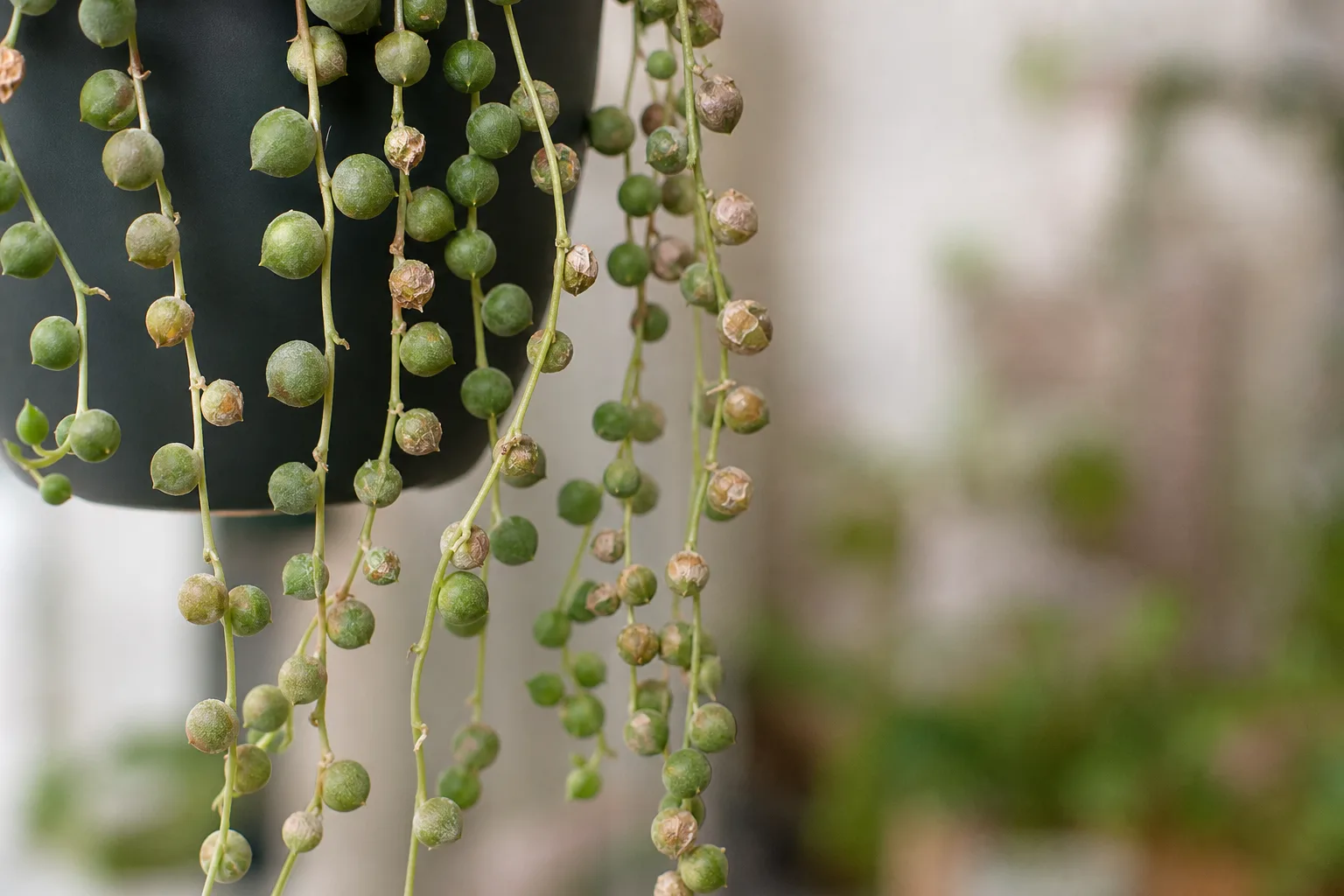
Low Humidity on String of Pearls: Causes, Checks & Fixes
This guide covers low humidity on String of Pearls. See also the general Low Humidity guide, watering, and light pages for this plant.
Low Humidity on String of Pearls: Causes, Checks & Fixes
Quick answer
String of Pearls is a desert-adapted succulent that prefers dry air, not steamy greenhouse conditions. Normal winter humidity of 20–40% in a heated home is usually fine. If pearl edges look crisp or strands curl, the cause is more often underwatering on String of Pearls, too much direct afternoon sun, or spider mites in a hot window-not dry air.
First step: check whether the mix is dry and whether pearls sit in harsh midday sun before you buy a humidifier or start misting. Raising humidity around trailing succulent crowns is one of the fastest ways to invite rot.
Why String of Pearls rarely suffers from low humidity
Curio rowleyanus comes from dry areas of southern Africa, where it trails along the ground storing water in nearly spherical leaves. Each pearl is engineered to minimize surface area exposed to arid air, with a translucent epidermal window that lets light reach interior tissue for photosynthesis. That leaf shape is a drought adaptation-not a sign the plant needs tropical humidity.
Missouri Botanical Garden notes that string of pearls tolerates infrequent watering, extended drought, and is unaffected by high humidity. In practice, that means low household humidity is normal and safe. RHS guidance for string of beads states these succulents dislike humidity and should never be misted. Fern and calathea advice does not transfer here.
String of Pearls performs best with low humidity below 40%, String of Pearls light guide with some morning direct sun, and a fast-draining cactus mix. Dry air combined with good airflow is safer than damp air trapped around dense trailing strands.
What low-humidity stress looks like on String of Pearls
True humidity-related damage is uncommon and usually mild. When it appears, it tends to show up only in extreme situations: a hanging basket pressed against a radiator, a strand draped directly over a heat vent, or prolonged blast-furnace dry air combined with already-stressed pearls.
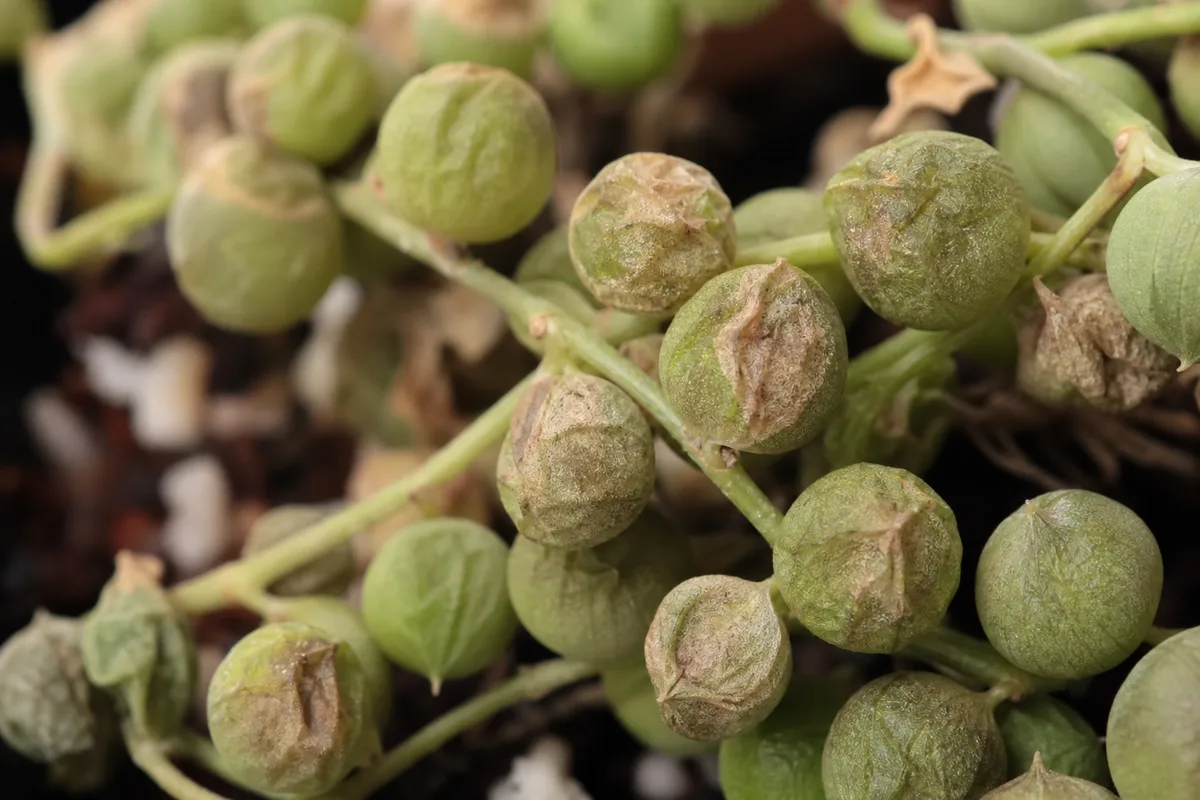
Low Humidity symptoms on String of Pearls - compare with healthy tissue on the same plant.
Signs that dry air may be contributing-not causing on its own:
- Pearl edges turn papery and tan without the wrinkled deflate of underwatering
- Strands closest to a heat source curl while pearls farther from the vent stay plump
- New pearls at strand tips look slightly smaller or tighter during a dry heating season, but soil moisture and light are otherwise stable
Signs that point away from humidity and toward other causes:
- Pearls wrinkle, flatten, and feel soft-underwatering
- Tan or brown patches on only the sun-facing side of outer strands-sun scorch
- Fine webbing, stippling, or dusty gray coating on pearls in a hot south window-spider mites
- Translucent, mushy pearls with wet soil-overwatering on String of Pearls or crown rot
Damaged pearl tissue will not re-plump. Judge recovery by new firm pearls emerging at growing tips, not by old crisp beads greening up.
How to confirm the cause
Work through these checks in order before changing humidity:
- Soil moisture test - Stick a finger into the top inch of mix. Dusty dry with widespread wrinkled pearls means underwatering, not humidity. Wet or heavy mix with soft pearls means rot risk-do not mist.
- Sun exposure audit - Note hours of direct afternoon sun through glass. More than a few hours of hot midday rays on south or west windows can scorch pearls on exposed strands.
- Heat source proximity - Is the pot or trailing strands within 12 inches of a radiator, space heater, or forced-air vent? Localized curl on the heated side supports dry-air contribution; even curl everywhere does not.
- Pest check in dry windows - Shake a strand over white paper in bright light. Spider mites thrive in warm, dry conditions and cause stippling, webbing, and curled pearls that mimic environmental stress.
- Pattern across the plant - Humidity issues from vents are localized. Underwatering and sun scorch often affect outer strands or sun-facing sides first. Pests may cluster on new tips.
If watering is consistent, light is appropriate, no pests are present, and only pearls beside a heat source show curl, dry air may be a secondary factor. If multiple stress signs overlap, fix water and light first-they explain more cases than humidity on String of Pearls overview.
First fix for String of Pearls
Move the pot away from radiators, heat vents, and hot window glass-then check soil moisture before watering.
Pull trailing strands off register grilles and shift the basket so no pearls rest on a warm appliance. Let the plant sit in stable bright indirect light with gentle morning sun. Only after placement is stable, water thoroughly if the mix is bone dry and pearls are wrinkled. Do not mist. Do not run a humidifier. Do not move the plant daily between rooms.
This single placement correction solves most “low humidity” scares on String of Pearls because the real trigger is often localized heat drying pearls faster than the plant can replace moisture-not ambient winter dryness.
Step-by-step recovery
Once the plant is away from heat blasts:
- Stabilize for one week - Hold String of Pearls repotting guide, fertilizer, and misting. Let the plant adjust to even temperatures.
- Water on dry-down rhythm - Water sparingly every two to three weeks in summer and barely once a month in winter, or when pearls show early wrinkling. Allow roots to dry between waterings.
- Trim only fully dead pearls - Snip strands where pearls are hard, brown, and hollow if they look unsightly. Partial tan edges can wait until new growth appears.
- Treat spider mites if confirmed - Rinse strands under lukewarm water, increase airflow, and isolate from other plants. Dry air favors mites; fixing pests matters more than raising humidity.
- Watch new tips - Firm round pearls at strand ends within two to four weeks during spring and summer mean conditions are working. Old damaged beads may stay crisp permanently.
Lookalike symptoms
| What you see | More likely cause | Quick check |
|---|---|---|
| Wrinkled, flattened pearls | Underwatering | Mix is dusty dry; pot feels light |
| Tan patches on sun-facing pearls | Sun scorch | Damage one-sided toward window |
| Fine webbing, stippling | Spider mites | Shake test; hot dry window |
| Mushy, translucent pearls | Overwatering / rot | Wet mix; sour smell at crown |
| Curl only above a vent | Localized dry heat | Move pot; compare strand positions |
Underwatering and sun scorch together are common in winter when plants sit in hot south glass while watering slows-this combination is often misread as humidity stress.
Mistakes to avoid
- Misting trailing strands - Wet pearls and crowded crowns rot quickly. RHS explicitly warns against misting string of beads.
- Grouping with humidity-loving plants - Bathrooms and humid kitchens trap moisture around succulent crowns and encourage fungus gnats.
- Running a humidifier for this plant - String of Pearls does not need one; excess ambient moisture with wet soil raises rot risk.
- Watering more because air feels dry - Dry winter air does not mean the mix dried faster if light is weaker. Overwatering in cool months kills more plants than low humidity.
- Ignoring spider mites - Dry hot window sills breed mites. Raising humidity will not clear an infestation and may worsen fungal issues.
Wear gloves when handling damaged tissue-the sap can irritate skin, and the plant is toxic to cats and dogs. Keep baskets on high shelves away from pets.
String of Pearls care cross-check
Low humidity is rarely the limiting factor. These basics prevent most pearl crisping:
- Light - Bright indirect with some morning direct sun. Avoid harsh afternoon sun through glass.
- Soil - Fast-draining succulent or cactus mix. Moisture-retaining peat-heavy blends cause rot.
- Water - Let mix dry between waterings. Pearls store water; chronic sogginess is more dangerous than dry air.
- Temperature - Best growth around 21–29°C (70–84°F) in summer and cooler winter rest near 10–16°C (50–60°F). Avoid frost.
- Airflow - Good circulation around hanging strands; not chilly drafts directly on the plant.
If pearls look stressed despite dry air and correct watering, revisit light intensity before assuming the room is too dry.
How to prevent problems in dry air
- Hang baskets away from radiators and forced-air vents; shorten strands that drape near heat sources.
- Use bright east or filtered south light rather than baking afternoon west glass in summer.
- Water based on mix dryness and pearl firmness, not on how dry the room feels.
- Keep winter watering sparse when growth slows-pearls need less replacement moisture in cool dim months.
- Scout weekly in hot windows for spider mites during dry heating season.
- Maintain sharp drainage and never let the crown stay wet overnight.
Dry air is an ally for String of Pearls when drainage and light are right. Prevention means protecting pearls from localized heat and incorrect watering-not humidifying the room.
When to worry
Low humidity alone is seldom an emergency. Escalate when:
- Pearls shrivel while soil stays wet-possible root or crown rot, not dry air
- Black mushy stems spread up strands from the soil line
- Widespread pearl drop after a sudden move to a much hotter window
- Spider mite webbing covers multiple strands and new growth stalls
In those cases, stop misting and humidifying, improve airflow, adjust water or light, and treat pests or rot as appropriate. A plant with firm roots, stable soil moisture, and new tip growth in spring is recovering-even if old crisp pearls remain.
Conclusion
String of Pearls is built for arid conditions. Dry winter air in most homes is compatible with healthy growth. When pearls crisp or curl, look first at watering, sun, localized heat, and pests-the fixes that matter for this succulent. Keep the air dry, the crown ventilated, and the mix fast-draining; that is the care this plant actually needs.
When to use this page vs other String of Pearls guides
- String of Pearls watering guide - Use for routine moisture checks before assuming low humidity is the main issue.
- String of Pearls problems hub - Browse all 17 common issues on this species.
- Brown Tips on String of Pearls - Different entry point when symptoms overlap with low humidity.