Spider Mites on Rosemary: Causes, Checks & Fixes
Quick answer
Spider mites on rosemary show as pale stippling and fine webbing on needle clusters, especially indoors in dry winter heat. First step: isolate the plant and rinse all needle surfaces thoroughly with lukewarm water before applying any spray.
Spider Mites on Rosemary: Causes, Checks & Fixes
This guide covers spider mites on Rosemary. See also the general Spider Mites guide, watering, and light pages for this plant.
Spider Mites on Rosemary: Causes, Checks & Fixes
Quick answer
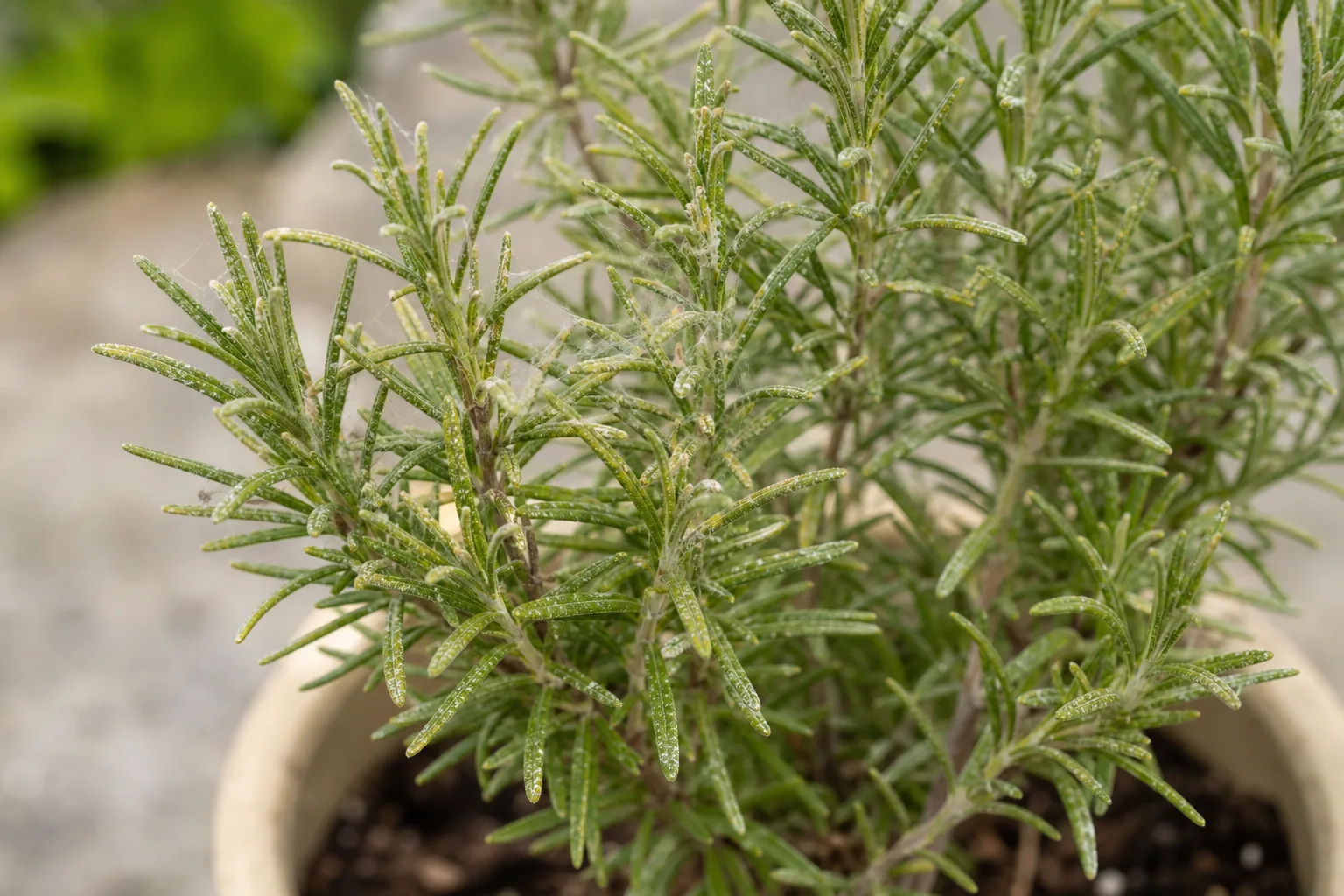
Spider mites on rosemary (Salvia rosmarinus) look like pale speckling, dull bronze patches, or fine webbing on needle clusters-most often on plants brought indoors for winter or sitting on hot, dry windowsills. The mites themselves are barely visible until populations build.
First step: isolate the plant and rinse every needle surface thoroughly with lukewarm water. Target stem joints and the undersides of foliage where colonies start. Do not reach for neem oil or soap until you have confirmed live mites and finished at least one full rinse-sprays on dusty, unstressed rosemary without coverage miss eggs tucked in webbing.
What spider mites look like on Rosemary
Rosemary carries narrow, aromatic needles packed tightly along woody stems. That shape makes mite damage easy to spot once you know the pattern.
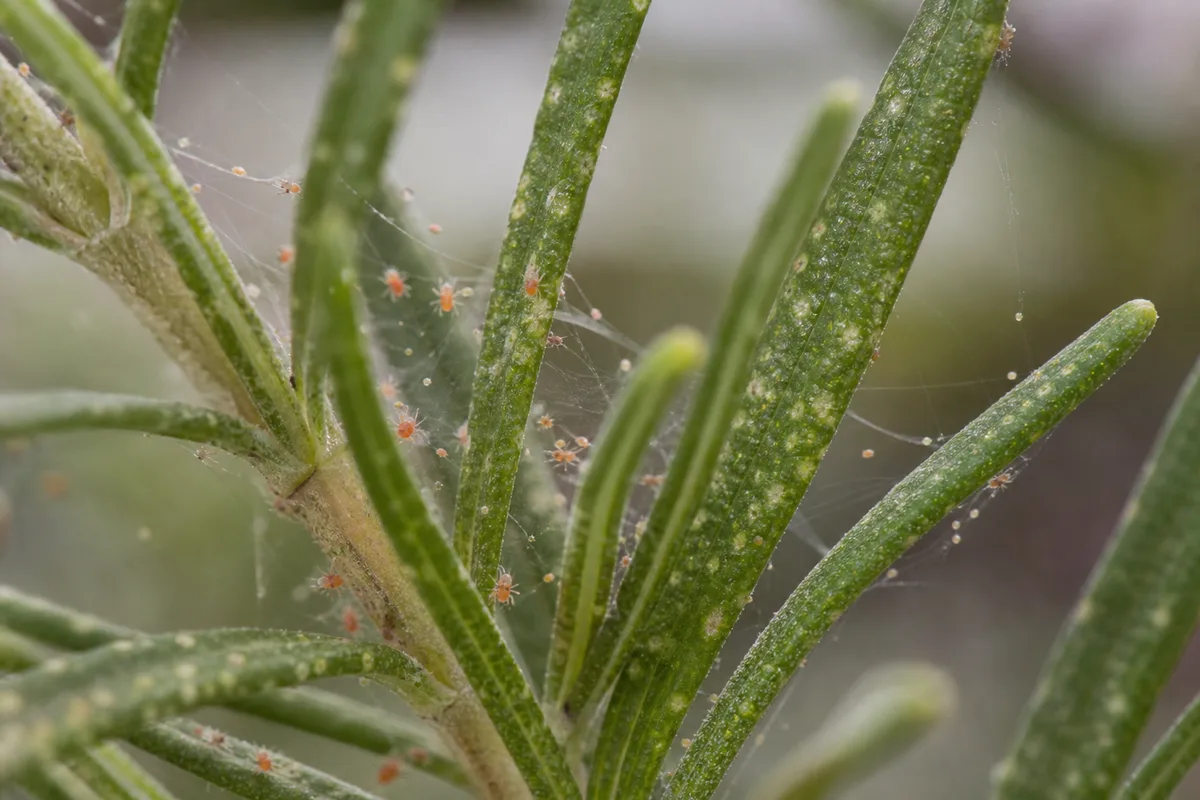
Spider Mites symptoms on Rosemary - compare with healthy tissue on the same plant.
Early feeding:
- Tiny pale yellow or white dots scattered across individual needles
- Needles look dusty, dull, or lightly sandblasted rather than uniformly green
- Slight loss of fragrance when you crush a damaged tip
Established infestation:
- Bronze or silvery stippling spreading along stem sections
- Fine silk webbing at needle bases, forked branches, or where stems meet
- Needles turning yellow-brown in patches while neighboring sections still look green
- New growth at tips may curl, stay small, or look dry even when soil is not bone dry
The tap test: Clip a 10–15 cm branch and slap it firmly onto white paper. Wait a few seconds. Mites fall as pinhead specks that crawl-often yellow-green with two dark spots on larger twospotted species. Red or orange fast-moving specks may be predatory mites; plant-feeding mites usually look greenish or yellowish when crushed.
Webbing is a late but reliable sign. A few stray threads at one joint can mean an early colony; sheets of silk across multiple stems mean the population is well established.
Why Rosemary gets spider mites
Rosemary evolved for Mediterranean sun, sharp drainage, and dry summer air-not the combination of indoor heat, low humidity, and reduced light that overwintering containers face. Missouri Botanical Garden notes that spider mites are a common indoor pest on rosemary brought inside for winter, alongside aphids, mealybugs, and whiteflies.
Dry, warm air is the main trigger. Twospotted spider mites reproduce fastest in hot, dry conditions. Indoor heating can drop humidity to 30% or lower while a south-facing sill still runs warm through glass-exactly the environment where mite colonies explode from egg to adult in as little as five days.
Rosemary’s care profile adds risk in subtle ways:
- Winter windowsill placement - Rosemary light guide is correct, but glass magnifies heat and blocks outdoor humidity. Pots above radiators or heat vents dry needle surfaces even faster.
- underwatering on Rosemary stress - Rosemary is drought tolerant, but needles curling inward from chronic dry soil weaken the plant. Stressed hosts show mite damage sooner than evenly watered rosemary in the same room.
- Dense needle canopy - Hundreds of narrow leaves give mites abundant feeding sites and hiding spots in webbing. Outdoor breezes dislodge colonies; crowded indoor sills do not.
- Bringing plants inside without quarantine - Mites hitchhike on rosemary, lavender, sage, and other herbs moved from patio to windowsill in fall. Infested plant material is a common introduction route.
- Predator loss indoors - Lady beetles, lacewings, and predatory mites that keep outdoor populations in check rarely follow pots inside. An outbreak that would self-limit in the garden can run unchecked on a kitchen sill.
overwatering on Rosemary is not the typical mite driver on rosemary-that pattern leads to root rot on Rosemary and mushy stem bases instead. If the pot stays wet and the caudex area smells sour, look at roots before blaming mites.
How to confirm the cause
Work through these checks in order so you do not treat drought, powdery mildew, or normal winter needle drop as mites.
- Stippling pattern - Mite damage is speckled and patchy on individual needles. Uniform brown tips from dry soil usually start at needle ends, not random dots across the surface.
- Webbing - Fine silk at stem joints strongly supports mites. Powdery mildew puts a white powder on surfaces without moving specks or web strands.
- Tap test - Confirm crawling specks on white paper after slapping a suspect branch.
- Underside inspection - Use a hand lens on lower needle rows and inner stems where webbing starts before it shows on outer tips.
- Soil moisture at 5 cm - Push your finger deep. Completely dry mix with inward-curling needles suggests underwatering stress that can overlap with mite damage; wet mix with soft stem bases points away from mites.
- Location audit - Note heat vents, radiator proximity, and hours of direct sun. Mites cluster on the warmest, driest side of the pot first.
- Neighbor plants - Check basil, thyme, oregano, and other herbs on the same sill. Shared stippling means quarantine the whole group.
If stippling is mild, no webbing appears, the tap test is negative, and needles feel firm with good aroma, wait and re-check in three days before spraying-some winter needle yellowing on lower branches is normal senescence, not pests.
First fix for Rosemary
Move the pot away from other plants and rinse all foliage with lukewarm water, using enough pressure to knock mites and webbing loose.
Hold the pot at an angle over a sink or tub. Work stem by stem, spraying from below so water hits needle undersides and branch forks. Rotate the plant so every side gets direct flow. Let foliage air-dry in bright light the same day-rosemary hates soggy crowns sitting in dark corners.
This single step physically removes mites, eggs, and protective webbing before any chemical control. Extension guidance consistently ranks forceful water spray as the first line for twospotted spider mites on houseplants and herbs.
Do not apply horticultural oil or insecticidal soap in the same session as your first heavy rinse unless the label allows it-you need dry needle surfaces for soap coverage on the follow-up day. Do not fertilize a mite-hit plant hoping to push new growth; soft tender shoots are easier mite targets. Do not repot on day one.
Step-by-step recovery
After the initial isolation and rinse:
- Repeat water rinses every three to four days for at least two weeks. Mite eggs in webbing hatch on a cycle; one shower rarely clears an established colony.
- Apply insecticidal soap or horticultural oil if live mites persist after several rinses. Coat all needle surfaces and stem joints; mites must be contacted directly because these products leave no residual kill. Repeat at five- to seven-day intervals for at least three applications.
- Improve the microclimate without overwatering the roots. Move the pot off the heat vent, set it on a pebble tray for local humidity, or run a small humidifier nearby. Rosemary dislikes soggy soil more than it dislikes dry air-raise humidity around leaves, not waterlogging in the pot.
- Trim heavily bronzed stems only after active mites are gone. Removing infested tips lowers pest load and opens spray coverage, but do not strip the plant bare while colonies are still active.
- Scout neighboring herbs daily for the first two weeks. Treat any shared sill mates on the same rinse schedule even if damage looks lighter.
- Hold harvest until sprays dry and label intervals pass if you cook with this rosemary. Wash needles well before kitchen use after any treatment.
Outdoor rosemary in summer rarely needs chemical escalation-a strong hose spray on a cool morning plus natural predators often suffices. Reserve repeated soap courses for persistent indoor outbreaks.
Recovery timeline
You should see fewer live specks on the tap test within three to five days of the first thorough rinse when the infestation is moderate. A full soap or oil course typically runs two to three weeks with label-interval repeats.
Old stippled needles stay marked-expect bronze patches on prior damage even after mites die. New needle clusters at stem tips should emerge green, firm, and fragrant within two to four weeks once stippling stops spreading and webbing stays gone.
If webbing returns within a week of three soap applications, the colony may be reinfesting from a nearby plant or eggs are surviving in dense inner stems-escalate isolation and inspect the whole collection before a fourth spray round.
Lookalike symptoms to rule out
Drought stress - Needle tips brown and curl inward; soil is completely dry at depth. No webbing, no crawling specks on paper. Deep watering after dry-down fixes tip curl over days; mite stippling persists after watering.
Powdery mildew - White powdery patches on needles in stagnant, humid corners with poor airflow. No moving mites, no stipple pattern. Rosemary is susceptible when air circulation is poor indoors-improve airflow rather than assuming mites.
Normal lower-needle drop - Older interior needles yellow and drop on woody rosemary in late winter without stippling on active tips. Firm stem bases and negative tap tests support this benign pattern.
Overwatering / root trouble - Yellowing with soft stem bases, sour soil smell, and wet mix at 5 cm. Mites may coexist but fixing drainage and dry-back comes first if roots are failing.
Thrips or aphids - Thrips leave silvery scrape marks and black specks; aphids cluster as soft-bodied groups on tender tips with sticky honeydew. Neither produces the fine sheet webbing typical of spider mites.
Mistakes to avoid
Do not spray only the top of the needle canopy-mites colonize undersides and stem forks first.
Do not stop after one rinse or one soap application. Eggs hatch on a cycle; incomplete courses are the main reason mites bounce back.
Do not place rosemary back against a heat vent because “Mediterranean plants like heat.” Dry blast air favors mites more than it helps growth indoors.
Do not use broad-spectrum insecticides on outdoor rosemary during active mite outbreaks-they kill predatory mites and lady beetles that naturally suppress twospotted spider mites, and can worsen infestations long term.
Do not assume yellow needles mean mites without the tap test. Winter care mistakes and normal senescence are common on potted rosemary.
Do not harvest and eat needles the same day you spray soap or oil unless the product label allows it and you wash thoroughly.
Rosemary care cross-check
Mite recovery sticks better when baseline care matches what rosemary expects:
- Light - At least six hours of direct sun daily indoors; supplement with a grow light if the sill is short on winter hours. Weak light produces soft, stretched growth mites prefer.
- Water - Water only when soil is completely dry at 5 cm depth. In winter that may mean every 10–14 days; in summer every 5–7 days. Match the pot, not the calendar.
- Soil and drainage - Sandy, gritty mix with open drainage holes. Never let the saucer hold standing water after a drink.
- Airflow - A small fan or cracked window on mild days reduces stagnant pockets where mildew and mites both thrive-without blasting cold drafts on the pot.
Fixing mites without adjusting a heat-vent placement usually means reinfestation within weeks.
How to prevent spider mites next time
Inspect needle undersides weekly from the week you bring rosemary indoors until spring return-outside day. Mites are easier to rinse off when only a few stems show stippling.
Quarantine new herb pots for two to three weeks before placing them beside established rosemary. Shake a branch over white paper during quarantine even if foliage looks clean.
Rinse foliage with plain water every one to two weeks through dry winter months. Disrupts early colonies before webbing spreads.
Keep pots off heat vents and away from radiator tops. If the only sunny spot is above a radiator, use a pebble tray and rotate the pot so one side does not bake dry.
When moving rosemary back outdoors in spring, hose it down before setting it near garden salvias. Outdoor predators will often handle stragglers once humidity and biodiversity return.
Avoid routine broad-spectrum sprays on outdoor rosemary unless a separate pest requires them-preserving natural enemies is your best long-term mite prevention in the garden.
When to worry
Treat as urgent when webbing spans most of the plant, needles drop in clusters despite correct watering, new tips stay deformed after two full rinse cycles, or mites appear on multiple herbs in the same room. Shared indoor collections can lose every sill herb within two mite generations if nothing is isolated.
A single stippled branch on an otherwise firm, aromatic plant with a positive tap test is serious but not hopeless-start rinsing today and scout neighbors before the colony spreads.
Replace rosemary that is mostly bare wood with active webbing on remaining tips if three weeks of disciplined rinsing and soap intervals fail. Starting fresh with a quarantined replacement is often less costly than fighting a reservoir plant that reinfects the whole herb shelf. Outdoor garden specimens rarely need this step unless drought stress and predator loss have let populations explode across an entire hedge.
Conclusion
Spider mites on rosemary are a dry-air, indoor-overwintering problem as much as a pest problem. Confirm with stippling plus a tap test-not yellow needles alone-isolate, rinse every needle surface thoroughly, then repeat through the mite life cycle if soap is needed. Old damaged needles may stay bronze; clean new tips and gone webbing mean you are winning. Keep full sun, dry-down watering, and heat vents in mind next winter and mites are far less likely to move in.
When to use this page vs other Rosemary guides
- Rosemary watering guide - Use for routine moisture checks before assuming spider mites is the main issue.
- Rosemary problems hub - Browse all 18 common issues on this species.
- Low Humidity on Rosemary - Different entry point when symptoms overlap with spider mites.
- Slow Growth on Rosemary - Different entry point when symptoms overlap with spider mites.