Aphids on Rosemary: Causes, Checks & Fixes
Quick answer
Aphids cluster on soft rosemary shoots and drip sticky honeydew onto needle-like leaves below. First step: blast stem tips with a strong water stream, then inspect undersides before any spray.
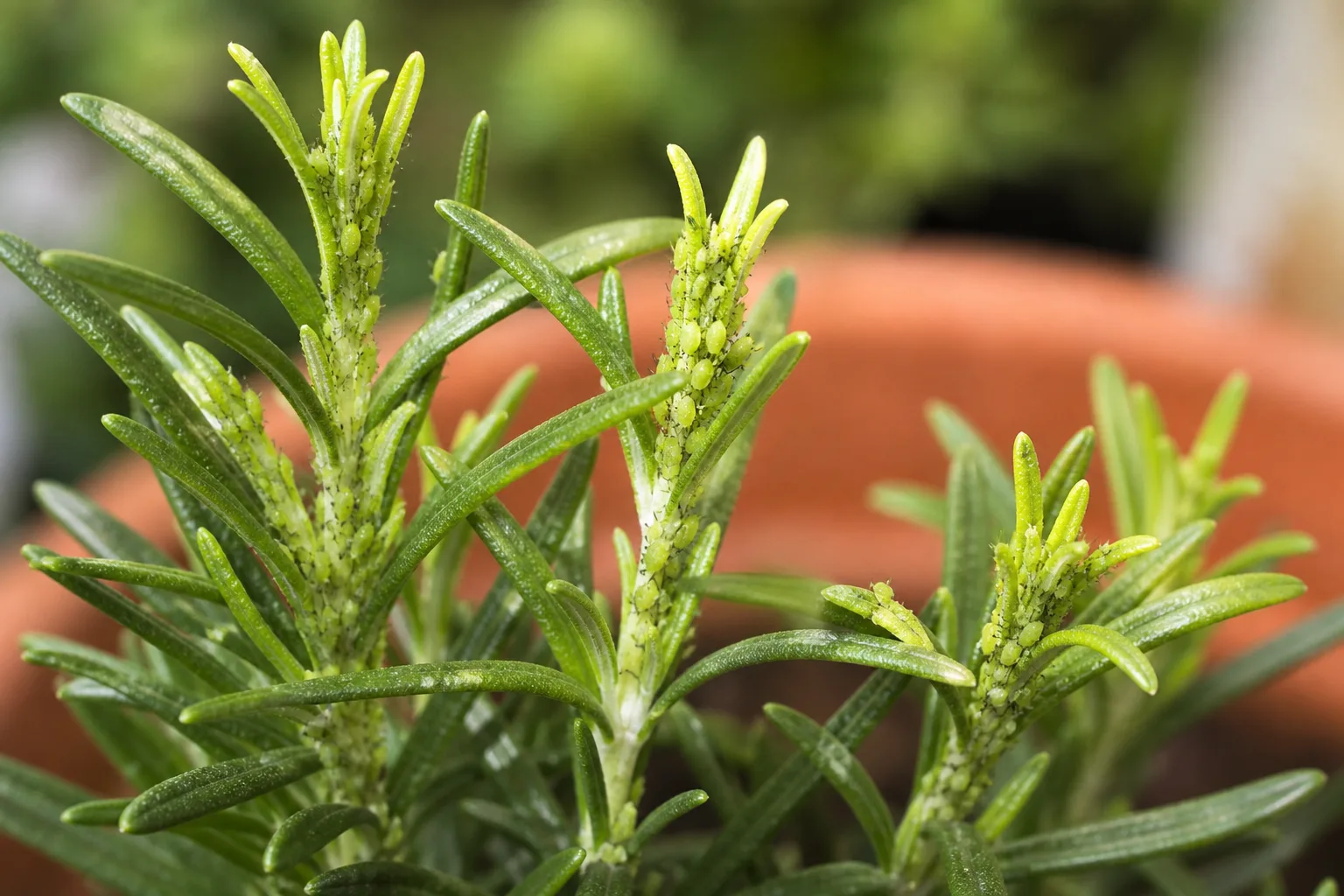
Aphids on Rosemary: Causes, Checks & Fixes
This guide covers aphids on Rosemary. See also the general Aphids guide, watering, and light pages for this plant.
Aphids on Rosemary: Causes, Checks & Fixes
Quick answer
Aphids on rosemary show up as soft clusters on tender stem tips and along the undersides of needle-like leaves, often leaving shiny honeydew that drips onto foliage below. Ant trails and black sooty mold are common secondary signs.
First step: blast stem tips with a strong stream of water, targeting the undersides of clustered needles. Let foliage dry in sun the same day. Only move to insecticidal soap if live aphids remain after two or three rinse cycles.
Because rosemary is grown for harvest, favor mechanical removal and labeled low-toxicity sprays over harsh residuals-especially on plants you plan to cook with soon.
Why Rosemary gets aphids
Rosemary is a Mediterranean shrub that prefers Rosemary light guide, gritty fast-draining soil, and dry intervals between watering. When those conditions slip-especially indoors over winter-soft new growth becomes both more abundant and more vulnerable.
Spring flush is the main risk window. After winter pruning or when overwintered container plants push fresh shoots in late spring, aphids target that tender tissue. Missouri Botanical Garden notes that aphids love tender young growth and that objects below feeding sites may become shiny, sticky, or blackened.
Indoor overwintering concentrates the problem. Rosemary brought inside for cold protection often sits in lower light with reduced airflow. MBG Plant Finder lists aphids, mealybugs, whiteflies, and spider mites as pests to watch on indoor rosemary-less common on outdoor plants with sun and air movement.
Stressed rosemary attracts pests faster than healthy plants. overwatering on Rosemary in humid climates weakens roots and produces soft, nitrogen-heavy shoots aphids prefer. Crowded herb shelves, saucers holding water, and pots wedged against walls all reduce airflow and mimic the stagnant conditions that favor sap-feeder buildup.
Rosemary belongs to Lamiaceae-the mint family-alongside sage, oregano, and thyme. Pests that colonize one kitchen herb often spread to neighbors on the same shelf. Aphids on a mint pot beside rosemary are a warning to inspect every Lamiaceae herb in the group.
What aphids look like on Rosemary
Typical aphid signs:
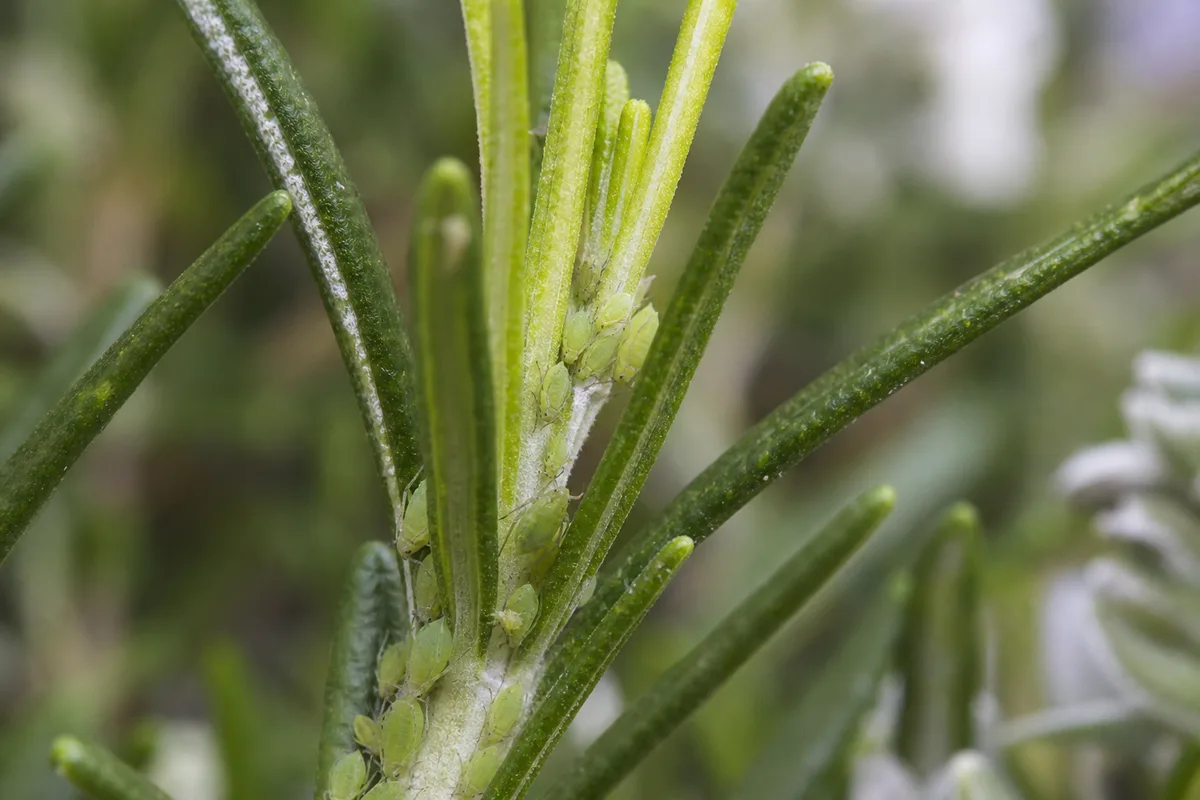
Aphids symptoms on Rosemary - compare with healthy tissue on the same plant.
- Tiny green, black, pink, or gray soft-bodied insects packed along stem tips and new side shoots
- Clusters tucked along the undersides of needle-like leaves where stems branch
- Curled, puckered, or yellowed new needles when feeding is heavy
- Shiny, tacky honeydew on upper needles where drips land
- Black sooty mold that wipes off with a damp cloth-mold grows on honeydew, not rosemary tissue directly
- Ants on pot rims, saucers, or nearby surfaces harvesting honeydew below colonies
Aphids are small-often under 3 mm-and pear-shaped. They do not fly when disturbed; they cling to the stem. That distinguishes them from whiteflies, which burst into a small cloud when you shake a branch.
Heavy feeding can stunt spring flush and distort flower buds before they open. On a culinary herb, even moderate colonies matter because honeydew and sooty mold coat needles you intended to harvest.
How to confirm the cause
Work through these checks before spraying:
- Location on plant - Aphids concentrate on soft tips and young side shoots, not random older woody stems. Uniform needle yellowing from base upward suggests watering stress, not insects.
- Underside inspection - Lift stem tips and check where needles meet stems. Colonies hide in tight axils that top-down views miss.
- Shake test - Shake a stem over white paper. Aphids fall as small dots that stay put. Flying white insects mean whiteflies, not aphids.
- Honeydew and mold - Rub a shiny upper needle. Honeydew feels tacky; sooty mold smears black and wipes away. Powdery mildew is a dry white dust, not sticky.
- Ant trails - Ants marching up container sides strongly suggest aphids or other honeydew producers on stems above.
- Neighbor herbs - Scan mint, sage, oregano, and thyme on the same shelf. Shared pests are common in Lamiaceae groupings.
- Soil and light cross-check - Push your finger 5 cm into mix. Rosemary should be dry at that depth before watering. Weak winter light plus wet mix stresses the plant and invites reinfestation after treatment.
If you find insects matching the above pattern, aphids are confirmed. If needles are sticky with no insects, ants, or wipe-able mold, look at scale insects or mealybugs before assuming aphids.
First fix for Rosemary
Blast stem tips and needle undersides with a strong stream of water early in the morning.
Hold the pot at an angle so water runs off needles instead of saturating gritty mix. Target the soft growth where colonies cluster. UC IPM recommends spraying aphids with a strong stream of water to knock them off sturdy plants-rosemary’s woody stems handle this well.
Let foliage dry in full sun the same day. Wet needles sitting in a dim kitchen overnight raise mildew risk on an already stressed plant.
Do not reach for insecticide on day one if you have not confirmed live aphids. Do not fertilize a pest-hit rosemary hoping to push replacement growth-that produces more tender shoots aphids prefer. Do not repot unless roots are clearly failing; Rosemary repotting guide stacks stress on top of pest stress.
Step-by-step recovery
After the initial water blast:
- Repeat water sprays every two to three days until live aphids are gone on close inspection of stem tips.
- Apply insecticidal soap if colonies persist after several rinses. Cover needle undersides and stem axils thoroughly. Soaps kill only insects contacted during application-repeat every five to seven days through one full pest generation.
- Wash sooty mold off coated needles with plain water once honeydew production stops. Trim heavily blackened tips if they no longer look harvestable.
- Manage ants if they protect colonies. Ant barriers on pot rims or moving the plant temporarily can help natural predators reach aphids.
- Isolate badly infested pots from other kitchen herbs until control holds for at least two weeks with no new colonies on tips.
- Adjust care - Move overwintered plants to the sunniest window or add supplemental light. Let mix dry fully at 5 cm depth before the next watering. Improve airflow between crowded shelf herbs.
If you harvest during treatment, rinse needles well and follow label intervals on any spray product. Insecticidal soaps are commonly used on vegetables up to harvest on label directions, but always read the specific product you apply.
Recovery timeline
Water knockdown shows results within two to three days when colonies are moderate. A full soap course may take one to two weeks with label-interval repeats. Sooty mold fades as honeydew dries up; expect cleaner new tips within one to three weeks once insects stay gone.
Curled young needles often flatten as new growth emerges. Old needles that yellowed or blackened under heavy coating rarely return to perfect gray-green-judge success by aromatic new shoots, not legacy damage.
Outdoor rosemary in full sun often recovers faster than indoor overwintered plants because natural predators-lady beetles, lacewings, and parasitic wasps-colonize aphid colonies when broad-spectrum sprays have not removed them.
Lookalike symptoms to rule out
Spider mites cause fine stippling and webbing on needle undersides, not soft pear-shaped clusters. Mites thrive in hot dry indoor air-confirm with a tap test over white paper.
Powdery mildew puts a dry white powder on needle surfaces in humid stagnant air. It is not sticky and has no insects or honeydew.
Scale insects appear as hard bumps on stems or needles that can be flicked off with a fingernail. Honeydew below scale looks similar to aphid honeydew, but the insect itself is very different.
Whiteflies fly when disturbed and leave pale nymphs on undersides. They share honeydew and sooty mold signs with aphids but need shake-test confirmation.
Overwatering and root rot on Rosemary yellow needles from base up, soften stems at soil line, and smell sour in mix-without insect clusters on tips. Fix drainage and watering before treating for pests.
Mistakes to avoid
Do not spray dish soap on rosemary. Detergents not labeled for plants can burn aromatic foliage. Use commercial insecticidal soap or horticultural oil per label.
Do not ignore ants. Controlling aphids alone is harder while ants defend colonies from predators.
Do not bring overwintering rosemary indoors without inspection. MBG herb guidance recommends spraying with insecticidal soap or horticultural oil before moving perennial herbs inside.
Do not harvest coated needles without rinsing. Honeydew and sooty mold are not ingredients you want in the kitchen.
Do not stack repotting, heavy pruning, and chemical treatment on the same day. Stressed rosemary rebounds slowly; fix pests first, then trim once new growth is clean.
Rosemary care cross-check
Aphids are often a signal that baseline care slipped, not a random pest lottery.
Light - Rosemary needs six or more hours of direct sun daily. Indoor winter plants in weak light push soft, pale shoots that aphids prefer. Move to the brightest south window or add grow lights.
Water - Water only when mix is completely dry at 5 cm depth. Saucers holding water and heavy peat mixes are the top killers in humid climates-and stressed roots invite pest flare-ups.
Soil - Gritty, fast-draining alkaline mix suits rosemary. Wet, poorly drained winter soil causes root rot and chronic stress that outlasts a single aphid treatment.
Airflow - Powdery mildew and pest buildup both worsen when pots crowd a shelf with no air movement. Space kitchen herbs enough that needles dry after watering.
Fertilizer - High nitrogen pushes soft leafy growth. Feed lightly in spring and summer only when the plant is healthy-not during an active infestation.
How to prevent aphids next time
Quarantine new nursery herbs for two weeks before placing them beside rosemary. Aphids hitchhike on tender nursery stock and spread fast on shared shelves.
Inspect stem tips weekly during spring flush-the window when rosemary pushes the soft growth aphids target. A hand lens catches colonies before honeydew coats harvestable needles.
Before overwintering container rosemary indoors, examine plants carefully and treat with water or labeled insecticidal soap. Bringing perennial herbs inside often imports pests that explode in warm dry indoor air.
Keep rosemary in full sun with gritty mix and dry-down watering cycles. Healthy sun-grown outdoor rosemary sees fewer aphid problems than stressed indoor specimens.
Preserve beneficial insects outdoors. Lady beetles, lacewings, and parasitic wasps control aphids when you have not sprayed broad-spectrum products that kill them.
Separate infested mint or sage from rosemary until those pots are clean. Lamiaceae herbs share pest pressure-one infested neighbor reinfects the group.
When to worry
Treat as urgent when colonies cover most soft shoots, flower buds abort before opening, ants swarm daily, or sooty mold spreads across the canopy within a few days. Chronic reinfestation on a woody, leggy indoor plant that never gets adequate sun may mean replacing the pot rather than endless chemical cycles-rosemary is easy to restart from cuttings when baseline care is right.
A handful of aphids on one spring tip is common and rarely catastrophic if you rinse early. Confirm insects, act on tips first, and escalate only when knockdown fails.
Conclusion
Aphids on rosemary concentrate on soft spring flush and overwintered indoor growth, leaving honeydew and sooty mold on aromatic needles below. Blast stem tips with water before you spray, confirm with underside inspection, and repeat until new shoots come in clean and firm. Matching full sun, gritty mix, and dry-down watering prevents the stressed soft growth that keeps aphids coming back on this Mediterranean herb.
When to use this page vs other Rosemary guides
- Rosemary watering guide - Use for routine moisture checks before assuming aphids is the main issue.
- Rosemary problems hub - Browse all 18 common issues on this species.
- Mealybugs on Rosemary - Different entry point when symptoms overlap with aphids.
- Spider Mites on Rosemary - Different entry point when symptoms overlap with aphids.
- Yellow Leaves on Rosemary - Different entry point when symptoms overlap with aphids.