Wilting on Prayer Plant: Causes, Checks & Fixes
Quick answer
Wilting on prayer plant often means underwatering or root rot, and both look similar. First step: feel soil at the top inch and lift the pot-water thoroughly if dry and light; stop watering and inspect roots if wet, heavy, or sour-smelling.
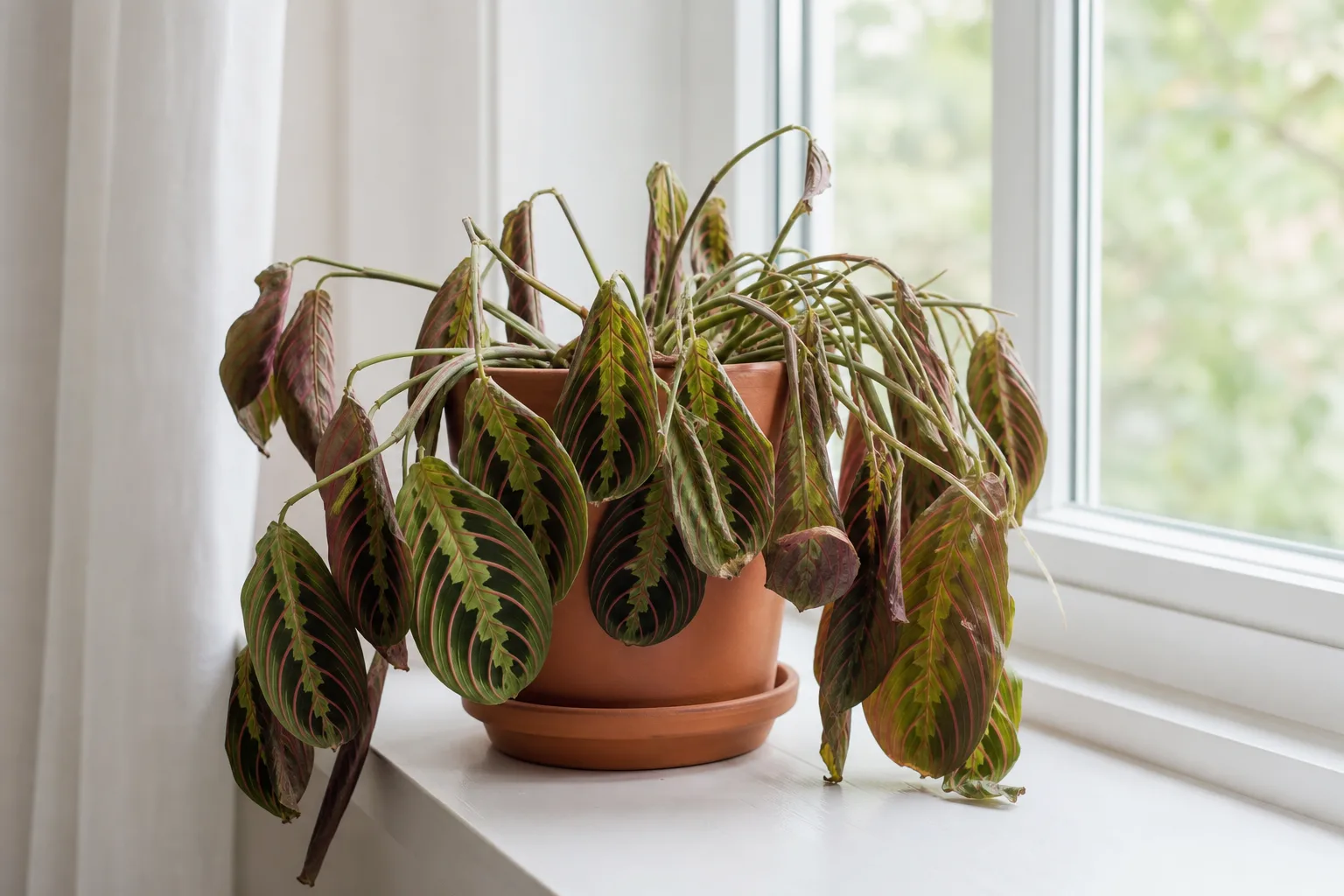
Wilting on Prayer Plant: Causes, Checks & Fixes
This guide covers wilting on Prayer Plant. See also the general Wilting guide, watering, and light pages for this plant.
Wilting on Prayer Plant: Causes, Checks & Fixes
Quick answer
Wilting on prayer plant (Maranta leuconeura) trips up even experienced growers because drought and root failure look the same: limp patterned leaves that may stop their nightly fold. Prayer plants want consistently moist soil during active growth, yet their fine rhizomatous roots rot quickly in soggy mix-so the wilted plant in front of you might need water or might need less of it.
First step: check moisture at the top inch and pot weight before you pour anything. A light, dry pot gets a thorough drink with drainage; a heavy, wet pot gets a dry-down and possible root inspection. Wilting can signal underwatering or overwatering, and guessing wrong makes both problems worse.
Feel soil before you pour. Wet soil plus wilted leaves means stop watering and inspect roots-not another drink.
This page covers acute turgor collapse and the dry-vs-wet paradox for growers who search by common name. The same species appears under the scientific slug maranta-leuconeura elsewhere on LeafyPixels; for extended botanical detail, see wilting on Maranta leuconeura. This guide sits in the prayer plant hub for everyday troubleshooting.
Wilting vs. drooping vs. underwatering - which guide to use
Three LeafyPixels pages on Prayer Plant overview overlap, but they answer different questions:
| Symptom focus | Best guide | What distinguishes it |
|---|---|---|
| Sudden limp collapse, dry or wet soil paradox | This page (wilting) | Acute loss of turgor; pot may be light or heavy |
| Posture change without full collapse | Drooping leaves | Leaves hang at a lower angle; may still fold at night |
| Chronic dry mix, crispy edges, slow decline | Underwatering | Repeated drought cycles, not one afternoon flop |
| Wet heavy pot with mushy roots | Root rot | Surgery-level decay after wilt fails to respond |
| Wet soil stress before roots decay | Overwatering | Firm roots on spot-check; pause water first |
If you are unsure whether leaves are wilting or just relaxing in warm afternoon air, check again after dark. A healthy prayer plant folds its leaves at night; true wilt often breaks that rhythm.
What wilting looks like on Prayer Plant
Healthy prayer plant leaves lie flat or angled upward by day and fold upward at night like praying hands. True stress shows when that rhythm breaks.
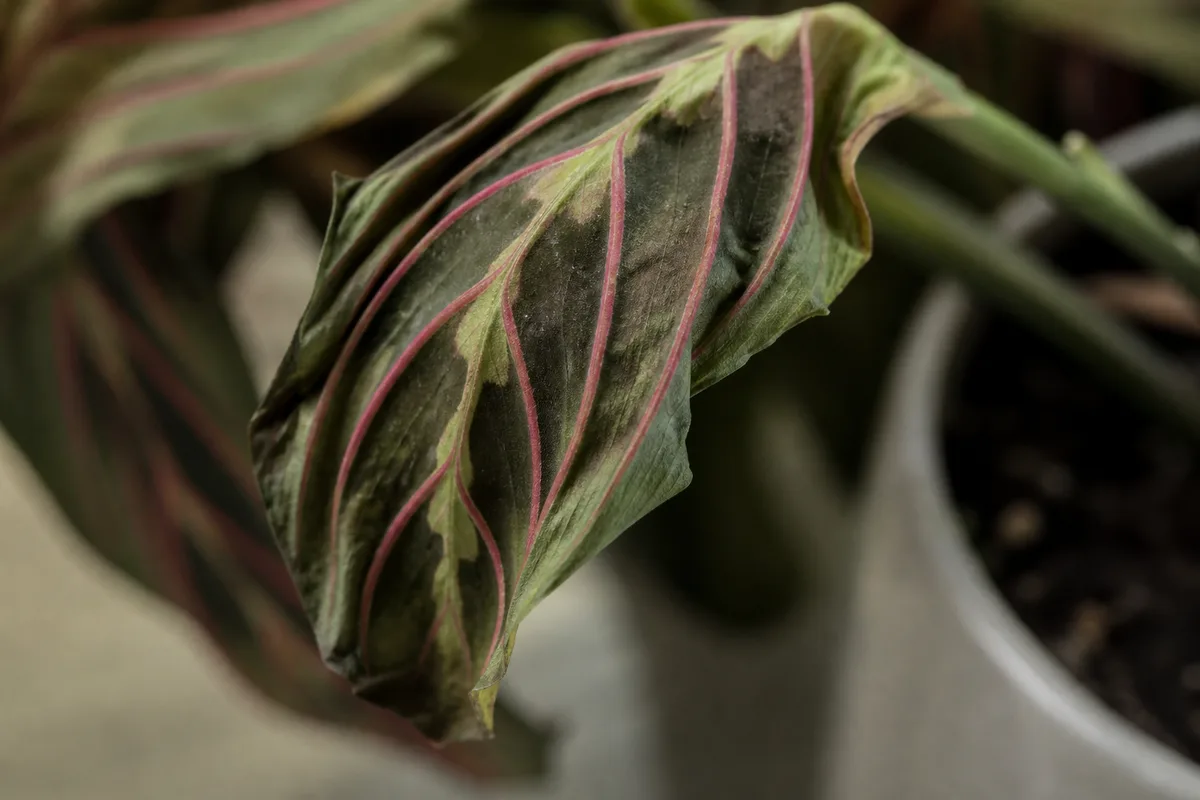
Wilting symptoms on Prayer Plant - compare with healthy tissue on the same plant.
Typical wilt patterns:
- Leaves hang limply from thin stems instead of holding their usual posture
- Foliage stays flat or drooped through the evening when it should rise
- Patterns on red-veined or herringbone cultivars stay visible early; margins yellow as stress advances
- Newest rolled leaves look soft or wrinkled rather than crisp
- Entire clumps collapse toward the pot edge while soil is either dust-dry or waterlogged
Drought wilt (dry light pot)
Underwatering wilt usually hits after the mix has dried too far-often with a light pot, dry soil at the top inch, and sometimes crispy brown tips on older leaves. Peat that pulls away from the pot sides can repel the next watering, leaving the center dry while the surface looks damp. Leaves may perk within hours after a deep drink if roots are intact.
Root-failure wilt (wet heavy pot, lost night fold)
Overwatering wilt appears while soil stays wet: heavy pot, yellow lower leaves, soft stems at the crown, or a sour smell from the mix. Damaged roots cannot supply water even when soil is saturated, so the plant looks thirsty while you have been watering faithfully. Lost or sluggish night folding on a wet pot is an early Maranta-specific signal that the root zone-not the air-is failing.
Temporary wilt after repotting
Wilting right after division or repotting often means disturbed roots plus wrong moisture, not a new disease. Temporary droop for several days with firm stems and no sour smell usually resolves if you hold stable light and moisture-see our repotting guide for depth and cachepot rules.
Why Prayer Plant wilts
Prayer plants evolved as low-growing tropical perennials from Brazil that live on humid, shaded forest floors. Indoors, wilting almost always traces to water moving wrong through the root zone, not random bad luck.
Underwatering and dry pockets
Prayer plant is not drought-tolerant. Your care profile calls for soil consistently moist at the top inch, with filtered or overnight tap water to limit fluoride brown tips per our watering guide. When the root ball dries completely-especially in warm, dry winter rooms near radiators-fine roots lose uptake capacity and thin leaves lose turgor fast.
Overwatering and root rot (wet-soil paradox)
The same species needs oxygen at the roots. Root rot may occur in poorly drained soil. Heavy potting mix without perlite, pots without drainage, saucers that hold water, or watering on a calendar regardless of light and season keeps roots waterlogged. Penn State Extension lists wilted leaves with soggy soil and algae on the surface as overwatering signs. Once roots decay, stems cannot hydrate leaves no matter how much you pour.
Low humidity compounding water stress
Prayer plants are rhizomatous, clump-forming perennials with thin leaves that transpire quickly. Humidity below roughly 50–60% increases water loss; leaves wilt faster when roots cannot keep pace. If moisture at the top inch is correct but only leaf edges crisp, read our low humidity guide before assuming root failure.
Environmental stress (drafts, repot shock)
Cold drafts or temperatures below about 18°C (65°F) slow root function-Maranta is intolerant of frost and prefers warm room temperatures. Too much direct sun bleaches patterns and drives water loss faster than shaded forest conditions allow. Crown wetness - Illinois Extension warns not to let water stand on prayer plant crowns because stems rot easily.
Spider mites, mealybugs, and thrips can weaken plants over time, but acute wilt on an otherwise clean prayer plant still starts with moisture diagnosis-not spraying first.
How to confirm the cause
Work through these checks in order. You only need to pick a path once soil tells you dry versus wet.
- Pot weight - Lift the container. Noticeably light means dry; heavy and slow to tilt means wet.
- Finger test at the top inch - Illinois Extension recommends testing soil before watering. Dusty dry at the top inch supports drought; cool, saturated mix supports overwatering.
- Smell - Sour or swampy odor from the drainage hole suggests anaerobic roots.
- Night movement - If leaves still fold up at night but look limp by afternoon only, heat or low humidity may be the driver; flat limp leaves day and night point to root-zone failure.
- Stem base - Firm green stems at soil line fit drought or mild stress; soft, darkening crowns fit rot.
- Recovery trial (dry pots only) - Water thoroughly until a little drains, empty the saucer, and recheck in four to six hours. Perking supports underwatering. No change with wet soil means stop watering and inspect roots.
If the pot is light, mix is dry throughout, and stems are firm, underwatering is the working diagnosis. If the pot is heavy, soil wet at depth, and lower leaves yellow, treat overwatering or root rot as likely until roots prove otherwise.
First fix for Prayer Plant
Check soil at the top inch and pot weight-then choose one path only.
Path A: dry mix - thorough drink with drainage
Water thoroughly with room-temperature filtered or overnight tap water until a small amount drains from the bottom. Empty the saucer so the plant is not sitting in runoff. Prayer plants need evenly moist soil during the growing season, not a shallow sprinkle that wets only the surface.
Path B: wet sour mix - dry-down and root inspection
Stop watering immediately. Move the plant to bright indirect light with good airflow, confirm drainage holes are open, and tip excess water from the saucer. Do not fertilize, mist heavily onto crowns, or repot on impulse the same day-let the root zone dry toward evenly moist, not bone dry, over several days while you watch for improvement.
Do not assume every wilted prayer plant needs water. UMD Extension notes that wilting houseplants may suffer from overwatering or root rots with discolored, softened roots-the fix is drainage and root rescue, not another drink.
Step-by-step recovery
When underwatering caused the wilt
- Bottom-soak if mix repels water - Set the pot in a sink with a few inches of water for twenty to thirty minutes, then drain fully. This rewets a hydrophobic root ball better than repeated top splashes.
- Water from the top once - After the soak, water until drainage runs clear and discard saucer water.
- Raise humidity - Group plants, use a pebble tray, or run a humidifier so leaves lose less moisture while roots recover. Target 50–70% relative humidity near active growth.
- Hold fertilizer - Wait until new growth looks healthy for two weeks before resuming half-strength monthly feed per our fertilizer guide.
- Adjust schedule - Note how many days until the top inch dries in your room; winter slows uptake, so stretch intervals when growth is minimal.
When overwatering or root rot caused the wilt
- Stop watering - Allow the top half of the mix to dry while keeping the plant in stable bright indirect light.
- Inspect if decline continues - After three to five days with no perk-up, unpot gently. Healthy prayer plant roots are pale and firm; rotten roots appear dark and soft.
- Trim decay - Cut mushy roots and any soft stem tissue back to firm white flesh with clean scissors. Sterilize blades between cuts.
- Repot into fresh airy mix - Use your usual blend per our soil guide in a pot only slightly larger, with drainage holes. Do not water standing on the crown.
- First water lightly - Moisten the new mix once, drain completely, then wait until the top inch dries before the next drink.
- Propagate backup - If one section of the clump has firm rhizome and roots, division or stem cuttings below a node can save genetics per our propagation guide while the main plant recovers.
For full trim-and-repot detail when more than a third of roots are mushy, see root rot on prayer plant.
Recovery timeline and what improvement looks like
Mild drought wilt often improves within four to twelve hours after thorough rehydration if leaves were limp but stems stayed firm. Full turgor across older leaves may take one to three days.
Overwatering caught early-wet soil but firm roots-may stabilize in one to two weeks once watering pauses and drainage improves. Expect older yellow leaves to drop rather than green up again.
Root rot after trimming and repotting needs two to six weeks before you judge success. New leaves that roll cleanly at night are the best sign. A firm stem base and stable pot weight matter more than cosmetic damage on old foliage.
Worsening signs: stems softening at the crown, spreading yellowing while soil stays wet, foul odor increasing, or no new growth by mid-spring after corrective care. Those patterns mean tissue loss is outpacing recovery.
Lookalike symptoms to rule out
| What you see | Likely cause | Route to |
|---|---|---|
| Normal nyctinastic movement - leaves rising at night with slight daytime relaxation | Healthy rhythm, not wilt | No action if soil moisture is correct |
| Dry air browning tips and margins without full stem collapse | Low humidity | Low humidity guide |
| Cold draft damage - blackened leaf patches | Temperature shock | Move away from windows and vents |
| Temporary droop after repot with firm stems | Transplant shock | Repotting guide |
| Stippling, webbing, or cottony clusters on undersides | Pest weakness over weeks | Spider mites or mealybugs |
| Chronic dry cycles, crispy edges | Repeated drought | Underwatering guide |
What not to do
Do not water on autopilot because leaves look limp-confirm moisture first. Avoid leaving wet plants in dim corners where soil never dries and roots suffocate. Do not mist heavily onto crowns; water standing on stems promotes rot.
Skip fertilizer on a stressed plant-salts in wet, damaged roots worsen wilt. Do not move a wilted prayer plant into direct sun hoping to dry it out; too much sun bleaches leaf colors and increases water demand.
Avoid repotting into a much larger pot while roots are failing; extra wet soil volume slows recovery. Do not assume winter needs the same water volume as summer-Illinois Extension notes allowing soil to dry somewhat between waterings in winter while keeping the plant from bone-dry collapse.
How to prevent wilting next time
Match watering to the pot, not the calendar. Test soil with your finger and water when the top inch feels dry in your home-often every five to seven days in active growth, less in winter per our watering guide.
Keep bright indirect light without hot direct sun per our light guide, 50–70% humidity, and room temperatures in the 18–27°C (65–80°F) comfort zone. Use filtered or overnight tap water, ensure drainage holes stay open, and empty saucers after every drink.
Choose moisture-retaining but airy mix with perlite and coco coir per our soil guide; avoid compacted old soil that stays wet in the center. Quarantine new prayer plants, inspect leaf undersides weekly, and press the pot lightly after watering so you learn what a properly hydrated Maranta weighs.
Practical checks
Urgency check
Wilt on wet soil with soft stems at the crown is same-day urgent root inspection. Slow afternoon droop on an otherwise folding plant in dry winter air can wait for humidity and a measured drink. Escalate immediately if the crown feels soft, stems blacken at the soil line, roots are mostly mushy on inspection, or wilt spreads while the mix remains soggy.
Best inspection order
Top-inch moisture → pot weight → night-fold test → stem firmness → smell at drainage hole → roots only if wet and declining.
Conclusion
Wilting on prayer plant is a moisture diagnosis problem before it is a mystery disease. Read pot weight and soil at the top inch, give water only when dry and light, and dry down plus inspect roots when wet and heavy. Prayer plants recover quickly from honest drought when roots are sound; they recover slowly-or not at all-from crown rot left sitting in stale water.
Related guides:
- Prayer plant overview - full care profile
- Watering - top-inch dry rhythm
- Drooping leaves - posture vs. acute wilt
- Underwatering - chronic drought patterns
- Overwatering - wet soil before rot
- Root rot - trim-and-repot surgery
- Wilting on Maranta leuconeura - scientific-slug deep dive
When to use this page vs other Prayer Plant guides
- Prayer Plant watering guide - Use for routine moisture checks before assuming wilting is the main issue.
- Prayer Plant problems hub - Browse all 17 common issues on this species.
- Underwatering on Prayer Plant - Different entry point when symptoms overlap with wilting.
- Overwatering on Prayer Plant - Different entry point when symptoms overlap with wilting.
- Root Rot on Prayer Plant - Different entry point when symptoms overlap with wilting.