Yellow Leaves on Prayer Plant: Causes, Checks & Fixes
Quick answer
Yellow leaves on prayer plant (*Maranta leuconeura*) usually mean wet soil, cold air below 60°F, or failing roots-not hunger. First step: pause watering until the top inch dries and move the pot above 60°F away from winter window glass.
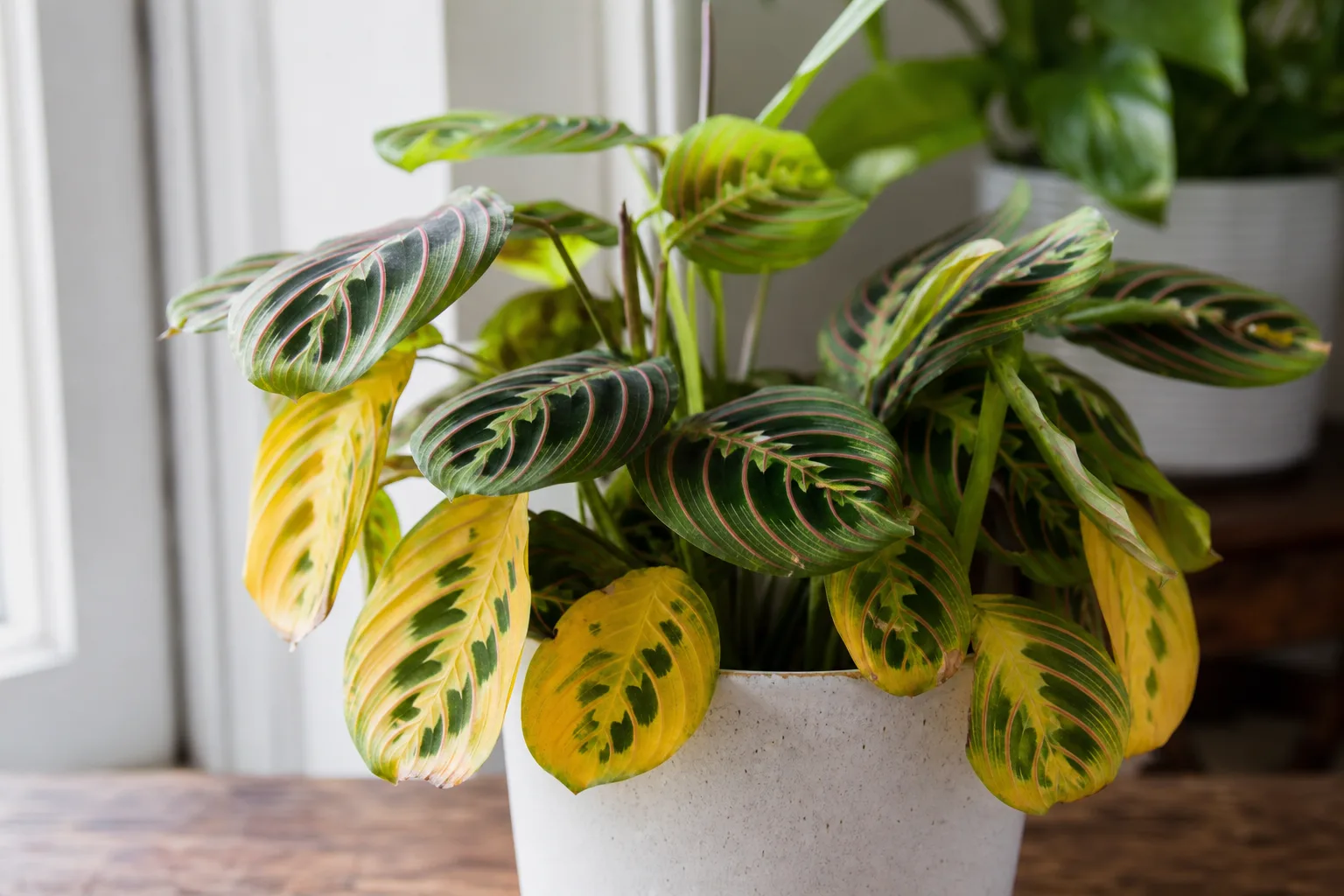
Yellow Leaves on Prayer Plant: Causes, Checks & Fixes
This guide covers yellow leaves on Prayer Plant. See also the general Yellow Leaves guide, watering, and light pages for this plant.
Yellow Leaves on Prayer Plant: Causes, Checks & Fixes
Quick answer
Yellow leaves on prayer plant (Maranta leuconeura) usually mean too much water in the root zone, cold air below 60°F (15°C), or failing roots-not a need for fertilizer. Prayer plants want moist but not waterlogged mix in bright diffused light and should not dip below 60°F.
First step: pause watering until the top inch of mix dries and move the pot above 60°F away from winter window glass. Do not feed, repot into a bigger container, or shower the foliage on day one.
Judge recovery by new growth, not old yellow blades. Spent yellow tissue rarely re-greens. Success means the problem stops spreading and new leaves roll up cleanly at night within two to three weeks after care stabilizes.
This page is the common-name yellow-leaves hub for growers who search “prayer plant” rather than the scientific name. The same species appears under maranta-leuconeura on LeafyPixels; see yellow leaves on Maranta leuconeura for the botanical-slug parallel. This guide sits in the prayer plant overview hub and adds a wet-vs-cold-vs-aging decision table, humidity and tap-water branches, and nyctinastic folding as an early stress signal-topics the binomial page covers more briefly.
Prayer plant is non-toxic to cats and dogs if pets chew fallen leaves; still remove damaged tissue and fix the underlying cause.
What yellow leaves look like on prayer plant
Yellowing on Maranta follows patterns that point to different fixes. Use this table before you change watering, light, or soil:
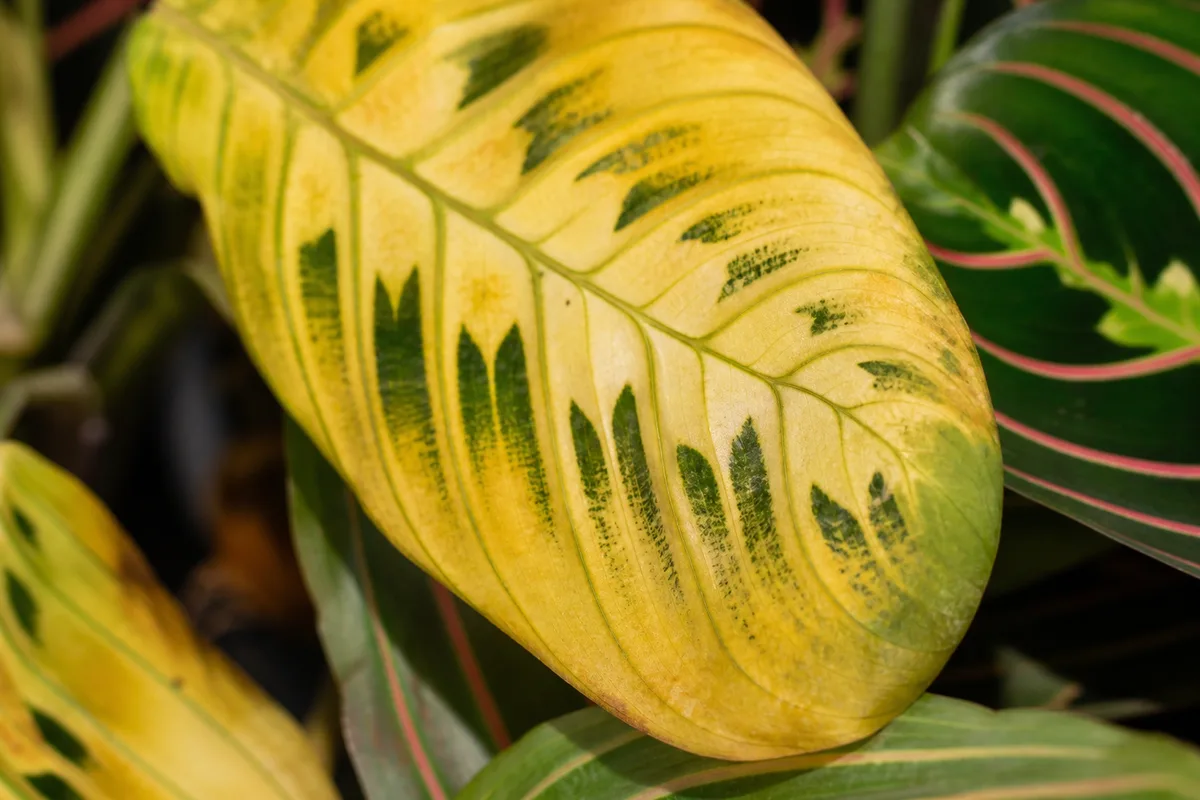
Yellow Leaves symptoms on Prayer Plant - compare with healthy tissue on the same plant.
| Pattern | What you see | Soil / pot | Night folding | Likely cause |
|---|---|---|---|---|
| Wet-soil yellowing | Bright yellow lower and inner leaves; limp patterned foliage | Heavy pot; surface stays dark and cool for days | Folding slows or stops on stressed leaves | Overwatering or early root rot |
| Cold-draft yellowing | Sudden yellow on leaves touching window glass or a vent | Mix may be normal weight; no sour smell | May stay flat on exposed side only | Air below 60°F near glass |
| Low-humidity stress | Pale or yellow lower leaves; margins may crisp before solid yellow | Moderate moisture; roots firm | Weaker fold on outer leaves | Dry winter air - see low humidity |
| Tap-water / salt burn | Yellow or tan margins on otherwise green blades | Normal watering rhythm | Folding often intact early | Fluoride or mineral buildup - see brown tips |
| Spider mite stippling | Fine yellow dots across herringbone pattern, not solid yellow leaves | Usually dry-to-normal; webbing on undersides | May weaken with heavy infestation | Spider mites exploiting dry air |
| Natural aging | One oldest leaf at base fades over weeks | Normal weight between drinks | New center leaves still roll at night | Senescence - no fix needed |
Healthy prayer plant leaves fold upward at night through nyctinastic movement. When roots are stressed in wet mix, that evening fold often falters before widespread yellowing-an early Marantaceae clue generic houseplant guides miss.
Why prayer plant gets yellow leaves
Overwatering and poor drainage
Maranta is a low-growing rhizomatous perennial that spreads horizontally from a shallow rhizome. Roots need oxygen even though the species wants evenly moist mix. Over-watering is a common cause of yellowing when soil stays saturated, especially in dim bathrooms or oversized decorative pots where the outer ring never dries.
Do not allow water to stand on crowns-pooled water after top-watering rots stems where they meet the rhizome and yellows foliage from the base up. Chronic wet soil invites root rot when roots turn mushy and cannot absorb water even though the pot feels heavy.
Cold air below 60°F
Prayer plants are intolerant of low temperatures and cold drafts. Winter window sills, leaky frames, and AC blasts can chill leaves below the 60°F minimum while the mix still feels moderately moist. Cold slows metabolism so a summer watering rhythm becomes excessive-and yellowing may appear without sour soil smell.
Low humidity and tap-water stress
Prayer plant evolved in tropical understory humidity. Dry forced-air heating pulls moisture from thin patterned leaves faster than shallow roots replace it. The damage often starts at margins but can progress to whole-leaf yellowing on outer growth. Leaves will burn with high fluorides in tap water, producing margin yellowing that mimics hunger-stacked with dry air on our brown tips page.
Rhizome biology and oversized pots
The rhizome stores some moisture, but it cannot compensate for weeks of saturated outer mix in a pot two sizes too large. Nursery plants in dense peat plus a decorative cachepot are a common yellow-leaves setup: the center still looks green while lower leaves yellow on permanently wet periphery soil.
Dim light slowing dry-down
Maranta needs bright, indirect light. In a dark corner, the same watering schedule keeps soil wet longer, yellowing lower leaves even when you think you are watering lightly. Compare placement with our light guide before blaming nutrients.
How to confirm the cause
Work through this numbered checklist in order-each step narrows the fix:
- Soil moisture at the top inch - Stick a finger in. Constant dampness for three or more days after the last drink points to overwatering. Bone-dry mix throughout suggests underwatering instead of chronic wet stress.
- Pot weight and smell - Lift the pot. A heavy, cool pot with sour or swampy odor from the drainage hole supports wet-root failure. Light pot with crispy leaves does not.
- Temperature at leaf height - Place a thermometer near the plant overnight. Readings below 60°F beside glass confirm cold stress even when roots are firm.
- Night folding on newest leaves - Check at dusk. Leaves that no longer rise to the perpendicular prayer position on new growth while soil stays wet suggest root stress-pair with a gentle root check.
- Root texture (if wet pattern persists) - Unpot only when steps 1–4 point to saturation. Firm, pale roots mean pause water and improve light; mushy brown roots mean trim-and-repot per the root rot guide.
- Pest stippling - Inspect undersides with a hand lens. Fine yellow dots and silk at petioles mean mites, not uniform overwatering yellow-see spider mites.
- Age pattern - Single oldest leaf only, slow fade, firm crown, normal pot weight? Likely natural senescence.
The first fix to try
Pick one path from your checklist result. Do not stack Prayer Plant repotting guide, fertilizer, and heavy pruning the same day.
Wet-soil path
Stop watering until the top inch dries. Move to brighter indirect light so the mix cycles moisture. Empty saucers after every drink. If yellowing continues after one full dry-down cycle on firm roots, you are still in overwatering territory-adjust the top-inch dry rule before surgery.
Cold-draft path
Move the pot above 60°F away from window glass, AC vents, and leaky winter frames. Hold your normal watering rhythm until the plant warms for several days-do not compensate for yellow leaves with extra water. Outer leaves damaged by chill may drop; judge recovery by new rolled leaves, not re-greening cold-hit blades.
Root inspection escalation
Unpot when the mix smells sour, stems soften at the crown, or multiple leaves collapse on a heavy wet pot. Trim mushy roots to firm tissue, let cut surfaces air-dry briefly, and repot into fresh moist but well-drained mix sized to the trimmed root mass-not the former foliage spread. Full numbered steps live on the root rot page.
Humidity or tap-water path
If the hygrometer reads below 45% at leaf height and margins crisp alongside yellowing, raise RH with a humidifier per the low-humidity guide before increasing watering. Switch to filtered or rainwater if margins yellow on an otherwise sound watering schedule-details on brown tips.
Recovery timeline
Mild yellowing from one overwatering episode or a short cold snap often stabilizes in 7–14 days after dry-down and warming. Root damage recovery takes two to four weeks-spent yellow leaves drop while new growth emerges.
Signs you are winning:
- New leaves open green with intact herringbone pattern
- Night folding returns on fresh growth
- Yellowing stops spreading up the plant
- Pot weight lightens between drinks on schedule
Signs the problem is worsening:
- Crown softness on wet soil
- Sour smell returns within days of repotting
- Multiple stems collapse while mix stays saturated
- New leaves emerge already yellow or fail to unroll
Causes to rule out
- Natural aging - One old leaf at the base every few months on an otherwise vigorous clump.
- Underwatering on Prayer Plant - Very light pot, dry mix throughout, dramatic curl-not limp yellow tissue on wet soil.
- Low light alone - Pale stretchy growth without sour smell or heavy perpetual wetness.
- Nutrient deficiency - Uncommon on recently repotted prayer plants; yellow margins from salts mimic hunger-do not feed on wet stressed roots.
- Spider mites - Stippled patches and webbing, not solid yellow lower leaves on soggy mix.
What not to do
Do not fertilize yellow leaves on wet soil-salt buildup yellows margins and stresses roots further. Do not assume wilting yellow foliage is thirsty when the pot is heavy; rotting roots cannot take up water even in damp mix. Do not repot into a much larger container. Do not mist heavily as a humidity fix on dense Marantaceae leaves that stay wet overnight.
How to prevent yellow leaves on prayer plant
- Water when the top inch dries, not on a calendar-allow more dry-down between drinks in winter when growth slows.
- Keep temperatures in the 65–80°F comfort band and above 60°F minimum away from cold glass.
- Maintain 50–70% RH near the pot during heating season via humidifier-not occasional misting alone.
- Use filtered water if tap minerals crisp or yellow margins.
- Match pot size to root mass and ensure open drainage; empty saucers after watering.
- Provide bright indirect light so soil cycles moisture between drinks.
- Scout undersides weekly in dry months for mite stippling before patches spread.
When to worry
Act the same day when:
- Stems soften at the crown on wet mix
- More than a third of leaves yellow in a week
- Soil smells sour again soon after repotting
- The plant wilts on a heavy pot three or more days after the last drink
Those patterns suggest crown involvement or advanced root failure-start the root rot guide immediately. If only one bottom leaf yellows slowly, roots are firm, and new night folding stays strong, you likely have aging or mild stress-not an emergency.
Conclusion
Yellow prayer plant leaves point to water, temperature, or roots first-dry the mix, warm the plant, and inspect roots when soil stays sour. Judge recovery by new rolled leaves that fold at night, not by old yellow blades turning green. When the wet-vs-cold table and checklist still leave you unsure, the botanical-slug guide offers parallel detail under the scientific name.
Related prayer plant guides:
- Watering - top-inch dry rhythm and winter adjustment
- Overwatering - wet-soil stress before roots decay
- Root rot - trim-and-repot when roots are mushy
- Low humidity - dry-air yellowing and humidifier setup
- Brown tips - tap-water and margin burn lookalikes
- Yellow leaves on Maranta leuconeura - scientific-slug parallel guide
- Overview - species context and hub links
When to use this page vs other Prayer Plant guides
- Prayer Plant watering guide - Use for routine moisture checks before assuming yellow leaves is the main issue.
- Prayer Plant problems hub - Browse all 17 common issues on this species.
- Overwatering on Prayer Plant - Different entry point when symptoms overlap with yellow leaves.
- Underwatering on Prayer Plant - Different entry point when symptoms overlap with yellow leaves.
- Not Enough Light on Prayer Plant - Different entry point when symptoms overlap with yellow leaves.