Best Soil for Prayer Plant: Mix, Drainage & Repotting
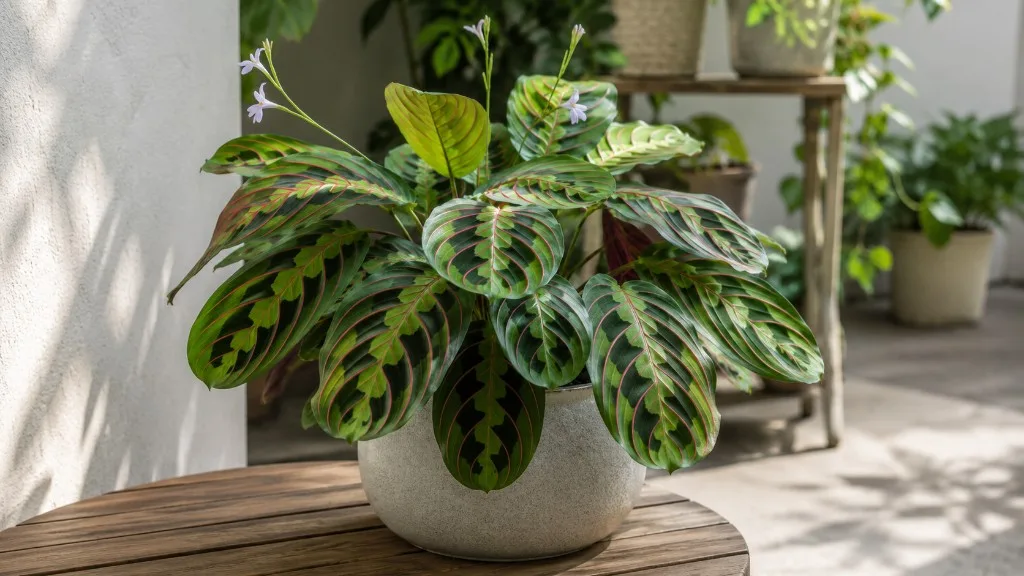
Best Soil for Prayer Plant: Mix, Drainage & Repotting
Best Soil for Prayer Plant: Mix, Drainage & Repotting
Best soil for Prayer Plant (Maranta leuconeura) is a light, peat- or coir-based mix amended with perlite and fine bark - roughly 2 parts base, 1 part perlite, 1 part bark - that holds even moisture without staying swampy around shallow rhizomes. If your mix only drains on paper, the leaves will tell you first: curling, yellowing, and crisp edges often trace back to a root zone that is either suffocating or drying out too sharply. This guide gives you measured recipes, a timed drainage test, pot depth rules for rhizomes, and a repot walkthrough so you can fix the mix before chasing humidity or fertilizer.
Why Prayer Plant Soil Is Different From Regular Potting Mix
Prayer Plant is not asking for “rich soil” the way outdoor garden plants do. It wants a light, airy, moisture-retentive potting mix that drains fast enough to keep fine roots breathing but holds enough water that the plant is not swinging between bone-dry and waterlogged every few days. Missouri Botanical Garden notes that indoor Maranta leuconeura performs well in a soil-based potting mix with bright indoor light and consistently moist soil - not wet stagnation. RHS describes the ideal substrate as moist but well-drained under glass, grown in peat-free compost with bright filtered light.
That dual requirement - moisture plus oxygen - is why standard bagged potting soil often fails without amendment. Dense peat-compost blends compact in plastic pots, hold water at the bottom, and leave the top inch dry while rhizomes sit in low-oxygen mud. Pure cactus mix dries too fast for prayer plants that evolved on humid forest floors. The target is consistent light moisture: the top inch can dry slightly between waterings, but the deeper mix should never go fully dry for long stretches, and it should never sit saturated for days.
What Prayer Plant Roots and Rhizomes Need From Soil
Maranta leuconeura is an evergreen, rhizomatous, low-growing clump native to Brazil, typically reaching 12–15 inches tall and wide indoors. NC State Extension describes short, rhizomatous stems that spread horizontally - roots stay relatively shallow compared with deep-rooted houseplants. UF/IFAS Extension recommends shallow pots because the root system is shallow, and warns not to allow water to stand on the crowns because stems rot easily.
That biology changes every soil decision. Fine roots need air pockets; shallow rhizomes need a mix that drains quickly after watering but rewets evenly; crowns buried too deep in dense, wet mix are a common path to collapse. Think of the mix as a sponge with holes, not a brick and not a swamp. After you water, excess should leave through the drainage hole within seconds. What remains should feel evenly damp through the root zone.
Best DIY Prayer Plant Soil Mix Recipes
Mix by volume using a scoop or cup, not by weight. Pre-moisten dry peat or coir slightly, blend in a clean tub, and run the drainage test below before potting a prized plant.
Starter Mix for Most Homes
This is the blend to start with in an average indoor room:
- 2 parts peat moss or coconut coir
- 1 part perlite or pumice
- 1 part fine orchid bark or pine bark fines
- A small handful of worm castings per quart of mix (optional)
That 50% base, 25% perlite, 25% bark ratio matches what multiple extension and botanical references converge on for Marantaceae-adjacent plants: RHS recommends peat-free compost that stays moist but well-drained; Illinois Extension advises regular potting mix kept evenly moist in bright, indirect light.
If you prefer a simpler three-ingredient shortcut aligned with the maranta binomial care model, use 60% potting compost + 20% perlite + 20% coco coir - moisture-retaining and well-draining, with a target pH band of roughly 5.5–7.0 as noted on RHS growing details for this species.
Airier Mix for Humid Rooms or Recovery From Root Rot
In humid homes, poorly ventilated bathrooms, or plastic pots that dry slowly, shift toward more aeration:
- 2 parts perlite
- 1 part fine orchid bark
- 1 part coconut coir
- No heavy compost until the plant re-establishes
In dry, heated rooms where pots lose moisture quickly, keep the starter ratio but increase coir or peat slightly - perhaps 55% base - without dropping perlite below 20%. More aeration material compensates for slow evaporation in humid conditions; slightly more base material compensates for fast drying in winter heat.
Core Ingredients and What Each One Does
Every ingredient should earn its place by doing one job: holding moisture, creating drainage, adding structure, or supplying slow organic nutrients.
Peat Moss or Coconut Coir
Sphagnum peat moss is the traditional base because it is lightweight, holds moisture evenly, and provides a slightly acidic environment prayer plants tolerate well. Coconut coir is the most common peat alternative - it holds moisture, rewets reliably, and starts closer to neutral pH. Either can serve as roughly 40–50% of a DIY mix by volume. Moisten dry peat or coir before mixing; dry peat can repel the first watering and leave the root ball dry while water runs down the pot sides.
Perlite and Orchid Bark
Perlite creates permanent air pockets so the root zone does not compact into an oxygen-starved mass. Aim for 20–30% perlite by volume in most recipes. Fine orchid bark adds chunkier structure, slows compaction as peat and coir break down, and mimics forest-floor debris. Useful proportion: 10–20% bark by volume. Be cautious with long-fiber sphagnum as the dominant base - it holds a lot of water and can stay wetter than beginners expect in deep pots.
Can You Use Regular Potting Soil for Prayer Plant?
Not on its own. Regular all-purpose potting soil is usually too dense for Maranta roots in indoor containers. UF/IFAS Extension recommends regular, well-drained potting mix - the keyword is well-drained, which bagged soil often is not without amendment.
Lighten what you have on the shelf: 1 part potting soil, 1 part perlite, 1 part orchid bark. Run the drainage test before use. African violet mix or tropical houseplant blend products are reasonable shortcuts; Illinois Extension lists regular potting mix as acceptable when kept moist - inspect texture and add 30–40% extra perlite or bark if the bag looks dark and fine. Cactus mix alone dries too fast; blend 1 part cactus mix to 2 parts coir and add perlite until the texture feels open. Garden soil should never go into an indoor prayer plant pot.
Drainage Speed and the One-Minute Drainage Test
Before you commit a plant to a new blend, run a quick test. Fill a small nursery pot with moistened mix, water thoroughly, and time how long water takes to run from the drainage hole.
A good prayer plant mix drains in roughly 3 to 8 seconds after a full watering. If water pools on the surface for more than ten seconds, add perlite or bark and test again. If it drains in under two seconds and feels almost gritty, increase coir or peat slightly. Squeeze a moist handful - it should hold together briefly then crumble apart. A sticky clump means too little aeration.
Once potted, after watering until runoff appears, water should reach the saucer within a minute, not trickle out ten minutes later. If the bottom stays soggy while the top dries, the mix has compacted and refresh is due even without upsizing the pot.
Pot Choice and Depth for Shallow Rhizomes
Drainage holes are non-negotiable. No mix compensates for a sealed bottom. UF/IFAS Extension is explicit: plant in well-drained mix and do not let water stand on crowns. Decorative cachepots work only if the inner nursery pot drains freely and you empty runoff after every watering.
Choose a pot only 1–2 inches (2.5–5 cm) wider than the root ball when repotting. Because prayer plants spread by shallow rhizomes, prefer shallow pots over deep cylinders - extra depth holds wet mix around unused soil while rhizomes sit in stagnant moisture. Match depth to rhizome spread, not leaf height. Terracotta dries faster; plastic retains moisture longer. Adjust the recipe for pot material and room humidity rather than choosing pots for aesthetics alone.
pH, Minerals, and When to Flush the Mix
RHS lists Maranta leuconeura as tolerating acid, alkaline, or neutral pH with moist but well-drained conditions - practically, most peat- and coir-based mixes fall in a slightly acidic to neutral band around 5.5–7.0, which suits prayer plants without constant testing.
What matters more day to day is mineral buildup. NC State Extension notes leaves burn with high fluorides and over-fertilization - salt crust on the soil surface, brown leaf tips despite adequate humidity, and slowed growth after regular feeding often trace to the root zone, not the air. Flush the pot by running water through until it drains freely, or refresh the mix at repotting rather than adding more fertilizer. Filtered or distilled water helps in hard-water homes; soil choice interacts with water quality because dense, wet mix concentrates salts faster than an airy blend.
When to Refresh or Repot Prayer Plant Soil
Refresh soil when it compacts, smells sour, dries in odd patterns, or no longer supports healthy new growth. Repot when roots crowd drainage holes, the mix dries out in under three days because the root ball fills the pot, you are recovering from root rot, or drainage has slowed despite correct watering.
UF/IFAS Extension suggests repotting in February or March when the plant outgrows its container - spring and early summer are the safest windows when growth resumes. Avoid repotting a severely stressed plant unless bad soil is clearly the cause. Refresh every 2 to 3 years even without upsizing, because peat, coir, and bark decompose and lose the air structure roots need.
Step-by-Step Repot for Prayer Plant
Water the plant 24 hours before repotting so the root ball holds together. Choose a shallow pot one size up with drainage holes. Pre-moisten new mix and run the drainage test. Slide the plant out gently, inspect roots, and trim brown, mushy sections with clean scissors - healthy roots should be firm and pale.
Loosen the outer edge of the old root ball rather than stripping all old soil away. Place a layer of new mix in the bottom, position the plant so rhizomes sit at the same depth as before - never bury the crown deeper - and fill around the sides. Tap gently to settle; do not pack tightly. Water lightly to settle, place in bright, indirect light, and skip fertilizer for 4 to 6 weeks. Some leaf curl in the first week is normal; persistent decline usually means the mix is too wet, the pot is too deep or large, or damaged roots were not trimmed.
For a full repot workflow including division timing, see the dedicated prayer plant repotting guide.
Soil Mistakes to Avoid
The most repeated error is dense, unamended potting soil in an oversized decorative pot with poor drainage strategy. Prayer plants respond with yellow leaves, and growers often water more - the opposite fix.
Rocks or gravel at the bottom do not improve drainage; they reduce usable root space and can keep the lower mix wetter. Oversized pots hold extra water without extra roots to use it. Burying rhizomes or crowns too deep after repotting causes stem rot - Illinois Extension warns that crowns must not sit in standing water.
Do not repot on day one after purchase unless the mix is clearly failing. Do not stack repotting, fertilizing, and location changes simultaneously. Watch for hydrophobic old mix that repels water - if water runs down the pot wall while the center stays dry, repot into fresh, pre-moistened blend. Self-watering pots can work with airy mix and healthy roots but fail quickly with dense soil or an already compromised root zone.
Know Your Plant: Maranta leuconeura Context
Prayer Plant (Maranta leuconeura) is the same species often listed under the botanical slug maranta leuconeura - common-name and Latin-name pages should agree on mix fundamentals even when display names differ. It is a low, rhizomatous clump from tropical Brazil, valued for patterned foliage and nyctinastic leaf movement rather than flowers.
NC State Extension notes root rot may occur with poorly drained soils - the single clearest link between soil choice and long-term health. Leaves are dramatic signalers: judge the newest rolled leaves and root-zone moisture before reacting to every old edge mark. Soil performance connects directly to watering rhythm and light level, but this page stays focused on the mix, pot, and root zone so you can fix drainage before adjusting other variables.
Practical Root-Zone Checks
Drainage check: After a full watering, runoff should appear within a minute. Water sitting on the surface, running down sides, or trapped in a cachepot means the soil system needs correction.
Smell test: Fresh mix smells earthy. Sour, swampy, or stagnant soil means roots may be losing oxygen before leaves show the full problem - inspect roots and consider an airier rescue mix.
Buying check: Choose plants with firm new growth and mix that does not smell sour or feel compacted. Wet soil in a dim shop corner is a warning sign regardless of leaf pattern.
If problems persist after soil correction, review overwatering, mold on soil, and root rot before changing several care variables at once.
Related Prayer Plant Guides
- Prayer Plant overview - full care context
- Watering - how fast your mix should dry between drinks
- Light - placement that affects drying speed
- Repotting - division and seasonal timing
- Propagation - rhizome division at repot time
Conclusion
The best soil for Prayer Plant is a balanced, peat- or coir-based mix amended with perlite and fine bark - start with 2 parts base, 1 part perlite, 1 part bark, or 60% compost + 20% perlite + 20% coir - adjusted for your room’s humidity and pot material. Standard potting soil and pure cactus mix both miss the mark without amendment, but either can be adapted if you prioritize drainage and test the blend before potting.
Run the 3-to-8-second drainage test, use shallow pots that match rhizome depth, repot in spring when mix breaks down or roots outgrow the container, and keep crowns above stagnant moisture. Prayer Plant will always be somewhat fussy about consistency, but a root zone that breathes and stays evenly moist removes the most common reason these plants struggle indoors. Get the mix right, and watering, humidity, and light become much easier to calibrate.
Related tool
Try the Soil Mix Calculator with prayer-plant pre-selected to estimate needs for your setup.