Prayer Plant (*Maranta leuconeura*) Fertilizer: When, How
Prayer Plant (*Maranta leuconeura*) Fertilizer: When, How, and Mistakes to Avoid
Prayer Plant (*Maranta leuconeura*) Fertilizer: When, How, and Mistakes to Avoid
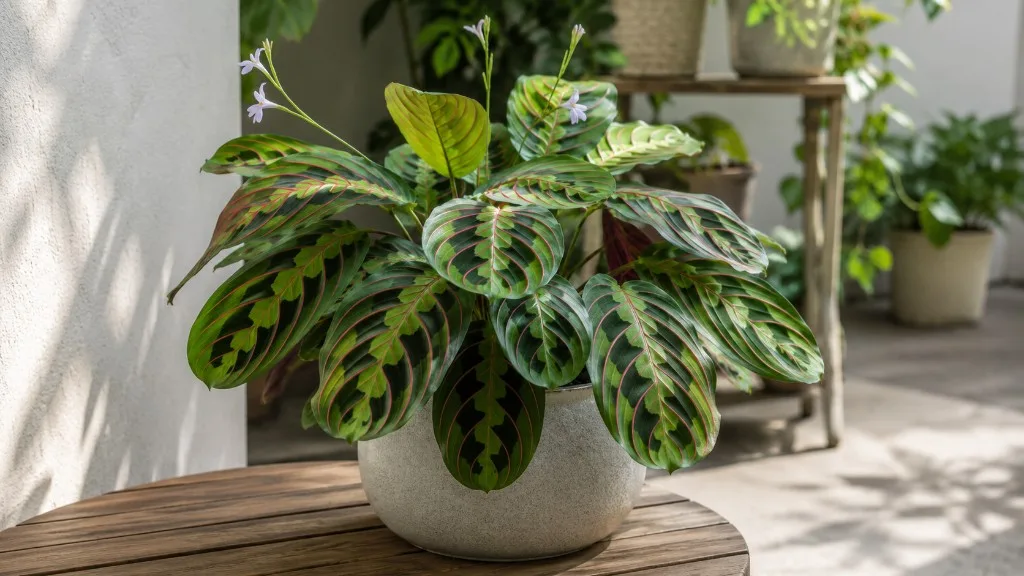
A prayer plant that stops folding its leaves at night, pushes out smaller pale leaves, or develops crisp brown edges on patterned foliage is rarely asking for more fertilizer - and heavy feeding often makes all three worse. Prayer plant (Maranta leuconeura) is a low-growing, clump-forming Marantaceae perennial from the Brazilian forest floor, typically reaching 12–15 inches tall and wide indoors. Those shallow rhizomes sit in relatively small pots where fertilizer salts concentrate fast, and the dramatic leaf patterns make even minor tip burn impossible to ignore. This guide answers the practical question most growers search for: when to feed, how much to dilute, and what to do when salts or fluoride show up on the leaves you bought the plant for.
Why Prayer Plant Feeding Depends on Growth Rhythm, Not a Fixed Calendar
Prayer plants do not follow a houseplant calendar divorced from light, humidity, and root moisture. During active warm months, new leaves emerge as tightly rolled tubes and nyctinastic folding stays crisp - signs the pulvinus has turgor and the root zone is taking up water steadily. In late autumn through winter, growth slows, folding may soften, and the plant simply cannot metabolize nutrients at the same rate. Fertilize monthly during the growing season when the plant is visibly pushing new foliage, then substantially reduce applications from autumn to late winter. Treating March like December - or feeding every time you water because the app reminded you - is how patterned leaves pick up salt crust and permanent edge damage.
The same growth rhythm that drives nightly leaf folding should drive your feed calendar. When a prayer plant under good light folds sharply at dusk and opens new leaves every few weeks, the metabolism is high enough to use a modest nutrient supplement. When folding stops because the soil went dry, or when the only new growth is tiny winter leaves on a cold windowsill, nutrients sit unused and become salts. Matching fertilizer to visible growth speed is more reliable than any generic houseplant schedule printed on a fertilizer bottle.
Quick Answer: Monthly Half-Strength Feed in Spring–Summer, Pause in Winter
Default routine: balanced liquid houseplant fertilizer at half the label strength, applied once per month from early spring through late summer while new leaves are opening. Pause from late autumn through winter unless the plant is under strong supplemental light and actively growing. Always apply to moist soil the day after a normal watering, never to dry mix. Flush the pot with plain water monthly during the feeding season to wash accumulated salts. In dim light or very small pots, stretch to every 6–8 weeks instead of monthly - lean feeding beats leaf burn.
What Fertilizer Does for Prayer Plant (Marantaceae Clump Biology)
Fertilizer replaces macronutrients nitrogen, phosphorus, and potassium that watering leaches from peat-based mixes over time. Prayer plants use those nutrients primarily for new leaf expansion and rhizome extension, not for flashy flowers - indoor blooms are small and insignificant compared to herringbone-veined or rabbit-track foliage. Because the plant spreads by short rhizomes rather than a deep taproot, most feeder roots occupy the upper third of the pot. Nutrients applied to dry soil or at full label strength hit those shallow roots as a concentrated shock rather than a steady supplement.
Nitrogen drives chlorophyll production and leaf size - the first nutrient to show deficiency as paler new growth. Phosphorus supports root and rhizome development behind the scenes. Potassium helps regulate water movement inside leaf cells, which matters for turgor in the pulvinus that powers nightly folding. A balanced ratio such as 10-10-10 or 20-20-20 avoids pushing foliage at the expense of root health. Slightly higher nitrogen formulas are acceptable for all-green kerchoveana forms, but on heavily patterned erythroneura or Fascinator Tricolor, excess nitrogen on an already fast-growing plant in summer more often produces soft, large leaves with weaker pattern contrast than it solves any real deficiency.
Rhizomes, Shallow Roots, and Salt Accumulation
A 12–15 inch clump in a 15 cm nursery pot has limited soil volume. Each feeding leaves a small mineral residue; skip the monthly plain-water flush and white crystals appear on the soil surface within a few months. NC State notes that prayer plant leaves burn with high fluorides and with over-fertilization - two separate stressors that produce similar crispy edges on erythroneura, kerchoveana, and Lemon Lime cultivars. Patterned variegation can also fade in low fertility situations, but on a well-fed plant in a bright window, salt stress usually arrives before true deficiency.
When Prayer Plant Needs Fertilizer - and When to Skip
Feed when all of the following are true: the plant is in active growth (new rolled leaves opening regularly), soil has been consistently moist but not waterlogged, the calendar sits in spring through late summer, and the plant is not recovering from repotting, pest treatment, or drought stress. Skip feeding when soil is dry, when a white salt crust is visible, when leaves are yellowing on wet soil (rule out overwatering on Prayer Plant first), when you repotted within the last four weeks, or when nyctinastic movement has stopped because the plant is underwatering on Prayer Plant - feeding stressed roots worsens burn. Never apply fertilizer to dry soil; water the day before.
Signs You Are Feeding Correctly
Healthy fed prayer plants show firm new leaves that unfurl with strong pattern contrast - red herringbone ribs on erythroneura, dark splotches on kerchoveana, chartreuse veins on Lemon Lime. Stems stay short and the clump spreads horizontally rather than stretching. Soil surface stays free of glittering salt crust, and nightly leaf folding remains reliable when humidity and light are also in range. Growth is steady, not explosive; Marantaceae rarely need heavy nitrogen pushes the way fast-growing pothos might.
Watch the newest rolled leaf rather than older blemished foliage when judging a feed. A single half-strength application should not produce visible change overnight; improvement shows up two to three weeks later as the next leaf opens larger and with sharper venation. If the plant pushes a new leaf every two to three weeks through summer, monthly feeding is well matched. If new leaves appear only every six weeks in a dim office, monthly fertilizer is almost certainly too much - back off before salts accumulate.
Signs of Over-Fertilizing and Under-Fertilizing
Over-fertilizing shows brown or tan leaf tips and margins, sometimes with a white mineral crust on the soil, sudden leaf drop on otherwise green plants, and stalled new growth right after a feed. Under-fertilizing shows pale new leaves, smaller leaf size over successive generations, and slowly thinning pattern color - but the same symptoms appear with too much direct sun, chronic underwatering, and fluoride-heavy tap water. Always check light, watering, and water quality before assuming the plant is hungry.
Telling Fertilizer Burn from Humidity or Fluoride Damage
| Symptom pattern | Likely cause | What to check |
|---|---|---|
| Crispy tips soon after feeding; salt crust on soil | Fertilizer burn / salt buildup | Flush pot; pause feed 4–6 weeks |
| Even edge browning on older leaves; no recent feed | Fluoride or hard tap water | Switch to filtered or rainwater |
| Crisping on leaf margins in heated winter air | Low humidity | Humidifier; see low humidity guide |
| Bleached or faded pattern in bright window | Too much light | Move back from direct sun |
NC State lists fluoride and over-fertilization together because both damage leaf margins on Prayer Plant overview - fixing one while ignoring the other leaves tips brown.
Step-by-Step: How to Fertilize Prayer Plant Safely
Dilute a balanced liquid fertilizer to half the label strength - if the bottle says one teaspoon per gallon, use half a teaspoon. Water the plant with plain water the day before so the root zone is evenly moist. Pour the fertilizer solution slowly over the soil surface until a little drains from the holes; avoid splashing concentrate on patterned leaves. Empty the saucer or cachepot so the plant does not reabsorb concentrated runoff. Mark the calendar for four weeks out (or six to eight in dim light). Flush with plain water once between feeds during the growing season to reset salt load. Pause entirely when growth slows in autumn.
Prayer Plant Feeding Schedule (Monthly vs. Lean 6–8-Week Option)
| Setup | Feed frequency | Dilution | Winter |
|---|---|---|---|
| Bright indirect light, 12–18 cm pot, active new leaves | Monthly Mar–Sep | Half strength | Pause Oct–Feb |
| Medium light, small pot, slow growth | Every 6–8 weeks | Half strength | Pause |
| Recently repotted or stressed | None 4–6 weeks | - | Pause |
| Strong grow lights, winter growth | Every 6 weeks | Half strength | Optional lean feed |
Missouri Botanical Garden and RHS both align on monthly feeding during the growing season for M. leuconeura under typical indoor conditions. The lean column is for growers whose plants push little new foliage - extra nutrients they cannot use become salts.
Worked Example: March–September on a 15 cm Pot
Imagine a red-veined erythroneura in a 15 cm plastic pot with drainage, sitting 1 metre from an east-facing window at room temperature. March: water on Sunday when the top inch dries; fertilize half-strength balanced liquid on the following Monday after the soil is moist. April–August: repeat monthly, flushing with plain water on the third watering of each month. Late August: skip the scheduled feed if new leaf size is shrinking and nights are cooling. September: last optional feed only if new rolled leaves are still opening weekly. October–February: plain water only, matching reduced winter watering from our watering guide. Resume March when folding and new growth return.
Water Quality, Humidity, and Fertilizer Salt Buildup
Prayer plants are fluoride-sensitive. Municipal tap water fluoride accumulates in leaf tissue over months; fertilizer salts add a second osmotic stress on the same fragile leaf margins. Illinois Extension advises keeping prayer plant soil moist in bright diffused light - that moisture requirement means salts stay in solution near roots longer than they would in a drought-tolerant succulent mix. Use filtered, distilled, or rainwater for both watering and diluting fertilizer when tips brown despite conservative feeding. Humidity below 50% also crisps edges independently; pair feeding with the humidity targets in our overview rather than compensating with more nitrogen.
Self-watering pots and cachepots deserve special caution. A wicking reservoir or standing outer pot keeps the rhizome zone continuously damp - good for moisture-loving Marantaceae, but it also prevents salts from ever concentrating and flushing naturally through dry-down cycles. Prayer plants in self-watering systems should feed less often (six- to eight-week intervals at half strength) and receive a quarterly top-to-bottom plain-water flush where you temporarily remove the inner pot and run water through until drain water runs clear. Decorative pots without drainage are a double risk: salts cannot escape, and overwatering masks fertilizer damage until roots fail.
Letting tap water sit overnight removes chlorine but not fluoride - a common misconception that sends growers back to the fertilizer bottle when edges keep browning. If your municipality fluoridates, assume prayer plant is on the fluoride-sensitive species list NC State documents and switch water sources before increasing feed rate.
What to Use - and What to Avoid
Use: balanced 10-10-10 or 20-20-20 liquid houseplant fertilizer; half-strength dilution; measuring syringe or spoon; narrow-spout watering can. Organic liquid formulas work if diluted equally - they are not automatically safer at full strength. Fish emulsion and seaweed blends can smell and attract fungus gnats if overapplied to constantly moist Marantaceae soil; if you prefer organic, keep the same half-strength discipline and expect slower, subtler response than synthetic liquids.
Synthetic vs organic trade-off: synthetic balanced liquids give predictable NPK each dose, which simplifies the monthly calendar. Organic sources release nutrients unevenly and may need more frequent but weaker applications - a poor fit for beginners already struggling with salt crust. Either path works; dilution and pause discipline matter more than the organic label on the bottle.
Avoid: slow-release pellets in shallow rhizome pots (unpredictable release), foliar feeding (leaves are not the primary uptake organ here), fertilizer-pesticide combos, and superphosphate-heavy products that raise fluoride load. Urea-heavy high-nitrogen lawn or garden fertilizers belong nowhere near a 15 cm prayer plant pot. Store liquids out of reach even though the plant itself is non-toxic to cats and dogs - concentrate ingestion is still a veterinary call.
How Fertilizer Connects to Light, Water, and Soil
Fertilizer is the last layer, not the first fix. Prayer plant in bright indirect light metabolizes nutrients faster than the same plant in a dim hallway - see our light guide before increasing feed frequency. Watering rhythm must keep soil evenly moist without crown rot; feeding drought-stressed plants burns roots. Soil should be moisture-retentive but aerated; old compacted mix holds salts - refresh at repot per our soil and repotting guides. If you recently divided a clump, wait until divisions show new growth before feeding; propagation aftercare is covered in our propagation guide.
Recovery After Over-Fertilizing
At the first sign of tip burn or salt crust after a feed, stop fertilizing. Flush by slowly running plain room-temperature water through the pot for several minutes, letting it drain fully - repeat once if crust was heavy. Pause feeding for four to six weeks minimum. Trim only fully dead leaf tips if they bother you; burned tissue will not green up. New rolled leaves that open without crisp edges are the real recovery signal - usually one or two leaf generations, though badly damaged foliage may persist until older leaves senesce. Chronic brown tips after flush point to fluoride or humidity rather than a single over-feed event.
If the plant was severely overfed - full-strength dose on dry soil, or double feeding in the same week - consider repotting into fresh mix after the flush, especially when white crust penetrates the top third of the soil column. Old peat loaded with salts continues leaching back into the root zone even after you stop adding fertilizer. Pair repot with a four-week feed pause; details on timing and mix choice are in our repotting guide. Do not repot and fertilize in the same week unless you enjoy watching patterned leaves crisp in real time.
Common Prayer Plant Fertilizer Mistakes
Feeding every watering stacks salts faster than monthly half-strength doses in small pots. Constant low-level feeding was designed for fast growers in large containers, not rhizomatous clumps whose entire root ball may span only 10 cm deep. If you prefer a weak solution each time you water, cut concentration to quarter strength and still skip winter - but most growers do better with a clear monthly event and plain water between.
Full-strength label rates ignore UMD guidance that indoor plants need dilution. Bottle directions often assume outdoor summer annuals in garden soil, not a peat-perlite mix in a heated flat. Halving the dose is the baseline, not the cautious exception.
Winter feeding on a plant resting on a windowsill adds nutrients it cannot use. Central heating dries air and slows metabolism even when leaves still look green. Wait for new rolled leaves in spring, not just the calendar flipping to March.
Fertilizing to fix brown tips without checking water and humidity worsens margins. Brown tips are a symptom with at least four common causes on prayer plant; fertilizer is the easiest to over-apply and the hardest to undo without flushing.
Slow-release stakes in 10 cm pots used for desk plants release into rhizome zones with no escape. One spike in spring can still be dumping nitrogen in August when growth has slowed.
Chasing pattern fade with nitrogen when the plant is actually bleaching from direct sun misdiagnoses the problem entirely. Move the pot first; feed second.
Doubling up after a missed month delivers two months of salts in one day. If you skipped July, resume at half strength in August - do not compensate with full-strength double volume.
Seasonal Adjustments: Late Summer Through Spring Resume
Late summer: drop from monthly to every six weeks if new leaf size shrinks. Autumn: reduce fertilizer substantially as soil moisture drops and room humidity falls with heating. Winter: hold plain water unless grow lights keep the plant in clear active growth. Early spring: resume when new rolled leaves appear regularly - one half-strength feed, then return to monthly after two to three weeks if growth stays strong. Do not combine spring resume with immediate repot and fertilizer; stagger stressors.
When to use this page vs other Prayer Plant guides
- Prayer Plant overview - Start here for whole-plant context before deep-diving this topic.
- Prayer Plant problems hub - Jump to symptom-specific fix guides when this care topic does not resolve the issue.
Related Prayer Plant guides
- Prayer Plant overview
- Prayer Plant watering
- Prayer Plant light
- Prayer Plant soil
- Prayer Plant propagation
- Prayer Plant repotting
- Prayer Plant problems
Conclusion
Prayer plant fertilizer is simple once the biology clicks: a low, rhizomatous clump in a small pot needs monthly half-strength balanced liquid feed during visible spring–summer growth, applied only to moist soil, with a monthly plain-water flush and a full winter pause. Stretch to six- to eight-week intervals in dim light, never feed stressed or dry plants, and treat brown patterned margins as a salt, fluoride, or humidity problem before reaching for more bottle. Get light, water, and soil right using the linked guides above, and fertilizer becomes a light seasonal supplement - not a rescue drug that burns the leaves you are trying to protect.