Prayer Plant Light Needs: Best Window & Warning Signs
Prayer Plant Light Needs: Best Window & Warning Signs
Prayer Plant Light Needs: Best Window & Warning Signs
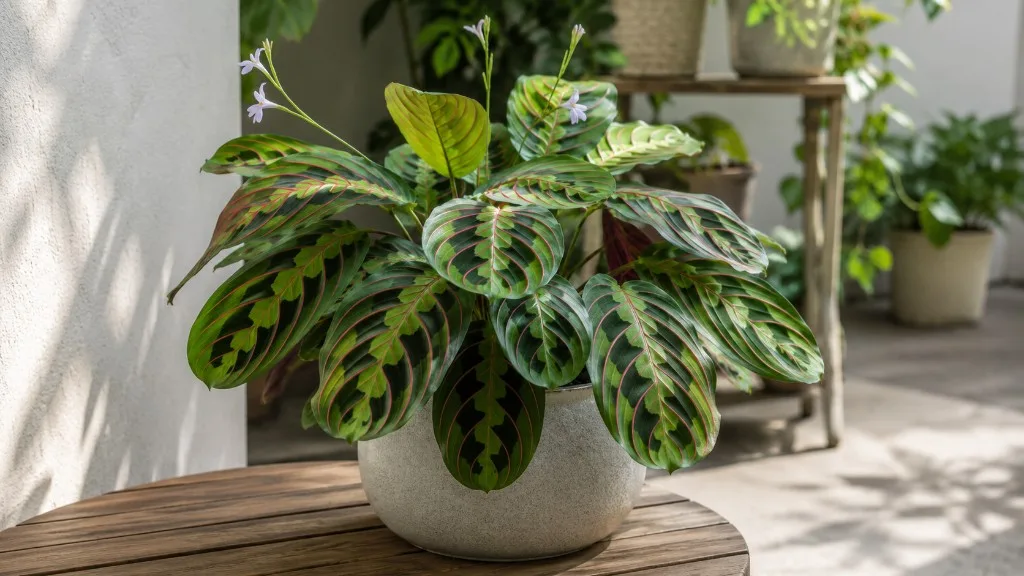
Prayer plant (Maranta leuconeura) is sold as a low-light houseplant so often that growers place it in dim corners and then wonder why the herringbone veins fade, new leaves open pale, or the nightly leaf-folding slows down. The plant is not a shade succulent. It is a Brazilian rainforest understory perennial that evolved under filtered, steady brightness - not darkness, and not harsh midday sun on open glass. The practical target indoors is bright indirect light, with medium indirect as a workable minimum for maintenance and moderate low light only as a short-term compromise where growth and pattern quality will suffer.
Missouri Botanical Garden describes indoor culture as bright indoor light but no strong direct sun, noting that too much sun will bleach out the attractive leaf colors. University of Illinois Extension recommends diffused sun and bright, indirect light with warm temperatures and high humidity. That combination tells you what experienced Maranta growers already know: give the plant real brightness at the leaf surface, filter anything that heats or bleaches patterned tissue, and judge success by new leaves, not by whether old foliage still looks green from across the room.
Why Prayer Plant Light Is Different From Generic “Low-Light” Advice
Marketing copy groups prayer plants with “low-light tolerant” tropicals because they survive dimmer rooms longer than many flowering houseplants. Botany tells a more precise story. Maranta leuconeura is a low, rhizomatous clump typically reaching 12–15 inches tall and wide indoors, with broad-elliptic leaves whose pattern, vein contrast, and color saturation depend on photosynthetic input. In too little light, the plant does not usually die quickly - it dims, stretches, and opens weaker new leaves while roots in moisture-retentive mix stay wet longer than the plant can use. That slow decline is easy to misread as a watering problem when light is the throttle.
Prayer plants also show light health through nyctinasty, the nightly upward folding of leaves that gives the plant its common name. Healthy, well-hydrated plants on a normal day-night cycle fold reliably in the evening and lower during the day. Stress from insufficient light, disrupted photoperiod, or root problems can weaken that movement before stems elongate obviously. Light is therefore not only about color - it is about rhythm and turgor in the pulvinus, the swollen joint at the base of each leaf.
Nyctinasty and the Day-Night Light Rhythm
Nyctinasty runs on a roughly 24-hour circadian rhythm. The pulvinus changes turgor pressure between upper and lower sides so the leaf blade rises at night and falls by day. If grow lights run 24 hours or a room never darkens, folding can become irregular even when humidity and watering look fine. Give prayer plants at least 8 hours of relative darkness nightly - turn off supplemental lamps on a timer - and movement usually returns within one to two weeks once hydration and temperature are also stable. Very old leaves may fold less as tissue ages; judge new foliage for whether the rhythm is healthy.
Quick-Reference Light Checklist
Before you move the pot, run through this short list. It is designed for patterned Maranta leuconeura indoors, not for unrelated “prayer plant” labels on Calatheas or Ctenanthes.
Target brightness: bright indirect light most of the day; medium indirect acceptable for maintenance; avoid prolonged dim placement if you want strong patterns.
Best default window: east-facing, 12–24 inches (30–60 cm) from unobstructed glass, or filtered south/west with sheer curtain.
Hand-shadow test: soft, readable shadow with defined edges at the leaf surface = bright indirect; faint shadow = medium/low; hot leaf surface in direct beam = move back or filter.
Watch new growth: firm, correctly patterned unfurling leaves prove the spot works; pale veins, small leaves, or weak folding mean adjust light before changing water or fertilizer.
Link watering: brighter placement dries the pot faster; dimmer placement requires longer dry intervals - see the prayer plant watering guide before increasing water in low light.
Best Light Level for Maranta leuconeura
The single clearest recommendation for indoor prayer plants is bright indirect light - strong ambient brightness at the leaf without prolonged harsh direct beams on patterned tissue. Medium indirect light keeps many plants alive with slower growth and some pattern dulling. Moderate low light - far from windows, obstructed north rooms, or dark hallways - is survivable for weeks to months but is a poor long-term home if you bought the plant for red veins, herringbone markings, or cultivar contrast.
RHS advises bright filtered or indirect light under glass, with high humidity maintained at all times. NC State Extension lists part shade to shade for outdoor culture in frost-free zones, which indoors translates to bright ambient light without scorching sun rather than a dark closet. When sources use “shade” for Marantaceae, read it as forest-filtered brightness, not absence of photons.
Foot-Candles, Lux, and the Hand-Shadow Test
Extension and botanical guides rarely publish prayer-plant-specific foot-candle charts, so home growers use practical tests. In editorial practice - not a formal cultivar standard - healthy growth on patterned Marantas often falls around 200–800 foot-candles (roughly 2,000–8,000 lux) at the leaf surface: bright enough to read comfortably without a lamp, with a soft, readable hand shadow. Survival can continue lower, near 100–200 foot-candles, but pattern contrast and folding vigor usually decline before stems stretch obviously.
The hand-shadow test costs nothing. On a clear day, hold your hand between the plant and the window at leaf height. A soft shadow with defined edges suggests bright indirect. A faint or absent shadow means low light - acceptable temporarily, not ideal for ‘Erythroneura’ or ‘Kerchoveana’ display quality. If leaves feel warm to touch within an hour of direct sun hitting them, filter or increase distance.
Best Window Placement: East, North, West, and South
Window direction is a starting point. Overhangs, trees outside, tinted glass, and interior walls all change intensity. Still, compass orientation gives a reliable first guess in the northern hemisphere.
| Window | Typical performance for prayer plant | Starting distance from glass |
|---|---|---|
| East | Best default - gentle morning sun possible, bright indirect rest of day | 12–24 in (30–60 cm) |
| North | Gentle indirect all day; often medium to low in winter | As close as possible without cold draft |
| West | Strong afternoon heat; needs curtain or extra distance in summer | 24–48 in (60–120 cm) or filtered |
| South | Highest intensity; sheer curtain or 3–5 ft setback | 36–60 in (90–150 cm) or filtered |
An east-facing window is the safest default for most homes. Morning sun is bright but relatively cool; many growers place the pot one to two feet from the pane and rotate a quarter turn weekly if growth leans. A north-facing window can work for established plants, especially in summer, but winter sun angle may drop growth to maintenance mode - watch for pale new leaves and extend watering intervals. South and west windows are usable with sheer curtains or greater setback; unfiltered afternoon sun through glass often causes bleached patches and crisp margins on variegated cultivars.
Bathrooms with frosted glass can work when bright ambient light reaches the leaves most of the day, not only when the room looks bright to your eyes. If steam and low winter light combine, pair the window with a small grow light rather than assuming humidity alone compensates for photons. For humidity-specific stress that mimics light damage, see low humidity on prayer plant.
Distance From the Glass
Direction labels fail when distance is wrong. A south window six feet away on an open floor may deliver less leaf-level light than an east window eighteen inches away. Use distance as a dimmer switch: closer increases intensity and heat; farther softens direct sun but can drop below the growth threshold. Seasonal adjustment beats permanent guessing - move slightly closer in winter when sun angle drops, slightly back in midsummer if leaf surfaces heat up or colors bleach.
Worked example: A grower placed Maranta leuconeura ‘Erythroneura’ on an east sill 12 inches from glass. New leaves opened with strong red veins and firm texture. After moving to an interior shelf eight feet from a north window, the next three leaves emerged paler with weak herringbone contrast within about three weeks - a classic pattern-fade signal. Returning to bright indirect east light produced better pattern on the following unfurl; old pale leaves did not fully recover cosmetically, which is normal.
Direct Sun: What Maranta Can Tolerate When Acclimated
Prayer plants are not full-sun plants. Missouri Botanical Garden is explicit: no strong direct sun indoors because it bleaches attractive leaf colors. That said, brief, gentle direct exposure - especially morning sun on an east sill - is different from hot afternoon beams through south or west glass. Leaves formed in lower light need gradual acclimation over two to three weeks before you increase exposure.
Treat direct sun as a tool, not a default. If sun-facing leaves develop white or yellow bleached zones, papery brown margins, or daytime curling that repeats at the brightest hours, pull the plant back or add sheer fabric. Unlike some succulents, bleached prayer plant tissue does not green up again; only new growth shows correction.
Low-Light Limits and Pattern Fade
Prayer plants tolerate lower light better than many Calatheas, but tolerance is not preference. In dim placement, expect slower growth, smaller new leaves, longer intervals between unfurling, and reduced nyctinastic vigor. The earliest warning on patterned types is often pattern fade - veins look washed out, red or lime markings dull to olive, and new leaves arrive smaller before stems stretch dramatically.
Low light also interacts dangerously with watering. Maranta grows in rich, moisture-retentive but well-draining mix and prefers evenly moist soil when actively growing. In dim light, transpiration drops; the same watering rhythm that worked near a window can leave roots waterlogged and invite rot. If the pot stays wet for weeks, improve light or reduce watering - not both ignored. For full symptom protocol, see not enough light on prayer plant.
Cultivar Pattern Retention
Cultivars show pattern loss at different speeds in marginal light.
‘Kerchoveana’ (rabbit’s foot): green fishbone pattern on light green; pattern dulls to near-solid green in low light before severe stretch.
‘Erythroneura’ (herringbone, red nerve): red midrib and veins fade early - often the first cultivar to look “tired” on a dark shelf.
‘Lemon Lime’: chartreuse zones wash toward yellow-green; contrast loss is obvious on new leaves.
‘Fascinator’ and similar heavily marked types: need brighter indirect to hold contrast; treat south glass only with filtration.
If you must keep a cultivar in medium light, accept slower growth and muted pattern rather than chasing color with fertilizer - feeding a dim, wet plant worsens stress.
Grow Lights When Natural Light Falls Short
When windows cannot deliver enough daily brightness - interior offices, north-only winter rooms, or shelves far from glass - full-spectrum LED grow lights are the reliable fix. Choose a fixture labeled for houseplants or seedlings, roughly 4000K–6500K white spectrum, not a room bulb optimized for human lumens alone.
Editorial starting points (label as heuristics, not cultivar standards): position the lamp 12–18 inches (30–45 cm) above the tallest leaf, run 12–14 hours daily on a timer, and ensure coverage across the clump, not just the center. If leaves pale or stretch toward the lamp, lower slightly or extend duration modestly. If edges crisp only under the lamp, raise the fixture or reduce hours - heat can mimic sun stress on a low clump.
Integrate grow lights with natural windows rather than using them only in winter. Turn lamps off at night so nyctinasty keeps a true dark period. After adding light, check soil moisture more often for two weeks; increased photosynthesis increases water use.
Maranta-Specific Warning Signs
Generic houseplant sunburn advice misses how prayer plants show stress on patterned tissue. Learn these Maranta-specific clusters.
Low-light stress: new leaves smaller and paler, vein contrast fading before leggy internodes, slow or weak nightly folding, soil staying wet too long, no new leaves for many weeks in growing season.
Too much light or heat: bleached white-yellow patches on exposed blades, crisp brown margins on sun-facing sides, daytime leaf curl during brightest hours, sudden collapse after an unacclimated move to hot glass, dull gray-green scorched zones that feel papery.
Do not confuse with: brown tips from fluoride or dry air - often uniform edge crisping without bleached center patches; see brown tips on prayer plant. underwatering on Prayer Plant curl tends to affect older leaves with dry soil and limp stems together.
Too Little Light vs Too Much Sun
When both seem possible - dim winter room but hot afternoon beam - prioritize removing harsh direct sun first. Scorch can mark leaves within days. Low-light stasis takes weeks to months. After stabilizing exposure, read the newest unfurling leaf. Old damage is historical; new tissue tells you whether today’s placement works.
Use a two-week observation window after any move. Change one variable - light OR watering OR repot - not all three. Prayer plants punish stacked interventions.
Move or Acclimate Without Shock
Sudden light jumps cause leaf curl, edge crisping, drop, or stalled growth on Maranta, especially when moving from a dim shop display to a bright sill. Acclimate in stages over two to three weeks: week one, place the pot in the target room but several feet back from the window; week two, move halfway to the final distance; week three, settle at the intended spot unless new growth shows stress.
Store-bought plants often come from low-light retail benches. Quarantine in moderate indirect light for a week before pushing toward your brightest acceptable window. Do not combine immediate repotting, fertilizing, and a major light jump - see prayer plant repotting and fertilizer guide for timing.
Know Your Plant: Rhizome, Pattern, and Brazil Understory Origin
Maranta leuconeura is an evergreen, rhizomatous, low-growing tropical perennial native to Brazil, winter-hardy only in USDA zones 11–12 outdoors. It spreads by shallow rhizomes, forming a clump rather than a single upright trunk. That habit matters for light: the canopy stays low, so light must reach the top leaf surface across the whole pot - a tall object blocking the window may shade one side and cause uneven pattern development.
Leaves close upward at night in a manner resembling praying hands - hence the common name. White veins radiate from the midrib on many cultivars; undersides are grayish-green to purplish-green. Small white flowers are insignificant indoors compared to foliage. For genus context and cultivar IDs, see the prayer plant overview.
Practical Checks: New Growth and the Watering Link
New-growth test: Judge light by the newest rolled leaf or shoot. Old blemishes will not repair, but new leaves should be firm, correctly colored, and close to expected pattern for your cultivar.
Watering link: Every light change changes water use. Brighter placement - move the pot closer to a window or add a grow lamp - means check moisture more often. Dimmer placement means let the top inch dry longer before watering. Maranta in dim light plus unchanged watering is a common root-rot setup; soil choice matters too - see prayer plant soil guide.
Rotation: Turn the pot a quarter turn weekly if growth leans toward the glass. Leaning is normal phototropism, not always an emergency.
Temperature note: Missouri Botanical Garden notes intolerance of frost and preference for temperatures not dipping below about 60°F (15°C). Cold windowsills in winter can slow growth and weaken folding even when light looks adequate.
When to use this page vs other Prayer Plant guides
- Prayer Plant overview - Start here for whole-plant context before deep-diving this topic.
- Prayer Plant problems hub - Jump to symptom-specific fix guides when this care topic does not resolve the issue.
- Not Enough Light on Prayer Plant - Escalate here when light adjustments are not enough.
- Leggy Growth on Prayer Plant - Escalate here when light adjustments are not enough.
Related Prayer Plant guides
- Prayer Plant overview
- Prayer Plant watering
- Prayer Plant soil
- Prayer Plant propagation
- Prayer Plant fertilizer
- Prayer Plant repotting
- Not Enough Light on Prayer Plant
- Leggy Growth on Prayer Plant
- Prayer Plant problems
Conclusion
Prayer plant light needs reduce to one distinction: shade tolerance is not darkness tolerance. Maranta leuconeura wants bright indirect light at the leaf surface, accepts medium indirect for maintenance, and shows its displeasure in dim corners through faded patterns, weak folding, and wet soil that never dries - not always through immediate wilt.
Place the pot where new leaves prove the light works: an east window one to two feet from glass is the safest default; filter south and west; treat north as seasonal. Use grow lights with 12–14 hour timers and a true dark period when windows fail. Acclimate gradually, link watering to dry-down speed, and read pattern on the newest leaf before blaming fertilizer or humidity alone. Old sun-bleached tissue will not recover, but the right placement today still produces vividly marked leaves on the next unfurl.
Related tool
Try the Plant Problem Diagnosis Tool with prayer-plant pre-selected to estimate needs for your setup.