Watering Prayer Plant: Schedule, Soil Checks & Mistakes
Quick answer
Water prayer plant when the top inch of soil feels dry, then soak until runoff and empty saucers within thirty minutes. Use filtered or overnight tap water if fluoride browns leaf tips. Expect roughly every five to seven days in bright summer growth and every ten to fourteen days in winter - always check the pot, not the calendar.
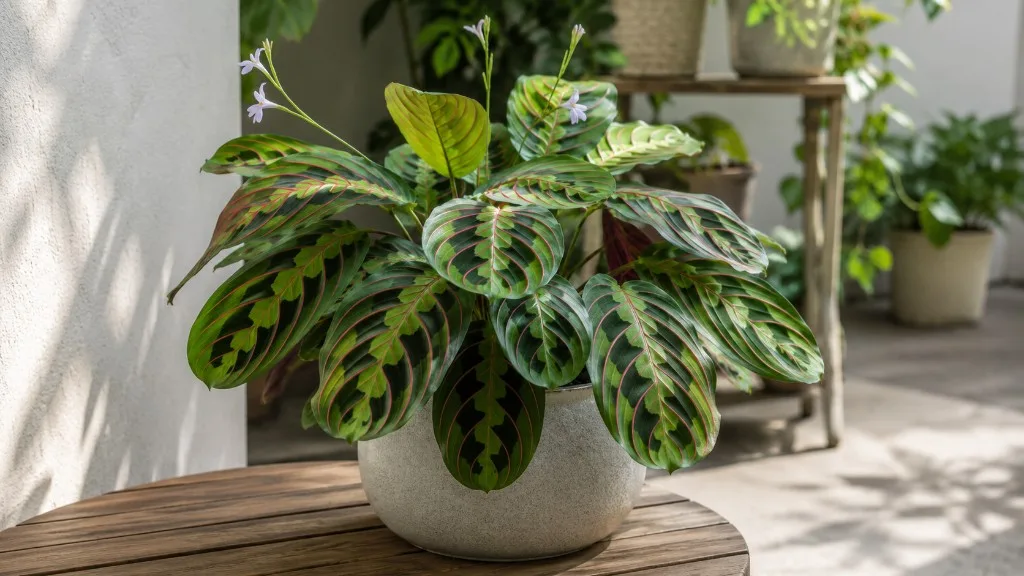
Watering Prayer Plant: Schedule, Soil Checks & Mistakes
Watering Prayer Plant: Schedule, Soil Checks & Mistakes
Prayer plant (Maranta leuconeura) punishes watering swings harder than most patterned tropicals. Fine rhizomatous roots expect steady moisture in the upper root zone, not bone-dry shock followed by a soggy recovery - yet the same plant rots quickly when a decorative cachepot traps runoff or water pools on the crown where stems meet the rhizome. The tension confuses beginners: extension sources say keep soil moist and also allow slight dry-down in winter and water when the top inch dries. Both can be true when you treat “moist” as evenly damp through the root ball after a full drink, not permanently wet surface peat.
The most common failure mode is not forgetting to water - it is watering on autopilot while light, pot size, and season change how fast the mix dries. A prayer plant in a bright east window may need a check every five to seven days in summer; the same pot in a cool back bedroom may sit ten to fourteen days between drinks in winter. Fluoride and chloramine in hard tap water add a second layer: crisp brown tips on otherwise healthy leaves often trace to water chemistry, not thirst. This guide covers moisture philosophy, check methods, water type, seasonal cadence, clean technique, and how to separate underwatering on Prayer Plant curl from wilt with wet soil after root damage.
Prayer Plant Watering Philosophy: Moist but Never Soggy
Marantas evolved on the Brazilian rainforest floor as low, spreading perennials with shallow rhizomes and fine feeder roots in leaf litter that stays damp but drains freely after rain (Missouri Botanical Garden). Indoors, that biology translates into three linked ideas.
First, the goal is consistent moisture in the root zone during active growth, not a calendar that ignores the pot. Illinois Extension advises to keep the soil moist in bright diffused light while keeping evenly moist but allowing the soil to dry between waterings during winter (Illinois Extension). Read that as: the upper profile can breathe slightly between drinks, but the plant should never sit in drought long enough to collapse fine roots.
Second, “moist” does not mean wet surface peat forever. After each watering, the mix should wick moisture through the root ball, then lose excess water through drainage holes. If the top stays dark and cool for many days while leaves yellow, the problem is retention or low light - see our light guide - not generosity with the watering can.
Third, crown sensitivity is real. Illinois Extension warns do not allow water to stand on the crowns; the stems rot easily (Illinois Extension). Pour at the soil line, tilt hanging baskets carefully, and empty saucers so pooled water never contacts the rhizome junction.
How Often to Water Prayer Plant
There is no honest universal schedule for how often to water a prayer plant. The interval is a consequence of dryness checks, not a cause. Use these starting ranges only after you confirm the top inch (about 2.5 cm) has dried or the pot weight has dropped - never as autopilot.
During active growth (roughly spring through early fall), many indoor prayer plants in bright indirect light need a thorough watering about every five to seven days. In winter, when growth slows and transpiration drops, the same container often stretches to every ten to fourteen days, sometimes longer in cool, dim rooms. Missouri Botanical Garden notes indoor culture should keep soils consistently moist in the growing season but reduce soil moisture substantially from autumn to late winter. NC State Extension similarly recommends evenly moist soil through the growing season while holding back on watering to allow soil to dry out in winter months.
Track your own pot for two full cycles: note the date you watered, when the top inch dried, and how new rolled leaves looked. Within a month you will know your home’s rhythm better than any generic blog schedule.
Summer vs. Winter Starting Ranges
| Season | Typical check rhythm | What changes |
|---|---|---|
| Spring–summer (active growth) | Every 5–7 days in bright light; verify top inch dry | Faster transpiration; new leaves opening weekly |
| Fall transition | Stretch interval as nights cool | Pot stays heavy longer; reduce top-ups |
| Winter (slow growth) | Every 10–14+ days; allow slight dry between drinks | Illinois Extension winter dry-down guidance; less fertilizer demand |
A worked example: a six-inch (15 cm) plastic nursery pot with drainage, red-veined M. leuconeura ‘Erythroneura’, sitting one metre from an east window at 21°C (70°F). July: top inch dry on day six; soak until runoff, empty saucer within thirty minutes; pot feels noticeably lighter by day five. January: same pot still slightly cool at depth on day nine; wait until day twelve when top inch is dry and weight drops; use room-temperature filtered water; no feed until spring. Your numbers will differ - the method matters more than copying these days.
The Top-Inch Moisture Check
The most reliable single rule for prayer plant watering is water when the top inch of mix feels dry, then soak until excess drains (Illinois Extension). That depth balances Marantaceae fine roots - which hate full drought - against the need for oxygen between drinks. Surface color lies: peat-heavy mixes can look pale on top while staying damp near the rhizome.
Finger, Skewer, and Pot-Weight Methods
Finger or knuckle test: Insert your finger to the first knuckle (about 2.5 cm). If the mix feels cool, clingy, or dark at that depth, wait. If it is dry and lightweight, proceed to a full watering.
Skewer or chopstick test: Push a dry wooden skewer toward the pot bottom. Pull it out - darkening or soil sticking means moisture remains; clean dry wood means the root zone has dried enough for the next drink.
Pot-weight test: Lift the pot after a fresh watering to feel “heavy,” then daily until it feels noticeably lighter. Weight change often beats surface appearance, especially in plastic pots. Combine weight with a finger check until you learn the pattern for that container.
Nyctinastic context: Healthy prayer plants fold leaves upward at night through sleep movement (NC State Extension). Drooping during the day with dry soil points to thirst; limp leaves with wet soil point elsewhere - see below.
What Water to Use on Prayer Plant
Prayer plants are sensitive to fluoride and excess minerals in municipal tap water. NC State Extension notes leaves burn with high fluorides and with over-fertilization - tip browning from water chemistry is a common Maranta complaint independent of thirst. Practical options:
- Filtered, distilled, or rainwater for routine watering when tips crisp despite good moisture.
- Overnight tap water in an open container - lets some chlorine dissipate; helps chloramine-sensitive setups though it does not remove fluoride.
- Room temperature water - cold shocks fine roots and slows uptake.
Brown tips with evenly moist soil and conservative feeding usually mean water quality or humidity, not hunger. See our brown tips problem guide before increasing water or fertilizer.
Signs You Are Watering Too Much
Chronic overwatering on Prayer Plant on prayer plant shows yellowing lower leaves, soft or collapsing stems at the soil line, sour-smelling mix, and fungus gnats hovering over perpetually damp peat. Leaves may ** wilt despite wet soil** once roots fail - the classic misread that triggers another round of watering. Missouri Botanical Garden lists root rot on Prayer Plant in poorly drained soil conditions as a primary problem for marantas.
Overwatering risk rises when rich, moisture-retentive mix (see our soil guide) meets low light, oversized pots, or cachepots without drainage. If several signs appear together, pause watering, inspect the root zone, and read our overwatering and root rot guides before feeding or repotting on panic.
Signs You Waited Too Long
Underwatering shows daytime limp or rolled leaves, dry, compacted mix pulling away from the pot wall, and crisp brown edges on older foliage - distinct from uniform fluoride tip burn on newer leaves. A single dry episode is usually recoverable: soak thoroughly until runoff, then let the pot drain fully. Avoid tiny daily sips that wet only the surface; they train shallow roots and leave the center dry.
Repeated drought damages fine roots and makes the plant react badly when water returns - new leaves may curl or stall. After rehydration, wait for firm new rolled leaves before changing light or repotting. Persistent curl with moist soil suggests curling leaves from humidity or other stress, not simple thirst.
Vacation dry-outs and forgotten watering rounds happen. When mix has pulled away from the pot wall and leaves collapse, rehydrate in one event: place the pot in a sink, water slowly until the mix rewets and runoff appears, then drain fully. If water runs straight through bone-dry peat without absorbing, bottom-water for twenty minutes, drain, then top-water once. After a severe dry episode, expect older leaf edges to stay crisp; new rolled leaves that open firm and resume night folding are the recovery signal, usually within one to two weeks in warm bright conditions.
Wilt With Wet Soil: When Watering Is Not the Problem
If prayer plant leaves are limp but the mix is wet and heavy, adding water worsens the problem. Common causes:
- Root rot or root death from prior overwatering - roots cannot transpire; leaves droop while media stays saturated. Inspect for brown, mushy roots and sour smell.
- Low light slowing water use - same watering rhythm in a dim corner leaves roots anaerobic. Improve light or reduce water; see not enough light.
- Cold drafts or temperatures below about 60°F (15°C) - Missouri Botanical Garden notes the species is intolerant of frost and prefers temperatures that do not dip below 60°F. Metabolic slowdown mimics drought stress while soil stays wet.
- High humidity with damaged roots - leaves may look soft in steamy bathrooms while roots fail underground. Check weight and root color, not leaf turgor alone.
Fast decision check: limp + light, dry pot → water thoroughly. Limp + heavy, cool, wet pot → stop watering; inspect roots and light before the next drink.
Seasonal Watering Changes
Prayer plant water use tracks growth phase and photons, not the month on the calendar. When days lengthen and new leaves open regularly, expect shorter dry-down cycles and maintain even moisture after each soak. When growth slows in late fall, extend intervals and allow the top inch to dry more fully between drinks per Illinois Extension winter guidance. Royal Horticultural Society notes watering can be reduced in winter under glass - the same principle applies indoors.
Heating systems dry air, not necessarily soil - do not compensate for low humidity by overwatering. Humidity stress and watering stress overlap on leaf edges; use our low humidity guide and overview for environmental targets while keeping the soil check separate.
How to Water Cleanly
Top watering (standard): Pour slowly across the soil surface until water runs from drainage holes - usually one-fifth to one-third of the pot volume depending on mix. Stop when runoff appears; do not leave the root ball sitting in a full saucer.
Bottom watering (optional): Set the nursery pot in a basin of water for twenty to thirty minutes so the mix wicks upward, then lift and drain. Useful when crown splash is a concern, but still empty external cachepots afterward - wicking does not fix trapped runoff below.
Saucers, Cachepots, and Crown Care
Empty saucers and decorative outer pots within thirty minutes of watering. Standing water re-saturates the bottom profile and invites stem rot where petioles meet the rhizome (Illinois Extension crown warning). Never let the plant “drink from the bottom” indefinitely in a cachepot without drainage. If you use pebble trays for humidity, keep pot bottom above the water line - roots should not touch standing water.
Avoid wetting foliage habitually; Marantas tolerate occasional mist on leaves less well than steady ambient humidity. Direct streams on the crown are the highest-risk habit for rot. Self-watering reservoirs can work only when the water level stays below the root zone and the upper profile still breathes - treat them as experiments and monitor the top inch manually for the first month.
After Repotting: Expect Slower Dry-Down
Fresh, airy mix in a larger pot holds water differently until roots explore the new volume. After division or repot - see our repotting guide - expect longer intervals between waterings even in summer. A common mistake is watering on the old schedule into empty mix, keeping the center soggy while surface looks dry. Check deeper with a skewer and reduce volume until the root ball re-establishes - usually four to eight weeks in spring.
Do not fertilize until new growth looks firm; propagation aftercare in our propagation guide follows the same conservative watering pattern.
Prayer Plant Watering Mistakes to Avoid
- Calendar watering without checking soil - the single fastest route to rot in winter or drought in summer.
- Splash on the crown repeatedly - stems rot easily when water stands at the rhizome (Illinois Extension).
- Leaving runoff in cachepots - decorative pots are display, not reservoirs.
- Tiny daily sips instead of full soaks - wets surface, starves center, trains weak roots.
- Ignoring tap-water fluoride while chasing humidity fixes for brown tips.
- Watering limp plants automatically without pot weight - wet-soil wilt needs drying and root inspection, not another drink.
- Changing water, light, and repotting simultaneously after a scare - stabilize watering first.
Know Your Plant: Maranta leuconeura Root Context
Maranta leuconeura is a rhizomatous, clump-forming tropical perennial native to Brazil, typically 12–15 inches tall and wide indoors, with shallow spreading stems rather than a deep taproot (Missouri Botanical Garden). That architecture means the upper half of the pot matters most for moisture decisions - deep dry while the surface looks fine is still stress; surface wet while the room is cold and dim is still danger.
The same species appears under the scientific slug maranta-leuconeura elsewhere on LeafyPixels; this guide sits in the prayer-plant hub alongside overview, light, and soil for growers who shop or search by common name. Biology is identical; navigation differs.
Judge newest rolled leaves and root-zone moisture before reacting to every old edge mark. Nyctinastic folding on healthy plants continues when turgor and roots are sound - if night folding stops with wet soil, suspect roots or temperature, not routine thirst.
Overwatering vs. Underwatering at a Glance
| Signal | Overwatering | Underwatering | Low humidity (wet soil) |
|---|---|---|---|
| Soil feel | Heavy, cool, sour | Light, dry, compacted | Often moist at depth |
| Leaf pattern | Yellow lower leaves, soft stem base | Daytime limp, rolled edges | Crisp margins, tips on new growth |
| Pot weight | Stays heavy many days | Very light | Variable |
| First action | Pause water; inspect roots | Soak and drain fully | Raise humidity; do not flood pot |
| Deep dive | Overwatering, root rot | Wilting | Low humidity |
Conclusion
Water prayer plant by checking the pot, not the calendar: top inch dry, then soak until runoff and empty standing water from saucers and cachepots. Keep soil evenly moist through the root ball in active growth, allow longer dry-down in winter, and use filtered or overnight tap water when fluoride browns leaf tips despite good care. When leaves wilt, read pot weight and soil smell before pouring - limp with wet soil is a rescue problem, not a thirst problem. Pair this page with light and soil guides so water, photons, and mix work together instead of fighting each other. For deeper context see overview, fertilizer, repotting, and problem guides on brown tips and wilting.
When to use this page vs other Prayer Plant guides
- Prayer Plant overview - Start here for whole-plant context before deep-diving this topic.
- Prayer Plant problems hub - Jump to symptom-specific fix guides when this care topic does not resolve the issue.
- Overwatering on Prayer Plant - Escalate here when watering adjustments are not enough.
- Underwatering on Prayer Plant - Escalate here when watering adjustments are not enough.
- Root Rot on Prayer Plant - Escalate here when watering adjustments are not enough.