Slow Growth on Prayer Plant: Causes, Checks & Fixes
Quick answer
Slow growth on prayer plant (*Maranta leuconeura*) usually means dim light, cool air below 60°F, dry winter humidity, or wet soil in a dark corner-not always disease. First step: move to bright indirect light, keep temperatures above 60°F, and check whether new rolled leaves are forming before feeding or repotting.
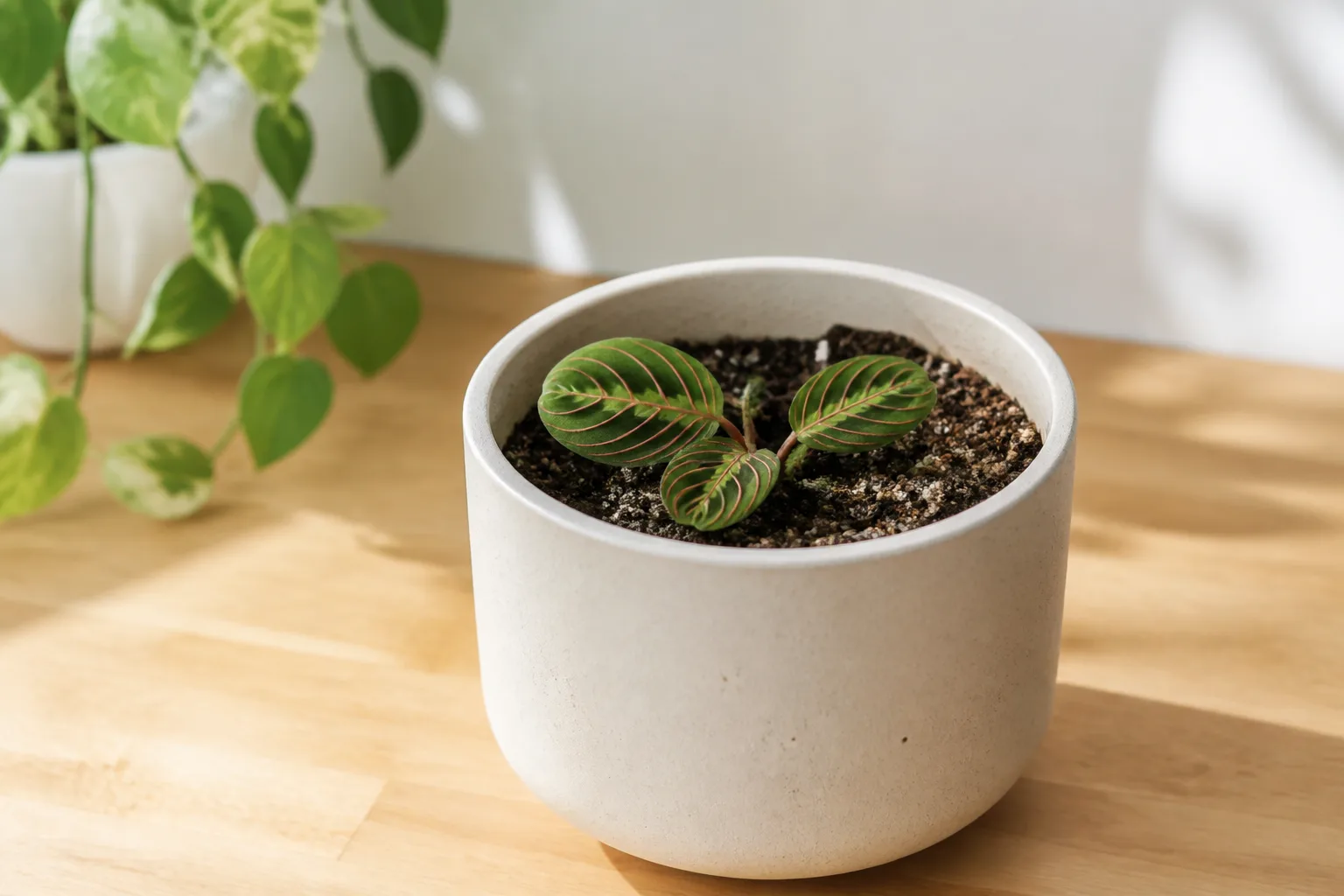
Slow Growth on Prayer Plant: Causes, Checks & Fixes
This guide covers slow growth on Prayer Plant. See also the general Slow Growth guide, watering, and light pages for this plant.
Slow Growth on Prayer Plant: Causes, Checks & Fixes
Quick answer
If your prayer plant has not made a new leaf in months, start with a one-minute season check before you repot or feed. Slow growth on prayer plant (Maranta leuconeura) is often normal winter rest, but persistent stalling through warm spring and summer usually points to dim light, cool air below 60°F (15°C), dry winter humidity, or root stress from wet soil in a dark corner-not hunger.
Prayer plant is a low-growing rhizomatous perennial that spreads horizontally, typically reaching 12–15 inches tall and wide indoors. It is a moderate grower, not a fast vine-compare this month to its own past rhythm, not to pothos.
First step: move the pot to bright, indirect light within one to three feet of an east window and keep day and night temperatures consistently above 60°F. Do not fertilize, divide, or repot on day one.
Judge recovery by new rolled leaves, not old blade size. Spent leaves rarely enlarge after a stall. Success means a firm new tube unfurls with strong herringbone patterning and the plant resumes folding upward at night on fresh growth within a few weeks after care stabilizes.
This page is the common-name slow-growth hub for growers who search “prayer plant” rather than the scientific name. The same species appears under maranta-leuconeura on LeafyPixels; see slow growth on Maranta leuconeura for the botanical-slug parallel. This guide adds growth-rate benchmarks, low-humidity stall pathways, nyctinasty while the crown stalls, and a normal-vs.-concerning decision table-topics the binomial page covers in overlapping detail.
Prayer plant is non-toxic to cats and dogs if pets chew foliage; fix the underlying stall before leaves accumulate on the soil.
Is slow growth normal on prayer plant?
Some slowdown is expected when days shorten and indoor heating dries the air. Missouri Botanical Garden guidance is to reduce soil moisture and fertilizer from autumn to late winter as growth naturally eases. That seasonal pause is healthy-not rot.
What is not normal:
- no fresh rolled leaves through an entire warm spring and summer
- new leaves that stay smaller and paler than older foliage for multiple cycles
- a crown that has not pushed growth while room temperatures sit in the comfortable 65–80°F range
Under bright indirect light in active season, many healthy indoor prayer plants produce one new rolled leaf every three to six weeks-faster in summer, slower in winter. Your cultivar matters: red-veined erythroneura and Fascinator forms often show pattern fade and stall earliest when humidity or light slip; rabbit-tracks kerchoveana can look tougher but still stalls in the same conditions.
What slow growth looks like on prayer plant
Slow growth on Maranta reads through new-leaf quality and crown activity, not just whether old leaves stay green from across the room.
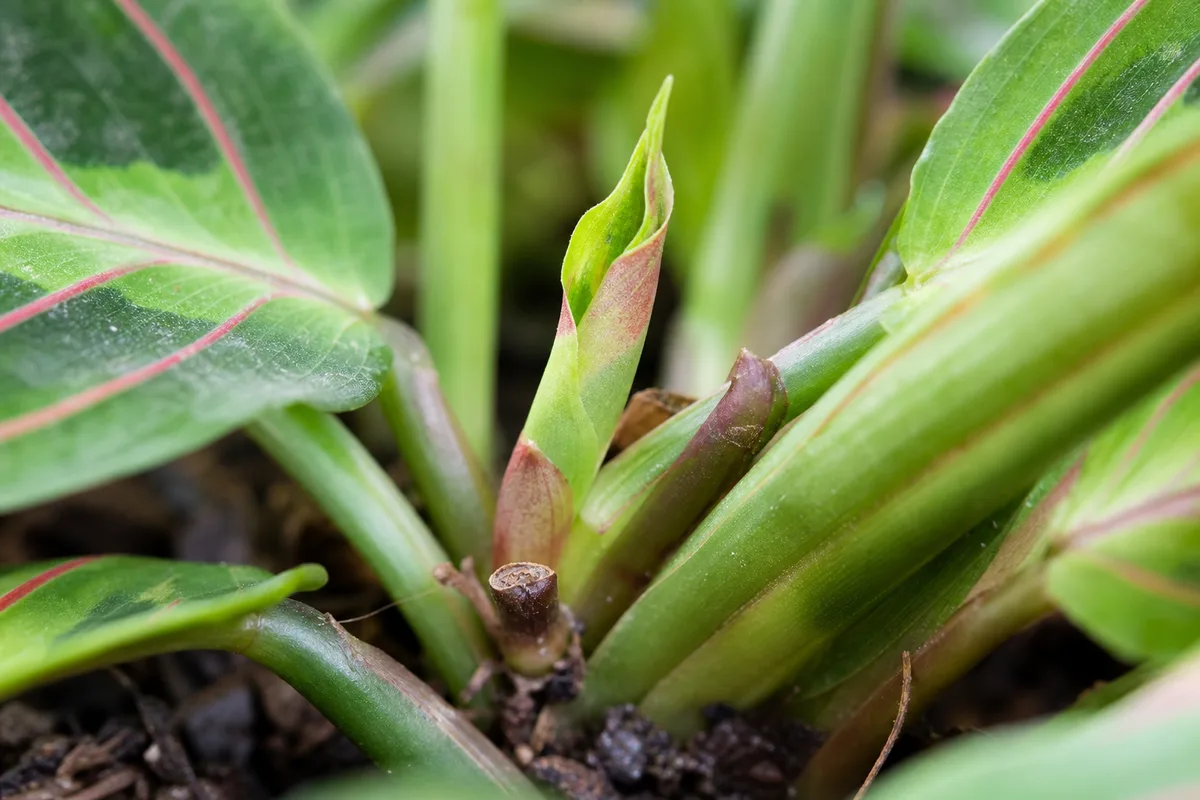
Slow Growth symptoms on Prayer Plant - compare with healthy tissue on the same plant.
Typical stall patterns:
- Crown stall with old-leaf movement - mature leaves still fold upright at night while the center produces few or no new rolled tubes for six to eight weeks in warm months
- Small, pale new leaves - latest unfurls open smaller than older blades with washed-out herringbone veins or muddy purple undersides
- Pattern fade before full stop - prayer plant invests energy in leaf pattern development; faded markings on the newest leaf often precede a complete crown pause
- Static clump size - the plant stays at a modest footprint (12–15 inches) with no outward rhizome spread through an active season
- Wet soil without new growth - mix stays damp ten days or more in a dim corner because transpiration never keeps pace with watering
Use this table before you change fertilizer, humidity gear, or pot size:
| Pattern | What you see | Soil / pot | Night folding on old leaves | Likely cause |
|---|---|---|---|---|
| Winter rest | Few or no new leaves Nov–Feb; firm stems | Normal dry-down; no sour smell | Strong fold on mature leaves | Seasonal slowdown - usually no fix needed |
| Low-light stall | Pale herringbone on new growth; lean toward window | Stays wet longer than in summer | May continue on old leaves | Not enough light |
| Low-humidity stall | Slow unfurl; smaller new leaves; margins may crisp later | Moderate moisture; roots firm | Often intact early | Dry air - see low humidity |
| Cool-draft stall | Growth stops near window glass in winter | Normal weight | May weaken on cold-exposed side | Air below 60°F |
| Root-zone stress | Crown quiet; no yellow yet | Heavy, wet pot for days | Folding may slow on stressed leaves | Overwatering in shade or early root rot |
| Post-repot pause | No new shoots for weeks after division | Fresh mix; firm roots if healthy | Variable | Transplant shock - wait before re-disturbing |
| Leggy stretch | Long internodes; weak new leaves | Often dry-to-normal | May continue | Leggy growth - light deficit with elongation |
Night prayer movement continuing on mature foliage while the crown stalls is a distinctive Maranta slow-growth signature-do not assume the plant is fine because leaves still fold at dusk.
Why prayer plant growth stalls
Insufficient light
Prayer plant needs bright, diffused or indirect light for steady photosynthesis. In a dark bathroom or bookshelf more than six feet from glass, the rhizome invests little in new leaves. The upper and undersides of leaves lose color in low light before growth stops entirely-pattern fade on the newest rolled leaf is often the first clue.
The dim-corner overwatering trap
Prayer Plant overview wants evenly moist soil during active growth, but low light slows water use. The same summer watering schedule that worked in June keeps soil anaerobic in October when the plant sits in shade. Roots lose oxygen, growth stops, and you may see no yellowing yet-only a quiet crown and a heavy pot. That overlap is why slow growth and overwatering guides belong together on prayer plant.
Cool temperatures and drafts
Maranta is intolerant of low temperatures and cold drafts. Growth slows sharply when night temperatures dip below 60°F (15°C) near winter window glass or AC vents. Cool air plus wet soil is especially hard on shallow rhizomes-the plant stalls without the dramatic wilt you might expect from a succulent.
Low humidity
Prayer plant requires high humidity and is intolerant of dry forced-air heating. Below roughly 50% at leaf height, new leaves may emerge smaller, stick during unfurl, or stall before brown tips appear. Chronic dry air also invites spider mites that drain vigor without obvious webbing at first.
Root crowding and transplant shock
Rhizomes spread horizontally; a root-bound pot can slow expansion even when night movement continues. Fresh division or repotting triggers a recovery pause while energy shifts underground-normal, but frustrating if you repot repeatedly hoping to “wake” the plant.
Tap-water and salt stress
Leaves will burn with high fluorides and over-fertilization. Mineral buildup can slow clean unfurling on sensitive new tissue before margins crisp-stacked with dry air on our brown tips page. Filtered or rainwater helps when pattern quality degrades after every drink.
How to confirm the cause (step-by-step)
Work through these checks in order before repotting, feeding, or buying a bigger humidifier:
- Season and temperature - Is it late autumn through winter with firm stems and no sour smell? Are day and night readings above 60°F at the pot, away from leaky window glass?
- Light at the leaf - Can you read comfortably near the plant without a lamp? Hold your hand at canopy height: a soft faint shadow suggests bright indirect light; almost no shadow means too dim. Compare placement with the light guide and not-enough-light workflow.
- Humidity at leaf height - Hygrometer below 50% with smaller new leaves points to air stress before you soak soil. See low humidity for humidifier setup.
- Soil moisture at the top inch - Press a finger in. Constant dampness three or more days after the last drink in a dim spot suggests the wet-soil trap. Bone-dry mix throughout suggests underwatering instead.
- New-growth read - The newest rolled tube tells the truth. Firm unfurl with sharp herringbone veins means conditions are improving. Absent or tiny pale unfurls for months in warm weather mean something above is still limiting growth.
- Root texture (only if wet pattern persists) - Unpot when the mix smells sour or stays soggy. Firm pale roots mean pause water and improve light; mushy brown roots mean trim-and-repot per the root rot guide.
- Recent disturbance - Division or repot within the last four to eight weeks? Allow recovery before the next intervention.
- Pest drain - Inspect undersides with a hand lens for mite stippling or mealy clusters on new growth.
If four or more checks point to dim placement and wet soil together, fix light first, then match watering to the faster dry-down in brighter exposure.
First fix for prayer plant (one action, then branch)
Move the pot to bright, indirect light within one to three feet of an east-facing window and keep temperatures consistently above 60°F for ten to fourteen days. That single correction restarts many stalled prayer plants without repotting or fertilizer.
East exposure is the default: gentle morning sun through glass, then bright indirect light the rest of the day. Increase brightness gradually over seven to ten days if the plant lived in deep shade for months. Full window and grow-light targets live on the light guide.
Do not change watering, fertilizer, or pot size on the same day. Wait at least two weeks after the light move, then adjust the top-inch dry rule to match how fast mix dries in the brighter spot.
Cause-specific branches (choose one after the first fix)
- Dry air - Run a humidifier to hold roughly 50–60% or higher at leaf height before you water more. Details on the low-humidity page.
- Wet, heavy soil in shade - Let the top inch dry; empty saucers; improve light so the plant uses moisture. If roots are mushy, follow root rot steps instead of waiting.
- Root-bound but healthy - Repot once in spring into moist but well-drained mix sized to the root mass-see repotting. Do not repot repeatedly in winter hoping for growth.
- Tap-water stress - Switch to filtered or rainwater if new leaves degrade after every drink; margin patterns on brown tips.
- Nutrient timing - Resume half-strength feed only after new growth appears in active season-see fertilizer. Feeding a dormant or root-stressed plant burns margins and slows recovery.
Avoid stacking repotting, feeding, and heavy pruning on the same day.
Recovery timeline
After light and warmth improve during the growing season, many prayer plants show a healthy new rolled leaf in roughly two to six weeks-editorial estimate based on typical indoor recovery, not a guaranteed schedule. Winter corrections may not show new foliage until spring even when care is correct.
Plants recovering from root stress, division, or cold damage often need four to eight weeks before the first firm unfurl. Judge progress by:
- new rolled leaves forming and opening at normal size for your cultivar
- restored herringbone or splotch contrast on fresh tissue
- stable night folding on new growth
- no further spread of yellowing, soft stems, or sour soil smell
Damaged old blades usually do not enlarge or regain full pattern intensity; recovery is visible in new leaves only.
Causes to rule out
Before treating for generic “slow growth,” rule out lookalikes:
- Normal winter slowdown - firm plant, reduced watering appropriate, no crown rot smell
- Leggy stretch - growth exists but internodes are long and weak; fix light per leggy growth, not fertilizer
- Recent repot or division pause - energy underground first; patience if roots are firm
- Pest drain - mites or mealybugs on undersides without obvious crown involvement
- Simultaneous leaf curling - may indicate humidity crisis, not light deficit alone; see curling leaves
What not to do
- Do not fertilize a stalled plant as a first response-especially in winter or on wet, stressed roots.
- Do not repot repeatedly to force growth; Marantaceae dislike disturbance.
- Do not keep soil constantly wet while chasing humidity with extra drinks.
- Do not diagnose from night folding alone on old leaves; track new rolled tubes.
- Do not compare growth pace to fast vines; prayer plant is naturally compact.
How to prevent slow growth next time
- Bright indirect placement year-round-review not-enough-light before shelves and dim bathrooms
- Temperatures above 60°F away from winter window glass and AC vents
- Humidity support when heating drops RH below 50%-low-humidity setup
- Water when the top inch dries, not on a calendar-allow more dry-down between drinks in winter
- Light feeding only in active growth per the fertilizer guide
- Repot every one to two years in spring when roots circle-repotting timing matters
- Scout undersides weekly in dry months before pests stall the crown
For broader species context, use the main prayer plant overview.
When slow growth is normal vs. when to worry
Normal: winter pause with firm stems, strong night fold on mature leaves, and resumed unfurls in spring when light and warmth return.
Worry now when growth stalls and you also see:
- stem softening at the crown on wet mix
- sour soil smell returning soon after repotting
- widespread yellowing while the pot stays heavy
- active pest webbing or collapse of multiple stems at once
Those patterns suggest crown involvement or advanced root failure-start the root rot guide the same day. Pure slow growth without wet soil, soft stems, or pest signs is slower-burning but still needs correction before the next winter short-day season makes recovery harder.
Conclusion
Prayer plant slow growth is usually light, temperature, and humidity first-brighten placement, warm the room, and match watering to how fast mix dries in the new spot. Judge success by new rolled leaves with strong patterning, not by fertilizer or repeated repotting. When benchmarks and the decision table still leave you unsure, the botanical-slug guide offers parallel detail under the scientific name.
Related prayer plant guides:
- Overview - species basics, nyctinasty, and care hub
- Not enough light - pattern fade and wet-soil paradox in shade
- Low humidity - dry-air stall before brown tips
- Leggy growth - stretch vs. true crown stall
- Watering - top-inch dry rhythm and winter adjustment
- Light - window placement and grow-light specs
- Fertilizer - when to feed after growth resumes
- Repotting - spring timing and division pause
- Overwatering - wet soil in dim corners
- Root rot - when stalled growth means failing roots
- Slow growth on Maranta leuconeura - scientific-slug parallel guide
When to use this page vs other Prayer Plant guides
- Prayer Plant watering guide - Use for routine moisture checks before assuming slow growth is the main issue.
- Prayer Plant problems hub - Browse all 17 common issues on this species.
- Not Enough Light on Prayer Plant - Different entry point when symptoms overlap with slow growth.
- Leggy Growth on Prayer Plant - Different entry point when symptoms overlap with slow growth.
- Yellow Leaves on Prayer Plant - Different entry point when symptoms overlap with slow growth.